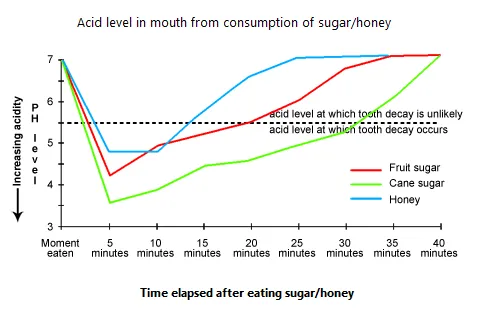
The line graph provides information about the amount of acid produced in the mouth after the intake of three different types of sweeteners, namely fruit sugar, cane sugar, and honey, and the subsequent impact on dental health.
The general trend shown in the graph is that all three sweeteners cause an immediate rise in acid production, which then gradually declines. However, the peak levels and the rate of decline vary between the three substances.
Fruit sugar causes the most rapid increase in acid production, reaching a peak within 5 minutes of consumption. However, this is followed by a steep decline, and by 20 minutes, the acid levels have returned to normal. In contrast, cane sugar results in a slower but more sustained rise in acid levels, which remain above normal for almost 30 minutes.
Honey, on the other hand, causes a moderate increase in acid production, peaking at around 10 minutes. However, this is followed by a very gradual decline, and even after 30 minutes, the acid levels have not fully returned to normal. This suggests that honey may have a more prolonged negative effect on dental health than the other two sweeteners.