Speaking test #006
Part 1 · Interview
4 to 5 minutes. The examiner asks about you and familiar topics.
Can you tell me your full name?
Where are you from?
Do you work or are you a student?
Which instrument do you like listening to most? [Why?
?] I absolutely adore listening to the piano. The soft melodies and intricate harmonies that can be produced from a piano are truly mesmerizing to me. The piano is a versatile instrument that can be used to play a wide range of genres and styles, from classical to pop. It's also a beautiful instrument to look at and the sound it produces is simply breathtaking.
Have you ever learned to play a musical instrument? [Which one?
?] Yes, I have had the pleasure of learning how to play the guitar. It's a wonderful instrument that I've grown to love over the years. I find that playing the guitar is a great way to relax and unwind after a long day, and it's also a great way to express myself creatively.
Do you think children should learn to play a musical instrument at school? [Why/Why not?
?] I definitely think that children should learn to play a musical instrument at school. Not only does learning to play an instrument help with the development of fine motor skills and hand-eye coordination, but it also helps with creativity and self-expression. Additionally, playing an instrument can also have a positive impact on children's cognitive development and can even improve their academic performance. Overall, I think that learning to play a musical instrument is an incredibly valuable skill that should be taught to children at school.
How easy would it be to learn to play an instrument without a teacher? [Why?
?] Learning to play an instrument without a teacher would be quite difficult, in my opinion. While there are certainly resources available, such as online tutorials and instructional videos, nothing can replace the guidance and feedback that a teacher can provide. A teacher can provide personalized instruction and can help identify and correct any mistakes that a student may be making. Additionally, a teacher can provide encouragement and motivation, which is essential for any student trying to learn an instrument. Without a teacher, it would be much more difficult to progress and improve one's playing skills.
Does your name have any special meaning?
My name, Nguyen, is a very common surname in Vietnam and it means "the one who goes first." I feel proud to have this name as it symbolizes leadership and being a pioneer in my culture.
How would you choose names for your next generation?
I would choose names that have special meanings and are meaningful to our family. For example, I would consider names that have been passed down from previous generations or names that have a significant meaning in our culture. I would also consider names that have a positive connotation and are easy to pronounce.
Are there any differences between how Vietnamese people name their children now and in the past?
Yes, there are definitely differences between how Vietnamese people name their children now and in the past. In the past, names were often chosen based on traditional customs and beliefs, such as choosing a name that had a good meaning or was associated with a specific deity. Nowadays, parents are more likely to choose names that are more modern and fashionable, and may not have as much significance as traditional names.
Does anyone in your family have the same name as you?
Yes, actually many of my family members have the same name as me. My father, grandfather, and uncles all have the same surname, Nguyen. However, my given name is unique to me and my immediate family. It is a tradition in Vietnamese culture to have the same surname within the family.
You will have to talk about the topic for one to two minutes. You have one minute to think about what you are going to say. You can make some notes to help you if you wish.
Something special you brought home from a holiday
You should say:
- What the item was
- Where you got it from
- Why it was special to you
- How you use or display it now
During my recent trip to Rajasthan, India, I came across a beautiful handmade Rajasthani tapestry that caught my eye. I purchased it from a local artisan at a bustling market in Jaipur, known for its vibrant cultural heritage and exquisite handicrafts. The intricate details and vibrant colors of the tapestry immediately drew me in, and I knew it was something I had to bring home with me.
This tapestry holds a special place in my heart as it represents the rich cultural heritage of Rajasthan and the incredible craftsmanship of the artisans in the region. The time and effort put into creating such a masterpiece is truly remarkable, and it serves as a reminder of the beauty and creativity that exists in the world. Every time I look at it, I am transported back to my unforgettable trip to Rajasthan and the wonderful memories I made there.
Currently, the tapestry is prominently displayed in my living room, where it adds a touch of elegance and color to the space. Its intricate patterns and vibrant hues never fail to catch the attention of visitors, sparking conversations about my travels and experiences in Rajasthan. It serves as a conversation starter and a constant reminder of the incredible journey I had, making it not just a decorative piece, but a cherished memento of my unforgettable holiday in Rajasthan.
- Words
- 225
- Sentences
- 9
- Words per sentence
- 25.0
- Speaking time
- about 1.7 min
Counted at 130 words a minute. The exam gives you one to two minutes.
Part 3 · Discussion
4 to 5 minutes. The examiner asks broader questions linked to the cue card topic.
How do the souvenirs people bring back from different places show what they experienced while traveling?
Souvenirs are fascinating little windows into our travel experiences, aren't they? They often encapsulate the essence of a place, allowing us to carry a piece of that culture back home. For instance, someone might bring back a traditional handcrafted artifact that not only serves as a beautiful decoration but also tells a story about the local artisans and their craft. These items often evoke cherished memories and emotions, making them much more than just trinkets; they become tangible reminders of the adventures we’ve had. Ultimately, souvenirs serve as a bridge between our past experiences and our present lives, keeping those moments alive long after the journey has ended.
How can the things someone brings home make them feel more connected to a certain place?
When someone brings home items from a particular place, it can create a profound sense of nostalgia and emotional resonance. Each object often carries its own story and memories, making it a tangible reminder of experiences shared in that location. For example, a simple souvenir like a handcrafted ornament can evoke feelings of warmth and joy, transporting someone back to the moments they spent exploring the local culture or interacting with its people. Moreover, these items can serve as conversation starters, allowing individuals to share their adventures with friends and family, thus strengthening their personal connection to that place. Ultimately, it's fascinating how material possessions can become gateways to cherished memories, fostering a lasting bond with the places we've visited.
How do physical items, like souvenirs, help us remember our travels?
Tangible items, like souvenirs, play a significant role in preserving memories of travel because they serve as physical reminders of our experiences. When we bring back a keepsake, it’s not just an object; it encapsulates a moment in time, often evoking a rush of emotions and memories associated with that place. For many people, these items can spark stories and conversations, allowing them to share their adventures with friends and family, which can further enrich those memories. Additionally, the act of displaying these souvenirs in our homes can create a personal narrative of our journeys, making our surroundings feel more meaningful. Overall, I believe that these tangible mementos help us to not only remember our travels but also to cherish the moments we’ve experienced.
Why do some people care more about collecting souvenirs than others?
That's a fascinating question! I believe the motivation behind collecting souvenirs often stems from one’s personal experiences and values. For some people, nostalgia plays a crucial role; they see souvenirs as tangible reminders of cherished memories and adventures. On the other hand, others might view such items as mere clutter, preferring to live in the moment rather than hold onto physical tokens. Additionally, cultural factors can influence this behavior; in some cultures, collecting souvenirs is a way to celebrate and share experiences, while in others, it might be less emphasized. Ultimately, it really boils down to individual perspectives on material possessions and their significance in our lives.
How can the meaning of souvenirs change as someone thinks back on their experiences?
That's a fascinating question! Over time, the significance of souvenirs can evolve dramatically. Initially, they often serve as tangible reminders of memorable experiences or special moments; for instance, a postcard might evoke the thrill of a trip. However, as time passes, these items can take on deeper meanings, representing not only the places visited but also the personal growth or changes that occurred during that period. It's almost like they become emotional touchstones that encapsulate a chapter of our lives. In this way, a simple trinket might later symbolize resilience, adventure, or the relationships we've forged along the journey.
How can travelers make sure their souvenirs help local economies without causing problems?
Travelers can play a pivotal role in supporting local economies while ensuring their souvenir purchases are ethical. Firstly, they should seek out handcrafted items made by local artisans, as this directly supports the community and promotes traditional craftsmanship. It's also beneficial to research and choose shops or markets that prioritize sustainable practices, as these businesses often reinvest in their communities. Furthermore, travelers can engage with local cultures by participating in workshops or classes, which not only enrich their experience but also provide direct financial support to the locals. Ultimately, being a conscientious consumer can lead to a win-win situation, where both the traveler and the local community thrive.
Go further with the books

Speaking
Band 7+ Speaking Expressions
300 natural expressions for fluent, flexible speaking
₹199$6.99CAD 8.99AUD 9.99£4.99NZD 10.99€5.99AED 24SGD 8.99

Speaking
Speaking Tips for IELTS
Proven Strategies for Band 8.0+
₹299$9.99CAD 13.99AUD 14.99£7.99NZD 16.99€8.99AED 39SGD 12.99
Speaking
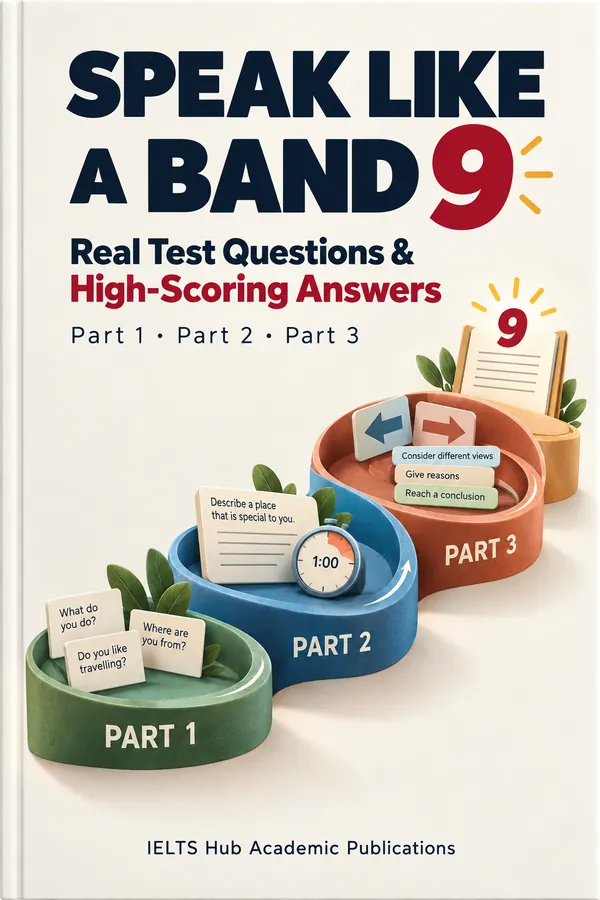
Speak Like a Band 9
Real Test Questions & High-Scoring Answers
₹299$9.99CAD 13.99AUD 14.99£7.99NZD 16.99€8.99AED 39SGD 12.99