Speaking test #008
Part 1 · Interview
4 to 5 minutes. The examiner asks about you and familiar topics.
Can you tell me your full name?
Where are you from?
Do you work or are you a student?
Do you like trying new activities? Why?
I absolutely love trying new activities. I think it is a great way to challenge myself and step out of my comfort zone. It also allows me to discover new interests and passions, and learn new skills. Plus, it makes life more exciting and interesting.
Is there any activities you want to try? Why?
I have always been fascinated by rock climbing, and I would love to try it one day. I think it would be an incredible physical and mental challenge, and it would give me a sense of accomplishment to conquer a difficult climb. Plus, the views from the top would be breathtaking.
What kinds of activities did you try in the past?
I have tried a variety of activities in the past, such as hiking, scuba diving, and painting. I have also taken up martial arts and yoga for fitness and self-defense. I have even tried bungee jumping, which was a thrilling and exhilarating experience.
Would you like to try new activities alone or in a group?
I am open to both options. Sometimes it can be nice to try something alone and focus on my own personal goals, but other times it can be more fun and motivating to try something new with friends or a group. It depends on the activity and my mood at the time.
How often do you read a newspaper?
I read a newspaper on a daily basis. I find it to be an excellent way to stay informed about current events and to stay up-to-date on the latest news and developments.
Why do you think some people like reading newspapers?
I think that some people enjoy reading newspapers because it provides them with an in-depth look at the news and events that are happening in the world. Additionally, newspapers often include a variety of different sections, such as business, sports, and entertainment, which can appeal to a wide range of readers.
Which other sources can people use to find out about the latest news?
There are many other sources that people can use to find out about the latest news, such as online news websites, television news programs, and social media. Additionally, many people also rely on news apps and podcasts to stay informed.
Do you think that it's important to know about news from other countries? Why / why not?
I believe that it is extremely important to know about news from other countries. Being aware of what is happening in the world around us can help us to understand and appreciate different cultures, as well as to make more informed decisions about global issues. Additionally, knowing about news from other countries can also help us to identify potential economic and political trends that may have an impact on our own country.
You will have to talk about the topic for one to two minutes. You have one minute to think about what you are going to say. You can make some notes to help you if you wish.
Describe the age or stage you enjoyed most
You should say:
- What age or stage of your life it was
- What activities you enjoyed during that time
- Who you spent time with
- Why you particularly enjoyed that age or stage
What age or stage of your life it was
I would like to talk about the age of 16, which was a particularly enjoyable stage of my life. At 16, I was in high school and transitioning into young adulthood, full of curiosity and enthusiasm for exploring the world around me. It was a time of self-discovery and growth, where I was eager to try new things and push my boundaries.
What activities you enjoyed during that time
During that stage, I was actively involved in various extracurricular activities such as debating, drama club, and volunteering for community service projects. These activities not only helped me hone my skills but also provided me with a sense of fulfillment and purpose. I enjoyed the thrill of competitions and the camaraderie of working towards a common goal with my peers.
Who you spent time with
I spent a lot of time with my close friends during this age, forming strong bonds and creating lasting memories together. We would often hang out after school, engage in deep conversations about life and our future aspirations, and support each other through the challenges we faced. These friendships were a source of joy and support during that stage of my life.
Why you particularly enjoyed that age or stage
What made this age particularly enjoyable for me was the combination of newfound independence, exciting opportunities, and the support of friends and family. I felt a sense of freedom to explore my interests, make mistakes, and learn from them. It was a time of growth, both personally and academically, that laid the foundation for the person I am today. Overall, the age of 16 holds a special place in my heart as a time of discovery, friendship, and personal development.
- Words
- 264
- Sentences
- 13
- Words per sentence
- 20.3
- Speaking time
- about 2.0 min
Counted at 130 words a minute. The exam gives you one to two minutes.
Part 3 · Discussion
4 to 5 minutes. The examiner asks broader questions linked to the cue card topic.
How do people enjoy different stages of life in different ways?
The enjoyment of different life stages can vary significantly between individuals due to a myriad of factors, including personal circumstances, cultural background, and individual personality traits. For instance, some people may thrive during their teenage years, relishing the sense of freedom and exploration, while others might find those years challenging and prefer the stability that comes with adulthood. Additionally, experiences such as family dynamics and socioeconomic status can greatly influence one's perspective on various life stages. Ultimately, it's fascinating to see how, for some, the joy of life peaks during their golden years when they can reflect on their achievements, while for others, the thrill of new experiences in their twenties might be the highlight. Everyone's journey is unique, and that’s what makes life so rich and diverse!
How much do people usually think their childhood was more fun than their teenage years?
That's a fascinating question! Many people often reminisce about their childhood as a time of pure joy and freedom, largely because they were free from the pressures and responsibilities that usually accompany teenage years. During childhood, the world is largely a playground full of imagination and wonder, where simple pleasures bring immense happiness. In contrast, the teenage years can sometimes be overwhelmed by academic pressures, social dynamics, and identity struggles, which can overshadow the joys of that time. So, while childhood might be seen as more enjoyable for its carefree spirit, it ultimately varies from individual to individual, as some teenagers cherish their newfound independence and experiences.
How does nostalgia affect how people view their favorite age or time in life?
Nostalgia plays a fascinating role in shaping how individuals perceive their favorite age or stage in life. It often acts as a lens through which we view our past experiences, amplifying the positive memories while conveniently glossing over the less favorable aspects. This selective memory can create an almost romanticized view of that period, leading us to believe it was a time of unparalleled joy and freedom. Additionally, nostalgia has a way of fostering a sense of connection to our personal history, making us feel grounded and linked to our roots. In this sense, it not only influences our perceptions but also enriches our identity, helping us appreciate the journey we've taken to reach where we are today.
Why do some people remember certain moments from their favorite age better than others?
That's a fascinating question! I believe the memories we cherish the most often stem from significant experiences that shape our identities. For some individuals, certain ages are filled with milestone events like graduations, first loves, or travel adventures, which create profound emotional connections. Additionally, the brain tends to encode memories more deeply during periods of heightened emotion, making those experiences more vivid and easier to recall later on. It’s also worth noting that people might have different coping mechanisms; some may cling to cherished memories from a specific age as a way to escape or find comfort during challenging times. Ultimately, it’s a unique blend of personal experiences and emotional significance that determines why some memories resonate more strongly than others.
How will future generations see the stages of life differently than current generations do?
That's a fascinating question! I believe future generations will likely have a much more flexible understanding of the stages of life compared to our current perspective. With the rapid advancements in technology and changing societal norms, milestones like education, career, and family might not follow the traditional timeline that we adhere to today. For instance, many young people today feel pressured to follow a set path—graduate, get a job, settle down—but future generations might embrace a more individualized approach, where life stages are seen as more fluid and interconnected. This could lead to a richer and more diverse experience of life, allowing them to explore their passions and redefine what success means on their own terms.
What steps can communities take to improve the experiences of various age groups?
Communities can take several proactive measures to enhance the experiences of various age groups, fostering a sense of belonging and inclusivity. For instance, organizing intergenerational activities can significantly bridge the gap between the young and the elderly, allowing them to share knowledge and experiences in a fun and engaging way. Additionally, creating accessible public spaces with facilities tailored to different age groups—like playgrounds for children and quiet parks for seniors—can encourage more people to come together and interact. Furthermore, local councils could implement community education programs that cater to the specific needs and interests of different age demographics, ensuring that everyone feels valued and involved. Ultimately, these initiatives can cultivate a vibrant community spirit, enriching the lives of all residents.
Go further with the books
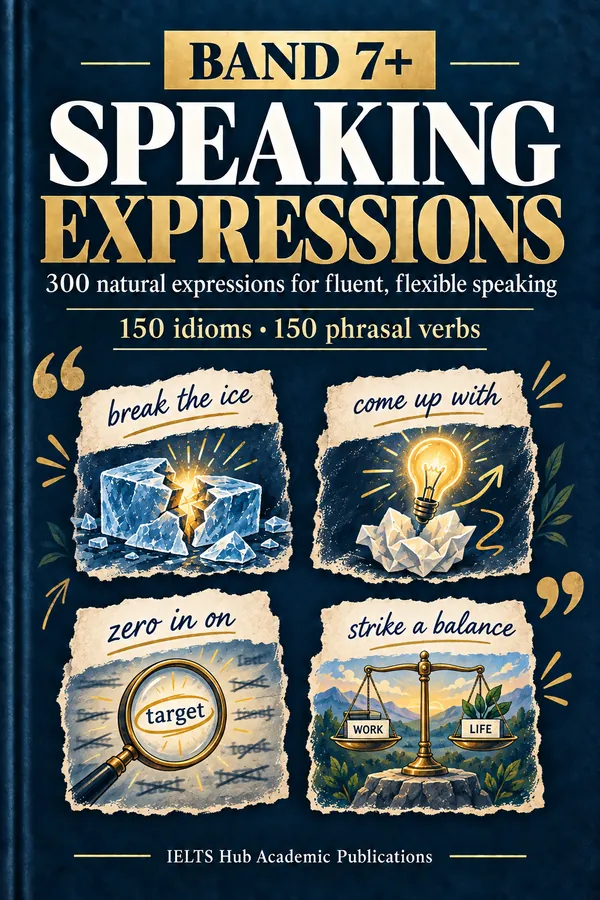
Speaking
Band 7+ Speaking Expressions
300 natural expressions for fluent, flexible speaking
₹199$6.99CAD 8.99AUD 9.99£4.99NZD 10.99€5.99AED 24SGD 8.99

Speaking
Speaking Tips for IELTS
Proven Strategies for Band 8.0+
₹299$9.99CAD 13.99AUD 14.99£7.99NZD 16.99€8.99AED 39SGD 12.99
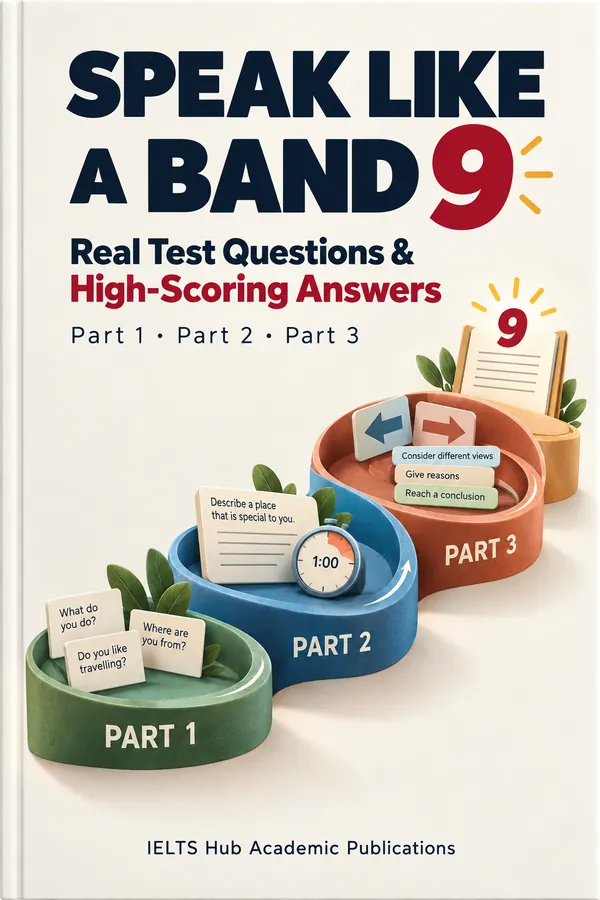
Speaking
Speak Like a Band 9
Real Test Questions & High-Scoring Answers
₹299$9.99CAD 13.99AUD 14.99£7.99NZD 16.99€8.99AED 39SGD 12.99