Speaking test #010
Part 1 · Interview
4 to 5 minutes. The examiner asks about you and familiar topics.
Can you tell me your full name?
Where are you from?
Do you work or are you a student?
Are you good at remembering numbers?
Yes, I consider myself to be quite good at remembering numbers. I have always had a knack for numbers and have always enjoyed working with them. I find that numbers are a great way to organize and make sense of information, and I am naturally drawn to them.
Are numbers used in your work or studies?
Yes, numbers are heavily used in my work and studies. I am currently studying finance, and numbers are essential in understanding financial concepts and making decisions. In my work as a financial analyst, numbers are also central to my role, as I am constantly analyzing data and making projections.
Are there any numbers that have special meaning in your country?
In my country, the number 7 is considered to be lucky. It is often associated with good fortune and is believed to bring good luck. Additionally, the number 8 is also considered to be lucky as it sounds similar to the word for prosperity in our language.
Did you like math when you were younger?
Yes, I have always loved math. I have always found math to be a fascinating subject, and I have always enjoyed solving problems and working with numbers. I was always very good at math in school, and I am now pursuing a career in finance, which is heavily dependent on math. I still find math to be incredibly exciting and enjoyable.
Have you ever been to any old buildings in your city?
Yes, I have been to several old buildings in my city. One of my favorites is a historic church that dates back to the 19th century. The architecture is absolutely stunning and it's always a pleasure to visit.
Do you prefer to live in an old building or a modern house?
Personally, I prefer to live in a modern house. I appreciate the clean lines and open spaces that are characteristic of contemporary design. However, I do understand the appeal of living in an old building with its own history and charm.
Are there any old buildings you want to see in the future?
Yes, I would love to see the ancient pyramids in Egypt. The pyramids are one of the oldest and most incredible architectural achievements in human history, and I think it would be an amazing experience to see them in person.
Do you think preserving old buildings is important?
Definitely! I think preserving old buildings is crucial for maintaining the cultural heritage and identity of a city or country. These buildings often have a rich history and significance that can be lost if they are demolished or allowed to fall into disrepair. Additionally, they can serve as important tourist attractions and bring economic benefits to the local community.
You will have to talk about the topic for one to two minutes. You have one minute to think about what you are going to say. You can make some notes to help you if you wish.
Something that you want to learn more about
You should say:
- What is the topic you want to learn more about
- Why are you interested in this topic
- How do you plan to learn more about it
- What benefits do you think learning more about this topic will bring
The topic I am keen to delve deeper into is the traditional Indian art form of Madhubani painting. This intricate art style originated in the Mithila region of India and is known for its vibrant colors and intricate detailing. The reason I am drawn to this topic is due to my admiration for the rich cultural heritage of India and the desire to explore and preserve traditional art forms.
To satisfy my curiosity about Madhubani painting, I plan to enroll in a workshop conducted by skilled artisans or attend art exhibitions showcasing this art form. Additionally, I aim to explore online resources such as tutorials, documentaries, and literature to gain a comprehensive understanding of the history, techniques, and significance of Madhubani art.
Learning more about Madhubani painting will not only enhance my knowledge of Indian culture but also develop my artistic skills and appreciation for traditional art forms. By immersing myself in this art form, I believe I can contribute to the preservation and promotion of India's rich artistic heritage. Furthermore, exploring Madhubani painting will provide me with a creative outlet and a means to express my cultural identity through art.
- Words
- 191
- Sentences
- 8
- Words per sentence
- 23.9
- Speaking time
- about 1.5 min
Counted at 130 words a minute. The exam gives you one to two minutes.
Part 3 · Discussion
4 to 5 minutes. The examiner asks broader questions linked to the cue card topic.
How does the interest in learning new topics change with age?
The desire to learn about new subjects indeed varies significantly across different age groups. Younger individuals, particularly children and teenagers, are often quite curious by nature, eager to explore the world around them. This innate curiosity often drives them to absorb information rapidly, as they are usually exposed to a variety of subjects in school. On the other hand, adults may exhibit a more targeted approach to learning; they often pursue knowledge that aligns with their personal or professional goals, which can lead to a deep and meaningful engagement with specific topics. Interestingly, older adults can also have a strong desire to learn, but it often stems from a need to stay connected to the world or to pursue long-held passions that they didn’t have time for earlier in life. Overall, while the motivation and methods may differ, the thirst for knowledge can be found at every stage of life.
What are some reasons people may want to know more about a specific subject?
People often have a variety of motivations for wanting to delve deeper into a specific topic. For many, it stems from a genuine curiosity or a desire to satisfy their intellectual curiosity. Others may seek to enhance their professional skills, especially in a rapidly evolving job market where staying updated is crucial. Additionally, some individuals are driven by personal experiences or challenges that ignite a passion for understanding a particular subject more comprehensively. Ultimately, the quest for knowledge can be incredibly rewarding, opening doors to new perspectives and opportunities in both personal and professional realms.
How can learning about a specific topic help a person grow?
Pursuing knowledge in a specific area can significantly enhance personal development in various ways. Firstly, it fosters a sense of broad intellectual curiosity, as diving deep into a subject often leads to new interests and connections with other fields. Moreover, mastering a particular discipline can boost confidence, enabling individuals to articulate their ideas and engage in meaningful discussions. This journey of learning also cultivates critical thinking skills, allowing one to analyze situations more effectively and make informed decisions. Ultimately, the pursuit of knowledge not only enriches personal growth but also enhances one's ability to contribute positively to society.
Why do you think some people want to learn more than others?
That's a fascinating question! I believe that the innate curiosity of an individual plays a crucial role in their eagerness to learn. Some people are naturally more open-minded and possess a genuine desire to explore new ideas, which can drive them to seek knowledge actively. Additionally, external factors such as their environment, educational opportunities, and encouragement from mentors or family can significantly influence one's attitude towards learning. For instance, someone who grows up in a stimulating environment with access to books and engaging discussions is likely to develop a lifelong love for learning. Ultimately, it’s a combination of personality traits and external influences that can make some individuals more inclined to pursue knowledge than others.
How could education change in the next few years based on what people are interested in learning?
The landscape of education is poised for a significant transformation in the coming years, largely driven by the evolving interests of learners. With the rise of technology and the digital age, we’re likely to see an increased emphasis on interdisciplinary studies, where students can explore subjects that blend traditional boundaries, such as combining art with technology or science with ethics. Additionally, the growing awareness of global issues like climate change will probably inspire more students to pursue studies in sustainability and environmental sciences. Moreover, as personalized learning becomes more prevalent, we might observe a shift towards tailored educational experiences, allowing individuals to focus on their passions rather than a standardized curriculum. This could lead to a more engaged and enthusiastic student body, as learners delve into subjects they genuinely care about. Ultimately, these changes could create a more dynamic and responsive educational environment that aligns better with the interests of future generations.
What methods can be used to promote continuous learning in our community?
To foster a culture of lifelong learning, I believe several strategies could be highly effective. First and foremost, integrating flexible learning opportunities into the workforce is crucial; companies should offer courses that employees can take at their own pace, which can greatly enhance their skills while accommodating their busy schedules. Additionally, public libraries and community centers could host regular workshops and seminars on various topics, making education accessible and engaging for all age groups. Furthermore, promoting a positive mindset towards failure and curiosity can encourage individuals to pursue learning for the joy of it, rather than just for career advancement. Lastly, leveraging technology by providing online resources and platforms can help people learn anytime and anywhere, which is particularly appealing in today's fast-paced world. Overall, it’s all about creating an environment where learning is valued and readily available!
Go further with the books
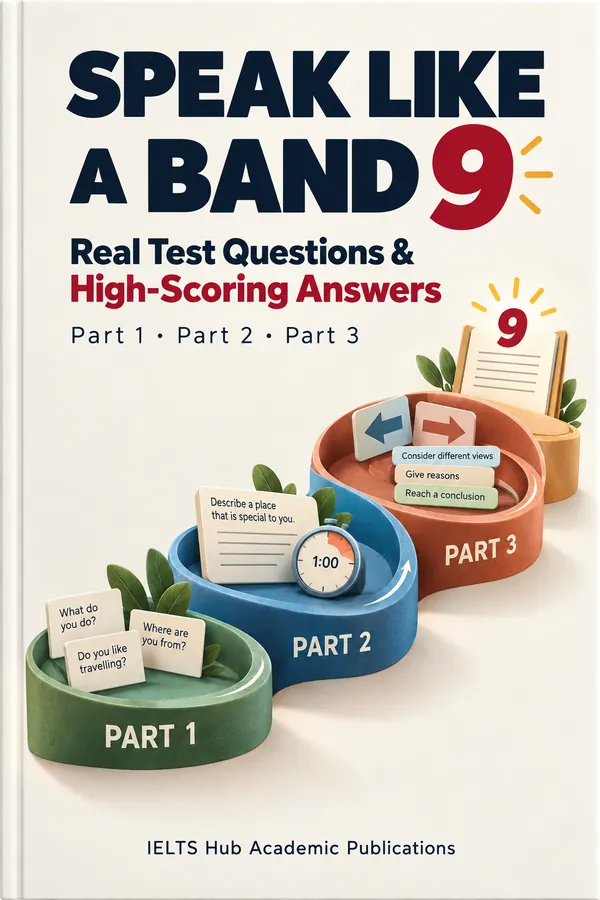
Speaking
Speak Like a Band 9
Real Test Questions & High-Scoring Answers
₹299$9.99CAD 13.99AUD 14.99£7.99NZD 16.99€8.99AED 39SGD 12.99

Speaking
Band 7+ Speaking Expressions
300 natural expressions for fluent, flexible speaking
₹199$6.99CAD 8.99AUD 9.99£4.99NZD 10.99€5.99AED 24SGD 8.99
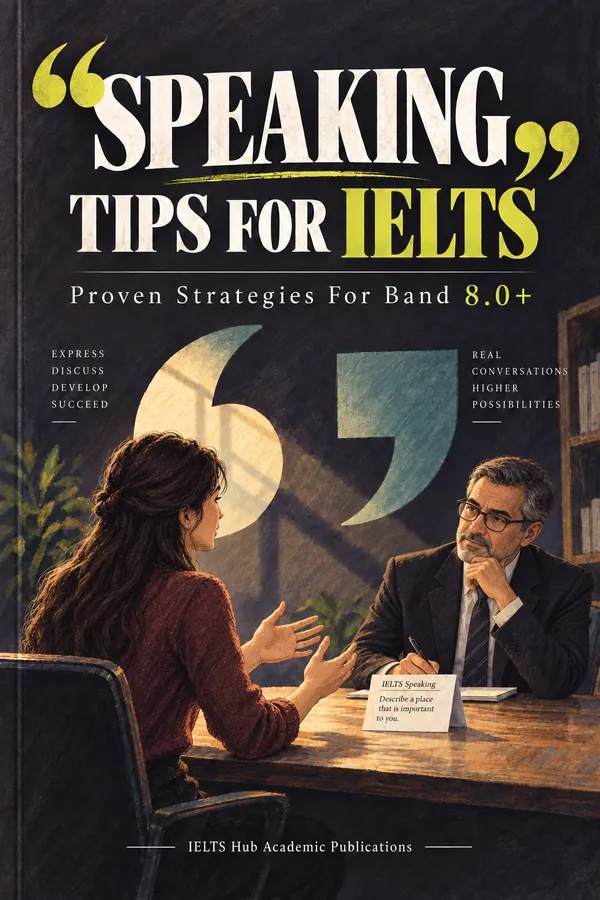
Speaking
Speaking Tips for IELTS
Proven Strategies for Band 8.0+
₹299$9.99CAD 13.99AUD 14.99£7.99NZD 16.99€8.99AED 39SGD 12.99