Speaking test #019
Part 1 · Interview
4 to 5 minutes. The examiner asks about you and familiar topics.
Can you tell me your full name?
Where are you from?
Do you work or are you a student?
Do you Think it’s Important to be on time?
Absolutely, being on time is crucial in both personal and professional settings. It shows respect for others' time and demonstrates responsibility and punctuality. Being late can also have negative consequences, such as missing out on important opportunities or causing inconvenience for others.
How do you Feel When others are Late?
When others are late, I can feel quite frustrated and sometimes even disrespected. It can disrupt the flow of a planned event or meeting and cause delays and inconvenience for everyone involved. However, I understand that unexpected circumstances can happen, so I try to remain understanding and patient.
How do you Feel When you are Late?
When I am late, I feel quite guilty and apologetic. I understand the inconvenience it can cause for others and I always make sure to communicate any delays or changes in plans. I also try to take steps to ensure that I am on time in the future, such as planning ahead and leaving extra early.
Do you Wear a Watch?
Yes, I do wear a watch. I find it to be a useful tool for keeping track of time and ensuring that I am on time for appointments and meetings. It also eliminates the need to constantly check my phone for the time, which can be a distraction.
Did you do puzzles in your childhood?
Oh, absolutely! I have fond memories of spending hours upon hours completing jigsaw puzzles with my family. It was always such a fun and challenging activity for us to do together.
Do you like doing word puzzles or number puzzles? Which is more difficult for you?
I love both types of puzzles, but I would have to say that word puzzles are my favorite. I find them to be incredibly stimulating for my mind and they always make me feel accomplished when I complete them. However, I find that number puzzles can be quite challenging for me as I'm not as strong in math as I am in language.
When do you do puzzles, during your trip or when you feel bored?
I try to do puzzles whenever I have some free time, whether it be during a trip or when I'm feeling bored. I find that puzzles are a great way to keep my mind active and occupied, and they're also a great stress reliever for me.
Do you think it is good for old people to do puzzles?
Absolutely! I think that puzzles are a wonderful activity for older adults as they help to keep the mind active and sharp. They can also help to improve memory and cognitive function, which can be particularly beneficial for older adults. Additionally, puzzles can be a great way for older adults to socialize and bond with others, as they can be completed in groups or with family members.
You will have to talk about the topic for one to two minutes. You have one minute to think about what you are going to say. You can make some notes to help you if you wish.
Describe a place near water
You should say:
- What is the location of the place?
- How often do you visit this place?
- What activities do you usually do there?
- Why is this place special to you?
What is the location of the place?
I would like to talk about the picturesque Varkala Beach in Kerala, South India. Situated along the Arabian Sea, this stunning beach is known for its golden sands, dramatic cliffs, and clear blue waters. The location of Varkala Beach is truly breathtaking, with the cliffs providing a perfect vantage point to admire the beauty of the sea stretching out endlessly.
How often do you visit this place?
I make it a point to visit Varkala Beach at least once every couple of months. Whenever I feel the need to unwind and reconnect with nature, I head to this tranquil spot. The calming sound of the waves crashing against the shore and the sight of the sun setting over the horizon never fail to rejuvenate my senses.
What activities do you usually do there?
During my visits to Varkala Beach, I often engage in various activities such as sunbathing, swimming, and beachcombing. I particularly enjoy taking long walks along the shore, feeling the soft sand beneath my feet and breathing in the fresh sea air. Sometimes, I also indulge in yoga sessions on the beach, as the peaceful surroundings create the perfect ambiance for relaxation and meditation.
Why is this place special to you?
Varkala Beach holds a special place in my heart for several reasons. The serene atmosphere of the beach allows me to escape from the hustle and bustle of daily life, providing me with a much-needed respite. The beauty of the surroundings never fails to inspire me, and I always leave feeling refreshed and renewed. The memories I have created at Varkala Beach are truly precious to me, making it a place that I hold dear and look forward to visiting time and time again.
- Words
- 266
- Sentences
- 13
- Words per sentence
- 20.5
- Speaking time
- about 2.0 min
Counted at 130 words a minute. The exam gives you one to two minutes.
Part 3 · Discussion
4 to 5 minutes. The examiner asks broader questions linked to the cue card topic.
What are the differences in fun activities for visitors between a lakeside place and a coastal area?
That's a fascinating question! A lakeside location typically offers a more tranquil atmosphere, which is perfect for activities like boating or fishing, allowing visitors to unwind and connect with nature. In contrast, coastal areas tend to provide a wider array of water sports, such as surfing and snorkeling, which cater to those looking for a more adrenaline-fueled experience. Additionally, beaches often feature vibrant social scenes with beachfront cafes and events, while lakesides might focus more on peaceful retreats like picnicking or hiking along scenic trails. Ultimately, the choice between the two really depends on what kind of experience visitors are after—whether it's the serenity of a lake or the vibrant energy of the coast!
How can being near water help people feel more relaxed than being in a crowded city?
Being near water can have a wonderfully calming effect on people, especially when compared to the hustle and bustle of a busy urban environment. The sound of gentle waves lapping against the shore or the sight of a tranquil lake can create a soothing atmosphere that encourages relaxation. Additionally, water offers a sense of connection to nature, which is often lacking in concrete jungles, making it easier to unwind and escape the stresses of daily life. The fresh air near water bodies also contributes to a feeling of rejuvenation, as it often feels more invigorating than the stale air of a crowded city. Ultimately, the serene ambiance of water can promote mindfulness, allowing individuals to be present in the moment and truly enjoy their surroundings.
How do bodies of water affect the health and happiness of communities and the people living in them?
Bodies of water play an absolutely vital role in enhancing the overall well-being of communities and their residents. Firstly, they serve as a crucial source of freshwater, which is essential for drinking, agriculture, and sanitation. Moreover, these water bodies often foster a sense of community by providing spaces for recreation and social interaction, such as parks and lakeside activities. They can also act as natural habitats, supporting biodiversity, which is increasingly important in our rapidly changing environment. Lastly, the aesthetic appeal of lakes, rivers, and oceans can significantly improve mental health, offering a serene escape from the hustle and bustle of daily life.
Why do you think lots of people like to go to places by water for vacations or fun activities?
I think there are several compelling reasons why people are naturally drawn to places near water for vacations or leisure activities. First and foremost, water bodies like beaches, lakes, and rivers often provide a stunning backdrop that creates a sense of tranquility and relaxation. The sound of waves crashing or water gently rippling can be incredibly soothing, allowing people to escape the hustle and bustle of daily life. Additionally, water-based activities, such as swimming or boating, are not only fun but also promote an active lifestyle, which can be a huge draw for many. Finally, these locations tend to foster a sense of community, as families and friends often gather to enjoy shared experiences, making memories that last a lifetime.
How do you think climate change could affect places near rivers and lakes in the future?
Climate change is poised to have a profound impact on areas near rivers and lakes, particularly through the alteration of weather patterns and increased frequency of extreme weather events. For instance, we could see more intense flooding due to heavy rainfall, which could devastate communities and disrupt local ecosystems. Additionally, rising temperatures might lead to reduced water levels, affecting both aquatic life and the livelihoods of those who depend on fishing or agriculture. It’s also worth noting that these changes could exacerbate existing environmental issues, such as pollution, making it even more critical for these areas to implement sustainable practices. In short, the ramifications of climate change on these regions could be both immediate and long-lasting, urging us to take action now.
What steps can we take to protect natural water bodies while still allowing for tourism and development?
To ensure that natural water bodies are preserved while accommodating tourism and development, a multifaceted approach is essential. Firstly, implementing stringent environmental regulations can significantly limit the impact of construction and recreational activities on these fragile ecosystems. For instance, establishing protected areas can help maintain biodiversity while still allowing for controlled tourism. Additionally, promoting sustainable tourism practices is crucial; this can involve educating visitors about the importance of respecting natural habitats and encouraging eco-friendly activities, such as kayaking or hiking, instead of more invasive options. Finally, engaging local communities in conservation efforts not only fosters a sense of responsibility but also ensures that development aligns with the preservation of their natural heritage. Overall, striking a balance between enjoyment and conservation can lead to a win-win scenario for both nature and tourism.
Go further with the books

Speaking
Speaking Tips for IELTS
Proven Strategies for Band 8.0+
₹299$9.99CAD 13.99AUD 14.99£7.99NZD 16.99€8.99AED 39SGD 12.99

Speaking
Speak Like a Band 9
Real Test Questions & High-Scoring Answers
₹299$9.99CAD 13.99AUD 14.99£7.99NZD 16.99€8.99AED 39SGD 12.99
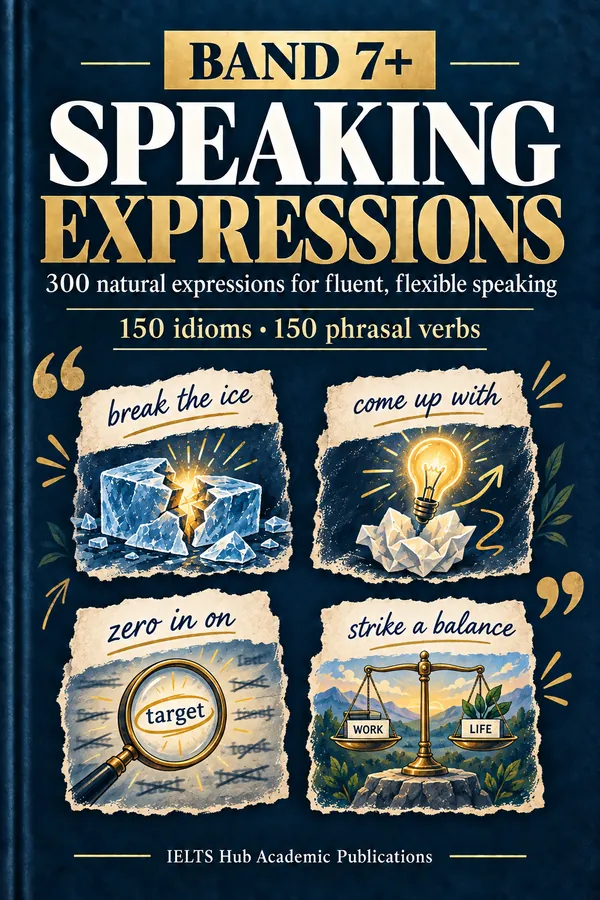
Speaking
Band 7+ Speaking Expressions
300 natural expressions for fluent, flexible speaking
₹199$6.99CAD 8.99AUD 9.99£4.99NZD 10.99€5.99AED 24SGD 8.99