Speaking test #026
Part 1 · Interview
4 to 5 minutes. The examiner asks about you and familiar topics.
Can you tell me your full name?
Where are you from?
Do you work or are you a student?
What are the main seasons in your country?
In my country, we have four main seasons: spring, summer, fall, and winter. Each season brings its own unique weather and characteristics, making for a diverse and dynamic climate.
Which is your favourite?
My favourite season would have to be fall. The cool temperatures and changing leaves make for a beautiful and peaceful atmosphere. Plus, it's the perfect weather for outdoor activities such as hiking and apple picking.
What is your favourite kind of weather?
I would have to say that my favourite kind of weather is sunny and mild. Not too hot or too cold, with just the right amount of sunshine to make the day feel bright and warm.
What problems does the weather cause in your country?
The weather can cause a variety of problems in my country. For example, heavy rains can lead to flooding and landslides in some areas. In the winter, heavy snowfall can make it difficult to travel and cause power outages. Additionally, heat waves can be a major health concern during the summer months. Overall, the weather can be unpredictable and can have a significant impact on daily life.
Did you share anything with others recently?
Yes, I recently shared my knowledge and experience with a group of students who were preparing for the IELTS exam. I provided them with tips and strategies to help them succeed in the test.
Did your parents teach you to share when you were a child?
Yes, my parents taught me the importance of sharing from a very young age. They instilled in me the value of generosity and kindness, and encouraged me to share my toys, clothes, and other possessions with my siblings and friends.
What things do you like to share with others?
I like to share my knowledge and skills with others, especially in areas where I have expertise. For example, I enjoy sharing my language skills with people who are learning English, and I also enjoy sharing my cooking skills with friends and family.
What kinds of things would you never share?
I would never share personal information or secrets with others without their permission. I also would never share something that could potentially harm or offend someone else, such as a rude or insensitive comment. Additionally, I would never share something that is confidential or proprietary, such as business secrets or sensitive information.
You will have to talk about the topic for one to two minutes. You have one minute to think about what you are going to say. You can make some notes to help you if you wish.
Describe a historical figure
You should say:
- Who the historical figure is
- What contributions or achievements they are known for
- How they impacted the course of history
- Why this historical figure is remembered or celebrated
Who the historical figure is
The historical figure I would like to talk about is Mahatma Gandhi, who is widely known as the Father of the Nation in India. Gandhi was a prominent leader of the Indian independence movement against British colonial rule in the early to mid-20th century. He is renowned for his philosophy of nonviolent resistance, which he termed as Satyagraha, meaning the force of truth.
What contributions or achievements they are known for
Gandhi's most significant contribution lies in leading India to independence through nonviolent civil disobedience, inspiring movements for civil rights and freedom across the world. His principles of truth, nonviolence, and peaceful protest have had a profound impact on the course of history, influencing many other leaders such as Martin Luther King Jr. and Nelson Mandela. Gandhi's methods of peaceful resistance not only brought freedom to India but also set a powerful example for fighting injustice globally.
How they impacted the course of history
Mahatma Gandhi is remembered and celebrated for his unwavering commitment to justice, equality, and nonviolence. His influence extended far beyond India, leaving a lasting legacy that continues to inspire people to strive for positive change through peaceful means. Gandhi's birthday, October 2nd, is celebrated as the International Day of Non-Violence, highlighting his enduring impact on the world. His teachings on tolerance, harmony, and human rights are revered worldwide and serve as a guiding light for those advocating for social justice and equality.
Why this historical figure is remembered or celebrated
In conclusion, Mahatma Gandhi's role as a historical figure is unmatched, as he not only led a nation to freedom but also showed the world the power of peaceful resistance and moral leadership. His legacy lives on through his teachings and continues to influence generations of activists and leaders striving for a better world. Gandhi's life and work serve as a timeless reminder of the potential for positive change through compassion, integrity, and the pursuit of truth.
- Words
- 298
- Sentences
- 14
- Words per sentence
- 21.3
- Speaking time
- about 2.3 min
Counted at 130 words a minute. The exam gives you one to two minutes.
Part 3 · Discussion
4 to 5 minutes. The examiner asks broader questions linked to the cue card topic.
How do you think important people from different cultures have impacted the world in different ways?
Historical figures from various cultures have left an indelible mark on our world, and their influences can be both profound and unique. For instance, leaders like Mahatma Gandhi and Martin Luther King Jr. championed nonviolent resistance, inspiring movements for civil rights and social justice across the globe. Meanwhile, figures like Confucius emphasized the importance of ethics and morality in governance, which has shaped the cultural and political landscapes of Eastern societies for centuries. Each of these figures reflects the values and beliefs of their respective cultures, demonstrating that their approaches to change can vary significantly. Ultimately, these diverse influences enrich our understanding of history and encourage us to appreciate the interconnectedness of our global heritage.
How much do you think different groups in society see the impact of historical figures in different ways?
The impact of historical figures is undoubtedly viewed through a multitude of lenses, and I believe this divergence is quite significant. Different groups in society often interpret the actions and legacies of these figures based on their own cultural, social, or political contexts. For instance, a leader celebrated for their contributions to national independence may be seen as a hero by one group, while another group might criticize their methods or the consequences of their actions. This subjective interpretation can lead to heated debates and even polarizing opinions about historical narratives. Ultimately, the way we perceive these figures is intricately linked to our own identities and experiences, making the discourse around them both rich and complex.
How important do you think historical figures are in influencing today's society?
The role of historical figures in shaping modern society is absolutely paramount. These individuals, whether they are leaders, thinkers, or activists, have often acted as catalysts for significant change, influencing our values, beliefs, and systems. For example, figures like Nelson Mandela and Mahatma Gandhi not only fought against oppression but also inspired movements for social justice and equality across the globe. Their legacies remind us of the power of resilience and the importance of standing up for what is right. Ultimately, understanding their contributions allows us to navigate contemporary issues with a more informed perspective, reinforcing the idea that history is not just a collection of dates, but a rich tapestry that informs our future.
Why do you think people are often motivated by what historical figures have done and accomplished?
People are often inspired by historical figures because these individuals represent the epitome of human potential and resilience. Their groundbreaking achievements and the challenges they overcame resonate with our own struggles and aspirations. For instance, figures like Martin Luther King Jr. or Marie Curie not only made significant contributions to society but also demonstrated a profound commitment to their causes. This connection encourages individuals to strive for greatness and to believe that they can make a difference, no matter their circumstances. Additionally, the stories of these figures often serve as powerful reminders of the values of perseverance and dedication, inspiring us to pursue our own goals with passion and determination.
What differences do you think future generations will have in their views of historical figures?
I think future generations will have a more nuanced understanding of historical figures, largely due to the accessibility of information. With the advent of technology, people can now delve into a wide array of perspectives, which allows them to see both the achievements and the flaws of these figures more clearly. This could lead to a shift away from the traditional hero-worship to a more balanced view, where individuals are recognized for their contributions but also held accountable for their shortcomings. Moreover, as society evolves, values change, and what was once celebrated may be reconsidered, leading to a more critical examination of legacies. Overall, I believe this shift will foster a deeper appreciation for the complexities of human nature.
What steps can be taken to make sure that the achievements of lesser-known historical figures are acknowledged and honored?
To ensure that the contributions of lesser-known historical figures are recognized and celebrated, a multi-faceted approach can be incredibly effective. Firstly, educational institutions could incorporate more diverse narratives into their curricula, highlighting the achievements of these individuals alongside the more famous figures. Additionally, local governments could create public memorials or host annual events that commemorate these historical figures, fostering a deeper appreciation within the community. Moreover, leveraging social media platforms can play a significant role in bringing attention to their stories; campaigns could be designed to share their contributions through engaging content. Finally, collaborating with historians and cultural organizations can help produce documentaries or podcasts that delve into their lives, ensuring that their legacies are preserved and appreciated by future generations. Overall, a combination of education, community involvement, and modern technology can truly help shine a light on these unsung heroes.
Go further with the books
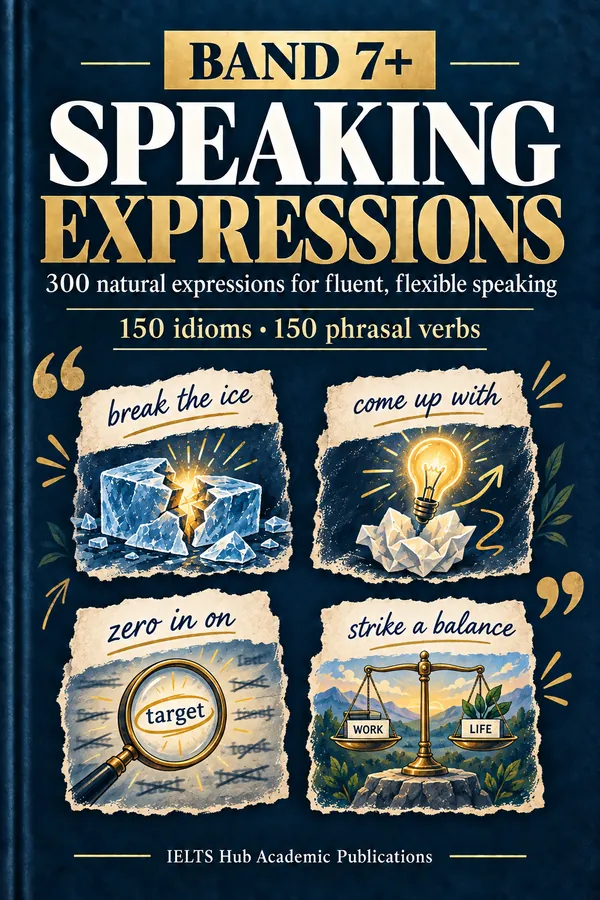
Speaking
Band 7+ Speaking Expressions
300 natural expressions for fluent, flexible speaking
₹199$6.99CAD 8.99AUD 9.99£4.99NZD 10.99€5.99AED 24SGD 8.99

Speaking
Speaking Tips for IELTS
Proven Strategies for Band 8.0+
₹299$9.99CAD 13.99AUD 14.99£7.99NZD 16.99€8.99AED 39SGD 12.99

Speaking
Speak Like a Band 9
Real Test Questions & High-Scoring Answers
₹299$9.99CAD 13.99AUD 14.99£7.99NZD 16.99€8.99AED 39SGD 12.99