Speaking test #040
Part 1 · Interview
4 to 5 minutes. The examiner asks about you and familiar topics.
Can you tell me your full name?
Where are you from?
Do you work or are you a student?
Do you often read books? When?
Yes, I'm an avid reader and I try to make time for reading every day, whether it's before bed or during my lunch break at work.
Are your reading habits now different than before?
Yes, they definitely have changed over the years. When I was younger, I used to only read fiction, but now I enjoy a wider range of genres, including non-fiction, biographies, and even self-help books.
Have you ever read a novel that has been adapted into a film?
Yes, many times actually. One of my favorite examples is the Harry Potter series - I read all of the books before seeing any of the movies, and it was such a different experience watching the films knowing the plot and characters so well.
Which do you prefer, reading books or watching movies?
It's tough to choose just one, because I really enjoy both activities for different reasons. Reading allows me to escape into different worlds and really immerse myself in the story, whereas watching movies is a great way to relax and unwind after a long day. Ultimately, I think it just depends on my mood and how much time I have available.
Do you have any special talent?
Yes, I do have a special talent. I am a proficient pianist and have been playing the piano for over a decade. I have a passion for classical music and enjoy playing pieces by composers such as Beethoven and Chopin.
Did you learn it when you were young or recently?
I started learning the piano when I was quite young, around the age of six. I have been taking lessons consistently ever since and have continued to improve my skills and technique over the years.
Do you think your talent can be useful for your future work?
I believe that my talent for playing the piano can be useful for my future work in several ways. For example, it could be beneficial in the field of music education, as I could use my skills to teach others. Additionally, my ability to play the piano could be an asset in the entertainment industry, as I could perform in concerts or events.
Do you think anyone in your family has the same talent?
Yes, actually, my older sister is also a pianist and has been playing for even longer than I have. We often play together and it's always a joy to perform with her. Additionally, my cousin is a professional musician and plays several instruments, including the piano. So, it seems that the talent for music runs in the family.
You will have to talk about the topic for one to two minutes. You have one minute to think about what you are going to say. You can make some notes to help you if you wish.
Describe an important event in your life
You should say:
- What the event was
- When it happened
- Why it was important to you
- How it impacted your life
The most significant event in my life was undoubtedly my graduation day. It took place in May 2016, marking the culmination of years of hard work and dedication towards earning my bachelor's degree in Computer Science. This event was crucial to me as it symbolized a major milestone in my academic journey and represented the fulfillment of my long-cherished dream of attaining a higher education degree.
The impact of my graduation day reverberated through various aspects of my life. Firstly, it boosted my self-confidence and instilled in me a sense of accomplishment, knowing that I had successfully completed a rigorous academic program. Secondly, it opened up new opportunities for my career advancement, as having a degree in Computer Science greatly enhanced my job prospects in the competitive tech industry. Additionally, the event brought immense joy and pride to my family, who had supported and encouraged me throughout my educational endeavors.
Moreover, my graduation day signified a transition from student life to the professional world, prompting me to apply the knowledge and skills acquired during my studies to real-world challenges. It motivated me to set higher goals for myself and strive for continuous learning and growth in my chosen field. Overall, the event served as a turning point in my life, shaping my aspirations, values, and ambitions for the future. It remains etched in my memory as a moment of immense personal significance and achievement.
- Words
- 234
- Sentences
- 11
- Words per sentence
- 21.3
- Speaking time
- about 1.8 min
Counted at 130 words a minute. The exam gives you one to two minutes.
Part 3 · Discussion
4 to 5 minutes. The examiner asks broader questions linked to the cue card topic.
How can the meaning of big events be different for different people?
The significance of important events can vary dramatically from one individual to another, largely due to personal experiences and values. For instance, a wedding might be a momentous occasion for someone who places a high value on family and relationships, while another person might view it as just another social gathering. Similarly, a graduation ceremony could evoke feelings of pride and achievement for one person, while another might see it merely as a stepping stone in a lifelong journey of education. These differing perspectives highlight how our unique backgrounds and circumstances shape our emotional responses, making every event resonate differently within us. Ultimately, it’s this subjective interpretation that adds depth to human experiences and interactions.
How can people have different views on how important life events affect them?
Individuals can perceive the impact of significant life events quite differently, often influenced by their personal experiences, values, and emotional resilience. For example, one person might view a job loss as a devastating setback, while another may see it as an exciting opportunity for new beginnings. This variation in perspective can also stem from cultural backgrounds, where certain communities might emphasize the importance of perseverance, while others may focus on communal support during tough times. Moreover, the timing of the event in one’s life can play a crucial role; a young adult facing a breakup might interpret it as a chance for growth, while someone older might associate it with a sense of loss. Ultimately, these differing viewpoints highlight the complexity of human emotions and the subjective nature of our experiences.
How do major events influence a person's character and future choices?
Important events can be incredibly transformative in shaping a person's character and future decisions. For instance, experiencing a significant challenge, like a major setback or loss, often leads individuals to develop resilience and a stronger sense of self. These experiences can serve as catalysts for personal growth, influencing how one approaches future challenges and making them more adaptable. Moreover, positive events, such as achieving a long-desired goal, can instill confidence and drive, pushing individuals to pursue even loftier aspirations. Ultimately, each important event acts like a building block, contributing to the intricate mosaic of our identities and guiding our choices moving forward.
Why do you think some events stick in people's minds as important while others are forgotten?
That's a fascinating question! I believe that life-changing events often have a profound emotional impact on us, which makes them more memorable. When we experience something that triggers intense feelings—be it joy, fear, or sadness—our brains are wired to prioritize those memories, almost like a protective mechanism. Additionally, significant milestones, such as graduations or the birth of a child, tend to be surrounded by social and cultural significance, which further cements them in our minds. On the other hand, more mundane experiences lack that emotional weight, causing them to fade into the background of our memory. Ultimately, it's the interplay of emotion and significance that shapes our recollection of events in such a compelling way.
How can the way we view key life events change as we get more experience?
That's a fascinating question! As individuals grow and accumulate experiences, their perception of significant life events often shifts dramatically. For instance, what might seem like a catastrophic failure in youth can later be viewed as a crucial learning opportunity, contributing to personal growth. This evolution in perspective can be attributed to a broader understanding of life's complexities and the ability to reflect critically on past experiences. Moreover, as we encounter a range of challenges and triumphs, we develop a more nuanced outlook, allowing us to appreciate the intricacies of our journeys. Ultimately, this transformation can lead to a deeper sense of gratitude for both the highs and lows we've faced.
What can people do to get the best experience from important events in their lives?
To truly make the most out of significant events in our lives, individuals can adopt a few key strategies. Firstly, being present and fully engaged is crucial; this means putting away distractions and savoring the moment. Secondly, documenting these experiences—whether through journaling or photography—can enhance the emotional resonance of the occasion and allow us to reflect on it later. Additionally, sharing these moments with loved ones can amplify the joy, creating lasting memories together. Finally, setting personal goals or intentions for these events can help individuals gain a deeper understanding of their significance and ensure they derive maximum value from the experience.
Go further with the books
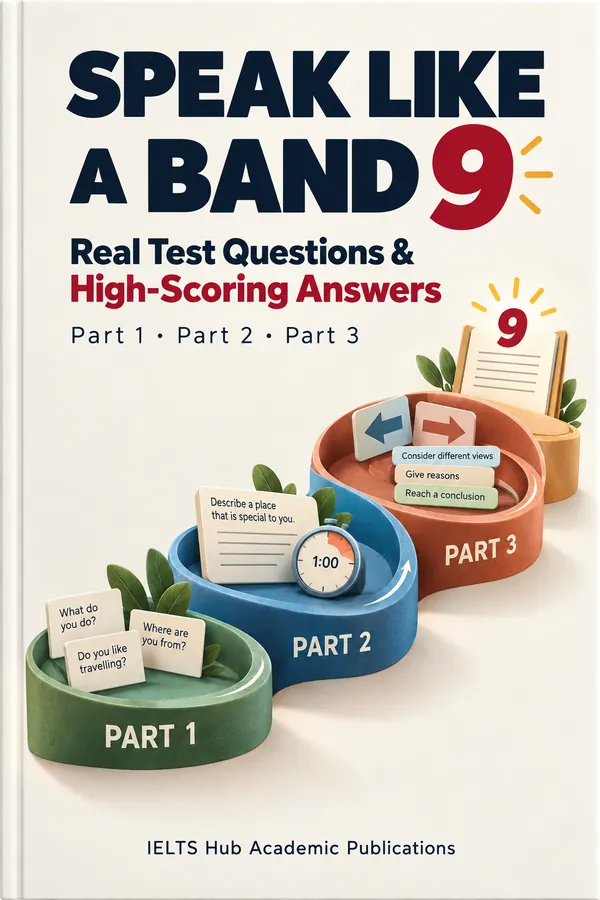
Speaking
Speak Like a Band 9
Real Test Questions & High-Scoring Answers
₹299$9.99CAD 13.99AUD 14.99£7.99NZD 16.99€8.99AED 39SGD 12.99
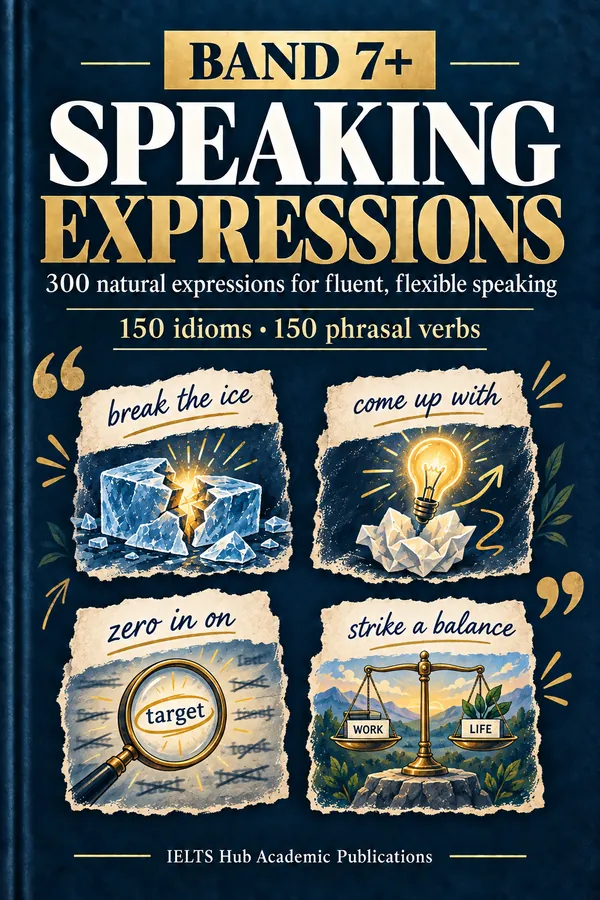
Speaking
Band 7+ Speaking Expressions
300 natural expressions for fluent, flexible speaking
₹199$6.99CAD 8.99AUD 9.99£4.99NZD 10.99€5.99AED 24SGD 8.99
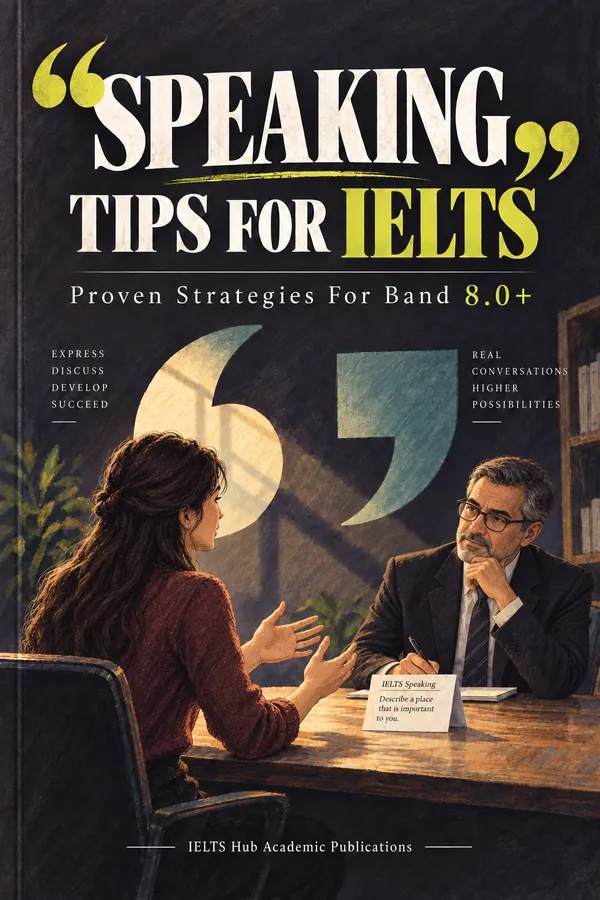
Speaking
Speaking Tips for IELTS
Proven Strategies for Band 8.0+
₹299$9.99CAD 13.99AUD 14.99£7.99NZD 16.99€8.99AED 39SGD 12.99