Speaking test #052
Part 1 · Interview
4 to 5 minutes. The examiner asks about you and familiar topics.
Can you tell me your full name?
Where are you from?
Do you work or are you a student?
Do you use a wallet/purse?
Yes, I do use a wallet. I find it to be a convenient and practical way to keep all of my cards and cash organized.
Have you ever lost a wallet/purse?
Thankfully, I haven't lost a wallet or purse before. I am quite meticulous about keeping track of my belongings, so I always make sure to check if I have my wallet on me before I leave the house.
Have you ever sent a wallet/purse to someone as a gift?
No, I haven't. I prefer to give gifts that are more personal and thoughtful, rather than something as practical as a wallet or purse.
Do most of your friends use a wallet/purse?
I would say that most of my friends do use a wallet or purse. It's a common accessory that is used to keep important items organized and easily accessible. However, I do have a few friends who prefer to use digital wallets or carry just a minimal amount of cash on them.
Do you wear a watch?
Yes, I do wear a watch. I find it to be a practical and stylish accessory that allows me to keep track of time throughout the day. Q
Have you ever gotten a watch as a gift?
Yes, I have. I remember receiving a beautiful watch as a gift from my parents on my graduation day. It was a precious and meaningful present that I still wear to this day. Q
Why do some people wear expensive watches?
Some people wear expensive watches as a symbol of status or wealth. It could also be a sign of luxury and exclusivity, as well as a form of personal expression. Additionally, expensive watches often possess intricate craftsmanship and superior quality that sets them apart from more affordable watches. Q
Do you think it is important to wear a watch?
Personally, I do think it is important to wear a watch. It serves as a useful tool for keeping track of time, which is essential in our daily lives. Additionally, a watch can also be a fashion statement, and can reflect one's personal style and preferences. However, it is ultimately a matter of personal preference and might not be as important for others.
You will have to talk about the topic for one to two minutes. You have one minute to think about what you are going to say. You can make some notes to help you if you wish.
Describe a thing / subject that you want to learn more about
You should say:
- What is the thing/subject
- Why you want to learn more about it
- How you plan to learn more about it
- What you hope to achieve by learning more about it
What is the thing/subject
The thing or subject that I am eager to delve deeper into is sustainable agriculture. This topic has piqued my interest due to the pressing global issue of food security and environmental sustainability. As the world population continues to grow, the traditional methods of agriculture are no longer sufficient to meet the increasing demand for food. Sustainable agriculture offers a promising solution by promoting practices that are environmentally friendly, economically viable, and socially responsible.
Why you want to learn more about it
I am keen to learn more about sustainable agriculture because I believe that it holds the key to addressing the challenges our planet is facing today. By understanding the principles and techniques of sustainable agriculture, I hope to contribute towards creating a more resilient and equitable food system. Moreover, I am intrigued by the innovative technologies and practices that are being developed in this field, such as precision farming, agroforestry, and organic farming.
How you plan to learn more about it
To deepen my knowledge on sustainable agriculture, I plan to enroll in online courses, attend workshops and seminars, and engage with experts in the field. I also aim to visit sustainable farms and agricultural research centers to witness firsthand the implementation of sustainable practices. By immersing myself in this subject, I aspire to gain a holistic understanding of the challenges and opportunities in sustainable agriculture and explore ways to apply this knowledge in real-world settings.
What you hope to achieve by learning more about it
By learning more about sustainable agriculture, I hope to contribute towards promoting food security, protecting the environment, and fostering sustainable development. I aspire to become an advocate for sustainable agricultural practices and play a role in shaping policies that support a more sustainable and resilient food system. Ultimately, my goal is to make a positive impact on the future of agriculture and contribute towards building a more sustainable world for generations to come.
- Words
- 295
- Sentences
- 13
- Words per sentence
- 22.7
- Speaking time
- about 2.3 min
Counted at 130 words a minute. The exam gives you one to two minutes.
Part 3 · Discussion
4 to 5 minutes. The examiner asks broader questions linked to the cue card topic.
What are the differences between learning a hands-on skill and studying a school subject?
Learning a practical skill and an academic subject can feel like two sides of the same coin, yet they offer distinctly different experiences. When you delve into a practical skill, such as cooking or woodworking, the emphasis is often on hands-on experience and immediate application. You’re not just absorbing information; you’re actively engaging with the material, which can be incredibly rewarding and often leads to a sense of accomplishment. On the other hand, academic subjects typically require a more theoretical approach, where understanding concepts and critical thinking take precedence, allowing for deep intellectual exploration. Moreover, practical skills often foster a sense of creativity and innovation, as you experiment and see tangible results, while academic learning can cultivate a broader understanding of the world and develop analytical abilities. Ultimately, both methods have their unique merits, and finding a balance between them can lead to a more well-rounded education.
How much do you believe people should follow their passions instead of choosing more practical subjects?
I believe that pursuing subjects one is passionate about can be incredibly fulfilling and often leads to a more satisfying career. When individuals engage with topics they truly love, they tend to be more motivated and can excel in their studies or work. However, it's also important to strike a balance; practical subjects often provide a clearer path to financial stability and job security. Ultimately, I think people should strive to find a middle ground—perhaps combining their passions with practical skills. This way, they can enjoy the best of both worlds and create a well-rounded career that not only fulfills them personally but also meets the demands of the job market.
How important is it for people to keep learning about new topics throughout their lives?
Continually seeking knowledge about new subjects is incredibly important for individuals. It not only keeps the mind sharp and agile, but it also fosters a sense of curiosity that can lead to personal growth and fulfillment. In our rapidly changing world, staying informed about emerging trends and ideas allows us to adapt and thrive in various aspects of life, whether in our careers or personal relationships. Moreover, this pursuit of knowledge can enhance our creativity, as exposure to diverse fields can spark innovative ideas. Ultimately, lifelong learning enriches our lives and helps us develop a more profound understanding of the world around us.
Why do you think some topics are more liked by students than others?
I believe the popularity of certain subjects among learners often hinges on their perceived relevance and real-world applications. For instance, subjects like science and technology tend to capture a lot of interest because they directly relate to advancements and innovations that shape our daily lives. Additionally, the way these subjects are taught can significantly impact their appeal; engaging teaching methods can spark curiosity and enthusiasm. Furthermore, societal trends, such as the increasing importance of digital literacy, can also influence students to gravitate towards subjects that promise better career prospects. Ultimately, it’s a combination of personal interest, teaching quality, and future opportunities that drives learners towards specific subjects.
How could education change in the next few years in terms of what subjects people decide to study?
The landscape of education is poised for significant transformation in the coming years, particularly concerning the subjects students opt to study. As technology continues to evolve at a rapid pace, we might see a shift towards more interdisciplinary subjects that blend traditional fields with emerging disciplines like artificial intelligence and data science. This could lead to a greater emphasis on skills such as critical thinking and adaptability, which are essential in an ever-changing job market. Additionally, with the rise of online learning platforms, students will have unprecedented access to a diverse range of topics, allowing them to pursue passions that were previously unavailable in conventional settings. Overall, I believe this evolution will foster a more personalized and student-centered approach to education, empowering learners to carve their own paths.
What steps can schools take to motivate students to study more subjects?
Educational institutions can implement several measures to encourage students to explore a broader spectrum of subjects. First, they could offer interdisciplinary courses that combine various fields, sparking students' curiosity and fostering a more holistic understanding of knowledge. Additionally, schools could invite guest speakers from diverse professions, which would not only inspire students but also expose them to real-world applications of different subjects. Moreover, providing opportunities for extracurricular activities, such as clubs or workshops in arts, sciences, and humanities, can engage students in a hands-on manner. Finally, creating a supportive environment that celebrates diversity in interests can motivate students to step outside their comfort zones and embrace lifelong learning. By adopting these strategies, educational institutions can cultivate a culture of exploration and intellectual curiosity among their students.
Go further with the books
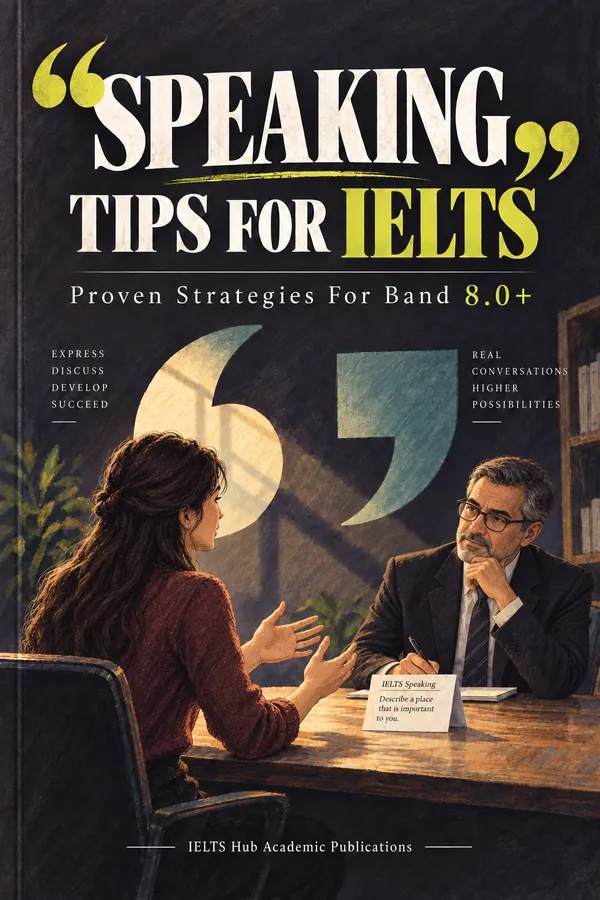
Speaking
Speaking Tips for IELTS
Proven Strategies for Band 8.0+
₹299$9.99CAD 13.99AUD 14.99£7.99NZD 16.99€8.99AED 39SGD 12.99

Speaking
Speak Like a Band 9
Real Test Questions & High-Scoring Answers
₹299$9.99CAD 13.99AUD 14.99£7.99NZD 16.99€8.99AED 39SGD 12.99

Speaking
Band 7+ Speaking Expressions
300 natural expressions for fluent, flexible speaking
₹199$6.99CAD 8.99AUD 9.99£4.99NZD 10.99€5.99AED 24SGD 8.99