Speaking test #056
Part 1 · Interview
4 to 5 minutes. The examiner asks about you and familiar topics.
Can you tell me your full name?
Where are you from?
Do you work or are you a student?
Do you write a lot?
Yes, I do write a lot. I find it to be a great way to express myself and to explore my thoughts and ideas. Whether it's through journaling, blogging, or writing fiction, I always make sure to set aside some time each day to write.
What do you like to write about?
I like to write about a variety of different subjects and themes. I find that my writing is often influenced by my personal experiences, so I like to write about things that I have lived through or that have affected me in some way. I also enjoy writing about social issues and current events, as I feel that it gives me a chance to engage with the world around me in a meaningful way.
Should children be taught creative writing from an early age?
I believe that children should definitely be taught creative writing from an early age. Not only is it an important way to develop their language skills and imagination, but it can also be a great way to help them process their emotions and understand the world around them. By encouraging children to express themselves through writing, we can help them develop important skills that will serve them well throughout their lives.
Would you like to become a famous author?
I would love to become a famous author. I think it would be an amazing feeling to know that my words have touched the hearts of people all over the world. However, I also realize that fame and success are not the only things that matter. I am content with creating something that resonates with people and that they can relate to. So, while I would be thrilled to become a famous author, I am also content with the idea of writing simply for the love of it. Overall, I would be happy with whatever outcome my writing brings me.
What kinds of advertisements do you watch?
I tend to watch advertisements that are relevant to my interests or needs. For example, if I'm in the market for a new car, I'll pay extra attention to car advertisements. I also appreciate advertisements that are well-made and creatively produced, regardless of the product being advertised.
Where can you see advertisements?
Advertisements can be seen in a variety of places, including on television, online, on billboards and posters, in newspapers and magazines, and even on the sides of buses or on the backs of receipts.
Have you ever bought something because of its advertisement?
Yes, I have definitely made purchases because of an advertisement before. Whether it's a product or a service, an effective advertisement can definitely influence my decision to make a purchase.
Do you watch advertisements from the beginning to the end?
It really depends on the advertisement. If I'm interested in the product or service being advertised, then I'll likely watch the whole thing. On the other hand, if the advertisement is not relevant to me or is poorly made, I'll probably tune it out before it's over.
You will have to talk about the topic for one to two minutes. You have one minute to think about what you are going to say. You can make some notes to help you if you wish.
Describe your favourite photograph
You should say:
- What the photograph is about
- When and where it was taken
- Who is in the photograph
- Why it is your favourite
What the photograph is about
Photographs are often cherished as they capture moments that are dear to us. One of my favorite photographs is a candid shot taken during my cousin's wedding festivities in my hometown of Jaipur, India. The photograph captures a joyous moment shared between my family members during the traditional dance performance at the sangeet ceremony.
When and where it was taken
It was taken last year in December, during the winter season when the weather was crisp and festive spirits were high. The setting was our ancestral home, beautifully decorated with fairy lights and marigold flowers, adding to the celebratory ambiance. The photograph encapsulates the essence of that evening, filled with laughter, music, and love.
Who is in the photograph
In the photograph, my cousins and I are seen dancing joyfully alongside our grandparents, who were beaming with pride and happiness. The genuine expressions of joy on everyone's faces are what make this photograph special to me. It not only captures a moment of togetherness but also reflects the strong bonds and traditions that bind our family together.
Why it is your favourite
What makes this photograph my favorite is the nostalgia it evokes every time I look at it. It serves as a reminder of the precious moments spent with my loved ones, the cultural richness of my heritage, and the importance of family bonds. This photograph is not just a visual memory but a treasure trove of emotions that I hold close to my heart.
- Words
- 230
- Sentences
- 12
- Words per sentence
- 19.2
- Speaking time
- about 1.8 min
Counted at 130 words a minute. The exam gives you one to two minutes.
Part 3 · Discussion
4 to 5 minutes. The examiner asks broader questions linked to the cue card topic.
How can a photograph make us feel differently than a painting or a drawing?
That's a fascinating question! I think photographs and paintings each have their own unique ability to stir emotions, but they do so in quite different ways. A photograph captures a moment in time with remarkable realism, often evoking feelings of nostalgia or a direct connection to reality. For instance, an image of a joyful family gathering can instantly bring back warm memories for viewers. On the other hand, paintings and drawings tend to have a more abstract quality, allowing artists to express emotions that might not be bound by the constraints of reality. The use of color, brush strokes, and composition can create an atmosphere that resonates on a deeper, sometimes more personal level. For example, a vibrant painting of a sunset can evoke feelings of tranquility or even melancholy, depending on how it's interpreted. So, while both mediums can be powerful, they engage our emotions in distinctly different ways!
Do you think some people believe photos are more real than other types of art? What do you think about that?
I can see why some people might consider photographs to be more authentic than other forms of art, mainly because they capture real moments in time. A photograph has the ability to freeze a fleeting moment, allowing viewers to connect with the raw emotion or atmosphere of that instant. However, I believe that authenticity is subjective and varies from person to person. For instance, while a painting may not depict reality in a literal sense, it can still convey profound feelings and thoughts that resonate deeply with the audience. Ultimately, both photography and other art forms have their unique ways of expressing truth, and they can complement each other beautifully in the realm of creativity.
How important do you think photos are for keeping memories and experiences?
Photographs play an incredibly significant role in preserving memories and experiences. They serve as a tangible reminder of moments that might otherwise fade in our minds over time. When I look back at old photos, I can vividly recall the emotions and details of those experiences, which can sometimes be lost in the hustle and bustle of daily life. Moreover, sharing these images with friends and family can spark conversations and bring back a flood of cherished memories, creating a sense of nostalgia that connects us all. In a way, photographs are like time capsules, allowing us to relive our past and share our journeys with others.
Why do you think some photos can have a strong effect on people?
Certain photographs have the power to leave a lasting impact on individuals because they can evoke strong emotions and stir deep memories. A single image can encapsulate a moment in time, conveying a story that words often struggle to express. For instance, a photograph of a significant historical event can remind us of the struggles and triumphs of humanity, fostering a sense of collective memory. Additionally, personal photographs, like those from cherished family gatherings, can transport us back to those moments, rekindling feelings of joy or nostalgia. Ultimately, the ability of a photograph to resonate with our feelings and experiences is what makes it so impactful.
How might the way people take and share photos change in the future?
In the future, I believe we will witness a significant shift in the way people capture and share photographs, largely driven by advancements in technology. For instance, with the rise of augmented reality and virtual reality, we might see people taking immersive photographs that allow viewers to experience the moment as if they were actually there. Furthermore, social media platforms are likely to evolve, enabling users to share their photos in more dynamic and interactive ways, perhaps through 3D images or even holograms. Additionally, the increasing concern about privacy might lead to more users opting for discreet photography methods, perhaps using AI to enhance photos without disturbing the moment. Overall, these changes could transform photography from a simple act of documentation into a more engaging and experiential form of communication.
What steps can be taken to make sure that photos are valued for their artistic quality instead of just what they show?
To truly appreciate photographs for their artistic value, it’s essential to promote visual literacy among the public. This could involve educational programs that teach people how to analyze composition, lighting, and technique, rather than simply focusing on the subject itself. Additionally, galleries and exhibitions can curate displays that emphasize the creative process behind the images, perhaps featuring behind-the-scenes footage or artist interviews that delve into their inspirations and methods. By fostering an environment that values creativity and technique, we can shift the conversation towards understanding and appreciating the artistry involved. Ultimately, encouraging discussions around the aesthetic qualities of photography will help elevate it beyond mere documentation.
Go further with the books

Speaking
Band 7+ Speaking Expressions
300 natural expressions for fluent, flexible speaking
₹199$6.99CAD 8.99AUD 9.99£4.99NZD 10.99€5.99AED 24SGD 8.99
Speaking
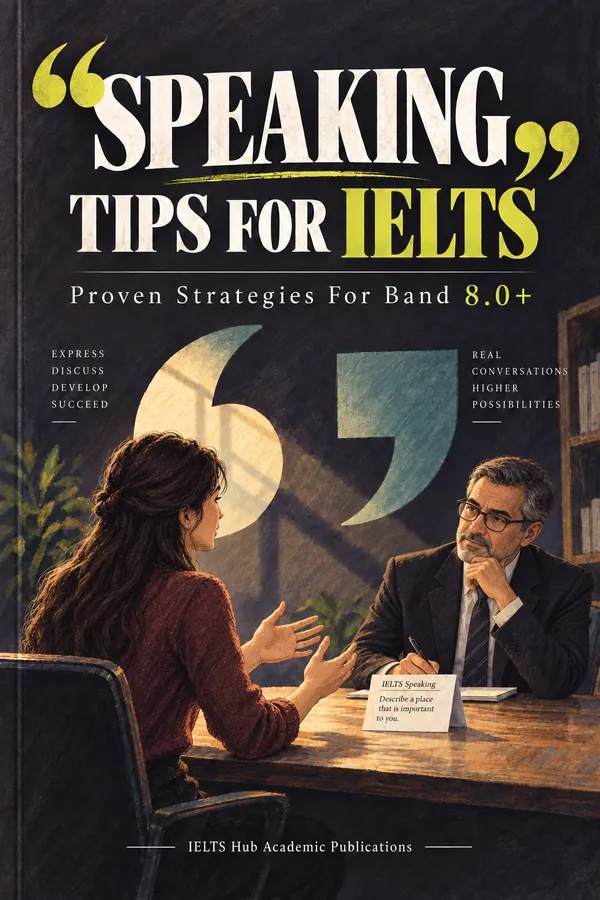
Speaking Tips for IELTS
Proven Strategies for Band 8.0+
₹299$9.99CAD 13.99AUD 14.99£7.99NZD 16.99€8.99AED 39SGD 12.99

Speaking
Speak Like a Band 9
Real Test Questions & High-Scoring Answers
₹299$9.99CAD 13.99AUD 14.99£7.99NZD 16.99€8.99AED 39SGD 12.99