Speaking test #058
Part 1 · Interview
4 to 5 minutes. The examiner asks about you and familiar topics.
Can you tell me your full name?
Where are you from?
Do you work or are you a student?
Do you like to travel by car?
Absolutely! There's just something about the freedom and flexibility of being able to drive yourself that I really enjoy. Plus, it's a great way to see more of a place and discover hidden gems you might not have found otherwise.
When do you travel by car?
I tend to travel by car most often when I'm going on longer road trips or when I'm visiting a place that doesn't have great public transportation. It's just easier to have your own vehicle and not have to rely on buses or trains to get around.
Where is the farthest place you have travelled to by car?
I've been lucky enough to take a few really long road trips in my life, but the farthest I've ever driven is probably from the East Coast of the United States all the way to the West Coast. It was an amazing journey and I saw so much of the country that I never would have seen otherwise.
Do you like to sit in the front or back when travelling by car?
It really depends on the situation. If I'm driving, I obviously prefer to sit in the front. But if I'm a passenger and there's someone else driving, I'm happy to sit in the back. It's just nice to have the option to stretch out and relax a little bit when you're on a long road trip.
Did you enjoy travelling by car when you were a child? [Why/Why not?
?] I absolutely loved travelling by car when I was a child. There was something so exciting about being in a vehicle and going on a journey, whether it was a long road trip or just a quick trip to the grocery store. Plus, being in the car meant that I could listen to music, play games, or just stare out the window and daydream. Overall, it was a really enjoyable experience for me.
Would you generally prefer to be a driver or a passenger in a car? [Why/Why not?
?] I would generally prefer to be a driver in a car. While it can be nice to sit back and relax as a passenger, I find that I enjoy the feeling of control and responsibility that comes with driving. Plus, I like being able to choose the route and decide where we go, rather than being at the mercy of someone else's choices.
How important is the colour of a car to you? [Why/Why not?
?] To be honest, the colour of a car is not particularly important to me. As long as it functions properly and gets me from point A to point B, I'm happy. I'm more concerned with things like the car's fuel efficiency, safety features, and overall reliability.
What type of car would you most like to have in the future? [Why/Why not?
?] In the future, I would love to have a hybrid or electric car. I'm really interested in reducing my carbon footprint and being more environmentally friendly, and I feel like driving a hybrid or electric car would be a great way to do that. Plus, with all of the advances in technology, I imagine that they will only become more and more practical and convenient in the coming years.
You will have to talk about the topic for one to two minutes. You have one minute to think about what you are going to say. You can make some notes to help you if you wish.
Describe a time when you missed an appointment
You should say:
- The appointment you missed
- Reasons for missing the appointment
- Consequences of missing the appointment
- How you dealt with the situation afterwards
The appointment I missed was a crucial meeting with my academic advisor to discuss my research project progress in my final year of college. I had scheduled this appointment weeks in advance as it was a mandatory check-in to ensure I was on the right track with my thesis.
Unfortunately, on the day of the appointment, I woke up feeling extremely unwell with a high fever and could barely get out of bed. I immediately called my advisor to inform her about my condition and apologized profusely for missing the meeting. I explained that I was unable to leave my house due to my illness and requested to reschedule the appointment at the earliest convenience.
The consequences of missing the appointment were significant as it delayed the feedback and guidance I needed for my research project. This delay caused me a lot of stress and anxiety as I was worried about falling behind schedule and not meeting the project deadlines.
To rectify the situation, I made sure to reschedule the meeting as soon as I recovered. I also took extra measures to ensure better communication with my advisor moving forward, such as setting up regular check-ins and providing progress updates more frequently. This experience taught me the importance of being proactive in communication and planning to avoid similar issues in the future.
Overall, missing the appointment was a regrettable experience, but it taught me valuable lessons in time management and communication that have since helped me become more organized and responsible in handling important commitments.
- Words
- 255
- Sentences
- 11
- Words per sentence
- 23.2
- Speaking time
- about 2.0 min
Counted at 130 words a minute. The exam gives you one to two minutes.
Part 3 · Discussion
4 to 5 minutes. The examiner asks broader questions linked to the cue card topic.
What are the different effects of missing appointments at work compared to in personal life?
That's a fascinating question! In professional settings, missing an appointment can lead to significant repercussions, such as disrupted workflows or even lost business opportunities. For example, if a client meeting is missed, it might not only delay a project but also damage the relationship with the client. On the other hand, in personal life, while missing a friend’s gathering might cause disappointment, the consequences are usually less severe and can often be forgiven more easily. It’s interesting how the stakes can feel so much higher in the workplace, as it often impacts not just the individual but also the entire team. Ultimately, the context really shapes how we perceive and react to these missed commitments.
Some people think that not showing up for appointments is usually due to bad time management. What do you think about this idea?
I absolutely agree that missing appointments frequently stems from ineffective time management. Many individuals struggle to prioritize their tasks or underestimate the time required for each commitment. This can lead to a domino effect, where one missed appointment snowballs into a series of delays and frustrations. Additionally, in our fast-paced world, distractions abound, making it even harder to stay organized. Ultimately, cultivating strong organizational skills and setting realistic schedules can significantly mitigate these issues and help individuals respect their commitments.
How important do you think being on time is for building trust and dependability in relationships?
Punctuality plays a crucial role in establishing trust and reliability in relationships, whether they are personal or professional. When someone consistently arrives on time, it sends a clear message that they value not only their time but also the time of others. This simple act can significantly enhance mutual respect, fostering a sense of dependability and commitment. Conversely, if a person frequently shows up late, it can create feelings of frustration and uncertainty, ultimately damaging the relationship. In essence, being punctual is a fundamental aspect of demonstrating respect and integrity, which are vital for building strong connections.
Why do you think some people have a harder time keeping appointments than others?
There are a few reasons why some individuals find it challenging to keep appointments. Firstly, it often boils down to time management skills; those who lack this crucial ability may underestimate how long tasks will take or overcommit themselves. Additionally, personal circumstances can play a significant role—some people may have unpredictable schedules due to work or family obligations, making it difficult to adhere to fixed commitments. Finally, there’s also the aspect of prioritization; individuals who don’t see certain appointments as important may not make the necessary effort to attend. Ultimately, it’s a combination of these factors that can lead to varying levels of success in keeping appointments.
How could technology affect how often people miss appointments in the future?
Technology is poised to revolutionize the way we manage appointments, potentially reducing the frequency of missed ones significantly. With the advent of smart scheduling apps and integrated calendar systems, people will have real-time reminders and updates at their fingertips. Moreover, features like automated notifications and even AI-driven insights could encourage individuals to stick to their schedules more diligently. Seamless integration with personal devices will make it easier than ever to reschedule or confirm appointments, fostering a sense of responsibility. In essence, as technology continues to evolve, I believe it will cultivate a culture of punctuality and accountability that we’re not quite seeing today.
What steps can people take to reduce the risk of forgetting important appointments?
To minimize the chances of missing important appointments, individuals can adopt several effective strategies. Firstly, utilizing technology is key; setting reminders on smartphones or using calendar apps can serve as a constant prompt for upcoming commitments. Additionally, maintaining a well-organized schedule helps people visualize their day and prioritize tasks accordingly. It’s also beneficial to create a buffer period before appointments, allowing for any unexpected delays. Lastly, developing a habit of double-checking schedules the night before can significantly enhance accountability and ensure that nothing slips through the cracks.
Go further with the books
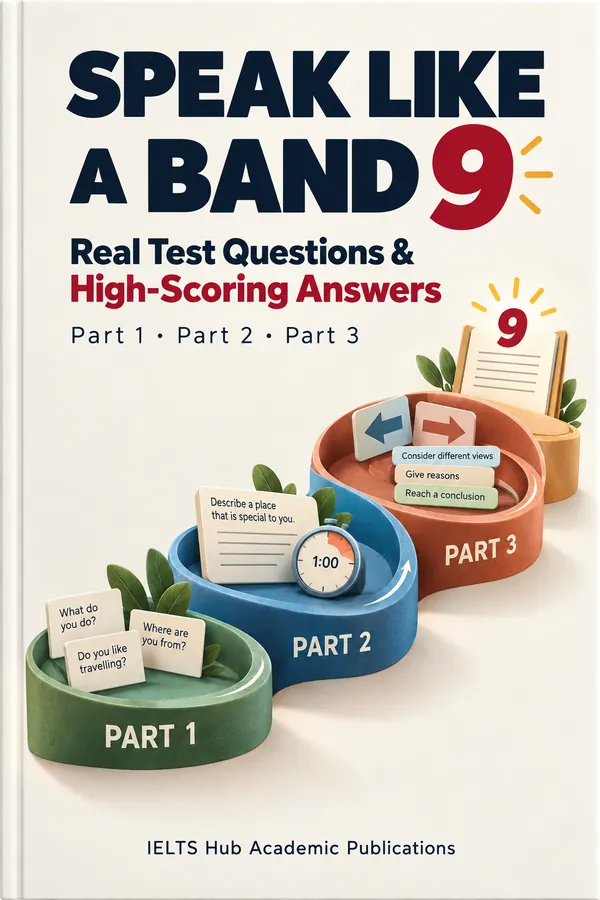
Speaking
Speak Like a Band 9
Real Test Questions & High-Scoring Answers
₹299$9.99CAD 13.99AUD 14.99£7.99NZD 16.99€8.99AED 39SGD 12.99

Speaking
Band 7+ Speaking Expressions
300 natural expressions for fluent, flexible speaking
₹199$6.99CAD 8.99AUD 9.99£4.99NZD 10.99€5.99AED 24SGD 8.99
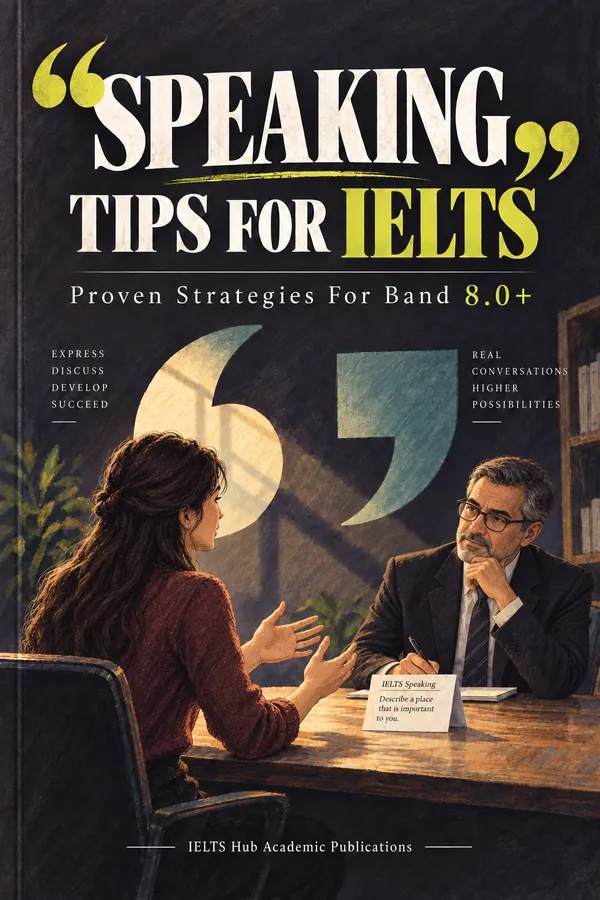
Speaking
Speaking Tips for IELTS
Proven Strategies for Band 8.0+
₹299$9.99CAD 13.99AUD 14.99£7.99NZD 16.99€8.99AED 39SGD 12.99