Speaking test #060
Part 1 · Interview
4 to 5 minutes. The examiner asks about you and familiar topics.
Can you tell me your full name?
Where are you from?
Do you work or are you a student?
What is your most vivid childhood memory?
My most vivid childhood memory is definitely the time my family took a trip to Disney World. I remember feeling so excited and overwhelmed by all the sights and sounds. It was such a magical experience that has stayed with me to this day.
Are you still in touch with your childhood friends?
Yes, I am still in touch with a few of my childhood friends. We've managed to stay connected despite the distance and time that has passed. It's always great to catch up with them and reminisce about old times.
What was your favourite toy when you were a child?
Oh man, that's a tough one. I had so many favourite toys when I was a child. But if I had to choose just one, I would say my favourite toy was my stuffed animal collection. I had so many different ones and I loved cuddling up with them at night.
Is it important for children to have fun? Why?
Absolutely. I think it's extremely important for children to have fun and enjoy their childhood. Play and laughter are crucial for their physical, mental, and emotional development. It helps to build their self-esteem, creativity, and social skills, and provides a much-needed break from the stresses of daily life. Plus, it's just plain good for the soul!
Do you like chocolate? [Why / why not?
?] Oh absolutely, I'm a total chocoholic. There's just something about the rich, creamy taste that I can't resist. Plus, it's a great way to satisfy my sweet tooth.
What type of chocolate do you prefer? [Why?
?] I have a bit of a sweet tooth, so I tend to go for the really dark, rich chocolate. I find that it has a more intense flavor and it's less sweet, which I really enjoy. Plus, it's supposed to be healthier for you, so that's always a bonus.
When do you usually eat chocolate?
I don't really have a specific time when I eat chocolate. I pretty much enjoy it anytime, anywhere. Sometimes I'll have a little piece as a pick-me-up in the afternoon, or I'll have a little square as a dessert after dinner. It's just one of those things that's always good to have on hand.
Do people give chocolate as a present in your country? [When?
?] Yes, chocolate is definitely a popular gift in my country. It's a classic present for Valentine's Day, birthdays, and Christmas, and it's also a common gift for saying thank you or congratulating someone. Chocolate is just one of those things that always seems to put a smile on people's faces.
You will have to talk about the topic for one to two minutes. You have one minute to think about what you are going to say. You can make some notes to help you if you wish.
Describe a job you are interested in
You should say:
- What job it is
- How you became interested in it
- What skills are required for this job
- Why you think you would be good at this job
What job it is
I would like to talk about my interest in pursuing a career as a data scientist. Data science is a field that involves extracting insights and knowledge from data by utilizing various scientific methods, algorithms, and systems. The increasing importance of data-driven decision-making in today's digital age has drawn me towards this profession.
How you became interested in it
My interest in data science sparked during my undergraduate studies in computer science when I took a course on data analytics. I was fascinated by the power of data in uncovering patterns, trends, and valuable information that can drive business strategies and innovations. This exposure made me realize the immense potential of data science in solving complex problems across different industries.
What skills are required for this job
To excel in the field of data science, one needs a combination of technical and analytical skills. Proficiency in programming languages such as Python and R, strong statistical knowledge, data visualization capabilities, and critical thinking are essential for a data scientist. Additionally, effective communication skills are crucial for translating data findings into actionable insights for non-technical stakeholders.
Why you think you would be good at this job
I believe I possess the necessary skills and qualities required for a career in data science. My educational background in computer science has equipped me with a solid foundation in programming and data analysis. Moreover, my attention to detail, problem-solving abilities, and enthusiasm for continuous learning make me well-suited for the dynamic and evolving nature of the data science field. I am confident that with dedication and further skill development, I can make significant contributions as a data scientist.
- Words
- 250
- Sentences
- 13
- Words per sentence
- 19.2
- Speaking time
- about 1.9 min
Counted at 130 words a minute. The exam gives you one to two minutes.
Part 3 · Discussion
4 to 5 minutes. The examiner asks broader questions linked to the cue card topic.
How could the tasks of a job you like be different from those in a job that is often considered less appealing?
That's a fascinating question! Jobs that align with my interests tend to be more fulfilling and often come with a set of responsibilities that are creatively stimulating. For instance, in a role that I’m passionate about, like graphic design, the responsibilities would involve not only creating visually appealing content but also collaborating with clients to bring their visions to life. On the other hand, positions that are often seen as less desirable, such as manual labor jobs, might focus more on physical tasks with routine responsibilities. While both types of jobs require dedication and hard work, the former allows for greater personal expression and innovation, which can lead to a more rewarding experience. In contrast, the latter may provide stability but could lack the same level of engagement or personal satisfaction. Ultimately, it’s about finding that sweet spot where one’s interests and responsibilities align!
How much do you think the type of work affects how satisfied people are with their jobs?
I firmly believe that the nature of the work itself plays a significant role in determining job satisfaction. When individuals engage in tasks that align with their interests and passions, they are more likely to feel a sense of fulfillment and motivation. For instance, someone who loves creativity in their job might thrive in a role that allows for innovation and artistic expression, whereas a more analytical mind might find joy in problem-solving and critical thinking. Additionally, the work environment, including factors such as teamwork and company culture, can further enhance or diminish that satisfaction. Ultimately, while other elements like salary and work-life balance are important, the intrinsic qualities of the job itself can truly make or break a person’s overall happiness at work.
How can finding a job that matches your interests affect your overall happiness?
Pursuing a job that aligns with one’s interests can have a profound impact on overall well-being. When individuals engage in work that they are passionate about, it often leads to a heightened sense of job satisfaction and fulfillment. This intrinsic motivation not only boosts productivity but also fosters a positive mental state, reducing stress and anxiety levels. Furthermore, being immersed in a field one loves can cultivate a sense of purpose, which is crucial for emotional health. Ultimately, when work becomes a source of joy rather than merely a means to an end, it enhances both personal happiness and overall quality of life.
Why do you think some people like certain jobs while others choose different ones?
That's a fascinating question! I believe that several factors influence why individuals gravitate towards certain careers. For some, it may be their natural aptitude or passion for a particular field, which can make them feel more fulfilled in their work. Others might be driven by external factors, such as family expectations or the potential for financial security. Additionally, personal experiences and life circumstances can shape one's career choices; for instance, someone who faced challenges in their youth might be inspired to pursue a career in social work. Ultimately, it’s a unique blend of personal interests, societal influences, and opportunities that lead individuals down their chosen paths.
What shifts could happen in the job market in the next ten years that might influence interest in some careers?
Over the next decade, we’re likely to see some significant shifts in the job market driven by rapid technological advancements and changing societal needs. For instance, with the rise of automation and artificial intelligence, many traditional roles might become obsolete, prompting a decline in interest in professions such as manufacturing and data entry. Conversely, I anticipate a surge in demand for jobs related to broad-spectrum technology, like AI ethics and cybersecurity, as businesses strive to navigate the complexities of the digital age. Additionally, as sustainability becomes a focal point for many companies, professions in renewable energy and environmental conservation will likely attract a lot more interest. Overall, the evolving landscape will encourage individuals to adapt and pursue careers that align with emerging trends.
What actions can people take to get ready for the job they love?
To better prepare for a job they are passionate about, individuals can take a variety of proactive steps. First and foremost, it's crucial to gain relevant experience, whether through internships, volunteering, or part-time positions. This not only enhances their skill set but also provides invaluable insights into the industry. Additionally, pursuing further education or certifications can significantly bolster one’s qualifications and demonstrate commitment to their chosen field. Networking is another key aspect; connecting with mentors and professionals can open doors and provide guidance that is often not found in textbooks. Ultimately, staying informed about industry trends and continuously seeking personal development can make a substantial difference in achieving career aspirations.
Go further with the books

Speaking
Speaking Tips for IELTS
Proven Strategies for Band 8.0+
₹299$9.99CAD 13.99AUD 14.99£7.99NZD 16.99€8.99AED 39SGD 12.99
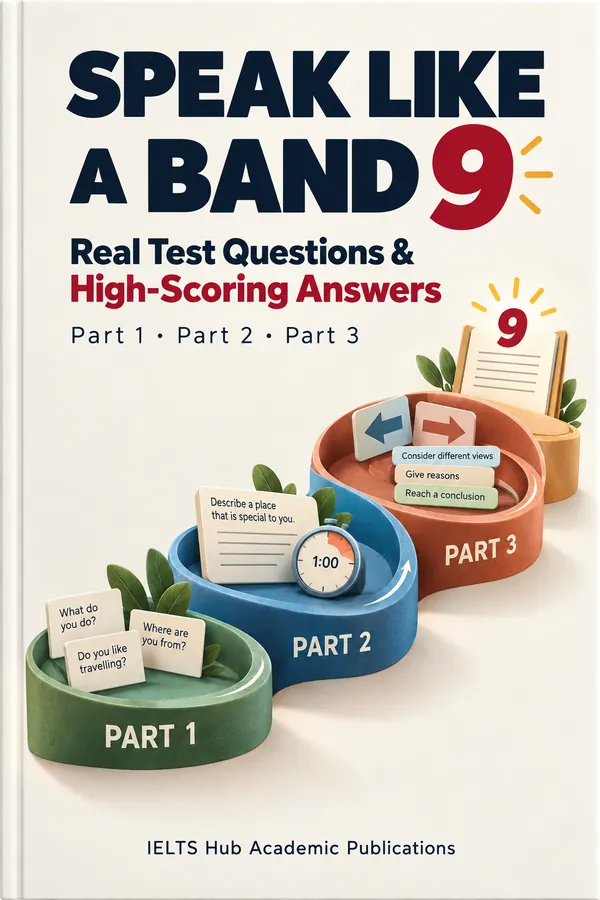
Speaking
Speak Like a Band 9
Real Test Questions & High-Scoring Answers
₹299$9.99CAD 13.99AUD 14.99£7.99NZD 16.99€8.99AED 39SGD 12.99
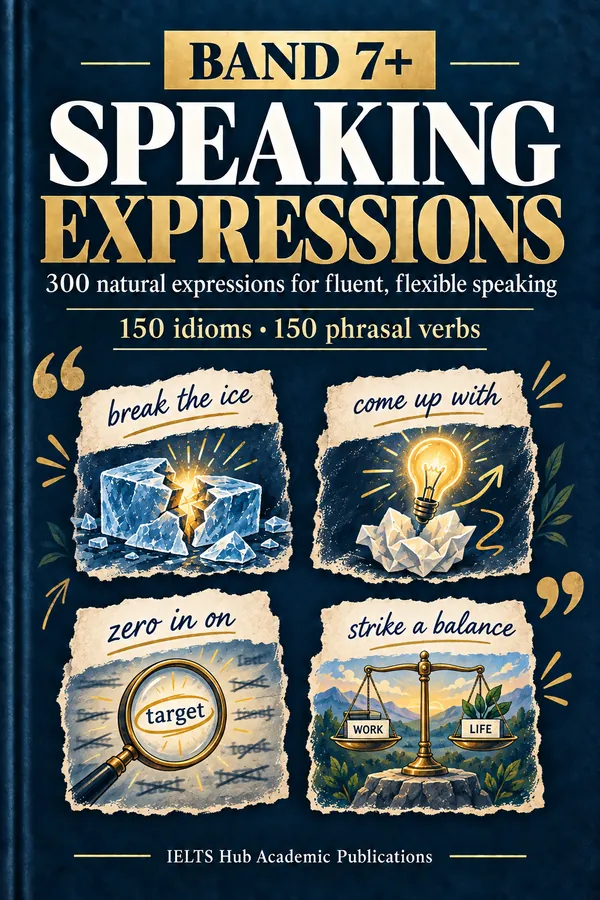
Speaking
Band 7+ Speaking Expressions
300 natural expressions for fluent, flexible speaking
₹199$6.99CAD 8.99AUD 9.99£4.99NZD 10.99€5.99AED 24SGD 8.99