Speaking test #085
Part 1 · Interview
4 to 5 minutes. The examiner asks about you and familiar topics.
Can you tell me your full name?
Where are you from?
Do you work or are you a student?
What's your favourite hairstyle?
My favourite hairstyle would have to be a sleek and polished look. I like to keep my hair well-groomed and styled in a classic way.
How often do you have your hair cut?
I try to get my hair cut every 6-8 weeks, as I find that this helps keep it looking healthy and well-maintained.
How much do you usually spend on your hair?
I usually spend around $50 to $71 on a haircut, depending on where I go. I also like to invest in good hair care products to keep my hair looking its best, so I spend a bit more on those.
Do you often change your hairstyle?
I don't tend to change my hairstyle very often, as I like to keep it fairly consistent. However, I do occasionally experiment with different looks or trims to change things up a bit.
What kinds of things do you write by hand? [Why/Why not?
?] I write a variety of things by hand, such as notes, journal entries, and letters. I find that writing by hand allows me to process my thoughts in a different way and helps me to remember information better. It also has a certain level of personalization that typing on a computer cannot provide.
Do you prefer writing by hand or typing on a keyboard? [Why/Why not?
?] I prefer writing by hand because it allows me to have a more personal connection to the words I am writing. I also find that my handwriting is more legible and easier to read than my typing. However, I do appreciate the convenience and speed of typing when it comes to larger projects or work-related tasks.
Did you write more by hand when you were younger? [Why/Why not?
?] Yes, I wrote more by hand when I was younger because that was the primary method of writing in my school. We were encouraged to take notes and do our homework by hand, which helped me to develop my handwriting and note-taking skills.
When you write by hand, do you think in the same way as when you use a keyboard? [Why/Why not?
?] No, I do not think in the same way when I write by hand as when I use a keyboard. Writing by hand allows me to process my thoughts in a more organic and free-flowing manner, while typing on a keyboard is more structured and efficient. They each have their own unique benefits and I like to use them in different situations depending on my needs.
You will have to talk about the topic for one to two minutes. You have one minute to think about what you are going to say. You can make some notes to help you if you wish.
Describe a plan you have for the future
You should say:
- What the plan is
- How you intend to achieve it
- Why this plan is important to you
- Any challenges you might face in implementing the plan
What the plan is
One of my significant future plans is to establish a non-profit organization dedicated to providing education and healthcare services to underprivileged children in rural areas of India. I firmly believe that every child deserves access to quality education and healthcare, regardless of their socio-economic background.
How you intend to achieve it
To achieve this goal, I plan to start by conducting thorough research on the current state of education and healthcare facilities in rural areas. I will then collaborate with like-minded individuals, organizations, and government agencies to gather resources and support for implementing the project effectively. Additionally, I aim to raise funds through crowdfunding campaigns, sponsorships, and partnerships with corporate entities to ensure the sustainability of the organization.
Why this plan is important to you
This plan is crucial to me because I have always been passionate about empowering the less privileged and making a positive impact in society. I strongly believe that investing in the education and health of underprivileged children not only transforms their lives but also contributes to the overall development of the nation. Seeing the smiles on the faces of children who receive the much-needed support will be the most fulfilling aspect of this endeavor.
Any challenges you might face in implementing the plan
Implementing this plan may pose several challenges, such as bureaucratic hurdles, lack of funding, and resistance from traditional mindsets. Overcoming these challenges will require patience, perseverance, and effective communication skills to build alliances and navigate through obstacles. However, I am determined to stay committed to my vision and overcome any obstacles that come my way to make this plan a reality.
- Words
- 247
- Sentences
- 11
- Words per sentence
- 22.5
- Speaking time
- about 1.9 min
Counted at 130 words a minute. The exam gives you one to two minutes.
Part 3 · Discussion
4 to 5 minutes. The examiner asks broader questions linked to the cue card topic.
How might people's future plans be different based on their cultural backgrounds?
Future plans can vary significantly across different cultural backgrounds due to a multitude of factors, such as values, traditions, and social expectations. For instance, in some cultures, there is a strong emphasis on collectivism, which often leads individuals to prioritize family obligations and community responsibilities when planning their futures. In contrast, people from more individualistic cultures might focus on personal aspirations and career achievements, seeking to carve out their unique paths. Additionally, educational opportunities and economic conditions can shape these plans, influencing whether individuals pursue higher education or vocational training. Overall, these cultural influences create a rich tapestry of future aspirations, reflecting the diverse values and goals of people around the world.
Some people think having a clear plan for the future is helpful, while others believe it can hold you back. What do you think about this?
I think both perspectives hold some truth, but personally, I lean towards the idea that having a detailed plan can be quite advantageous. A well-thought-out plan provides a sense of direction and purpose, allowing individuals to set realistic goals and measure their progress. However, I also understand the viewpoint that being too rigid can stifle creativity and spontaneity. Life is inherently unpredictable, and sometimes, the best opportunities arise when we least expect them. So, while I believe in the value of planning, I think it’s crucial to remain flexible and open to change, adapting our plans as we grow and learn.
How important do you think it is for people to make long-term plans for their future?
Having long-term plans for the future is incredibly crucial for individuals. It provides a sense of direction and purpose, which can be motivating and empowering. Without a clear vision of where one wants to go, it’s easy to feel lost or make hasty decisions that don't align with one’s true aspirations. Additionally, having long-term goals often encourages better time management and prioritization of tasks, which can lead to greater overall success. That said, it’s equally important to remain flexible and adaptable, as life can throw unexpected challenges our way.
Why do you think some people are more likely to make future plans than others?
I believe the tendency to create plans for the future often boils down to personality traits and life experiences. Some individuals, especially those with a more goal-oriented mindset, find comfort in structure and clarity, which makes planning feel natural to them. On the other hand, those who are more spontaneous or adaptable might view planning as restrictive and prefer to embrace opportunities as they arise. Additionally, past experiences can play a significant role; people who have faced uncertainty may feel a stronger need to map out their future to mitigate risks. Ultimately, it's fascinating how diverse our approaches can be, reflecting our unique backgrounds and aspirations!
How could future planning look different in the next ten years because of new technology?
The landscape of future planning is likely to undergo a significant transformation in the next decade, primarily driven by rapid advancements in technology. For instance, the integration of smart city technologies will enable urban planners to utilize real-time data to make more informed decisions about resource allocation and infrastructure development. Furthermore, the rise of artificial intelligence could streamline the planning process, allowing for more efficient simulations and predictive modeling of urban growth. Additionally, with the growing emphasis on sustainability, technology will play a crucial role in creating eco-friendly solutions that balance development with environmental conservation. Overall, I believe these changes will not only enhance the quality of life for residents but also lead to more resilient and adaptable urban environments.
What can people do to make sure their future plans can adjust to unexpected changes?
To ensure that future plans are more adaptable to unexpected changes, individuals should first cultivate a mindset of flexibility. This means being open to adjusting goals and strategies as circumstances evolve. Additionally, it can be incredibly beneficial to regularly assess and re-evaluate one’s plans, allowing for timely modifications in response to new information or challenges. Building a diverse skill set also plays a crucial role; by developing versatile abilities, individuals can pivot more easily in changing situations. Finally, fostering strong networks can provide support and alternative perspectives, making it easier to navigate unforeseen obstacles. Overall, the key is to embrace uncertainty as an opportunity for growth rather than a setback.
Go further with the books
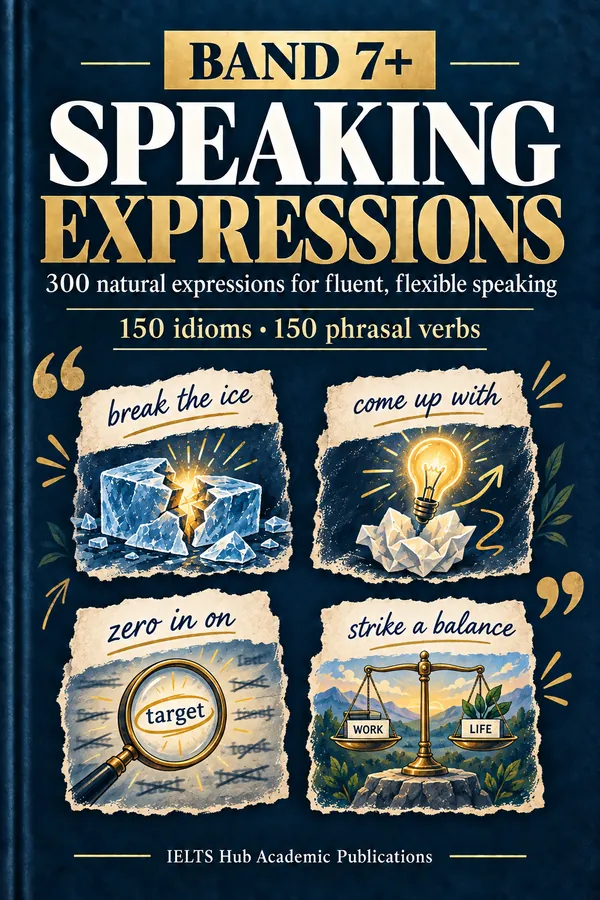
Speaking
Band 7+ Speaking Expressions
300 natural expressions for fluent, flexible speaking
₹199$6.99CAD 8.99AUD 9.99£4.99NZD 10.99€5.99AED 24SGD 8.99
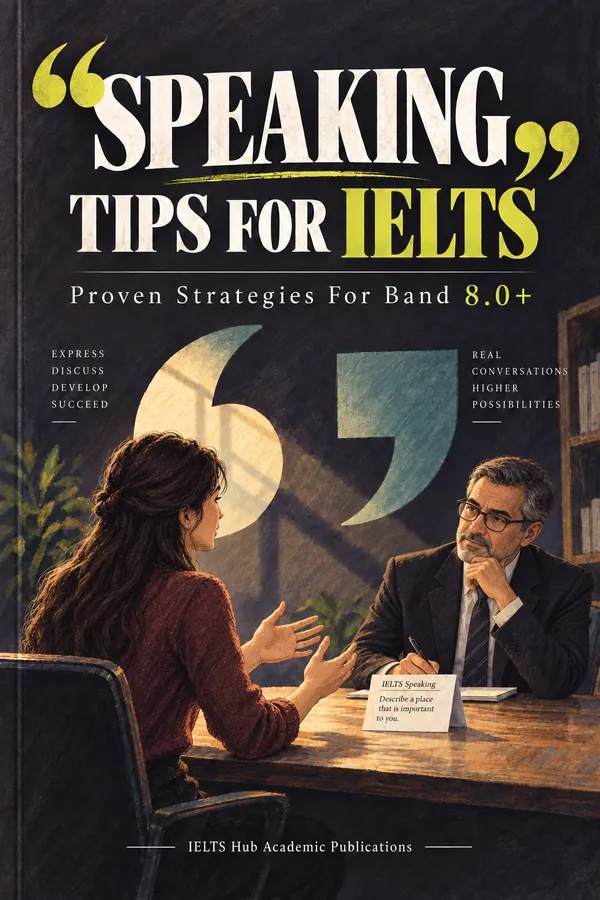
Speaking
Speaking Tips for IELTS
Proven Strategies for Band 8.0+
₹299$9.99CAD 13.99AUD 14.99£7.99NZD 16.99€8.99AED 39SGD 12.99
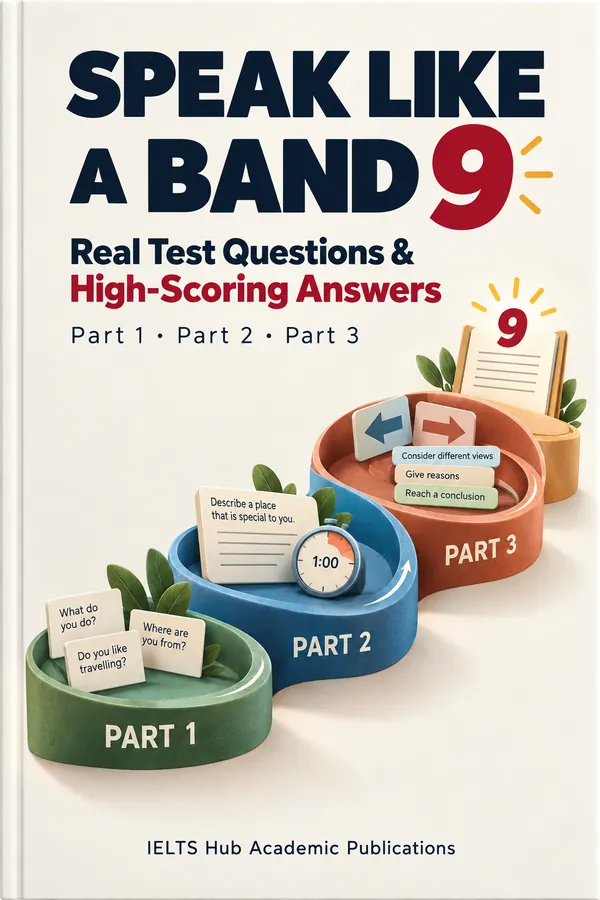
Speaking
Speak Like a Band 9
Real Test Questions & High-Scoring Answers
₹299$9.99CAD 13.99AUD 14.99£7.99NZD 16.99€8.99AED 39SGD 12.99