Speaking test #094
Part 1 · Interview
4 to 5 minutes. The examiner asks about you and familiar topics.
Can you tell me your full name?
Where are you from?
Do you work or are you a student?
How often do you wear jewellery? [Why/Why not?
?] I wear jewellery quite often, as I find it to be a great way to add a touch of elegance and style to any outfit. I particularly enjoy wearing statement pieces, such as a bold necklace or a pair of statement earrings, as they can really help to make an outfit stand out. However, I also appreciate the simplicity of a delicate pendant or a pair of simple stud earrings, as they can add a touch of elegance without being too overpowering.
What type of jewellery do you like best? [Why/Why not?
?] Personally, I have a strong preference for gold jewellery. I find that the warmth and richness of the metal complements my skin tone very well, and I enjoy the way that it can add a touch of luxury to any outfit. Additionally, I find that gold jewellery is often very versatile and can be worn with a wide range of different styles and colours.
When do people like to give jewellery in your country [Why?
?] In my country, people tend to give jewellery as gifts for special occasions such as birthdays, anniversaries, and weddings. I think that this is because jewellery is often seen as a symbol of love and commitment, and as such is a perfect gift to mark a special occasion. Additionally, many people also like to give jewellery as a way to commemorate important life milestones, such as a graduation or a new job.
Have you ever given jewellery to someone as a gift? [Why/Why not?
?] Yes, I have given jewellery as a gift to several people in my life. I find that jewellery is a very personal and meaningful gift, as it can be worn and treasured for years to come. Additionally, I like to give jewellery as a gift because it allows me to express my feelings and show someone how much I care about them. For example, I have given my mother a beautiful gold necklace as a gift for her birthday and I gave my wife a diamond ring as a gift for our anniversary. I always feel that these gifts were very special for them as well as for me.
Do you like listening and telling jokes?
I absolutely adore listening to and telling jokes. I find them to be a great way to lighten the mood and bring a sense of levity to any situation. Not only do they provide a form of entertainment, but they can also serve as a tool for bonding with others and fostering a sense of camaraderie.
How do you know what jokes are proper to say to your friends?
I make sure to exercise discretion when it comes to telling jokes to my friends. I always consider the context and audience before sharing a joke, as well as the potential impact it may have on those around me. I also try to avoid jokes that may be offensive or insensitive, as I believe that humor should never come at the expense of others.
What are some common subjects that people like to joke about?
People often like to joke about a wide variety of subjects, such as politics, relationships, and everyday life. Additionally, self-deprecating humor is also quite popular, as it allows people to poke fun at their own flaws and foibles. Pop culture and current events are also common subjects for jokes, as they provide a relatable and timely basis for humor.
Are you good at telling jokes?
I would consider myself to be quite proficient at telling jokes. I have a vast repertoire of jokes that I can draw from, and I am always on the lookout for new and interesting jokes to add to my collection. I also enjoy experimenting with different comedic styles and formats, such as puns, one-liners, and storytelling. Overall, I believe that my ability to tell jokes is one of my strengths, and I take great pleasure in bringing a smile to others through humor
You will have to talk about the topic for one to two minutes. You have one minute to think about what you are going to say. You can make some notes to help you if you wish.
Describe a computer game you have played
You should say:
- What is the name of the game and when did you play it?
- How did you start playing this game?
- What was your experience with the game?
- Explain why you liked or disliked the game
What is the name of the game and when did you play it?
I would like to talk about a computer game called "PUBG" that I played extensively during my college days. It was around two years ago when I first got introduced to this popular multiplayer battle royale game. Many of my friends were already playing it, and they encouraged me to join them, so I decided to give it a try.
How did you start playing this game?
I remember the excitement and thrill I felt when I started playing PUBG for the first time. The game's realistic graphics and intense gameplay immediately drew me in. The feeling of being dropped onto an island with 99 other players and having to scavenge for weapons and supplies while trying to survive until the end was truly exhilarating.
What was your experience with the game?
My experience with PUBG was a mix of adrenaline-pumping moments and strategic thinking. I enjoyed the teamwork aspect of the game, where my friends and I would communicate and coordinate our moves to outsmart our opponents. The sense of achievement I felt when we won a match together was truly satisfying and kept me coming back for more.
Explain why you liked or disliked the game
What I liked most about PUBG was the immersive experience it provided. The game's graphics, sound effects, and gameplay mechanics all worked together seamlessly to create a realistic and engaging virtual world. However, one downside was the time commitment required to play a full match, which sometimes made it difficult to balance with my other responsibilities. Overall, PUBG was a game that brought me closer to my friends and provided hours of entertainment and excitement.
- Words
- 251
- Sentences
- 13
- Words per sentence
- 19.3
- Speaking time
- about 1.9 min
Counted at 130 words a minute. The exam gives you one to two minutes.
Part 3 · Discussion
4 to 5 minutes. The examiner asks broader questions linked to the cue card topic.
How could playing computer games feel different for kids and adults?
The experience of playing computer games can vary significantly between children and adults, primarily due to their different levels of cognitive development and emotional engagement. For children, gaming often serves as a formative experience, helping them develop crucial skills like hand-eye coordination and problem-solving, all while being immersed in a vibrant, imaginative world. In contrast, adults may approach gaming more as a recreational activity or a way to unwind after a long day, often seeking more complex narratives or multiplayer experiences that foster social connections. Moreover, children are typically drawn to games that offer instant gratification and visual stimulation, whereas adults might prefer games that challenge their strategic thinking or provide a deeper, more immersive storyline. Ultimately, while both groups can enjoy and benefit from gaming, the reasons for their engagement and the skills they derive from it can differ quite markedly.
How true is it that computer games help improve social interactions?
It's fascinating to consider the impact of computer games on social interactions! On one hand, they can significantly enhance social connections, particularly through online multiplayer platforms where players from around the world can team up, strategize, and communicate in real-time. These experiences often foster a sense of community, allowing individuals to build friendships that transcend geographical boundaries. Furthermore, many games encourage teamwork and require effective communication, which can translate into improved interpersonal skills in real life. However, it's essential to acknowledge that excessive gaming can lead to social isolation for some individuals, particularly if they prioritize virtual interactions over face-to-face ones. In moderation, though, I believe that computer games can be a fantastic tool for social engagement, promoting collaboration and even helping people to bond over shared interests. Overall, when used wisely, computer games can definitely have a positive impact on social interactions.
How do computer games help people improve their problem-solving skills?
Computer games can play a significant role in the development of problem-solving skills, and it's fascinating to see how they do this. Many games require players to think critically and devise strategies to overcome challenges, which can translate to real-life situations. For instance, puzzle games encourage players to analyze problems from different angles, fostering creative thinking. Moreover, multiplayer games often involve collaboration and negotiation, which can enhance interpersonal skills while tackling complex tasks together. Ultimately, when approached mindfully, computer games can be a valuable tool for honing essential problem-solving abilities.
Why do you think some people get so absorbed in video games?
I think there are several reasons why some individuals become so engrossed in computer games. Firstly, the immersive nature of these games allows players to escape from reality and enter fantastical worlds, which can be incredibly appealing, especially in times of stress or boredom. Additionally, many games offer a sense of achievement and progression, which can be quite addictive; completing challenges or leveling up gives players a rush of satisfaction. Social interaction is another key factor—multiplayer games often foster a sense of community, where friends can connect and collaborate, making the experience more engaging. Ultimately, it’s a combination of escapism, achievement, and social bonding that hooks people into the gaming world.
How could the future of video games change with new technology?
The future of computer gaming is poised for an incredible transformation, driven by rapid advancements in technology. For instance, with the rise of virtual reality and augmented reality, players will likely find themselves immersed in environments that feel incredibly real, allowing for a more engaging and interactive experience. Additionally, as cloud gaming becomes more prevalent, access to high-quality games will no longer be confined to powerful consoles or PCs; instead, anyone with a decent internet connection can enjoy these experiences on their devices. Moreover, artificial intelligence is expected to revolutionize game design, making non-playable characters (NPCs) more lifelike and responsive, which could lead to more dynamic storytelling. Overall, I believe we are on the brink of a gaming renaissance, where technology will not only enhance the visuals but also enrich the narratives and gameplay, creating a truly immersive experience for gamers.
What steps can be taken to make sure that playing computer games stays a healthy activity for people?
To ensure that computer gaming remains a healthy pastime, a multi-faceted approach is essential. First and foremost, setting time limits can help individuals enjoy gaming without it encroaching on other important activities like physical exercise or social interactions. Additionally, promoting games that encourage critical thinking and problem-solving can turn gaming into a productive experience rather than just mindless entertainment. It's also vital for parents and guardians to actively participate in their children's gaming habits, guiding them towards suitable content. Ultimately, fostering a balanced lifestyle that includes a variety of activities will ensure that gaming remains a positive and enriching experience.
Go further with the books
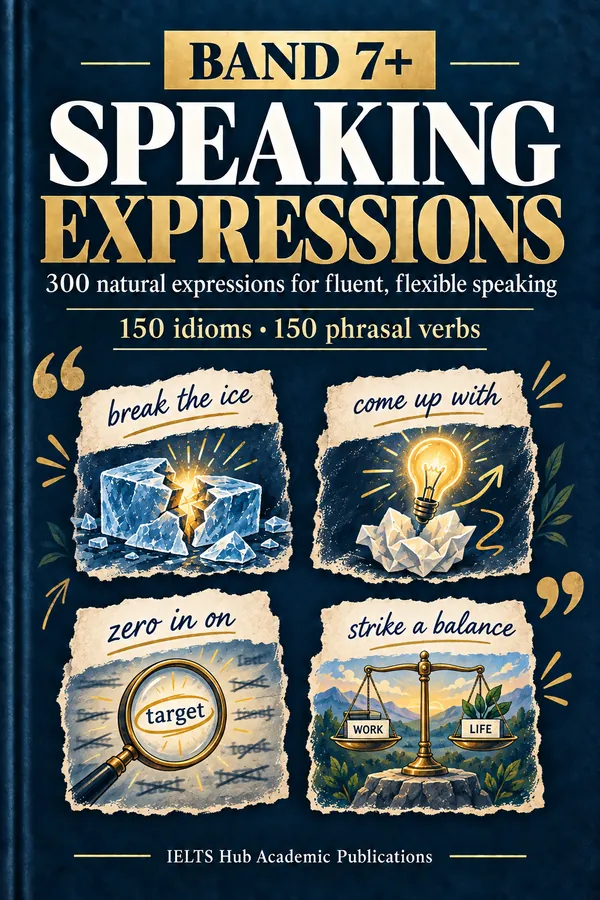
Speaking
Band 7+ Speaking Expressions
300 natural expressions for fluent, flexible speaking
₹199$6.99CAD 8.99AUD 9.99£4.99NZD 10.99€5.99AED 24SGD 8.99

Speaking
Speaking Tips for IELTS
Proven Strategies for Band 8.0+
₹299$9.99CAD 13.99AUD 14.99£7.99NZD 16.99€8.99AED 39SGD 12.99

Speaking
Speak Like a Band 9
Real Test Questions & High-Scoring Answers
₹299$9.99CAD 13.99AUD 14.99£7.99NZD 16.99€8.99AED 39SGD 12.99