Speaking test #115
Part 1 · Interview
4 to 5 minutes. The examiner asks about you and familiar topics.
Can you tell me your full name?
Where are you from?
Do you work or are you a student?
Do you make plans every day?
Yes, I make plans every day. I find that having a plan helps me to stay organized and focused throughout the day.
Are you good at managing your time?
I would say that I am quite good at managing my time. I have developed strategies and techniques that help me to stay on task and avoid procrastination.
What is the latest plan you made?
The latest plan I made was to study for an upcoming exam. I have set aside specific times each day to focus on different topics and have also planned out my study schedule for the next week.
What is the hardest part of making plans?
The hardest part of making plans for me is sticking to them. It can be easy to get sidetracked or lose motivation, but I try to remind myself of the end goal and stay focused on my plan.
You will have to talk about the topic for one to two minutes. You have one minute to think about what you are going to say. You can make some notes to help you if you wish.
Describe someone who has a lot of responsibilities
You should say:
- Who this person is
- What responsibilities they have
- How they manage their responsibilities
- How their responsibilities impact their life
Who this person is
In the vibrant tapestry of my Indian culture, I have been fortunate to witness the unwavering dedication and resilience of my grandfather, a beacon of responsibility in our family. At 78 years old, he continues to be the pillar of strength and wisdom for our extended family, comprising three generations under one roof.
What responsibilities they have
My grandfather shoulders a multitude of responsibilities that range from overseeing the financial affairs of the family to providing emotional support and guidance to each family member. As the head of the family, he ensures that everyone's needs are met, from the youngest grandchild to the eldest member. He also plays a pivotal role in making crucial decisions that impact the family's well-being and future.
How they manage their responsibilities
Despite the weight of his responsibilities, my grandfather manages them with grace and composure. He maintains a meticulous routine, allocating time for each task and person in need. His exceptional organizational skills and ability to prioritize effectively allow him to navigate through the myriad challenges that come with his role as the family's patriarch.
How their responsibilities impact their life
The impact of my grandfather's responsibilities reverberates across our family dynamics, fostering a sense of unity and belonging among us. His selfless dedication and tireless efforts have instilled in us a deep appreciation for the value of familial bonds and the importance of shouldering responsibilities with dignity and honor. In essence, he embodies the essence of selflessness and sacrifice, leaving an indelible mark on our lives.
- Words
- 238
- Sentences
- 11
- Words per sentence
- 21.6
- Speaking time
- about 1.8 min
Counted at 130 words a minute. The exam gives you one to two minutes.
Part 3 · Discussion
4 to 5 minutes. The examiner asks broader questions linked to the cue card topic.
How do the duties of a leader differ from those of someone in a support role?
That's a fantastic question! The responsibilities of someone in a leadership position are often much broader and more strategic than those in a supportive role. Leaders are typically tasked with setting the vision and direction for their team, which involves making critical decisions and often being the driving force behind initiatives. In contrast, individuals in supportive roles usually focus on assisting leaders and ensuring that day-to-day operations run smoothly. They might handle the nitty-gritty details and provide essential support, but they generally don’t have the same level of accountability for the overall outcomes. So, while leaders need to think big and inspire, supporters often excel in execution and collaboration, making both roles vital for success.
How much do you believe having many responsibilities can help you grow as a person?
Having many responsibilities can significantly contribute to personal growth in various ways. First and foremost, it often fosters a sense of accountability, which pushes individuals to develop discipline and time management skills. When you're juggling multiple tasks, you learn to prioritize and make decisions more effectively, which is invaluable in both personal and professional contexts. Furthermore, facing challenges associated with these responsibilities can enhance problem-solving abilities and resilience, enabling individuals to adapt to new situations with greater ease. However, it’s essential to strike a balance; overwhelming responsibilities can lead to stress and burnout, which can be counterproductive to growth. Overall, when managed well, responsibilities can be a powerful catalyst for self-improvement and development.
Why is it important for people in society to take on responsibilities, and how does it affect their communities?
Taking on responsibilities is absolutely crucial for individuals in society. When people embrace their roles, whether as parents, workers, or community members, they contribute to a sense of social cohesion that binds communities together. This sense of accountability not only enhances personal growth but also fosters a culture of mutual support and collective well-being. Furthermore, when individuals actively participate in communal responsibilities, such as volunteering or engaging in local initiatives, it can lead to significant positive changes, creating a ripple effect that benefits everyone. Ultimately, a society where individuals are willing to shoulder responsibilities is one that thrives and evolves harmoniously.
Why do some people do well under pressure with many tasks, while others find it hard?
That's a fascinating question! I believe the ability to thrive under pressure largely depends on a combination of personality traits and learned coping mechanisms. Some individuals are naturally more resilient and possess a strong sense of self-efficacy, which allows them to tackle challenges head-on without feeling overwhelmed. On the other hand, those who struggle might find it difficult to manage their time effectively or may have a tendency to become easily stressed when faced with multiple tasks. Additionally, previous experiences can play a significant role; if someone has faced high-pressure situations before and emerged successfully, they are likely to develop a sense of confidence that helps them in future challenges. Ultimately, it's a blend of mindset, experience, and coping strategies that determines how we handle pressure!
What might happen at work if more people took on extra tasks?
If more individuals took on additional responsibilities, the workplace could experience a significant transformation. Firstly, there would likely be an increase in collaboration among team members, as people would need to communicate more effectively to manage their expanded roles. This could foster a sense of shared purpose and improve overall team dynamics. Additionally, employees might feel more empowered, leading to greater job satisfaction and a heightened sense of ownership over their work. However, it’s crucial to strike a balance; if the responsibilities become overwhelming, it could lead to burnout and affect productivity negatively. So, while the idea is promising, it requires careful implementation to ensure it benefits everyone involved.
"What actions can organizations take to help people handle their tasks better?"?
Organizations can adopt a variety of measures to assist individuals in managing their responsibilities more effectively. For starters, they could provide flexible working hours, which allow employees to tailor their schedules according to their personal needs and peak productivity times. Additionally, implementing time management workshops can equip staff with valuable skills and techniques for prioritizing tasks and minimizing procrastination. Moreover, offering access to mental health resources can significantly enhance employees' well-being, enabling them to tackle their responsibilities with a clearer mind. Finally, fostering a culture of open communication encourages team members to share their challenges, leading to collaborative solutions that can alleviate some of the burdens they face. Overall, a supportive environment can make a world of difference in helping individuals balance their responsibilities effectively.
Go further with the books
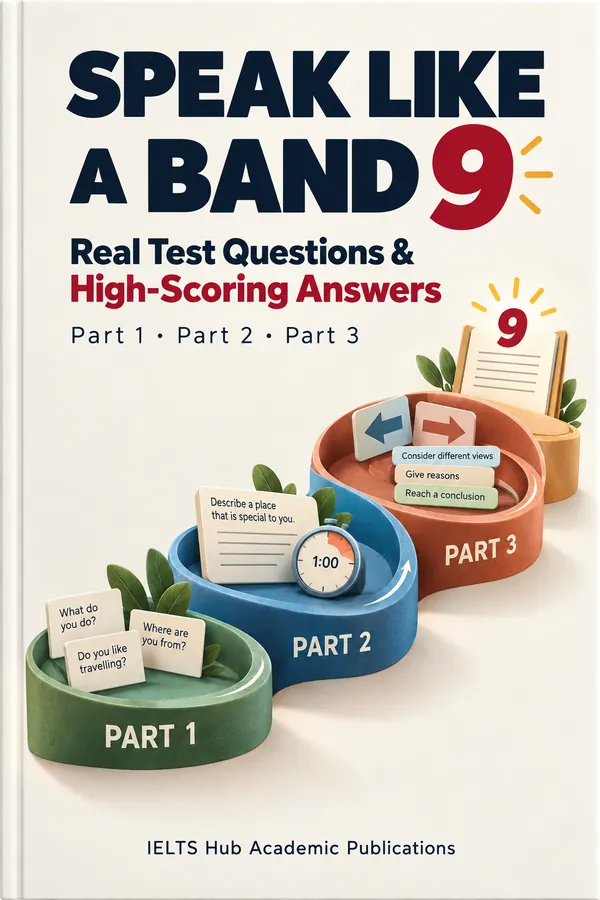
Speaking
Speak Like a Band 9
Real Test Questions & High-Scoring Answers
₹299$9.99CAD 13.99AUD 14.99£7.99NZD 16.99€8.99AED 39SGD 12.99

Speaking
Band 7+ Speaking Expressions
300 natural expressions for fluent, flexible speaking
₹199$6.99CAD 8.99AUD 9.99£4.99NZD 10.99€5.99AED 24SGD 8.99

Speaking
Speaking Tips for IELTS
Proven Strategies for Band 8.0+
₹299$9.99CAD 13.99AUD 14.99£7.99NZD 16.99€8.99AED 39SGD 12.99