Speaking test #123
Part 1 · Interview
4 to 5 minutes. The examiner asks about you and familiar topics.
Can you tell me your full name?
Where are you from?
Do you work or are you a student?
How do you feel about birds? [Why?
?] I absolutely adore birds! Their vibrant colors and unique songs always bring a smile to my face. Plus, it's amazing to see the different adaptations and behaviors they exhibit in their natural habitats.
Have you seen many kinds of birds?
Yes, I've been fortunate enough to observe a wide variety of birds in my travels. From the majestic bald eagle in the United States to the colorful parrots of South America, it's always a treat to spot a new species.
How do people in your country feel about birds?
In India, birds hold a special place in our culture and traditions. Many people keep bird feeders in their gardens to attract a variety of species, and it's not uncommon to see people taking early morning walks to watch and photograph the birds.
Do any birds have any particular significance in your country?
Absolutely! The peacock is the national bird of India and is revered for its beauty and grace. In Hindu mythology, the god Krishna is often depicted with a peacock feather in his headband, symbolizing his vanity and pride.
Did you save money when you were young?
Yes, I did save money when I was young. I have always had a strong sense of financial responsibility and understood the importance of saving money for the future. I remember putting away a portion of my allowance every week into a piggy bank, and as I got older, I opened a savings account at the bank.
Do parents give children pocket money in your culture (India)?
Yes, parents in India do give children pocket money. It is common for parents to give their children a small allowance to manage their expenses, such as buying snacks or going to the movies with friends. It is also a way for parents to teach their children about budgeting and managing money.
What kinds of things do people save money for?
People save money for a variety of things, such as buying a new car or house, paying for education, going on vacation, or saving for retirement. Some people also save money for emergencies or unexpected expenses. Ultimately, it depends on each person's financial goals and priorities.
Why do you think some people cannot save money?
I believe that some people cannot save money due to a lack of financial literacy or discipline. They may struggle with budgeting and managing their expenses, or they may have a tendency to overspend or live beyond their means. Additionally, some people may have financial constraints such as low income or high debt, which can make it difficult to save money. However, with the right mindset and tools, anyone can learn to save money and achieve their financial goals.
You will have to talk about the topic for one to two minutes. You have one minute to think about what you are going to say. You can make some notes to help you if you wish.
Describe a children's park you have visited recently
You should say:
- Location of the park
- Facilities available for children
- Your favorite part of the park
- The overall atmosphere of the park
Recently, I had the pleasure of visiting a charming children's park located in the heart of my city, Bangalore, India. Situated near a bustling residential area, this park is a haven for families and children seeking a serene escape from the city's chaos. The park's strategic location makes it easily accessible to locals, attracting a diverse crowd of visitors.
Upon entering the park, I was delighted to see a wide range of facilities designed specifically for children. From colorful play structures and swings to a mini-amphitheater for storytelling sessions, the park offers a myriad of activities to keep young ones engaged and entertained. Additionally, there is a dedicated area for outdoor games such as badminton and football, encouraging children to stay active and socialize with their peers.
My favorite part of the park is the beautifully landscaped garden that serves as a tranquil oasis amidst the hustle and bustle of the city. Lush green lawns, vibrant flowers, and shady trees create a peaceful setting where families can relax and enjoy quality time together. The well-maintained garden provides the perfect backdrop for picnics, leisurely strolls, or simply basking in the beauty of nature.
Overall, the atmosphere of the park is truly uplifting and rejuvenating. The sounds of children's laughter, birds chirping, and gentle rustling of leaves create a harmonious symphony that soothes the soul. Families can be seen bonding over picnics, couples enjoying romantic walks, and children running around in pure joy. The park exudes a sense of community spirit and positivity, making it a beloved destination for all age groups.
In conclusion, the children's park I recently visited in Bangalore is a delightful escape from the city's hustle and bustle, offering a range of facilities for children to play and explore. The serene garden, vibrant atmosphere, and community spirit make it a cherished spot for families and individuals alike. I look forward to visiting this park again to experience its calming ambiance and joyful energy.
- Words
- 325
- Sentences
- 16
- Words per sentence
- 20.3
- Speaking time
- about 2.5 min
Counted at 130 words a minute. The exam gives you one to two minutes.
Part 3 · Discussion
4 to 5 minutes. The examiner asks broader questions linked to the cue card topic.
What are the differences between children's parks in cities and those in the countryside?
Children's parks in urban areas often reflect the hustle and bustle of city life, incorporating modern amenities and features that cater to a diverse population. For instance, you might find high-tech play equipment and safe, well-maintained spaces, which are designed to accommodate a larger number of children at once. In contrast, parks in rural settings tend to embrace a more natural aesthetic, often featuring lush greenery and open spaces that encourage imaginative play and exploration. These parks may have fewer facilities, but they typically offer a sense of tranquility and a closer connection to nature, allowing children to engage in activities like climbing trees or exploring streams. Overall, the differences highlight how each setting influences the design and experience of play for children.
Can the way children's parks are designed affect how kids behave and interact with others?
Absolutely, the design of children's parks can have a profound impact on their behavior and social skills. When parks are equipped with interactive play structures and open spaces, they encourage children to engage with one another, fostering teamwork and cooperation. For instance, playgrounds that have climbing walls or group swings can motivate kids to work together, enhancing their social interactions. Moreover, if a park includes areas for quiet reflection or imaginative play, it can help children develop emotional resilience and creativity. Ultimately, a thoughtfully designed park not only provides a space for physical activity but also serves as a platform for essential social development.
How do children's parks help in the growth of a community?
Children's parks play a vital role in the overall development of a community, serving as more than just recreational spaces. They act as a social hub, where families can come together, fostering a sense of belonging and community spirit. Not only do these parks provide a safe environment for children to engage in physical activities and develop their motor skills, but they also encourage social interactions among peers, which is crucial for emotional and social development. Additionally, well-maintained parks can enhance the aesthetic appeal of a neighborhood, potentially increasing property values and attracting new residents. Overall, children's parks contribute significantly to the well-being of both individuals and the community as a whole.
Why do you believe it's important for kids to have places to play outside?
Access to outdoor play areas is absolutely vital for children for several reasons. Firstly, being outdoors allows them to engage in physical activity, which is crucial for their overall health and well-being. It helps combat issues like childhood obesity and promotes a more active lifestyle from an early age. Moreover, outdoor play stimulates their creativity and imagination; when children are free to explore nature, they often come up with inventive games and solutions to problems. Lastly, interacting with peers in these spaces fosters essential social skills, such as teamwork and communication, which are fundamental as they grow and navigate relationships throughout life. Overall, outdoor play areas provide a perfect blend of fun and learning!
How could children's parks change in the future because of new technology?
The future of children's parks is likely to be quite fascinating as technology continues to evolve. We might see parks incorporating interactive installations that use augmented reality, allowing children to engage with their surroundings in entirely new ways. Imagine a playground where kids can not only climb on physical structures but also interact with digital characters that enhance their play experience! Moreover, smart technology could be integrated into equipment to promote safety and provide real-time feedback to parents via mobile apps. This shift towards a more technologically enriched environment could foster creativity and collaboration among children, making parks not just places to play, but also hubs for learning and social interaction.
What steps can be taken to improve safety and access in kids' parks?
To enhance safety and accessibility in children's parks, a multifaceted approach is essential. Firstly, implementing state-of-the-art safety equipment, such as soft-fall surfaces and rounded edges on play structures, can significantly reduce the risk of injuries. Additionally, ensuring that parks are designed with universal accessibility in mind is crucial; this includes features like wheelchair-friendly paths and sensory play areas for children with diverse needs. Moreover, regular maintenance and inspections of the facilities can prevent hazards from arising, ensuring that the parks remain safe and welcoming. Community engagement in the design process can also foster a sense of ownership, making it more likely that local families will use the parks and contribute to their upkeep. Ultimately, these measures would not only protect children but also encourage families to spend quality time outdoors.
Go further with the books
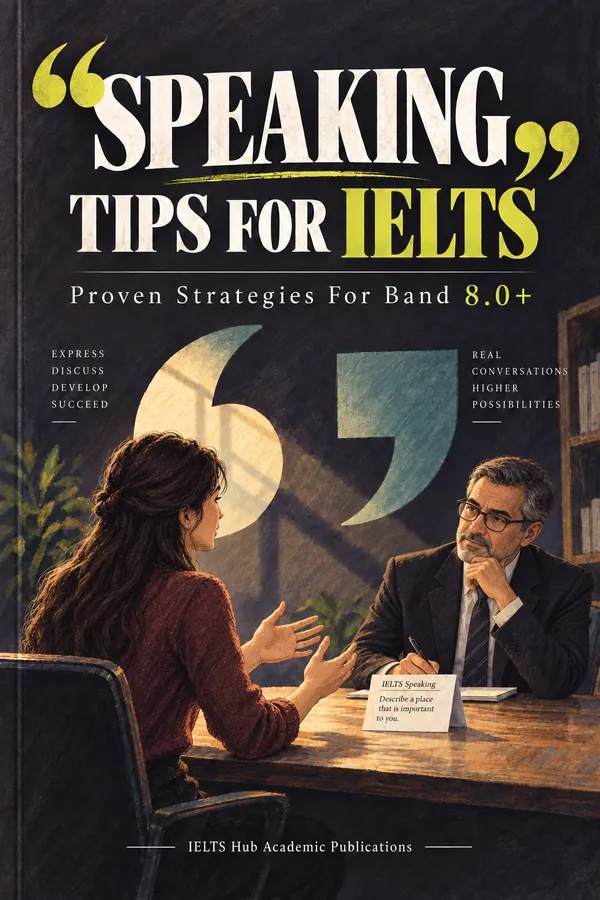
Speaking
Speaking Tips for IELTS
Proven Strategies for Band 8.0+
₹299$9.99CAD 13.99AUD 14.99£7.99NZD 16.99€8.99AED 39SGD 12.99

Speaking
Speak Like a Band 9
Real Test Questions & High-Scoring Answers
₹299$9.99CAD 13.99AUD 14.99£7.99NZD 16.99€8.99AED 39SGD 12.99

Speaking
Band 7+ Speaking Expressions
300 natural expressions for fluent, flexible speaking
₹199$6.99CAD 8.99AUD 9.99£4.99NZD 10.99€5.99AED 24SGD 8.99