Speaking test #147
Part 1 · Interview
4 to 5 minutes. The examiner asks about you and familiar topics.
Can you tell me your full name?
Where are you from?
Do you work or are you a student?
Did you play with toys when you were a child?
Of course, I did. I was quite an active child and I always enjoyed playing with a variety of toys.
What kinds of toys did you like?
As a child, I was particularly fond of action figures, Lego sets, and building blocks. I found them to be quite engaging and stimulating for my imagination.
In your country, do boys and girls play with the same types of toys?
In my country, there is a general belief that boys and girls should be exposed to the same types of toys and activities. However, it is not uncommon for certain toys to be marketed more towards one gender than the other.
Do you think that toys help children to learn?
I absolutely believe that toys can play a crucial role in helping children to learn and develop. They can provide children with hands-on opportunities to explore different concepts and ideas, as well as encouraging creativity, problem-solving, and critical thinking skills. Overall, toys can be a powerful tool in promoting a child's cognitive, social, and emotional development.
How bad is the traffic in your country (India)?
The traffic in my country, India, can be quite challenging at times. With a rapidly growing population and a vast network of roads and highways, traffic congestion is a common issue in many cities. The problem is particularly severe during peak hours, when the roads become clogged with vehicles, leading to long delays and increased pollution levels.
Do traffic problems affect you?
Yes, traffic problems do affect me on a daily basis. As someone who commutes to work, I often find myself stuck in gridlock, which can be quite frustrating and time-consuming. Additionally, the noise and pollution caused by the heavy traffic can be quite detrimental to my overall well-being.
What do you do to deal with the traffic problems?
To deal with traffic problems, I try to plan my trips and errands during off-peak hours, when the roads are less congested. I also try to carpool or take public transportation whenever possible, as this helps to reduce the number of vehicles on the road. Additionally, I try to stay informed about any road closures or construction projects that may be causing delays, so that I can plan my routes accordingly.
Would you like to move to a place without traffic problems in the future?
While I am quite fond of my current city and the people I have grown to know and love, I would definitely be open to the idea of moving to a place without traffic problems in the future. A place where getting around is easy and efficient would be a dream come true for me, as it would allow me to spend more time doing the things I enjoy, rather than sitting in traffic. However, I would also consider other factors such as job opportunities, safety and cost of living before making a final decision.
You will have to talk about the topic for one to two minutes. You have one minute to think about what you are going to say. You can make some notes to help you if you wish.
Describe a happy event of your life
You should say:
- What was the event
- When and where it happened
- Who was involved
- Why it made you happy
What was the event
One of the happiest events of my life was my graduation day from university. The event took place in June 2019 at a grand ceremony held at the university auditorium. My family, friends, professors, and fellow graduates were all present to celebrate this momentous occasion with me. It was a culmination of years of hard work, dedication, and perseverance.
When and where it happened
The graduation day was particularly special because it signified the successful completion of my undergraduate degree in Computer Science. Achieving this milestone meant a lot to me as it was a goal I had set for myself ever since I started my academic journey. Seeing my parents' proud smiles and sharing the joy with my close friends made the day even more memorable and meaningful.
Who was involved
The event made me incredibly happy as it was a validation of all the effort I had put into my studies over the years. Walking across the stage to receive my degree, surrounded by my loved ones, filled me with a sense of accomplishment and pride. The feeling of crossing that stage and turning the tassel on my graduation cap symbolized the beginning of a new chapter in my life, filled with opportunities and possibilities.
Why it made you happy
In conclusion, my graduation day remains one of the happiest events in my life, bringing together all the people who have supported and encouraged me throughout my academic journey. It was a day filled with joy, laughter, and a deep sense of achievement that will always hold a special place in my heart.
- Words
- 252
- Sentences
- 12
- Words per sentence
- 21.0
- Speaking time
- about 1.9 min
Counted at 130 words a minute. The exam gives you one to two minutes.
Part 3 · Discussion
4 to 5 minutes. The examiner asks broader questions linked to the cue card topic.
How do different cultures celebrate joyful moments in their lives?
Different cultures have a myriad of ways to celebrate happy events, each reflecting their unique values and traditions. For instance, in many Western cultures, milestones like weddings and birthdays often involve large gatherings, elaborate decorations, and a lot of festive feasting with family and friends. In contrast, some Asian cultures might emphasize more intimate family celebrations, highlighting rituals that have been passed down through generations. Additionally, events like the birth of a child are often marked by specific ceremonies that symbolize blessings and prosperity, such as the Chinese "red egg and ginger party." Overall, these celebrations not only bring joy but also strengthen community bonds and allow people to express gratitude in culturally significant ways.
How much do you think our own happiness can affect the happiness of the people around us?
I believe personal happiness plays a significant role in influencing the happiness of those around us. When someone is genuinely happy, their positive energy can be quite contagious. For instance, a cheerful person tends to uplift the mood of their friends and family, creating a more harmonious environment. Additionally, happy individuals often engage in meaningful interactions, which can strengthen relationships and foster a sense of community. Ultimately, when people radiate joy, it not only enhances their own lives but also encourages others to embrace a more optimistic outlook.
How important do you think happy moments are for a person's overall well-being?
Happy events play a crucial role in shaping a person's overall well-being, and I think their impact can be quite profound. When we experience joy, whether it’s a personal achievement, a celebration with loved ones, or simply a day filled with laughter, it creates positive memories that we can draw upon during tougher times. These moments not only boost our mood but also contribute to a sense of belonging and connection, which are essential for mental health. Furthermore, they can foster resilience, allowing us to bounce back more effectively from life's challenges. Overall, I believe that embracing and cherishing happy events is integral to maintaining a balanced and fulfilling life.
Why do you think people usually remember some happy moments more clearly than others?
That's a fascinating question! People tend to remember certain happy events more vividly because of the emotional intensity associated with those moments. When we experience strong emotions—whether it's joy, love, or excitement—our brains are more likely to encode those memories in a way that makes them easier to recall later. Additionally, events that are significant milestones in our lives, like weddings or the birth of a child, often carry a deeper meaning and context, further enhancing their memorability. Plus, the way we share and revisit these moments with others can also solidify them in our minds, creating a rich tapestry of shared experiences that we cherish.
How could the idea of happiness be different in the future because of changes in society?
That's a fascinating question! As society evolves, I believe the concept of happiness will become increasingly intertwined with our digital lives. With the rise of technology, particularly social media, people may start to equate happiness with online validation and virtual connections. However, this might lead to a more superficial understanding of happiness, where genuine relationships could take a backseat. On the flip side, as we become more aware of mental health issues and the importance of well-being, there could be a shift towards finding happiness in mindfulness practices and authentic experiences. People might prioritize real-life connections and mental wellness over the constant pursuit of likes and followers. Ultimately, I think the future of happiness will be a balancing act between the digital and the tangible, as society grapples with the implications of rapid technological advancements.
What can people do to have more happy moments in their everyday lives?
Creating more happy moments in our daily lives is definitely achievable with some intentional actions. Firstly, individuals can focus on practicing gratitude; simply taking a moment each day to reflect on what they're thankful for can significantly enhance their mood. Additionally, cultivating meaningful connections with friends and family through regular catch-ups or shared activities can foster a sense of belonging and joy. Engaging in hobbies that spark passion, whether it's painting, hiking, or cooking, can also elevate one's spirits and add a touch of excitement to the routine. Ultimately, it’s about finding those little pockets of joy and making a conscious effort to embrace them!
Go further with the books
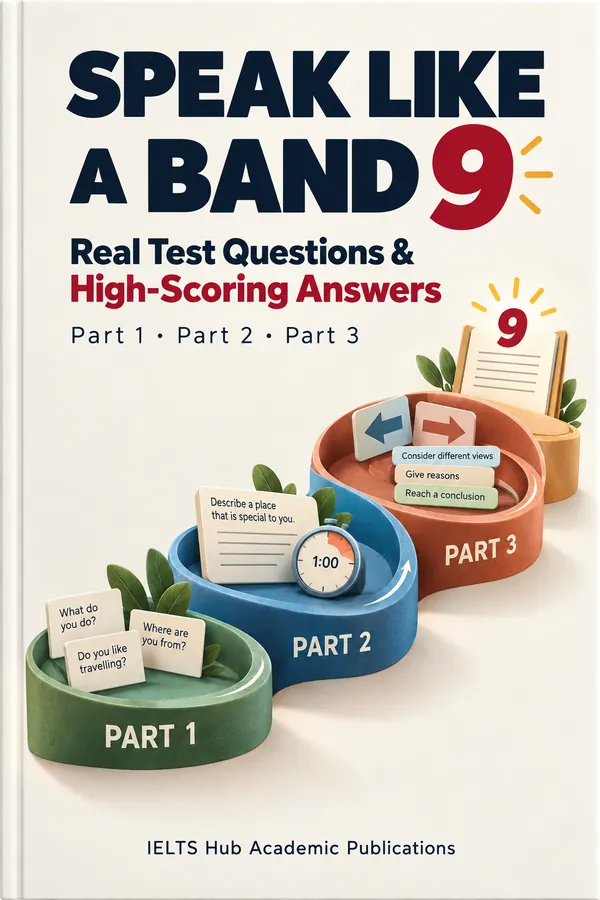
Speaking
Speak Like a Band 9
Real Test Questions & High-Scoring Answers
₹299$9.99CAD 13.99AUD 14.99£7.99NZD 16.99€8.99AED 39SGD 12.99

Speaking
Band 7+ Speaking Expressions
300 natural expressions for fluent, flexible speaking
₹199$6.99CAD 8.99AUD 9.99£4.99NZD 10.99€5.99AED 24SGD 8.99

Speaking
Speaking Tips for IELTS
Proven Strategies for Band 8.0+
₹299$9.99CAD 13.99AUD 14.99£7.99NZD 16.99€8.99AED 39SGD 12.99