Speaking test #162
Part 1 · Interview
4 to 5 minutes. The examiner asks about you and familiar topics.
Can you tell me your full name?
Where are you from?
Do you work or are you a student?
Do you collect anything?
Yeah, I'm definitely a bit of a collector. I've always loved picking up unique items and adding them to my collection. Right now, I'm really into vintage cameras and have a pretty impressive collection going on.
Is there anything that you keep from childhood?
Definitely. I have a lot of sentimental value attached to certain items from my childhood, so I try to hold onto them as much as possible. For example, I still have my favorite stuffed animal from when I was a kid, and I could never bring myself to get rid of it.
Would you keep old things for a long time? Why?
Absolutely. I think there's something really special about being able to hold onto old things and being able to look back on them and remember certain memories or moments in your life. Plus, I just think it's a really cool way to add character and history to your home.
Where do you usually keep things you need?
I'm pretty organized, so I like to have a designated spot for everything. For example, I keep my keys and wallet in a designated drawer in my bedroom, and I have a specific spot in my kitchen for all of my cooking supplies. It just makes it easier to find things when I need them.
What colors do you like best for? [Why/Why not?
?] I really love shades of blue and green. I find that they have a calming effect and are perfect for creating a relaxing atmosphere. Plus, they go well with a variety of other colors, so it's easy to incorporate them into any decorating scheme.
Do you like the same color when you were a child? [Why/Why not?
?] Actually, my favorite color has always been pink. I don't know why, but it's just a color that brings me joy and makes me feel happy. As I've grown older, I've come to appreciate other colors as well, but pink will always have a special place in my heart.
What colors would you not choose for decorating your room? [Why/Why not?
?] I'm not a huge fan of really bright, bold colors like neon orange or electric yellow. They can be a bit overwhelming and hard on the eyes, so I tend to avoid them in my home decor. That being said, I do love a pop of color here and there, so I might incorporate small accents of those shades in throw pillows or accessories.
What are the most popular colors with your friends at the moment? [Why/Why not?
?] I think one of the biggest trends right now is neutral tones like beige, white, and grey. They're really versatile and can be dressed up or down, depending on the occasion. My friends seem to be really into these shades because they're easy to match with any outfit and create a cohesive look. Plus, they're just really chic and stylish.
You will have to talk about the topic for one to two minutes. You have one minute to think about what you are going to say. You can make some notes to help you if you wish.
Describe a skill which is important to you
You should say:
- What the skill is
- How you developed this skill
- Why this skill is important to you
- How this skill has helped you in your life
What the skill is
I would like to talk about the skill of effective communication, which holds great importance in my life. This skill involves conveying information clearly and confidently, as well as actively listening to others. I believe that the ability to communicate effectively is crucial in both personal and professional settings.
How you developed this skill
I started developing this skill during my school days by participating in debates, public speaking competitions, and group discussions. Over the years, I have continuously worked on improving my communication skills through practice, feedback, and self-reflection. I have also taken communication courses and workshops to enhance my verbal and non-verbal communication abilities.
Why this skill is important to you
Effective communication is important to me because it plays a key role in building strong relationships, resolving conflicts, and achieving success in various aspects of life. It enables me to express my thoughts and ideas clearly, understand others' perspectives, and collaborate effectively with different individuals. Moreover, good communication skills help me to convey my message in a way that is easily understood and well received.
How this skill has helped you in your life
This skill has significantly helped me in my personal and professional life. In my career, I have been able to communicate my ideas persuasively, lead team discussions, and negotiate effectively. In personal relationships, I have found that good communication fosters trust, mutual understanding, and meaningful connections with others. Overall, I believe that mastering the skill of effective communication has been instrumental in my growth and success.
- Words
- 232
- Sentences
- 13
- Words per sentence
- 17.8
- Speaking time
- about 1.8 min
Counted at 130 words a minute. The exam gives you one to two minutes.
Part 3 · Discussion
4 to 5 minutes. The examiner asks broader questions linked to the cue card topic.
How is the importance of this skill different in different cultures or jobs?
The significance of communication skills can vary dramatically across cultures and professions. In many Western cultures, for instance, being articulate and expressing oneself clearly is often seen as a mark of intelligence and confidence. In contrast, some Eastern cultures may place a higher value on non-verbal cues and contextual understanding, where listening and observing can be just as important as speaking. In professional settings, these differences become even more pronounced. For example, in creative fields like advertising or design, collaboration and the ability to share ideas openly are crucial for innovation. Conversely, in more hierarchical professions, such as law or finance, communication might lean towards being more formal and structured. Ultimately, understanding these cultural nuances in communication can significantly enhance interpersonal relationships and professional success across diverse environments.
Some people might think this skill is not as important as it's made out to be. What do you think about that idea?
I can definitely understand why some people might think that certain skills, like communication, are overrated. However, I believe that effective communication is absolutely crucial in both personal and professional settings. It’s not just about exchanging information; it’s about building meaningful relationships and fostering collaborative environments. In today's world, where teamwork and networking are so vital, being able to articulate thoughts clearly can really set someone apart. So, while it might seem like just another skill, its impact is far-reaching and invaluable!
How does getting good at this skill help someone grow personally or in their job?
Mastering any skill can significantly enhance both personal and professional development. For instance, when someone becomes proficient in a particular area, they often experience a boost in self-confidence, which can spill over into other aspects of their lives. This newfound confidence encourages individuals to take on new challenges, fostering a mindset of continuous improvement. Professionally, a mastery of skills can lead to greater opportunities, as employers are always on the lookout for candidates who demonstrate a high level of competence and expertise. Furthermore, individuals who continuously develop their skills often find themselves better equipped to adapt to changes in the workplace, making them invaluable assets in today’s fast-paced environment.
Why do you think a lot of people have a hard time learning this skill?
Acquiring a new skill can often be a daunting task for many individuals, and I think there are a few reasons for this. Firstly, there’s the issue of time management; people often lead such busy lives that they struggle to carve out dedicated time for practice and learning. Additionally, the fear of failure can be a significant barrier—many individuals worry about not being good enough, which can lead to a lack of motivation. Lastly, some skills require a certain level of dedication and perseverance that not everyone is prepared to commit to, especially when faced with challenges along the way. Overall, it’s a complex mix of personal circumstances and psychological factors that makes skill acquisition so tough for many.
What changes in society could affect how important this skill is in the future?
Absolutely, that's a fascinating question! As we move deeper into the 21st century, the rapid pace of technological advancement is likely to have a significant impact on the relevance of various skills. For instance, with the rise of artificial intelligence and automation, there will be an increasing demand for skills that cannot easily be replicated by machines. This means that critical thinking and creative problem-solving are likely to become even more essential, as they enable individuals to navigate complex challenges that technology cannot handle. Furthermore, as society becomes more interconnected through globalization, the ability to communicate across cultures will also gain importance, fostering collaboration and cross-cultural understanding. In essence, the skills that emphasize human intuition and interpersonal connections will remain relevant, even in an increasingly digital world.
What steps can be taken to help more people learn this important skill?
To encourage more people to develop important skills, particularly in a rapidly evolving job market, there are several effective measures that can be implemented. Firstly, educational institutions could integrate skill development into their curricula, ensuring that students are not just focused on theoretical knowledge but also on practical applications. Additionally, workshops and seminars led by industry professionals can provide real-world insights and motivate individuals to pursue further learning. Moreover, offering incentives such as scholarships or grants for skill-based courses can make a significant difference, especially for those from underprivileged backgrounds. Finally, fostering a culture of lifelong learning through community programs can help individuals realize that skill development is a continuous journey, not just a requirement for a job. By taking these steps, we can create an environment where everyone feels empowered to enhance their skill set.
Go further with the books
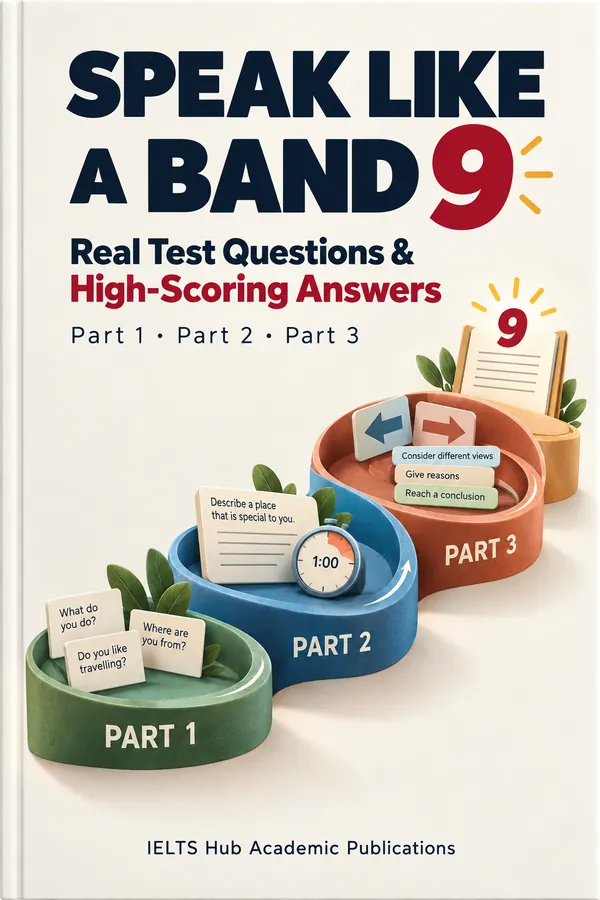
Speaking
Speak Like a Band 9
Real Test Questions & High-Scoring Answers
₹299$9.99CAD 13.99AUD 14.99£7.99NZD 16.99€8.99AED 39SGD 12.99
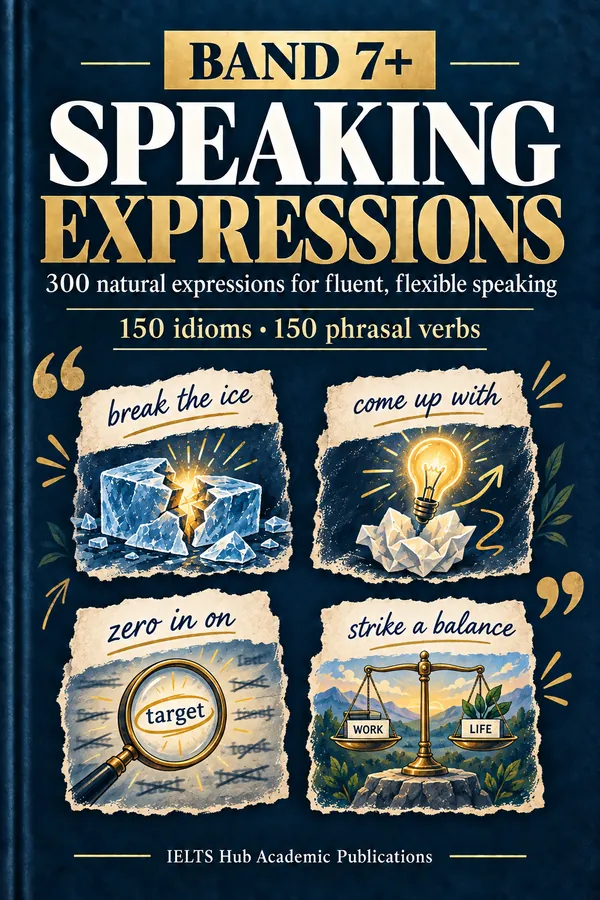
Speaking
Band 7+ Speaking Expressions
300 natural expressions for fluent, flexible speaking
₹199$6.99CAD 8.99AUD 9.99£4.99NZD 10.99€5.99AED 24SGD 8.99
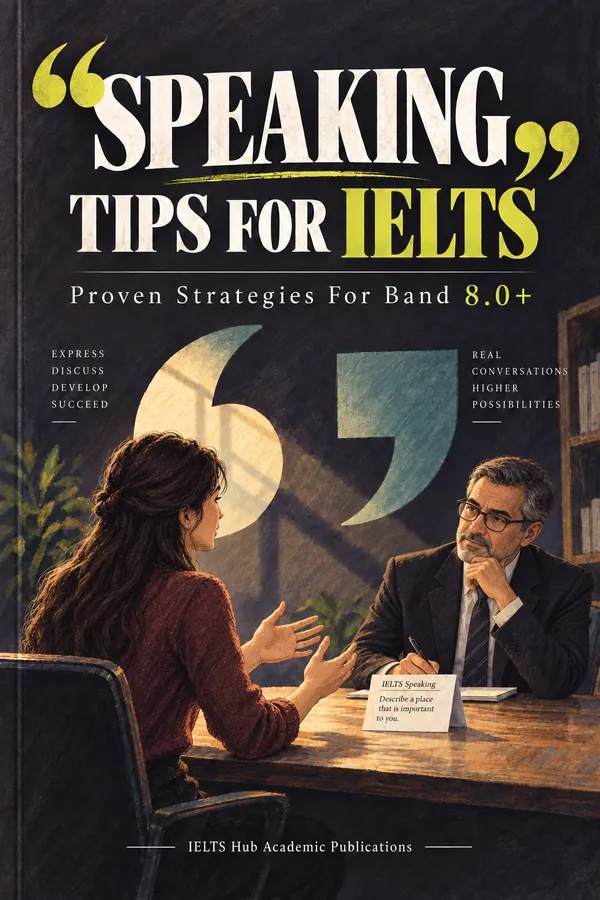
Speaking
Speaking Tips for IELTS
Proven Strategies for Band 8.0+
₹299$9.99CAD 13.99AUD 14.99£7.99NZD 16.99€8.99AED 39SGD 12.99