Speaking test #181
Part 1 · Interview
4 to 5 minutes. The examiner asks about you and familiar topics.
Can you tell me your full name?
Where are you from?
Do you work or are you a student?
What games are popular in your country?
In my country, there are a variety of popular games that are enjoyed by people of all ages. Some of the most popular games include football, cricket, and badminton. These games are popular because they are easy to learn and can be played by people of all skill levels. Additionally, they are also widely televised and many people like to watch professional games as well as participate in amateur leagues.
Do you play any games?
Yes, I am quite fond of playing games and try to make time for it as often as possible. I play a variety of games such as football, badminton, and chess. I find that playing games is a great way to spend time with friends and family, and it also helps me stay active and maintain good health.
How do people learn to play games in your country?
In my country, there are a number of ways that people can learn to play games. Many children learn to play games through physical education classes in school. Additionally, there are many clubs and organizations that offer lessons and training for a variety of different games. For example, football clubs often have youth teams that teach children how to play the game. Additionally, many people also learn to play games through playing with friends and family.
Do you think it's important for people to play games?
I absolutely believe that it is important for people to play games. Games provide a great opportunity for people to bond and connect with one another, as well as providing a way for people to stay active and maintain good health. Additionally, games can also be great for mental health, as they can provide an opportunity for people to relax and de-stress. Overall, games provide a lot of benefits and can be an important part of a well-rounded and balanced lifestyle.
Why do some people throw litter/garbage on the street?
I believe that some people may throw litter or garbage on the street because they have a lack of understanding or concern for the impact it has on the environment and their community. They may also have a lack of education or resources for proper disposal, or simply a lack of personal responsibility for their actions.
How do you feel when you see people throw litter/garbage?
Seeing people throw litter or garbage on the street makes me feel frustrated and disheartened. It shows a lack of respect for the community and the environment, and also contributes to a negative image of the city.
Do you think your city is clean or not?
I think that my city has its moments of cleanliness and moments of litter, but it could definitely use improvement. There are certain areas that are always well-maintained, but there are also areas where litter and garbage can be found often.
What do you do if you see garbage on the street?
If I see garbage on the street, I would do my best to dispose of it properly by either throwing it in a trash can or bringing it home to dispose of it there. I also believe in leading by example and encouraging others to do the same, instead of simply ignoring the problem. Additionally, I would consider supporting community clean-up initiatives or contacting my local government to address the issue.
You will have to talk about the topic for one to two minutes. You have one minute to think about what you are going to say. You can make some notes to help you if you wish.
Describe a hobby that someone in your family has
You should say:
- Who in your family has this hobby
- What the hobby is
- How often they engage in this hobby
- Why they enjoy this hobby
Who in your family has this hobby
In my family, my grandmother has a fascinating hobby of knitting. She has been knitting for as long as I can remember and it has become an integral part of her daily routine. Every evening, without fail, she will sit in her favorite chair with a ball of colorful yarn and her trusty knitting needles, creating intricate patterns and designs.
What the hobby is
Knitting is not just a hobby for my grandmother; it is a form of meditation for her. She finds immense joy and peace in the repetitive motion of looping and stitching the yarn together. It helps her relax and unwind after a long day, and she often says that it soothes her mind and soul like nothing else can.
How often they engage in this hobby
Despite her busy schedule taking care of the family and managing the household, my grandmother always makes time for her beloved hobby. She spends at least an hour every day knitting, sometimes even more on weekends. It has become a therapeutic activity for her, allowing her to express creativity and produce beautiful handmade items for her loved ones.
Why they enjoy this hobby
The reason my grandmother enjoys knitting so much is not just the act of creating something tangible but also the satisfaction of gifting her handmade creations to family and friends. She takes great pride in her work and loves seeing the joy on people's faces when they receive a knitted scarf, hat, or sweater from her. Knitting has not only become a hobby but a means of spreading love and warmth to those around her.
- Words
- 252
- Sentences
- 12
- Words per sentence
- 21.0
- Speaking time
- about 1.9 min
Counted at 130 words a minute. The exam gives you one to two minutes.
Part 3 · Discussion
4 to 5 minutes. The examiner asks broader questions linked to the cue card topic.
How are hobbies different for each generation in families?
Hobbies can vary significantly between generations in families, often reflecting the cultural and technological shifts of the times. For instance, older generations might gravitate towards more traditional pastimes, such as gardening or knitting, which have been passed down through families for years. In contrast, younger generations tend to embrace more modern activities, like gaming or social media, which are heavily influenced by technology. This shift often leads to a fascinating blend of interests within families, where members can learn from each other's diverse passions. Overall, these differences not only highlight the changing landscape of leisure activities but also foster intergenerational connections as family members share and explore each other's hobbies.
Some people think hobbies can really boost personal happiness, while others view them as a waste of time. What do you think about this?
I firmly believe that hobbies play a crucial role in enhancing personal happiness. Engaging in activities we love allows us to unwind and escape the pressures of daily life, which can be incredibly fulfilling. For many, hobbies provide a sense of purpose and achievement, whether it's through creative expression, physical activity, or learning new skills. While some may view them as a mere distraction, I see them as essential for mental well-being and overall life satisfaction. After all, when we pursue our passions, we not only enrich our lives but also cultivate a more positive outlook towards our responsibilities.
How do hobbies improve a person's life?
Hobbies play a pivotal role in enhancing a person's quality of life in numerous ways. Firstly, they provide a fantastic outlet for stress relief; engaging in activities we love allows us to escape the daily grind and recharge our batteries. Furthermore, hobbies often promote social interaction, whether through group activities or online communities, fostering connections that can lead to lasting friendships. Additionally, they can spark creativity and help individuals develop new skills, which not only boosts self-esteem but also opens up new avenues for personal and professional growth. Overall, hobbies enrich our lives, making our everyday experiences more fulfilling and enjoyable.
What do you think makes people pick some hobbies instead of others?
People often gravitate towards specific hobbies due to a variety of factors, including personal interests, cultural influences, and even social circles. For instance, someone who grew up in a family that values sports may develop a passion for physical activities like soccer or basketball. Additionally, the accessibility of certain hobbies plays a significant role; if a hobby requires a lot of resources or specialized equipment, it might deter individuals from pursuing it. Moreover, many people are drawn to hobbies that provide them with a sense of fulfillment or escapism from their daily routines, allowing them to unwind and express themselves creatively. Ultimately, the choice of hobby often reflects an individual’s personality and lifestyle, showcasing what they truly value in their leisure time.
How could the popularity of certain hobbies shift in the future?
The popularity of specific hobbies is bound to change as society evolves and technology advances. For instance, I believe we’ll see a significant rise in hobbies that incorporate cutting-edge technology, such as virtual reality gaming or drone racing. As younger generations become more tech-savvy, traditional pastimes may take a back seat, giving way to these modern pursuits. Additionally, with increasing awareness of mental health, activities such as meditation and mindfulness practices are likely to gain traction, as people seek ways to unwind and destress in their busy lives. It’s fascinating to think about how these shifts will reflect broader societal trends and values!
What steps can be taken to get more people involved in creative hobbies?
To encourage more people to engage in hobbies that foster creativity, one effective measure could be the establishment of community workshops. These workshops can provide a platform for individuals to explore various creative pursuits, from painting to writing, in a supportive environment. Additionally, promoting these activities through social media or local events can help raise awareness and spark interest. Collaborating with local artists or creators to host demonstrations could also inspire others to pick up a hobby. Finally, offering incentives, such as discounts on materials or free classes, can lower the barriers to entry and motivate individuals to get involved.
Go further with the books
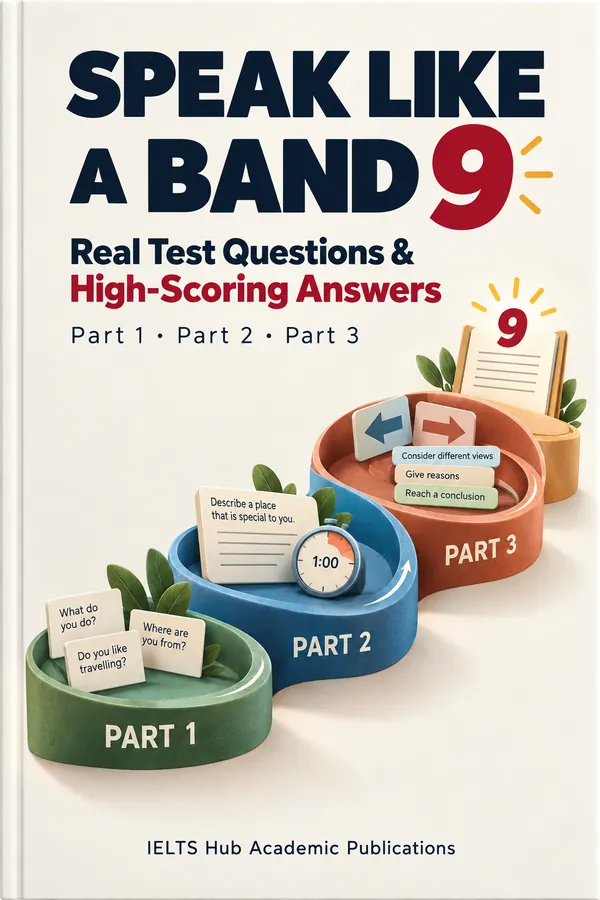
Speaking
Speak Like a Band 9
Real Test Questions & High-Scoring Answers
₹299$9.99CAD 13.99AUD 14.99£7.99NZD 16.99€8.99AED 39SGD 12.99
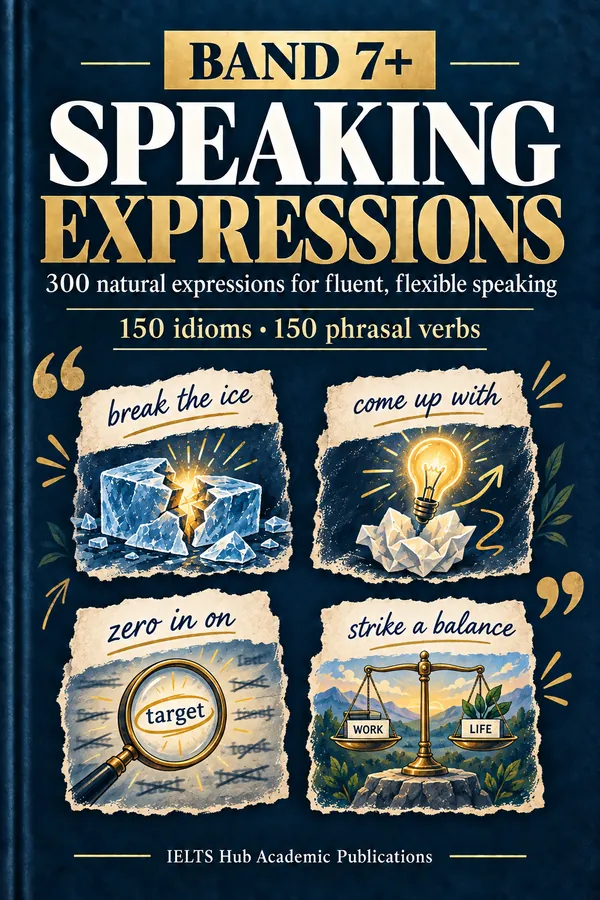
Speaking
Band 7+ Speaking Expressions
300 natural expressions for fluent, flexible speaking
₹199$6.99CAD 8.99AUD 9.99£4.99NZD 10.99€5.99AED 24SGD 8.99
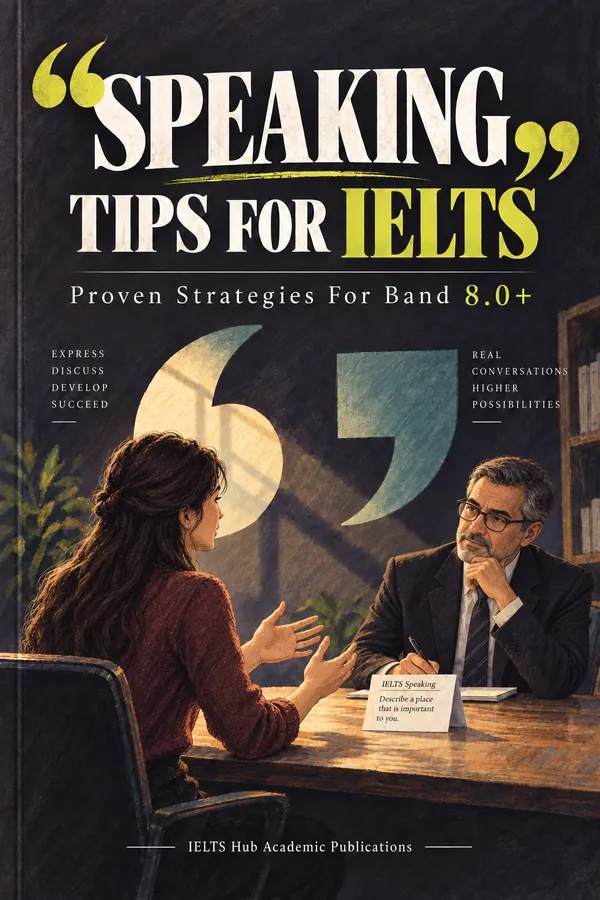
Speaking
Speaking Tips for IELTS
Proven Strategies for Band 8.0+
₹299$9.99CAD 13.99AUD 14.99£7.99NZD 16.99€8.99AED 39SGD 12.99