Speaking test #187
Part 1 · Interview
4 to 5 minutes. The examiner asks about you and familiar topics.
Can you tell me your full name?
Where are you from?
Do you work or are you a student?
Is it important to you to eat healthy food?
Definitely, eating healthy food is extremely important to me. Not only does it provide my body with the necessary nutrients to function properly, but it also has a direct impact on my overall well-being and mental health. I make sure to include a variety of fruits, vegetables, lean proteins, and whole grains in my diet, and try to limit my intake of processed foods and added sugars.
If you catch a cold, what do you do to help you feel better?
When I catch a cold, I make sure to get plenty of rest and drink lots of fluids to help my body fight off the virus. I also like to use over-the-counter medication such as ibuprofen or acetaminophen to alleviate any aches and pains, and sometimes use a humidifier in my room to help clear my congestion. I also avoid alcohol and smoking because they can irritate the respiratory system.
Do you pay attention to public information about health?
Yes, I definitely pay attention to public information about health. I think it's important to stay informed about current health issues and trends, as well as new research and treatments that are available. I regularly read articles and news updates about health topics that interest me, and I also follow reputable health organizations on social media to stay up-to-date on the latest information.
What could you do to have a healthier lifestyle?
There are many things I could do to have a healthier lifestyle. For example, I could make sure to get regular physical activity, such as going for a walk or a run, or taking part in a fitness class. I could also focus on eating a well-balanced diet that includes a variety of fruits, vegetables, and lean proteins. Additionally, I could make sure to get enough sleep each night, and try to manage my stress levels through activities such as yoga or meditation.
Do you enjoy reading about history? [Why?
?] I absolutely love reading about history. I find it fascinating to learn about past events and how they have shaped the world we live in today. The stories and personalities from different eras always capture my attention and I find myself getting lost in the details and the context of the events.
When was the last time you read a book or watched a film about history? [Why?
?] The last time I read a book about history was about a month ago. I read "The Rise and Fall of the Third Reich" by William L. Shirer. It was a gripping account of the rise of Nazi Germany and the events leading up to the Second World War. I was particularly interested in learning more about the political and social climate of the time and how it led to such a catastrophic event in history.
What historical event do you find most interesting? [Why/ Why not?
?] One of the historical events that I find most interesting is the American Revolution. I find it fascinating to learn about the events leading up to the war, the political and social climate of the time, and how it led to the formation of the United States of America. I also find the personalities of the key players in the war, such as George Washington and Thomas Jefferson, to be incredibly intriguing.
Do you think studying history is important? [Why/ Why not?
?] I believe that studying history is incredibly important. It provides us with a better understanding of the world we live in today and how it came to be. It helps us to understand the causes and consequences of past events, as well as the motivations and actions of the people who lived through them. It also helps us to learn from the mistakes of the past and to make better decisions in the present and future. Without an understanding of history, it would be difficult to fully understand the world we live in today.
You will have to talk about the topic for one to two minutes. You have one minute to think about what you are going to say. You can make some notes to help you if you wish.
Describe an animal that lives in the water
You should say:
- Physical characteristics of the animal
- Habitat of the animal
- Diet of the animal
- Interesting facts about the animal
Physical characteristics of the animal
In India, the Ganges River Dolphin is a fascinating aquatic creature that captivates the hearts of many. These dolphins are known for their unique physical characteristics, such as their long snouts and rounded foreheads. Their bodies are typically a light grayish-blue color, allowing them to blend in with the murky waters of the Ganges River. The Ganges River Dolphin is also known for its small, almost non-existent eyes, as their vision is not their primary sense for navigating underwater.
Habitat of the animal
These enchanting creatures inhabit the freshwater rivers of India, particularly the Ganges and Brahmaputra rivers. The Ganges River Dolphin prefers deep, fast-moving waters where they can hunt for fish with ease. They are also known to inhabit confluence zones where two rivers meet, as the abundance of fish in these areas provides them with ample food sources.
Diet of the animal
The diet of the Ganges River Dolphin mainly consists of various species of fish found in the rivers. They are skilled hunters, using echolocation to locate their prey in the murky waters. These dolphins have a diverse diet that includes carp, catfish, and freshwater shrimp, ensuring they receive the necessary nutrients to thrive in their aquatic environment.
Interesting facts about the animal
One of the most interesting facts about the Ganges River Dolphin is that it is one of the few freshwater dolphin species in the world. Unfortunately, their population is dwindling due to pollution, habitat destruction, and bycatch in fisheries. Efforts are being made to conserve these majestic creatures and protect their natural habitat to ensure their survival for future generations to admire.
- Words
- 255
- Sentences
- 13
- Words per sentence
- 19.6
- Speaking time
- about 2.0 min
Counted at 130 words a minute. The exam gives you one to two minutes.
Part 3 · Discussion
4 to 5 minutes. The examiner asks broader questions linked to the cue card topic.
What are the differences between water animals and land animals in their adaptations and ways of living?
Aquatic animals and terrestrial animals exhibit fascinating differences in their adaptations and lifestyles, primarily driven by their environments. For instance, aquatic animals typically have streamlined bodies, which help them move efficiently through water, while terrestrial animals often possess limbs that enable them to navigate land effectively. Additionally, many aquatic species, like fish, have gills that allow them to extract oxygen from water, whereas terrestrial animals have lungs for breathing air, showcasing a remarkable adaptation to their respective habitats. Furthermore, the lifestyles of these animals reflect their environments—aquatic creatures often rely on camouflage to evade predators in murky waters, while land animals might develop speed or strength to survive. It's also interesting to note that social structures differ; for example, certain fish species form schools for protection, whereas many terrestrial animals exhibit a range of social behaviors, from solitary to pack living. Overall, the adaptations of these animals are a testament to the incredible diversity of life on our planet.
Some people think that water animals are more affected by changes in the environment than land animals. What do you think about this?
I absolutely agree that aquatic animals are particularly vulnerable to environmental changes. The underwater ecosystem is incredibly delicate; even slight fluctuations in temperature or pollution levels can have devastating effects on marine life. For instance, coral reefs, which are often referred to as the “rainforests of the sea,” are suffering due to rising ocean temperatures and acidification, leading to widespread coral bleaching. Furthermore, many aquatic species are highly specialized and cannot adapt quickly to changing conditions, making them increasingly susceptible to threats like overfishing and habitat destruction. Overall, the intricate balance of aquatic environments means that these animals face unique challenges that can be much more pronounced than those experienced by land animals.
How do you believe protecting water animals is important for the health of ocean ecosystems?
The conservation of aquatic animals is absolutely vital for the overall health of marine ecosystems, and there are several reasons for this. Firstly, these creatures play a crucial role in maintaining the balance of the ecosystem; for instance, predators help control the populations of other species, preventing any one group from becoming too dominant. Additionally, the loss of aquatic species can lead to a cascade of negative effects, known as a trophic cascade, which disrupts the entire food web. Furthermore, healthy populations of fish and marine mammals contribute to the stability of habitat structures, like coral reefs, which in turn support a diverse range of marine life. Ultimately, protecting aquatic animals is not just about saving individual species; it's about preserving the intricate relationships that sustain our oceans and, by extension, our planet's health.
Why do you think some water animals are more likely to go extinct than others?
That's a fascinating question! I think certain aquatic species face a higher risk of extinction due to a combination of factors, including habitat destruction, overfishing, and climate change. For instance, species that inhabit coral reefs or shallow waters often experience significant threats from pollution and rising ocean temperatures, which can lead to coral bleaching. Additionally, some species have very specific habitat requirements or slow reproduction rates, making them particularly vulnerable when their environments are disrupted. Overall, it’s a complex interplay of human activities and natural vulnerabilities that puts these species at a greater risk.
What changes could happen in water ecosystems if current environmental problems keep getting worse?
If we continue on our current trajectory with environmental issues, the changes in aquatic ecosystems could be quite alarming. For instance, rising water temperatures could lead to biodiversity loss, as many species are unable to adapt quickly enough to the new conditions. Additionally, increased levels of pollution—especially plastics and chemicals—can disrupt the delicate balance of these ecosystems, harming not only marine life but also the livelihoods of communities that depend on them. Furthermore, the phenomenon of ocean acidification is likely to intensify, which could devastate coral reefs, often referred to as the "rainforests of the sea." Overall, if we don't take immediate action, we may witness a significant decline in aquatic health, which would have a ripple effect on the entire planet.
What steps can be taken to better protect water habitats and the creatures that live in them?
To enhance the protection of aquatic habitats, a multifaceted approach is essential. Firstly, implementing stricter regulatory frameworks can significantly reduce pollution levels in oceans and rivers, ensuring that aquatic ecosystems remain healthy. Additionally, establishing marine protected areas can safeguard critical habitats, allowing endangered species to thrive without the stress of human interference. Community engagement is also vital; by raising awareness and promoting sustainable practices among local populations, we can foster a sense of responsibility towards these ecosystems. Finally, investing in restoration projects can help rejuvenate damaged habitats, giving a new lease of life to the diverse species that call them home.
Go further with the books

Speaking
Speak Like a Band 9
Real Test Questions & High-Scoring Answers
₹299$9.99CAD 13.99AUD 14.99£7.99NZD 16.99€8.99AED 39SGD 12.99
Speaking
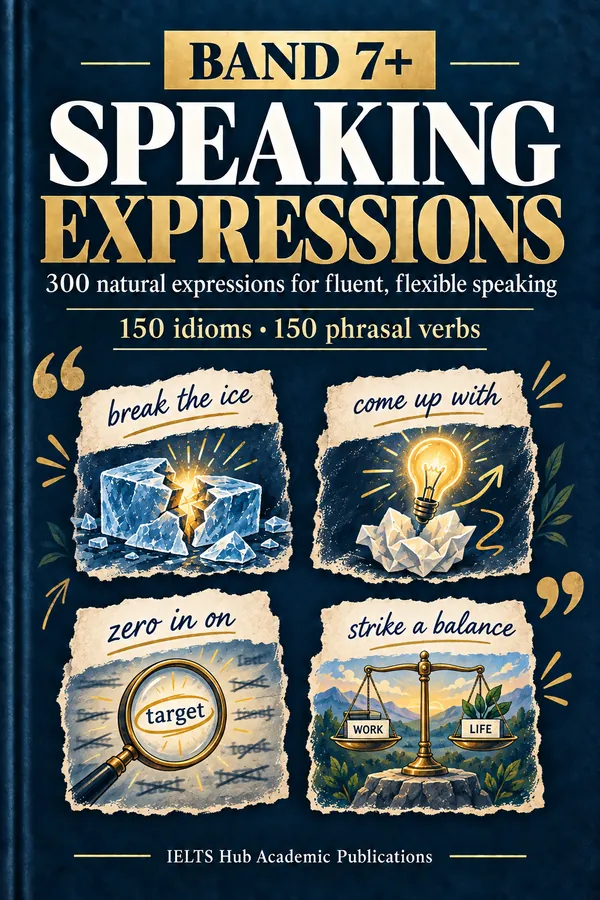
Band 7+ Speaking Expressions
300 natural expressions for fluent, flexible speaking
₹199$6.99CAD 8.99AUD 9.99£4.99NZD 10.99€5.99AED 24SGD 8.99

Speaking
Speaking Tips for IELTS
Proven Strategies for Band 8.0+
₹299$9.99CAD 13.99AUD 14.99£7.99NZD 16.99€8.99AED 39SGD 12.99