Speaking test #192
Part 1 · Interview
4 to 5 minutes. The examiner asks about you and familiar topics.
Can you tell me your full name?
Where are you from?
Do you work or are you a student?
How often do you go online?
I go online almost every day, usually for several hours at a time. I find it to be an essential tool for staying connected with my friends and family, as well as for work and research.
What do you use the internet for?
I use the internet for a variety of purposes. I use it for communication, such as sending emails and chatting with friends and family. I also use it for work, researching and collaborating with colleagues on projects. Additionally, I use it for entertainment, such as streaming movies and music, and browsing social media.
What's your favourite website?
My favourite website would have to be YouTube. I love the variety of content it offers, from educational videos to music and comedy. It's a great way to discover new things and I always find myself spending hours on it.
Do you think children should be allowed unsupervised access to the internet?
I believe that children should have some level of supervision when using the internet. While the internet can be a valuable tool for learning and communication, it can also be a dangerous place if children are not properly educated on how to stay safe online. Parents should set guidelines and monitor their children's internet usage to ensure they are not exposed to inappropriate content or online predators.
Have you ever been to an island?
Yes, I have been to several islands. I have visited the beautiful beaches of Maldives, the historic island of Santorini in Greece, and the tropical paradise of Bali in Indonesia. Each island had its own unique charm and I absolutely loved exploring them.
Is there any island in your country?
Yes, there are several islands in my country. Some of the most popular ones include Bora Bora, Moorea, and Tahiti in French Polynesia, as well as the Cook Islands and Niue in the South Pacific. These islands are known for their stunning beaches, crystal-clear waters, and diverse marine life.
Do you want to live on an island?
I would love to live on an island. I think it would be an incredibly peaceful and tranquil experience to wake up to the sound of waves and the smell of fresh sea air every day. Plus, the island lifestyle is very laid-back and relaxed, which I think would be great for my mental and physical well-being.
What would you like to do when you are on an island?
When I am on an island, I would love to do a variety of activities. I would love to go snorkeling or diving to explore the coral reefs and marine life, go for long walks on the beach, and try different water sports such as kayaking or paddle-boarding. I would also love to visit any local villages or towns and learn about the culture and history of the island. Overall, I just want to fully immerse myself in the island lifestyle and take in all the natural beauty it has to offer.
You will have to talk about the topic for one to two minutes. You have one minute to think about what you are going to say. You can make some notes to help you if you wish.
Decision that took you a long time to make
You should say:
- What decision you had to make
- Why it took a long time to make that decision
- What factors influenced your decision
- How you felt after making the decision
What decision you had to make
Making the decision to pursue higher education abroad was a significant choice that took me a long time to finalize. Initially, I was torn between continuing my studies in my home country or venturing out for a new academic experience. The complexity of this decision arose from the fact that it involved not only my education but also my future career prospects and personal growth.
Why it took a long time to make that decision
The decision-making process was prolonged due to various reasons. Firstly, the financial implications of studying abroad were a major concern. I had to meticulously plan and explore scholarship opportunities to alleviate the burden on my family. Secondly, the thought of leaving behind my comfort zone and family to live in a foreign country was daunting. I needed time to mentally prepare myself for the challenges that lay ahead.
What factors influenced your decision
Several factors played a crucial role in influencing my decision. The reputation of the educational institution I was considering, the potential for academic and career growth, and exposure to diverse cultures were key factors that swayed my choice. Additionally, the encouragement and support from my family and mentors provided me with the confidence to take this leap of faith.
How you felt after making the decision
After making the decision to pursue higher education abroad, I felt a mix of excitement and nervousness. While I was thrilled about the opportunities that awaited me, there was also a sense of apprehension about stepping into the unknown. However, as I embarked on this new chapter of my life, I felt empowered and determined to make the most of this decision and grow both academically and personally.
- Words
- 260
- Sentences
- 14
- Words per sentence
- 18.6
- Speaking time
- about 2.0 min
Counted at 130 words a minute. The exam gives you one to two minutes.
Part 3 · Discussion
4 to 5 minutes. The examiner asks broader questions linked to the cue card topic.
How do people and groups make decisions differently when they have important choices to make?
That's a fascinating question! When it comes to decision-making, individuals often rely on their own instincts and experiences, which can lead to quicker resolutions. They might weigh their options based on personal values and past experiences, allowing for a more intuitive approach. On the other hand, groups tend to engage in a more collaborative process, allowing for diverse perspectives to be considered. This can result in a more comprehensive analysis of the situation, but it may also lead to bottlenecks due to differing opinions. Ultimately, while individual decisions can be swift and decisive, group decisions often reflect a richer tapestry of insights, albeit at a slower pace.
How much does the time it takes to make a decision show a person's character or beliefs?
The length of time it takes someone to make a decision can indeed be quite revealing about their personality and values. For instance, individuals who are methodical and deliberate often take longer to weigh their options, as they value thoroughness and want to ensure they make the best choice. On the other hand, those who are more spontaneous and impulsive might make decisions quickly, reflecting a more adventurous spirit or a preference for living in the moment. Additionally, a person's core values can also play a role; someone who prioritizes ethical considerations may take more time to reflect on how their choices impact others. Ultimately, while it's not a definitive measure, the time taken to decide can offer fascinating insights into one's character and what they hold dear.
How does the effect of a choice on future chances affect how important that choice seems?
The impact of a decision on future opportunities is absolutely crucial in determining how significant that decision is perceived to be. When individuals consider the potential outcomes of their choices, they often weigh them against the doors that may open or close as a result. For instance, choosing a particular career path can greatly influence not just immediate job prospects but also long-term career advancement and personal fulfillment. Consequently, decisions that have far-reaching implications tend to be viewed with a greater sense of gravity, as people naturally want to maximize their potential. Ultimately, this thought process underscores the importance of foresight and planning in decision-making, as one small choice can lead to a cascade of opportunities or obstacles down the line.
Why do you think some people find it harder than others to make important choices?
That's a fascinating question! I believe the ability to make important decisions often hinges on a combination of personal experience and emotional intelligence. Some individuals may have faced significant challenges in their past that have sharpened their decision-making skills, while others might feel overwhelmed by the fear of making the wrong choice. Additionally, those with a strong support network can often navigate tough decisions more effectively, as they can seek advice and gain different perspectives. Ultimately, it's a blend of confidence, critical thinking, and perhaps even personality traits that can determine how one approaches decision-making.
How could new technology change how long it takes people to make decisions in the future?
The advent of technology is likely to revolutionize the way we make decisions in the future. With the rise of artificial intelligence and data analytics, individuals will have access to a wealth of information at their fingertips, enabling them to make more informed choices in a fraction of the time. This could lead to quicker decision-making processes, as people will no longer need to spend hours sifting through information; instead, they can rely on algorithms to present the most relevant options. However, I also wonder if this might result in a certain level of information overload, where the sheer volume of data could overwhelm individuals and actually prolong decision-making. It's a fascinating balance between speed and the quality of our choices that technology will influence.
What ways can people speed up their decision-making in important situations?
In crucial situations, individuals can adopt several strategies to streamline their decision-making process. Firstly, setting a clear framework for evaluating options can significantly reduce confusion. For instance, creating a simple pros and cons list can help clarify the benefits and drawbacks of each choice. Additionally, seeking advice from trusted peers or mentors can provide valuable insights and help to alleviate some of the emotional weight of the decision. Lastly, practicing mindfulness techniques, such as deep breathing or visualization, can facilitate a more focused state of mind, enabling quicker yet informed choices.
Go further with the books

Speaking
Band 7+ Speaking Expressions
300 natural expressions for fluent, flexible speaking
₹199$6.99CAD 8.99AUD 9.99£4.99NZD 10.99€5.99AED 24SGD 8.99
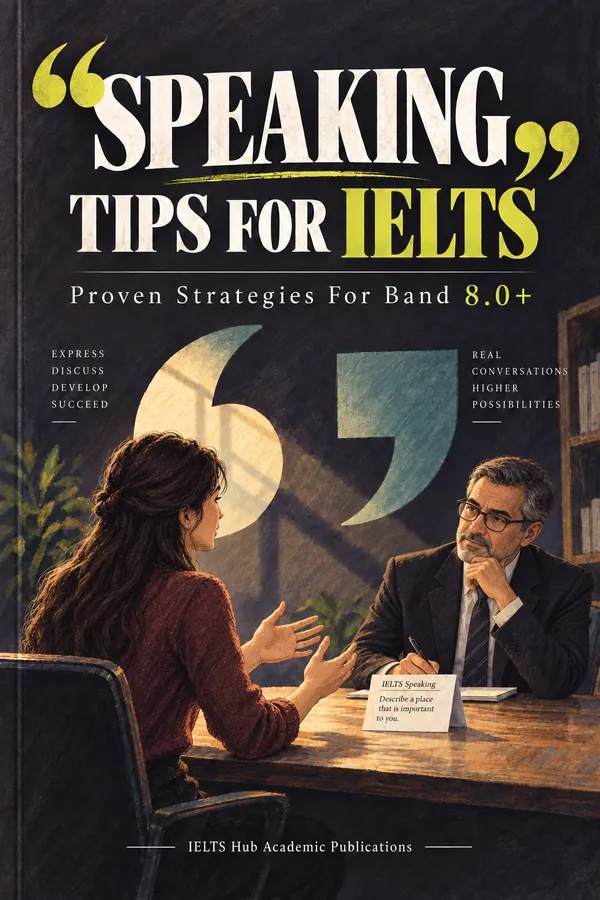
Speaking
Speaking Tips for IELTS
Proven Strategies for Band 8.0+
₹299$9.99CAD 13.99AUD 14.99£7.99NZD 16.99€8.99AED 39SGD 12.99
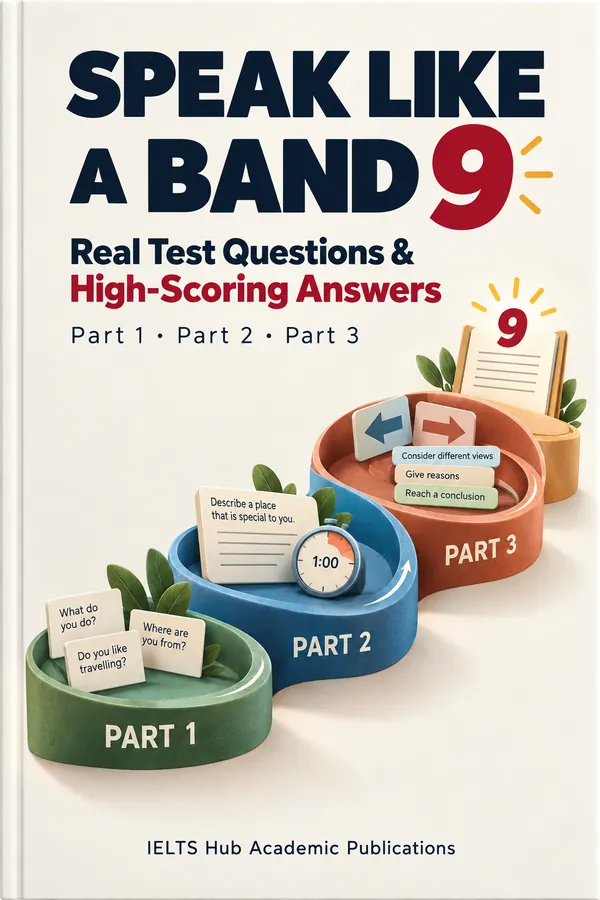
Speaking
Speak Like a Band 9
Real Test Questions & High-Scoring Answers
₹299$9.99CAD 13.99AUD 14.99£7.99NZD 16.99€8.99AED 39SGD 12.99