Speaking test #195
Part 1 · Interview
4 to 5 minutes. The examiner asks about you and familiar topics.
Can you tell me your full name?
Where are you from?
Do you work or are you a student?
How many languages can you speak? [Why/Why not?
?] I can speak three languages fluently - English, Spanish, and French. I have always been fascinated with different cultures and languages, so I made it a point to learn as many as possible. I believe that being multilingual can open up many opportunities, both personally and professionally.
How useful will English be to you in your future? [Why/Why not?
?] English is incredibly useful to me in my future as it is widely spoken and understood in many countries around the world. It is considered a global language and is used in many fields such as business, education, and technology. Being proficient in English will greatly benefit me in my career and personal growth.
What do you remember about learning languages at school? [Why/Why not?
?] I remember that learning languages at school was a fun and challenging experience for me. I enjoyed learning about different cultures and grammar rules, but I also found it difficult to retain new vocabulary and grammar structures. However, I believe that the effort I put into learning languages at school has greatly helped me in my ability to speak multiple languages fluently.
What do you think would be the hardest language for you to learn? [Why?
?] I think the hardest language for me to learn would be Chinese. The structure and grammar of the language is vastly different from the languages I am familiar with, and the characters used in Chinese are also quite challenging. Additionally, the tones and pronunciation are also very difficult, which makes it a language that would take a lot of time and effort to master.
What kinds of thing make you laugh?
I find that I tend to laugh at things that are unexpected or surprising. I also enjoy clever or witty humor, and I find that physical comedy can be quite amusing as well. I also like to laugh at things that are relatable or that make me think about my own experiences.
Do you like making other people laugh?
I absolutely love making other people laugh. I find it incredibly satisfying to see others enjoying themselves and to know that I played a part in that. I also believe that laughter is contagious, so when I make someone else laugh, it often leads to others joining in as well.
Do you think it's important for people to laugh?
I absolutely believe that it is important for people to laugh. Laughter has been shown to have a wide range of benefits for our physical and mental health, and it can also help to build and strengthen relationships. I think that laughter is a way for people to connect and bond with each other, and it can also serve as a powerful tool for coping with stress and difficult situations.
Is laughing the same as feeling happy?
I don't necessarily think that laughing is the same as feeling happy, but I do think that they are closely connected. I believe that laughter can be a sign of happiness, but it can also be a way to cope with or mask other emotions. I think that laughter can be a way to release pent-up emotions, and it can also be a way to distract ourselves from negative feelings.
You will have to talk about the topic for one to two minutes. You have one minute to think about what you are going to say. You can make some notes to help you if you wish.
Describe a skill you want to learn
You should say:
- What skill it is
- Why you want to learn it
- How you plan to learn it
- When you hope to master it
What skill it is
I would like to learn the skill of traditional Indian cooking, particularly mastering the art of making authentic Indian dishes from scratch. This skill has always intrigued me because of my deep appreciation for Indian cuisine, known for its rich flavors and diverse range of dishes. I believe that by learning this skill, I can not only explore my culinary creativity but also connect more deeply with my cultural roots.
Why you want to learn it
The reason I want to learn traditional Indian cooking is to preserve and pass down the culinary heritage of my country. As an Indian, I feel a sense of responsibility to learn and uphold the traditions that have been passed down through generations. Additionally, I am eager to impress my family and friends with homemade Indian dishes that capture the essence of our culture and traditions.
How you plan to learn it
To learn traditional Indian cooking, I plan to start by watching tutorials and reading cookbooks that focus on authentic Indian recipes. I also aim to enroll in cooking classes or workshops that specialize in Indian cuisine to gain hands-on experience and guidance from experts in the field. Additionally, I intend to practice regularly by cooking Indian meals at home and experimenting with different ingredients and techniques.
When you hope to master it
I hope to master the skill of traditional Indian cooking within the next year. By dedicating time and effort to learning and practicing this skill consistently, I am confident that I will be able to create delicious and authentic Indian dishes that reflect the true essence of my cultural heritage. Ultimately, mastering this skill will not only enhance my culinary abilities but also strengthen my connection to my Indian roots.
- Words
- 272
- Sentences
- 12
- Words per sentence
- 22.7
- Speaking time
- about 2.1 min
Counted at 130 words a minute. The exam gives you one to two minutes.
Part 3 · Discussion
4 to 5 minutes. The examiner asks broader questions linked to the cue card topic.
What is different about learning a new skill as an adult compared to learning skills as a child?
Learning a new skill in adulthood often presents a different set of challenges compared to acquiring skills in childhood. As children, our brains are like sponges, effortlessly absorbing information and adapting to new experiences. In contrast, adults tend to have more fixed mindsets and may struggle with self-doubt or fear of failure, which can hinder the learning process. Additionally, adults usually have a busier lifestyle, juggling work, family, and other responsibilities, which can make it difficult to dedicate time and energy to new pursuits. However, on the flip side, adults often bring a wealth of life experience and a clearer sense of purpose to their learning, allowing them to set meaningful goals and stay motivated. Overall, while the learning process can be more challenging for adults, it can also be incredibly rewarding.
What are some usual reasons people may be reluctant to learn new skills as they get older?
There are several reasons individuals might feel hesitant to learn new skills later in life. Firstly, many people grapple with the fear of failure; they worry that they won't be able to master the new skill, especially if they’ve had little experience with it before. Additionally, there’s often a perception that learning is primarily for the young, which can lead to a sense of self-doubt and the feeling that they might be out of their depth. Time constraints also play a significant role; as adults, they usually have numerous responsibilities, such as work and family, making it challenging to dedicate time to learning. Lastly, some may simply feel comfortable in their existing routines and fear that stepping outside of their comfort zone might disrupt their current lifestyle.
How can becoming really good at a skill help you grow personally and professionally?
Mastering a skill can have a profound impact on both personal development and professional growth. First and foremost, it fosters a sense of self-confidence; when you become proficient in something, it boosts your belief in your abilities. This newfound confidence often spills over into other areas of life, encouraging you to tackle challenges with a more positive mindset. Additionally, skill mastery can open up new opportunities in your career. Employers are always on the lookout for candidates with specialized expertise, and having a well-honed skill can set you apart in a competitive job market. It also encourages a mindset of lifelong learning, as the pursuit of mastery often leads individuals to seek out further knowledge and understanding, which is incredibly valuable in today’s fast-paced world. Overall, the journey of mastering a skill not only enhances your personal attributes but also significantly elevates your professional standing.
Why do you think some people can learn certain skills more easily than others?
That's a fascinating question! I believe there are a few factors at play here. Firstly, innate talent can make a significant difference; some individuals might have a natural affinity for certain skills, whether it’s musicality, athleticism, or even languages. Additionally, previous experience can also shape how easily someone picks up a new skill. For example, someone who has played an instrument in the past may find it easier to learn another one compared to a complete novice. Lastly, I think that motivation and mindset play crucial roles; those who are genuinely passionate about what they’re learning tend to excel more quickly, as their enthusiasm drives them to practice and improve.
How could the need for certain skills change in the next ten years?
The demand for specific skills is likely to undergo significant transformation in the next decade, primarily driven by advancements in technology and shifts in the global economy. For instance, as automation and artificial intelligence continue to evolve, there will be a growing need for individuals who possess highly specialized technical skills, particularly in fields like data analysis and machine learning. Moreover, soft skills such as emotional intelligence and adaptability will become increasingly valuable, as companies prioritize collaboration and innovation in their work environments. Additionally, the rise of remote work might necessitate stronger communication and digital literacy skills, as teams become more dispersed. Overall, it’s fascinating to think about how these changes will not only reshape the job market but also influence how education and training programs are designed to prepare the workforce of the future.
What ways can we make it easier for everyone to learn new skills?
To make learning new skills more accessible to everyone, we could leverage technology in innovative ways. Online platforms and mobile applications can offer a plethora of resources, allowing individuals to learn at their own pace and from the comfort of their homes. Additionally, community centers could host free or low-cost workshops, creating a supportive environment for skill development. Furthermore, partnerships between educational institutions and local businesses could facilitate mentorship programs, bridging the gap between theoretical knowledge and practical experience. This multifaceted approach would not only democratize education but also foster a lifelong learning culture within society.
Go further with the books
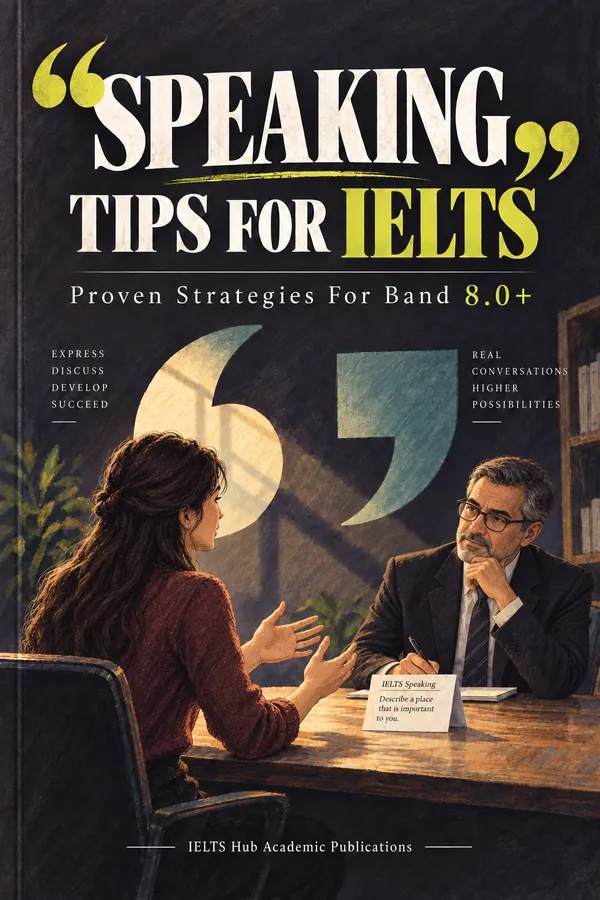
Speaking
Speaking Tips for IELTS
Proven Strategies for Band 8.0+
₹299$9.99CAD 13.99AUD 14.99£7.99NZD 16.99€8.99AED 39SGD 12.99
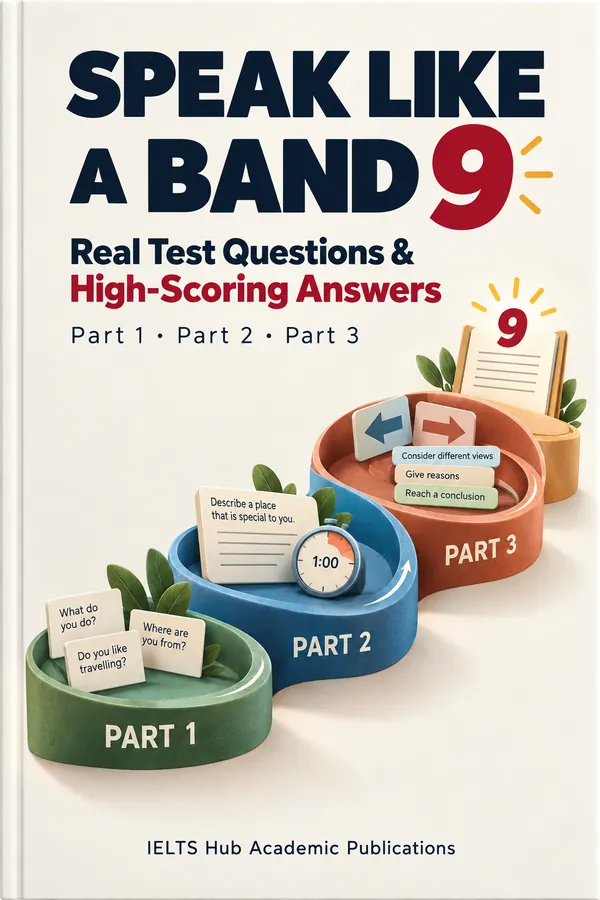
Speaking
Speak Like a Band 9
Real Test Questions & High-Scoring Answers
₹299$9.99CAD 13.99AUD 14.99£7.99NZD 16.99€8.99AED 39SGD 12.99
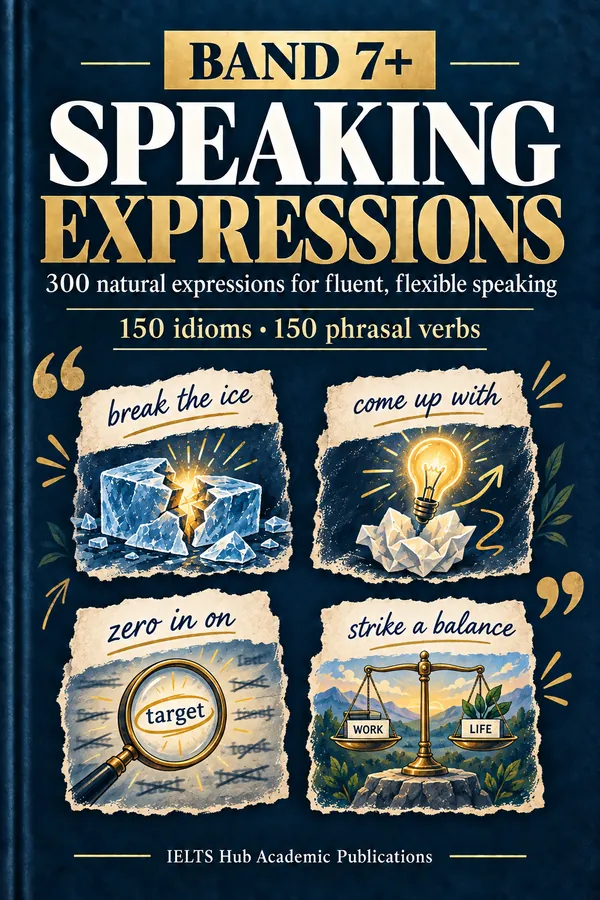
Speaking
Band 7+ Speaking Expressions
300 natural expressions for fluent, flexible speaking
₹199$6.99CAD 8.99AUD 9.99£4.99NZD 10.99€5.99AED 24SGD 8.99