Speaking test #199
Part 1 · Interview
4 to 5 minutes. The examiner asks about you and familiar topics.
Can you tell me your full name?
Where are you from?
Do you work or are you a student?
At what age did you start studying mathematics?
I started studying mathematics when I was around six years old, in primary school.
Do you like mathematics? Why / why not?
I do enjoy mathematics, particularly the logical and analytical aspects of it. I find it satisfying to solve complex problems and to understand mathematical concepts. However, I also understand that it can be challenging for some people, so I appreciate that it might not be everyone's favorite subject.
Is it necessary for everyone to learn mathematics?
I believe that mathematics is an important subject for everyone to learn, regardless of their chosen career path. It is essential for developing problem-solving skills and logical thinking, which are valuable in many different fields. Additionally, it is essential for understanding the world around us, from basic concepts such as measurement and time to more advanced topics like statistics and physics.
Do you prefer to use a calculator when doing mathematics?
Personally, I prefer to use a calculator when doing mathematics. I find it helpful to use a calculator when working with large numbers or when solving complex equations. However, I also understand the importance of being able to do basic calculations mentally, so I try to practice both methods. Overall, I believe that a calculator can be a useful tool when working with mathematics, but it is important to understand the underlying concepts and principles.
You will have to talk about the topic for one to two minutes. You have one minute to think about what you are going to say. You can make some notes to help you if you wish.
A musical instrument you would like to be able to play
You should say:
- What instrument it is
- Why you want to play it
- Where you would like to learn it
- How you think it would benefit you
What instrument it is
I have always been fascinated by the enchanting sounds of the violin, and it is the musical instrument I would love to learn to play. The violin's ability to evoke a wide range of emotions through its soulful melodies is truly captivating to me. Its rich history and versatile nature make it a timeless instrument that transcends cultural boundaries, and I am drawn to the challenge of mastering its complex techniques.
Why you want to play it
I believe learning to play the violin would not only allow me to express myself artistically but also provide me with a sense of discipline and focus. The process of learning such a delicate instrument would require patience, dedication, and perseverance, qualities that I aspire to develop further. Additionally, mastering the violin would open up opportunities for me to collaborate with other musicians and explore different genres of music, enhancing my overall musical experience.
Where you would like to learn it
Ideally, I would like to learn to play the violin in a traditional setting such as a music school or under the guidance of a skilled violin teacher. Being immersed in a structured learning environment would help me grasp the fundamentals of violin playing more effectively and progress steadily towards proficiency. Moreover, interacting with fellow music enthusiasts and receiving feedback from experienced instructors would create a supportive learning community that would motivate me to excel.
How you think it would benefit you
Overall, I believe that learning to play the violin would not only enrich my life with the beauty of music but also improve my cognitive abilities and emotional well-being. The discipline and focus required to master this intricate instrument would undoubtedly benefit me in various aspects of my personal and professional life, fostering a sense of creativity, resilience, and achievement that would stay with me for years to come.
- Words
- 289
- Sentences
- 11
- Words per sentence
- 26.3
- Speaking time
- about 2.2 min
Counted at 130 words a minute. The exam gives you one to two minutes.
Part 3 · Discussion
4 to 5 minutes. The examiner asks broader questions linked to the cue card topic.
How do various musical instruments add to the variety of music?
Different musical instruments play a pivotal role in creating a rich and diverse musical landscape. Each instrument brings its own unique timbre and sound, which can evoke various emotions and cultural narratives. For instance, the haunting notes of a violin can convey deep sorrow, while the vibrant rhythms of a djembe can uplift and energize a crowd. Furthermore, when you combine instruments from different cultures, like a sitar with a guitar, it fosters an exciting fusion of styles that can lead to innovative music. This diversity not only enriches individual songs but also promotes greater cross-cultural understanding and appreciation among listeners, making music a universal language that connects us all.
What do you think about the idea that playing an instrument can boost creativity?
I absolutely believe that learning to play an instrument can significantly enhance creativity! When you engage with music, it’s not just about hitting the right notes; it’s about expressing emotions and ideas in a unique way. This process encourages out-of-the-box thinking, as musicians often need to improvise and experiment with different sounds and rhythms. Additionally, the discipline and focus required to master an instrument can lead to improved problem-solving skills, which are essential for creative pursuits. Overall, I think the journey of learning music opens up a whole new world of artistic expression that can enrich one’s life in countless ways.
How do you think musical instruments shape cultural identity?
Musical instruments are absolutely pivotal in shaping and expressing cultural identity. They serve as a vital link between generations, allowing traditions and stories to be passed down through music. For instance, the sitar in Indian classical music or the djembe in West African cultures not only produce unique sounds but also embody the history and values of their respective societies. Moreover, learning to play these instruments often fosters a sense of belonging, as individuals connect with their heritage and community. Ultimately, musical instruments are not just tools for entertainment; they are powerful symbols that can evoke a deep sense of pride and identity within a culture.
Why do people usually pick certain instruments to learn instead of others?
People often choose to learn specific instruments based on a variety of factors, including personal taste, cultural influences, and even practicality. For instance, someone might be drawn to the guitar because of its versatility in different genres like rock, folk, and pop. Additionally, cultural background plays a significant role; for example, someone from a family of classical musicians might feel inclined to learn the violin. Peer influence also cannot be overlooked; if a friend plays the drums, it could spark an interest in percussion instruments. Ultimately, the choice of instrument often reflects a blend of passion and accessibility, shaping the musical journey of each individual.
How could the popularity of some instruments change later on?
The popularity of musical instruments is likely to evolve significantly as technology continues to advance. For instance, we might see a rise in the use of digital instruments and synthesizers, especially among younger generations who are more inclined towards electronic music. Traditional instruments like the piano or guitar may still hold their charm, but they could be complemented by innovative technologies that create new sounds and experiences. Additionally, with the increasing global connectivity, instruments from diverse cultures might gain traction, leading to a more eclectic mix of musical styles. Ultimately, the landscape of music is always shifting, and I believe we’ll witness some fascinating transformations in the instruments people choose to play.
What ways can we get more people to learn to play musical instruments?
To encourage more people to learn musical instruments, I believe implementing a variety of engaging programs could be incredibly effective. For instance, offering free or subsidized group classes at community centers can create a supportive environment where individuals feel comfortable trying out new instruments without the pressure of one-on-one lessons. Additionally, incorporating technology, like apps that gamify the learning process, can make practicing more accessible and enjoyable for all ages. Moreover, collaboration with local schools to integrate music education into the curriculum could spark interest from a young age, fostering a lifelong appreciation for music. Lastly, hosting community events or competitions where amateurs can showcase their skills might inspire others to pick up an instrument, creating a vibrant community around music. Overall, a combination of accessibility, innovation, and community engagement could significantly boost interest in learning musical instruments.
Go further with the books
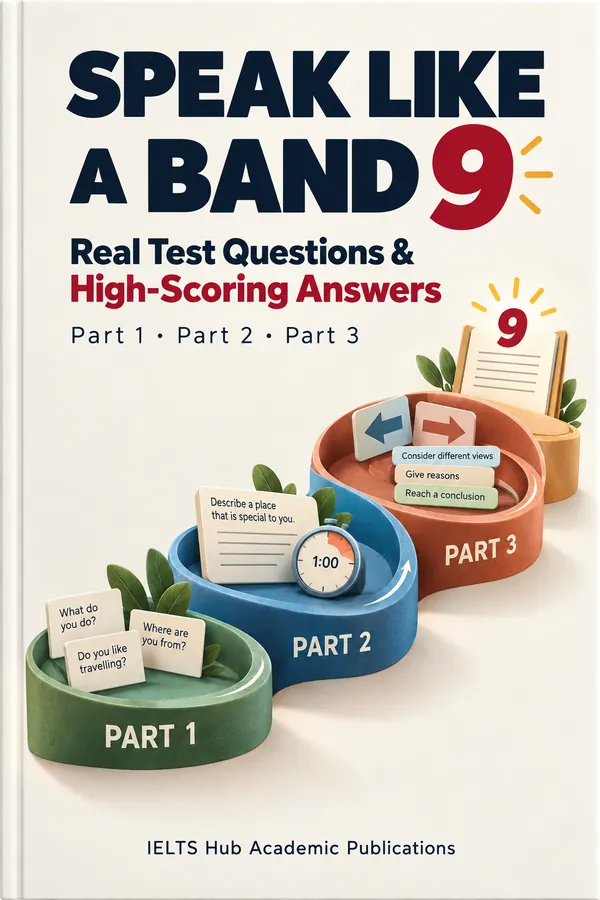
Speaking
Speak Like a Band 9
Real Test Questions & High-Scoring Answers
₹299$9.99CAD 13.99AUD 14.99£7.99NZD 16.99€8.99AED 39SGD 12.99
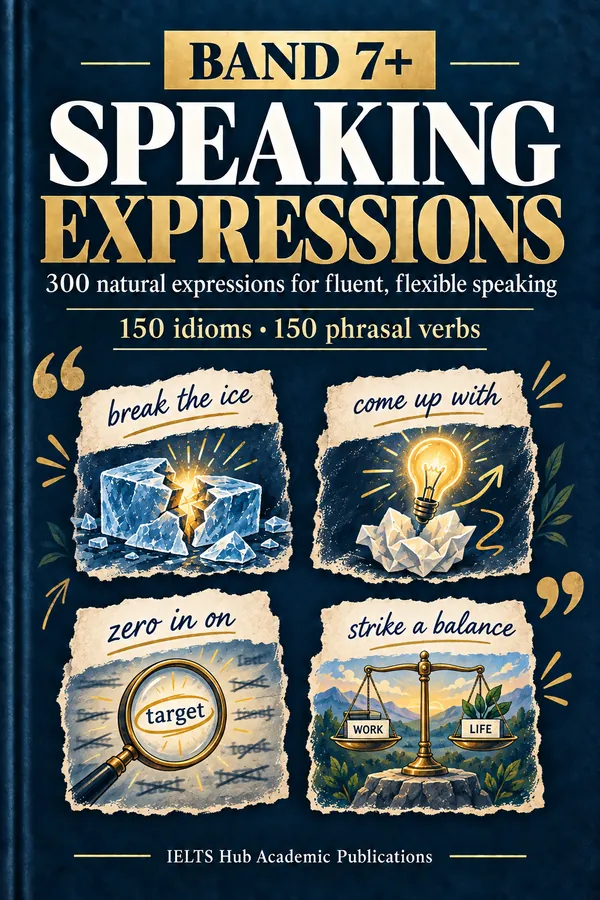
Speaking
Band 7+ Speaking Expressions
300 natural expressions for fluent, flexible speaking
₹199$6.99CAD 8.99AUD 9.99£4.99NZD 10.99€5.99AED 24SGD 8.99
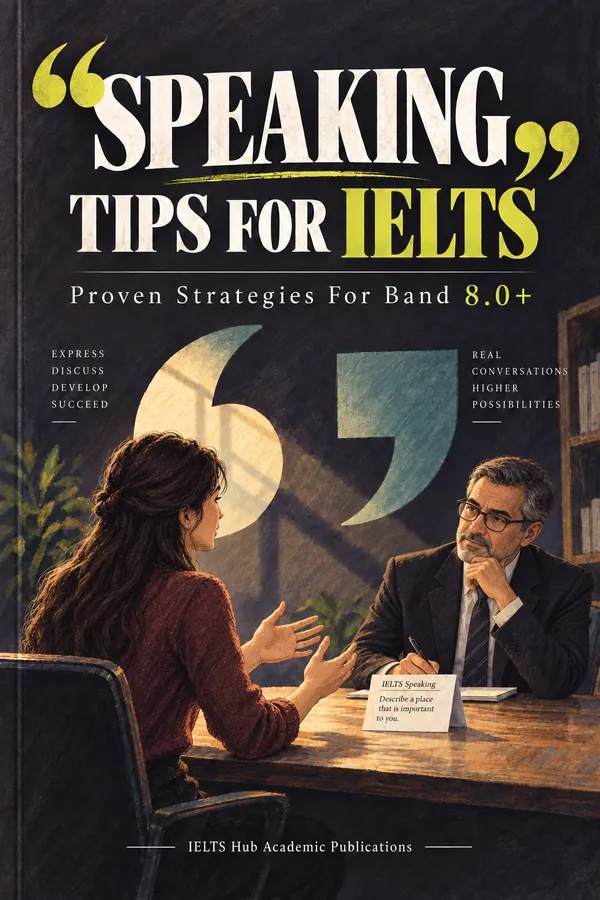
Speaking
Speaking Tips for IELTS
Proven Strategies for Band 8.0+
₹299$9.99CAD 13.99AUD 14.99£7.99NZD 16.99€8.99AED 39SGD 12.99