Speaking test #202
Part 1 · Interview
4 to 5 minutes. The examiner asks about you and familiar topics.
Can you tell me your full name?
Where are you from?
Do you work or are you a student?
Do you like looking at yourself in the mirror? How often?
I absolutely love looking at myself in the mirror. I find it to be a great way to check my appearance and make sure I am looking my best before leaving the house. I typically look in the mirror a few times a day, such as when I wake up in the morning, before I go to bed at night, and occasionally throughout the day when I am getting ready for different events or activities.
Have you ever bought mirrors?
Yes, I have bought mirrors before. I have purchased several mirrors for different rooms in my home, including a large floor mirror for my bedroom and a few smaller mirrors for my bathroom. I also recently purchased a full-length mirror for my entryway, which is great for checking my outfit before heading out the door.
Do you usually take a mirror with you?
No, I do not usually take a mirror with me when I am on the go. I find that most public restrooms and other facilities have mirrors available for use, so I don't typically feel the need to carry one with me. However, if I am going on a trip or will be away from home for an extended period of time, I may bring a small compact mirror with me.
Would you use mirrors to decorate your room?
Yes, I definitely would use mirrors to decorate my room. I think mirrors are a great way to add some visual interest and can also make a room feel larger and more open. I have used mirrors in the past to decorate different rooms in my home, such as hanging a group of small mirrors in my dining room to create a unique wall display. I also love the idea of incorporating a large floor mirror into a room design, as it can make a big impact and can also be functional for getting ready in the morning.
What was your first mobile phone?
My first mobile phone was a Nokia 3310. I remember it being a very basic model with no internet or camera, but it was still a game-changer for me at the time. It was a gift from my parents when I was in high school, and I felt so grown up having my own phone.
Do you often use your mobile phone for texting or calls?
Yes, I use my mobile phone for both texting and calls quite frequently. I find it to be a convenient way to communicate with friends and family, and I also use it for work-related communication. I also use my phone to send and receive emails, which is very helpful.
Will you buy a new one in the future?
Yes, I plan to buy a new phone in the near future. I like to stay up to date with the latest technology and features, so I like to upgrade my phone every couple of years.
How has your mobile phone changed your life?
My mobile phone has changed my life in many ways. It has made communication so much more convenient and easy. I can stay connected with friends and family no matter where I am in the world. It also allows me to access information and stay connected with work and the news. Additionally, it has also made my life easier by having all my contacts, appointments, and notes in one place. Overall, my mobile phone has made my life more productive, organized and efficient.
You will have to talk about the topic for one to two minutes. You have one minute to think about what you are going to say. You can make some notes to help you if you wish.
Describe what you usually do in your leisure time
You should say:
- Activities you enjoy
- Where you usually spend your leisure time
- Who you prefer to spend your leisure time with
- How your leisure activities make you feel
Activities you enjoy
In my leisure time, I usually engage in a variety of activities that help me relax and unwind. One of my favorite pastimes is reading books, especially fiction and self-improvement genres. I find it incredibly rewarding to delve into the captivating worlds created by talented authors and gain valuable insights that I can apply to my own life.
Where you usually spend your leisure time
I typically spend my leisure time at home, where I have created a cozy reading nook with a comfortable armchair and a small bookshelf filled with my favorite titles. This quiet and peaceful environment allows me to fully immerse myself in the stories and ideas presented in the books I read, providing me with a much-needed escape from the hustle and bustle of daily life.
Who you prefer to spend your leisure time with
When it comes to spending my leisure time, I prefer to do so alone. While I enjoy socializing with friends and family, I find that solitary activities like reading allow me to recharge and focus on my own thoughts and emotions. Being alone in my personal space gives me the freedom to fully relax and introspect, which is essential for my overall well-being.
How your leisure activities make you feel
Engaging in my favorite leisure activities brings me a sense of inner peace and contentment. Reading, in particular, has a calming effect on my mind and helps me reduce stress and anxiety. The knowledge and inspiration I gain from books enrich my life and broaden my perspective, leaving me feeling refreshed, rejuvenated, and ready to face whatever challenges may come my way.
- Words
- 248
- Sentences
- 11
- Words per sentence
- 22.5
- Speaking time
- about 1.9 min
Counted at 130 words a minute. The exam gives you one to two minutes.
Part 3 · Discussion
4 to 5 minutes. The examiner asks broader questions linked to the cue card topic.
What are the differences in leisure activities between various age groups?
Leisure activities can vary significantly across different age groups, primarily due to varying interests, physical capabilities, and social dynamics. For instance, younger people often gravitate towards more adventurous pursuits, such as extreme sports or gaming, which not only provide excitement but also foster social connections. In contrast, middle-aged individuals might prefer activities that allow for both relaxation and personal growth, like gardening or joining book clubs, which can also serve as a great way to unwind after a busy day. On the other hand, older adults often lean towards more gentle pastimes, such as walking in nature or engaging in arts and crafts, which offer a sense of tranquility and creativity. Interestingly, the motivations behind these leisure choices can also differ; younger generations might seek out thrill and social interaction, while older individuals often prioritize well-being and mindfulness. Overall, these differences reflect the evolving priorities and lifestyles that come with age, showcasing the rich tapestry of how we choose to spend our free time.
How important do you think free time is for improving a person's quality of life?
Leisure time is absolutely crucial in enhancing one’s quality of life. It provides individuals with the opportunity to unwind and recuperate from the stresses of daily life, which is essential for mental well-being. Engaging in hobbies or spending time with loved ones during leisure hours fosters a sense of connection and belonging, which can significantly boost overall happiness. Furthermore, leisure activities often lead to the development of new skills and interests, enriching our lives and providing a sense of accomplishment. Ultimately, a balanced approach to leisure can create a more fulfilling and well-rounded life, making it an indispensable part of our daily routines.
How do fun activities help a person's mental and physical health?
Leisure activities play a crucial role in enhancing both mental and physical well-being. Engaging in hobbies such as sports or arts can significantly reduce stress levels, allowing individuals to unwind and recharge. Moreover, physical activities like jogging or dancing not only keep one fit but also release endorphins, which are often referred to as the body’s natural mood lifters. On the mental side, pursuing interests like reading or gardening can foster creativity and provide a sense of accomplishment, contributing to overall happiness. Ultimately, making time for these activities can lead to a more balanced and fulfilling life, enriching our daily experiences.
Why do you think people pick some fun activities instead of others?
People often choose specific leisure activities based on a mix of personal interests, social influences, and lifestyle factors. For instance, someone might gravitate towards sports because they enjoy the thrill of competition and the camaraderie that comes with teamwork. On the other hand, others may prefer more solitary pastimes, like reading or painting, as a way to unwind and express their creativity. Additionally, cultural background plays a significant role; activities that are popular in one region might not resonate in another. Ultimately, it’s all about finding what brings joy and fulfillment to an individual’s life, which can vary widely from person to person.
How could the patterns in free-time activities change in the next few years?
I think the trends in leisure activities are poised for some exciting changes in the coming years! With the rapid advancement of technology, we might see a significant shift towards more immersive experiences, such as virtual reality gaming or augmented reality adventures. People are increasingly seeking meaningful experiences that blend entertainment with social interaction, so we could also see a rise in community-focused activities, like local art festivals or outdoor concerts. Additionally, as awareness of mental health grows, activities that promote well-being and mindfulness, such as yoga retreats or nature hikes, could become more popular. Overall, I believe that leisure time will be more about connection—both with ourselves and with others.
What steps can be taken to motivate people to enjoy more free time activities?
To encourage individuals to spend more time on leisure activities, a multifaceted approach is essential. Firstly, employers could implement flexible working hours or even offer remote work options, allowing employees to balance their professional and personal lives more effectively. Additionally, local governments could invest in community facilities, such as parks and recreation centers, which would provide accessible spaces for people to engage in various activities. Lastly, raising awareness about the mental and physical health benefits of leisure through public campaigns could really inspire individuals to prioritize their downtime. Ultimately, fostering a culture that values leisure time can lead to a healthier and more balanced society.
Go further with the books
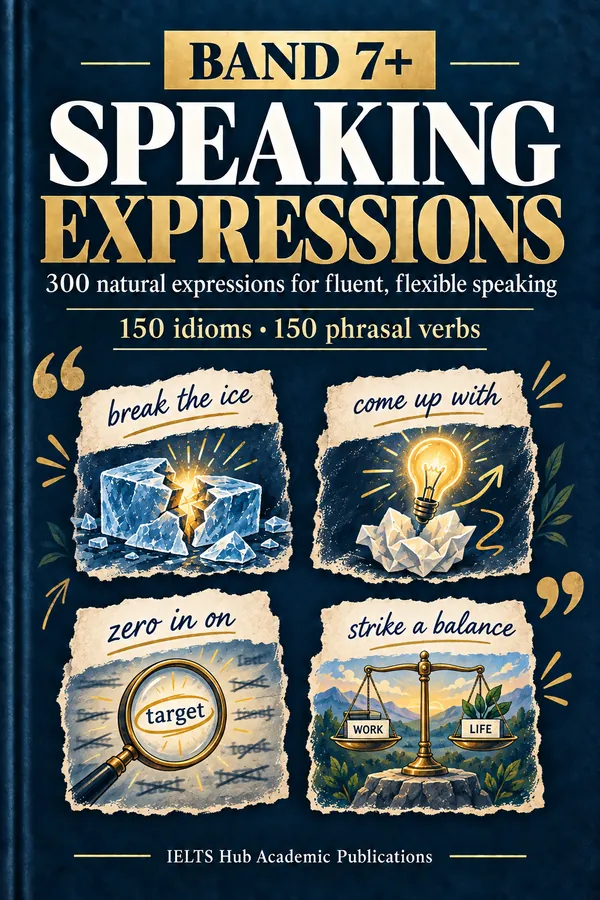
Speaking
Band 7+ Speaking Expressions
300 natural expressions for fluent, flexible speaking
₹199$6.99CAD 8.99AUD 9.99£4.99NZD 10.99€5.99AED 24SGD 8.99

Speaking
Speaking Tips for IELTS
Proven Strategies for Band 8.0+
₹299$9.99CAD 13.99AUD 14.99£7.99NZD 16.99€8.99AED 39SGD 12.99
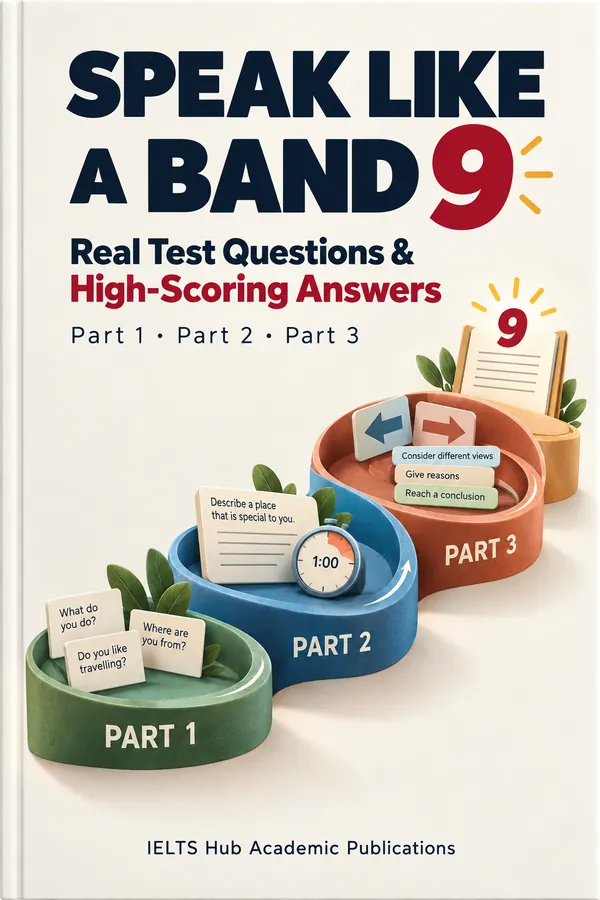
Speaking
Speak Like a Band 9
Real Test Questions & High-Scoring Answers
₹299$9.99CAD 13.99AUD 14.99£7.99NZD 16.99€8.99AED 39SGD 12.99