Speaking test #224
Part 1 · Interview
4 to 5 minutes. The examiner asks about you and familiar topics.
Can you tell me your full name?
Where are you from?
Do you work or are you a student?
Are you still in contact with your friends from high school?
Yes, I am still in contact with a few of my friends from high school. We keep in touch through social media and occasionally meet up for reunions.
What was your high school like?
My high school was a large public school with a diverse student population. The teachers were dedicated and the facilities were modern and well-equipped. The school offered a variety of extracurricular activities and clubs, which allowed me to explore my interests and passions.
What happened on the first day of high school?
On the first day of high school, I remember feeling a mix of emotions. I was excited to start a new chapter in my education, but also a bit nervous to meet new people and navigate a new school environment. My parents walked me to school and helped me find my classes. I met some of my classmates and we bonded over the shared experience of starting high school.
Did your parents choose your secondary school (= high school) for you?
No, my parents did not choose my high school for me. They gave me options of schools to choose from and supported my decision in the end. I researched and visited different schools before making my final choice. I believe that it is important for students to have a say in their education and make decisions that align with their goals and aspirations.
At what age did you start studying science at school?
I started studying science at the age of 11, when I entered secondary school.
Do you find science a difficult or an easy subject?
I find science to be a challenging but highly rewarding subject. It requires a lot of critical thinking and problem-solving skills, but the concepts and principles taught in science are also fascinating and enlightening.
What was the most interesting science topic for you at school?
The most interesting science topic for me at school was definitely physics. I found the laws of motion and the study of energy and matter to be incredibly intriguing and thought-provoking.
How useful is your knowledge of science in your daily life?
My knowledge of science is extremely useful in my daily life. It helps me to understand the world around me and make informed decisions. For example, my understanding of physics and chemistry helps me to appreciate the technology and appliances I use every day, and my knowledge of biology and health sciences enables me to make informed choices about my own well-being.
You will have to talk about the topic for one to two minutes. You have one minute to think about what you are going to say. You can make some notes to help you if you wish.
Describe a game or sport you enjoy playing
You should say:
- What is the game or sport
- How you learned to play it
- Why you enjoy playing it
- Describe a memorable experience while playing
What is the game or sport
I would like to talk about cricket, a game that holds a special place in the hearts of many in India, including myself. Cricket is not just a sport but a passion that unites people across the country. I first learned to play cricket when I was a child, watching matches with my family and friends. I was fascinated by the skills displayed by the players and soon started playing in our neighborhood.
How you learned to play it
The reason why I enjoy playing cricket is the thrill and excitement it brings. The strategic aspects of the game, the coordination required among team members, and the competitiveness involved always keep me engaged. Whether it's batting, bowling, or fielding, each aspect of the game offers a unique challenge that I eagerly embrace. The camaraderie that develops among players during a game of cricket is also something I cherish.
Why you enjoy playing it
One memorable experience while playing cricket was during a local tournament where my team was down to the last over with just a few runs needed to win. I was at the crease, facing a tough bowler, and the pressure was immense. In a thrilling finish, I managed to hit a boundary off the last ball, securing a victory for my team. The cheers and celebration that followed were unforgettable, and it reinforced my love for the game.
Describe a memorable experience while playing
In conclusion, cricket is not just a game for me but a source of joy, camaraderie, and unforgettable moments. From learning the basics as a child to experiencing the thrill of a close match, every moment spent playing cricket has been priceless. It is a game that has taught me valuable lessons about teamwork, perseverance, and sportsmanship, making it an integral part of my life.
- Words
- 285
- Sentences
- 15
- Words per sentence
- 19.0
- Speaking time
- about 2.2 min
Counted at 130 words a minute. The exam gives you one to two minutes.
Part 3 · Discussion
4 to 5 minutes. The examiner asks broader questions linked to the cue card topic.
How do the physical requirements of various sports affect a person's choice of activity?
The physical demands of various sports can significantly shape an individual's choice of activity, often aligning with their personal strengths and preferences. For instance, someone who thrives on high-intensity workouts might be drawn to sports like rugby or basketball, where endurance and agility are crucial. Conversely, individuals who prefer a more relaxed pace may gravitate towards activities like yoga or golf, which offer a different set of physical challenges and mental engagement. Additionally, factors such as age and fitness level play a pivotal role; younger athletes might embrace the rigorous demands of more strenuous sports, while older individuals may opt for gentler options that still promote health. Ultimately, the choice of sport often mirrors a person's lifestyle, aspirations, and even social circles, creating a fascinating interplay between physical capability and personal enjoyment.
How do people's likes for team sports compare to individual sports?
People's preferences for team sports and individual sports can vary significantly based on several factors, including personality, social needs, and even cultural background. For instance, individuals who thrive on collaborative effort and enjoy the camaraderie of working towards a common goal might gravitate towards team sports. Conversely, those who prefer to take full responsibility for their performance and value personal achievement may find individual sports more appealing. Additionally, team sports can foster a sense of community and belonging, which is especially attractive for extroverts, while introverts might appreciate the solitude and self-reliance that individual sports offer. Ultimately, it comes down to personal inclination and what drives an individual’s passion for physical activity.
How do you think sports help improve people's mental health?
Sports play a pivotal role in enhancing mental well-being, acting as a natural antidote to stress and anxiety. Engaging in physical activity releases endorphins, often referred to as the body's feel-good hormones, which can significantly uplift one's mood. Additionally, participating in team sports fosters a sense of community and belonging, which is essential for emotional health. Furthermore, the discipline and focus required in sports can help individuals develop resilience, enabling them to cope better with life's challenges. Overall, the mental benefits of sports are profound, making them an indispensable part of a healthy lifestyle.
Why do you think some people are more likely to join in sports than others?
I believe several factors contribute to why some individuals are more inclined to participate in sports than others. Firstly, personal interests play a significant role; those who have a natural affinity for physical activity are more likely to engage in sports regularly. Additionally, social influences, such as family and peers, can encourage or discourage participation. For example, if someone grows up in a household that emphasizes the importance of athletics, they might be more motivated to get involved. Lastly, accessibility is crucial; individuals with easier access to facilities and resources tend to participate more actively, while those in less fortunate circumstances may find it challenging to engage in sports. Overall, it's a combination of individual passion, environmental factors, and opportunities that shapes one's inclination towards sports.
What changes could happen in the popularity of some sports in the next ten years?
Over the next decade, I believe we’ll see a significant shift in the popularity of various sports, largely influenced by emerging trends and societal changes. For instance, sports like esports and extreme sports are likely to gain momentum as technology continues to evolve, attracting a younger audience that is increasingly engaged with digital platforms. Additionally, traditional sports such as football and basketball might see their viewership fluctuate as people seek more diverse and inclusive sporting experiences. The rise of health consciousness could also fuel interest in activities like yoga and cycling, making them more mainstream. Overall, the landscape of sports is bound to evolve, reflecting the dynamic interests and values of future generations.
What steps can communities take to get more people involved in physical activities?
Communities can implement a variety of measures to encourage greater participation in physical activities. Firstly, establishing more accessible recreational facilities like parks, sports complexes, and walking trails can make a significant difference. Offering free or subsidized classes in activities like yoga, dance, or martial arts can also attract individuals who might otherwise hesitate to join due to costs. Additionally, organizing community events such as fun runs, sports days, or fitness challenges can foster a sense of camaraderie and motivate people to get involved. Lastly, leveraging social media to promote these activities and share success stories can create a vibrant community atmosphere, making physical activity more appealing to everyone.
Go further with the books

Speaking
Speaking Tips for IELTS
Proven Strategies for Band 8.0+
₹299$9.99CAD 13.99AUD 14.99£7.99NZD 16.99€8.99AED 39SGD 12.99
Speaking
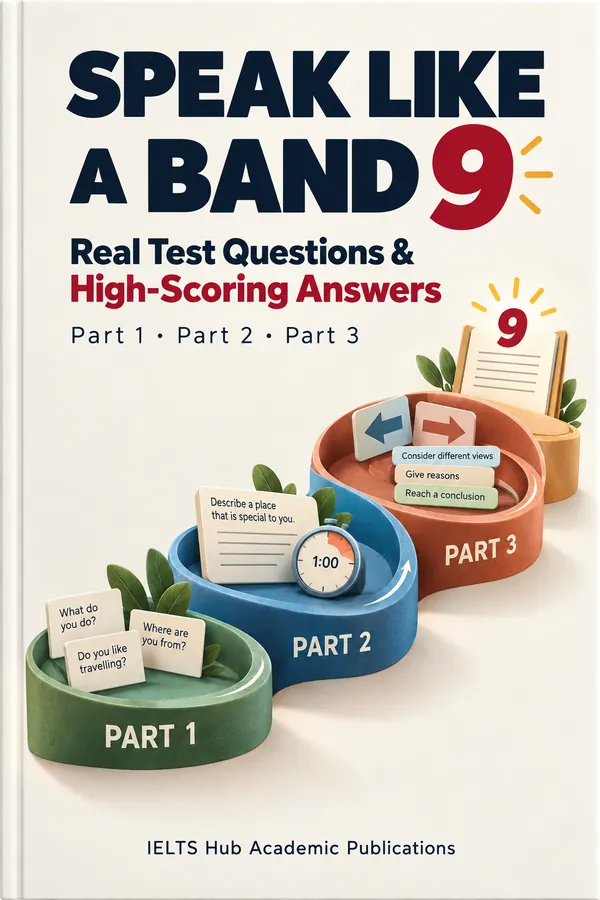
Speak Like a Band 9
Real Test Questions & High-Scoring Answers
₹299$9.99CAD 13.99AUD 14.99£7.99NZD 16.99€8.99AED 39SGD 12.99
Speaking
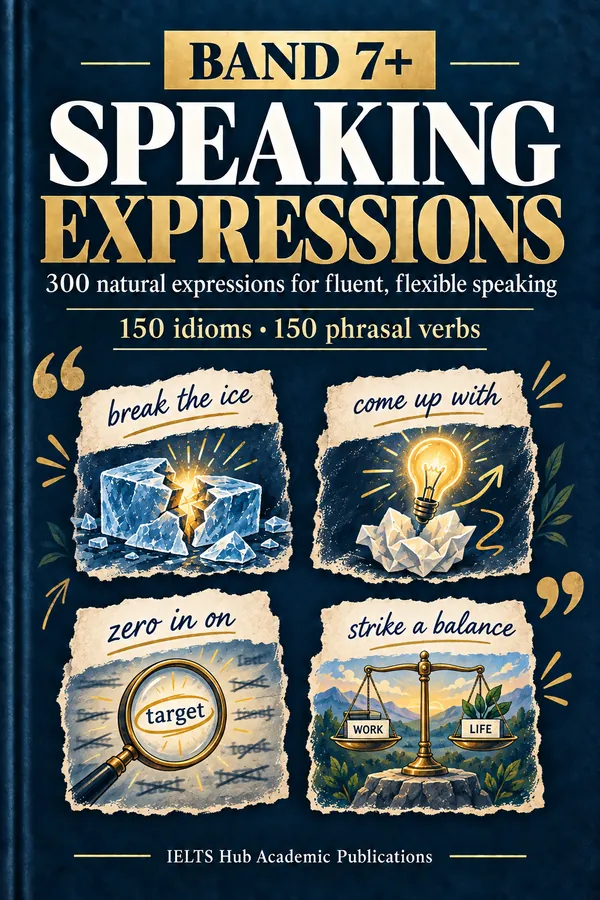
Band 7+ Speaking Expressions
300 natural expressions for fluent, flexible speaking
₹199$6.99CAD 8.99AUD 9.99£4.99NZD 10.99€5.99AED 24SGD 8.99