Speaking test #239
Part 1 · Interview
4 to 5 minutes. The examiner asks about you and familiar topics.
Can you tell me your full name?
Where are you from?
Do you work or are you a student?
Do you often read books? When?
Yes, I'm an avid reader and I try to make time for reading every day, whether it's before bed or during my lunch break at work.
Are your reading habits now different than before?
Yes, they definitely have changed over the years. When I was younger, I used to only read fiction, but now I enjoy a wider range of genres, including non-fiction, biographies, and even self-help books.
Have you ever read a novel that has been adapted into a film?
Yes, many times actually. One of my favorite examples is the Harry Potter series - I read all of the books before seeing any of the movies, and it was such a different experience watching the films knowing the plot and characters so well.
Which do you prefer, reading books or watching movies?
It's tough to choose just one, because I really enjoy both activities for different reasons. Reading allows me to escape into different worlds and really immerse myself in the story, whereas watching movies is a great way to relax and unwind after a long day. Ultimately, I think it just depends on my mood and how much time I have available.
Do you have any special talent?
Yes, I do have a special talent. I am a proficient pianist and have been playing the piano for over a decade. I have a passion for classical music and enjoy playing pieces by composers such as Beethoven and Chopin.
Did you learn it when you were young or recently?
I started learning the piano when I was quite young, around the age of six. I have been taking lessons consistently ever since and have continued to improve my skills and technique over the years.
Do you think your talent can be useful for your future work?
I believe that my talent for playing the piano can be useful for my future work in several ways. For example, it could be beneficial in the field of music education, as I could use my skills to teach others. Additionally, my ability to play the piano could be an asset in the entertainment industry, as I could perform in concerts or events.
Do you think anyone in your family has the same talent?
Yes, actually, my older sister is also a pianist and has been playing for even longer than I have. We often play together and it's always a joy to perform with her. Additionally, my cousin is a professional musician and plays several instruments, including the piano. So, it seems that the talent for music runs in the family.
You will have to talk about the topic for one to two minutes. You have one minute to think about what you are going to say. You can make some notes to help you if you wish.
Describe a wild animal from your country
You should say:
- What is the name of the animal?
- Where can this animal be found in your country?
- What does the animal look like?
- Why is this animal important in your country's ecosystem?
What is the name of the animal?
In India, one of the most iconic and revered wild animals is the Royal Bengal Tiger. These majestic creatures can be found in various national parks and reserves across the country, with significant populations in places like Ranthambore, Sunderbans, and Bandhavgarh. The Royal Bengal Tiger is known for its striking appearance, characterized by its orange coat with black stripes, muscular build, and piercing eyes that exude power and grace.
Where can this animal be found in your country?
The Royal Bengal Tiger holds immense importance in India's ecosystem due to its role as a top predator. As an apex predator, these tigers help regulate the population of herbivores like deer and wild boar, thereby maintaining the balance of the ecosystem. Their presence is crucial in ensuring the health of the forests and preventing overgrazing by herbivores, which can have cascading effects on plant life and other animal species.
What does the animal look like?
Moreover, the Royal Bengal Tiger is a symbol of India's rich biodiversity and cultural heritage. It holds a special place in Indian mythology and folklore, often depicted as a symbol of strength, courage, and royalty. Conservation efforts to protect these tigers have also led to the preservation of their habitats, benefitting a wide range of plant and animal species that share the same ecosystem.
Why is this animal important in your country's ecosystem?
In conclusion, the Royal Bengal Tiger stands as a powerful symbol of India's natural heritage and the importance of preserving biodiversity. Its significance in the ecosystem goes beyond its physical presence, influencing the delicate balance of wildlife populations and habitats. As India continues its efforts to conserve and protect these magnificent animals, the Royal Bengal Tiger remains a source of pride and inspiration for both its ecological role and cultural significance.
- Words
- 274
- Sentences
- 12
- Words per sentence
- 22.8
- Speaking time
- about 2.1 min
Counted at 130 words a minute. The exam gives you one to two minutes.
Part 3 · Discussion
4 to 5 minutes. The examiner asks broader questions linked to the cue card topic.
What are the differences in behavior and living spaces between the wild animal you talked about and pets?
That's a fascinating question! Wild animals, like the one I mentioned, often exhibit instinctual behaviors that are crucial for their survival, such as hunting, foraging, and establishing territory. In contrast, domesticated animals have been bred over generations to be more reliant on humans, which has significantly altered their natural instincts. For instance, while wild animals might be more aggressive or elusive to protect themselves from predators, domesticated animals tend to be more social and friendly, often seeking human companionship. As for habitat, wild animals thrive in their natural environments, such as forests, savannas, or mountains, where they have adapted to the conditions and resources available. On the other hand, domesticated animals usually live in human-made environments, like farms or homes, which cater to their needs but often lack the same diversity and challenges found in the wild. This fundamental difference in both behavior and habitat highlights the unique relationship between species and their environments!
How much do you think wild animals should be kept safe in their natural homes?
I firmly believe that wild animals should be protected in their natural environments to a significant extent. Firstly, these creatures play a crucial role in maintaining the ecological balance. For instance, predators control herbivore populations, which in turn helps to sustain plant life and overall biodiversity. Moreover, protecting their habitats not only conserves these species but also preserves the intricate ecosystems they inhabit. By safeguarding wild animals, we are essentially ensuring the health of our planet for future generations, which is something we all should be passionate about. Ultimately, the preservation of wildlife is not just about saving individual species; it's about fostering a harmonious relationship between humans and nature.
How do wild animals help keep nature balanced and support different kinds of living things?
Wild animals are absolutely crucial in maintaining ecological balance and biodiversity. They play a significant role in various ecosystems by acting as keystone species, meaning that their presence or absence can dramatically affect the structure of the environment. For instance, predators help control the populations of herbivores, which in turn allows vegetation to flourish, creating diverse habitats for countless other species. Additionally, many wild animals contribute to the pollination of plants or the dispersal of seeds, which is essential for plant reproduction and the overall health of ecosystems. Without these animals, we would face a cascade of negative effects that could threaten both biodiversity and the stability of our planet's ecosystems.
Why do people need to know about the behavior and needs of wild animals?
Understanding the behavior and needs of wild animals is crucial for several reasons. Firstly, it helps us to promote conservation efforts, ensuring that we protect endangered species and their habitats. When we have insight into how these animals live and what they require to thrive, we can implement more effective strategies to safeguard their future. Additionally, this knowledge fosters a sense of responsibility and respect towards wildlife, encouraging people to engage in sustainable practices that benefit the environment. Ultimately, understanding wild animals enriches our lives, as it deepens our connection to nature and enhances our appreciation for the intricate web of life on our planet.
How could climate change affect where wild animals live in the future?
Climate change is poised to have a profound impact on the habitats of wild animals in the future. As temperatures rise and weather patterns become increasingly erratic, many species may find their traditional habitats uninhabitable. For instance, polar bears are already facing significant challenges as their sea ice retreats, which is crucial for their hunting and breeding. Furthermore, shifting ecosystems could lead to a dramatic decline in biodiversity, as some animals struggle to adapt to new conditions or migrate to more suitable environments. This not only threatens the survival of individual species but also disrupts the delicate balance of entire ecosystems, which can have a cascading effect on other organisms. Overall, the future looks precarious for many wild animals, and it underscores the urgent need for concerted efforts to combat climate change.
What steps can be taken to protect endangered wild animals?
To ensure the protection of endangered wild animals, a multifaceted approach is essential. First and foremost, establishing protected areas and wildlife reserves can create safe havens for these species, allowing them to thrive without human interference. Additionally, enforcing stricter laws against poaching and illegal wildlife trade is crucial; this would deter potential offenders and maintain the integrity of ecosystems. Moreover, raising public awareness through educational campaigns can foster a sense of responsibility and encourage community involvement in conservation efforts. Finally, collaborating with local communities to promote sustainable practices can create an incentive for protecting wildlife while also supporting their livelihoods. By combining these strategies, we can make significant strides in safeguarding these vulnerable species for future generations.
Go further with the books

Speaking
Speak Like a Band 9
Real Test Questions & High-Scoring Answers
₹299$9.99CAD 13.99AUD 14.99£7.99NZD 16.99€8.99AED 39SGD 12.99
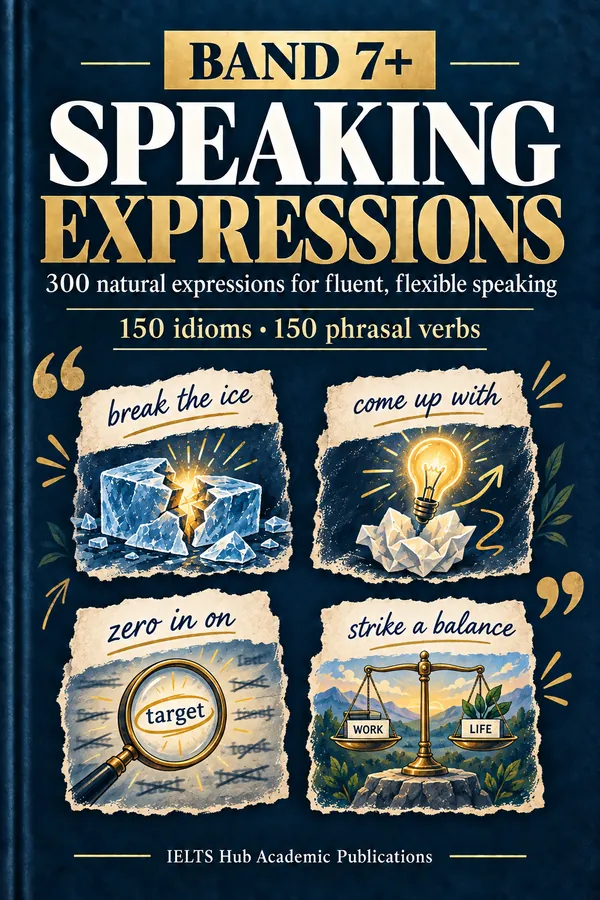
Speaking
Band 7+ Speaking Expressions
300 natural expressions for fluent, flexible speaking
₹199$6.99CAD 8.99AUD 9.99£4.99NZD 10.99€5.99AED 24SGD 8.99

Speaking
Speaking Tips for IELTS
Proven Strategies for Band 8.0+
₹299$9.99CAD 13.99AUD 14.99£7.99NZD 16.99€8.99AED 39SGD 12.99