Speaking test #246
Part 1 · Interview
4 to 5 minutes. The examiner asks about you and familiar topics.
Can you tell me your full name?
Where are you from?
Do you work or are you a student?
Tell me about the kind of foreign visitors or tourists that go to your country (India)?
India is a diverse and culturally rich country that attracts a wide range of foreign visitors. From backpackers and budget travelers to luxury tourists, India caters to a broad spectrum of travelers. The country is particularly popular among those interested in exploring its ancient history, such as the iconic Taj Mahal, and experiencing its vibrant culture and traditions. Additionally, India is also a popular destination for spiritual seekers and yoga enthusiasts.
In what ways has tourism changed your country (India)?
Tourism has had a significant impact on India in recent years. On one hand, it has brought in a significant amount of revenue and employment opportunities for locals. On the other hand, it has also led to the development of new infrastructure and facilities to cater to the needs of tourists. This includes the construction of new hotels, restaurants, and transportation options. Additionally, tourism has also led to a greater appreciation and preservation of the country's cultural heritage and natural resources.
How easy it is to travel around in your country (India)?
Traveling around India can be a bit challenging, especially for first-time visitors. However, with a bit of planning and preparation, it can be quite manageable. The country has an extensive network of transportation options, including trains, buses, and domestic flights, which makes it easy to get around. Additionally, there are plenty of tour operators and travel agencies that can assist with planning and arranging transportation and accommodation.
Is your country (India) a safe place for foreign tourists to come to?
India is generally considered a safe destination for foreign tourists. However, as with any destination, there are certain areas that may be more dangerous than others. It's always best to exercise caution and stay informed about any local safety concerns. Additionally, tourists should also be aware of local customs and traditions to ensure they do not inadvertently offend anyone. Overall, India is a welcoming and friendly country, and most visitors have a positive and safe experience while visiting.
Did you play with toys when you were a child?
Of course, I did. I was quite an active child and I always enjoyed playing with a variety of toys.
What kinds of toys did you like?
As a child, I was particularly fond of action figures, Lego sets, and building blocks. I found them to be quite engaging and stimulating for my imagination.
In your country, do boys and girls play with the same types of toys?
In my country, there is a general belief that boys and girls should be exposed to the same types of toys and activities. However, it is not uncommon for certain toys to be marketed more towards one gender than the other.
Do you think that toys help children to learn?
I absolutely believe that toys can play a crucial role in helping children to learn and develop. They can provide children with hands-on opportunities to explore different concepts and ideas, as well as encouraging creativity, problem-solving, and critical thinking skills. Overall, toys can be a powerful tool in promoting a child's cognitive, social, and emotional development.
You will have to talk about the topic for one to two minutes. You have one minute to think about what you are going to say. You can make some notes to help you if you wish.
Describe an interesting conversation you had with someone
You should say:
- Who was the person you had the conversation with
- Where and when did the conversation take place
- What was the topic of the conversation
- Why did you find the conversation interesting
Who was the person you had the conversation with
I once had a captivating conversation with my grandfather, whom I deeply admire for his wisdom and life experiences. The conversation took place in the comfort of our family home during a warm summer evening.
Where and when did the conversation take place
The topic of our conversation was his journey of living through India's independence movement and the challenges he faced during that transformative period in history. Listening to his first-hand accounts of the struggle for freedom was not only enlightening but also deeply moving.
What was the topic of the conversation
What made this conversation particularly interesting was the way my grandfather narrated his experiences with such vivid detail and emotion. His storytelling skills brought the past to life, making me feel as though I was witnessing those historic moments alongside him.
Why did you find the conversation interesting
Moreover, this conversation allowed me to gain a deeper understanding of our country's history and the sacrifices made by previous generations for the sake of freedom. It strengthened my bond with my grandfather and left me with a profound sense of gratitude for the opportunities and liberties we enjoy today because of their struggles.
- Words
- 173
- Sentences
- 8
- Words per sentence
- 21.6
- Speaking time
- about 1.3 min
Counted at 130 words a minute. The exam gives you one to two minutes.
Part 3 · Discussion
4 to 5 minutes. The examiner asks broader questions linked to the cue card topic.
How do you think talks can be different in various cultures or age groups?
Conversations can vary significantly across different cultures and age groups, reflecting unique social norms and communication styles. For instance, in some cultures, directness is valued, and people tend to be quite forthright in expressing their opinions. In contrast, other cultures might prioritize harmony and thus employ more subtle forms of communication, often using hints or non-verbal cues instead. When it comes to age groups, younger people often use more informal language and slang, which might be confusing to older generations who prefer a more traditional approach to conversation. Additionally, older individuals might focus more on storytelling and sharing experiences, while younger people might lean towards quick, snappy exchanges. Overall, these variations enrich our interactions and help us appreciate the beautiful tapestry of human communication!
Some people think that having deep talks is better than casual chat. What do you think about this?
I absolutely agree that engaging in deep conversations holds more value than small talk. While small talk can serve as a useful icebreaker, it often lacks the substance that fosters genuine connections. Deep conversations allow us to explore ideas, share personal experiences, and truly understand one another, which can lead to more meaningful relationships. Additionally, they can challenge our perspectives and promote personal growth, which I think is incredibly enriching. So, while there's certainly a time and place for light-hearted chatter, I believe that the richness of deep dialogue is what truly enhances our social interactions.
How important do you think good communication is for building relationships?
I believe effective communication is absolutely crucial in building relationships. It acts as the foundation upon which trust and understanding are built. When people can express their thoughts and emotions clearly, it fosters a sense of connection that is vital for any relationship, whether personal or professional. Moreover, good communication helps to resolve conflicts and misunderstandings, which, if left unaddressed, can create significant rifts. Ultimately, being able to share ideas and feelings openly can transform a simple acquaintance into a meaningful bond, which is what we all strive for in our relationships!
Why do you think some people can have more interesting chats than others?
I believe several factors contribute to why some individuals excel in having engaging conversations while others struggle. For one, effective communication skills play a crucial role; those who are articulate and confident can express their thoughts more clearly, making the conversation flow more naturally. Additionally, people who are naturally curious tend to ask more insightful questions, which can spark deeper discussions. Moreover, social exposure and experience can significantly enhance one's conversational abilities; those who frequently engage with diverse groups often develop a broader range of topics to discuss. Ultimately, it’s a combination of personality traits, social skills, and life experiences that makes some individuals more adept at captivating conversations than others.
How might conversations change as technology keeps developing?
As technology continues to evolve, I think we will see a significant shift in the way we communicate. For instance, the rise of instant messaging and social media has already transformed our conversations from face-to-face interactions to more text-based exchanges. This could lead to a decline in non-verbal communication, which is crucial for conveying emotions and building connections. Moreover, with the advent of virtual reality and AI-driven chatbots, conversations may become more immersive, allowing people to interact in a simulated environment. While these advancements can enhance communication, they might also create a disconnect, as people may become more accustomed to interacting with screens than with one another. Overall, it’s an exciting yet challenging time for the future of conversations!
What steps can we take to promote deeper conversations in daily life?
To foster more meaningful conversations in our daily interactions, we could start by promoting active listening. When people genuinely listen, it creates a space for deeper understanding and connection. Additionally, encouraging open-ended questions can significantly enhance the quality of discussions, allowing individuals to express their thoughts and feelings more freely. Another effective measure would be to create environments where people feel comfortable sharing their perspectives, perhaps through community events or discussion groups. Lastly, leading by example—by being present and engaged in conversations ourselves—can inspire others to do the same, ultimately cultivating a culture of thoughtful dialogue.
Go further with the books
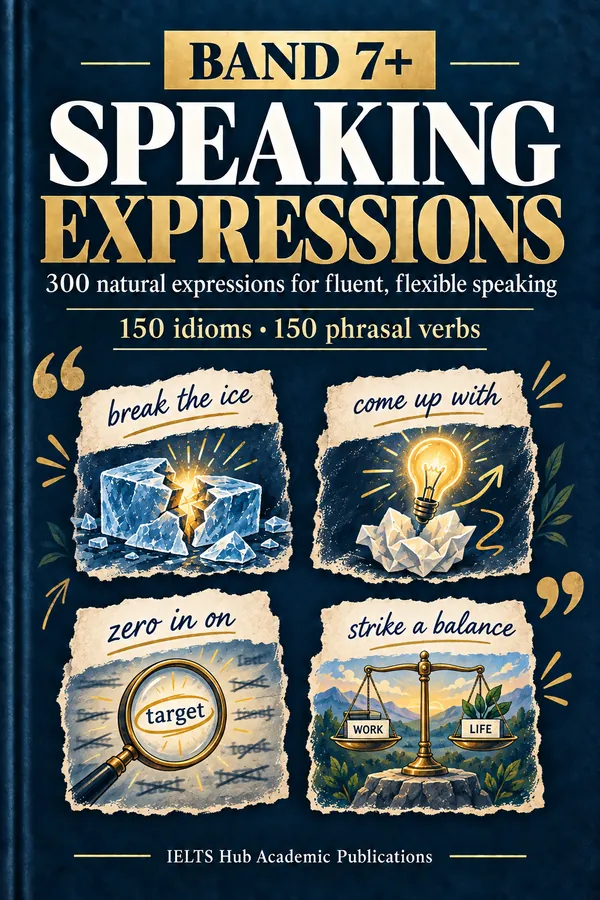
Speaking
Band 7+ Speaking Expressions
300 natural expressions for fluent, flexible speaking
₹199$6.99CAD 8.99AUD 9.99£4.99NZD 10.99€5.99AED 24SGD 8.99
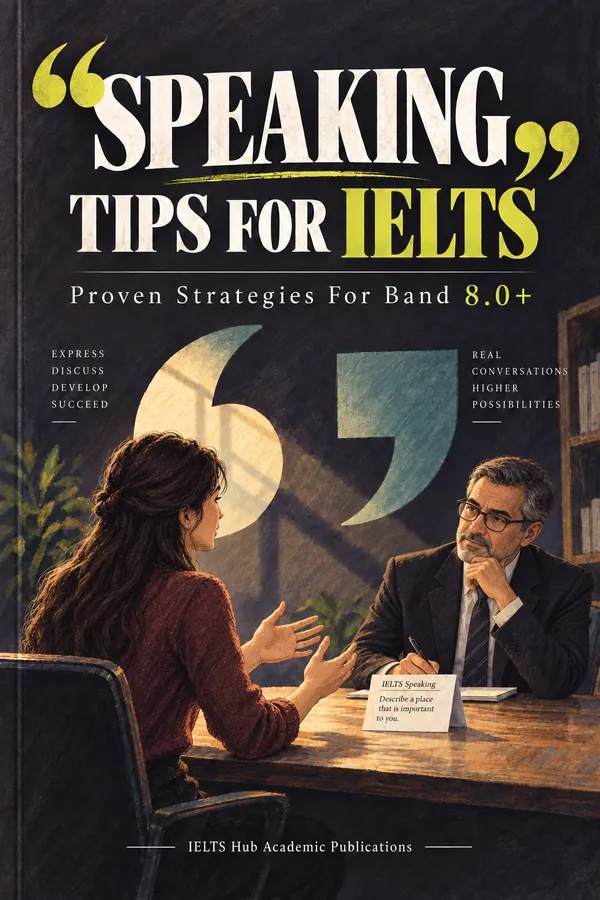
Speaking
Speaking Tips for IELTS
Proven Strategies for Band 8.0+
₹299$9.99CAD 13.99AUD 14.99£7.99NZD 16.99€8.99AED 39SGD 12.99

Speaking
Speak Like a Band 9
Real Test Questions & High-Scoring Answers
₹299$9.99CAD 13.99AUD 14.99£7.99NZD 16.99€8.99AED 39SGD 12.99