Speaking test #247
Part 1 · Interview
4 to 5 minutes. The examiner asks about you and familiar topics.
Can you tell me your full name?
Where are you from?
Do you work or are you a student?
How bad is the traffic in your country (India)?
The traffic in my country, India, can be quite challenging at times. With a rapidly growing population and a vast network of roads and highways, traffic congestion is a common issue in many cities. The problem is particularly severe during peak hours, when the roads become clogged with vehicles, leading to long delays and increased pollution levels.
Do traffic problems affect you?
Yes, traffic problems do affect me on a daily basis. As someone who commutes to work, I often find myself stuck in gridlock, which can be quite frustrating and time-consuming. Additionally, the noise and pollution caused by the heavy traffic can be quite detrimental to my overall well-being.
What do you do to deal with the traffic problems?
To deal with traffic problems, I try to plan my trips and errands during off-peak hours, when the roads are less congested. I also try to carpool or take public transportation whenever possible, as this helps to reduce the number of vehicles on the road. Additionally, I try to stay informed about any road closures or construction projects that may be causing delays, so that I can plan my routes accordingly.
Would you like to move to a place without traffic problems in the future?
While I am quite fond of my current city and the people I have grown to know and love, I would definitely be open to the idea of moving to a place without traffic problems in the future. A place where getting around is easy and efficient would be a dream come true for me, as it would allow me to spend more time doing the things I enjoy, rather than sitting in traffic. However, I would also consider other factors such as job opportunities, safety and cost of living before making a final decision.
Do you like to travel?
Oh, absolutely! I am a huge fan of traveling and experiencing new cultures, cuisines, and landscapes. There is nothing quite like immersing oneself in a new environment and gaining a fresh perspective on the world.
How did you get here today?
I opted to utilize public transportation today, as it is a convenient and eco-friendly mode of transportation. I took the bus from my residence to the nearest train station and then boarded a train to reach here.
Do you often use public transport?
Yes, I do. I try to use public transportation as much as possible, as it is not only cost-effective but also beneficial for the environment. It also allows me to avoid traffic congestion and parking difficulties, which can be quite a hassle.
What are the benefits of travelling by foot?
Travelling by foot has several benefits, the most obvious one being the ability to explore a place in a more leisurely and intimate manner. Walking also allows you to discover hidden gems and lesser-known places that you might miss while using other forms of transportation. Additionally, walking is a great way to stay active and healthy, and it is also an environmentally friendly mode of transportation. Overall, I believe that travelling by foot is a great way to immerse oneself in a new place and gain a deeper understanding of it.
You will have to talk about the topic for one to two minutes. You have one minute to think about what you are going to say. You can make some notes to help you if you wish.
Describe a friend from your childhood
You should say:
- How you met this friend
- What activities you did together
- What you liked about this friend
- How this friendship impacted your life
How you met this friend
During my childhood in India, I had a dear friend named Priya whom I met in kindergarten. Our friendship blossomed in the school playground where we were both drawn to the swings. I vividly remember us taking turns pushing each other higher and higher, laughing uncontrollably as the wind blew through our hair. Our shared love for playground adventures laid the foundation of our deep bond.
What activities you did together
Priya and I were inseparable during our childhood days. We spent countless hours playing hopscotch, hide-and-seek, and creating imaginary worlds in our minds. We also enjoyed solving puzzles and reading storybooks together. Our favorite activity was building sandcastles at the nearby park, immersing ourselves in a world of creativity and laughter. These shared experiences forged a special connection between us.
What you liked about this friend
What I admired most about Priya was her kindness and empathy towards others. She had a gentle soul and a heart full of compassion. Priya always stood up for those in need and never hesitated to lend a helping hand. Her positive attitude and ability to see the good in everyone inspired me to be a better person. I cherished her friendship for the warmth and understanding she brought into my life.
How this friendship impacted your life
The impact of my friendship with Priya extends far beyond my childhood. She taught me the value of empathy, kindness, and unconditional support. Our bond helped shape my values and perspective on relationships. Through our adventures and shared moments, I learned the importance of nurturing genuine connections and being there for others in times of joy and adversity. Priya will always hold a special place in my heart as a friend who enriched my life in countless ways.
- Words
- 276
- Sentences
- 19
- Words per sentence
- 14.5
- Speaking time
- about 2.1 min
Counted at 130 words a minute. The exam gives you one to two minutes.
Part 3 · Discussion
4 to 5 minutes. The examiner asks broader questions linked to the cue card topic.
How are childhood friendships different from friendships made in adulthood?
Childhood friendships are often characterized by their innocent simplicity. Kids tend to form bonds based on shared interests, like playing games or enjoying the same cartoons, which can lead to friendships that are incredibly genuine and carefree. In contrast, adult friendships are usually built on shared experiences and deeper emotional connections, often stemming from professional environments or life stages, like parenting or career pursuits. Adults are more likely to navigate complexities such as time constraints and personal responsibilities, making these relationships sometimes feel more transactional or based on mutual benefit. While childhood friendships can be fleeting, those formed in adulthood often require more effort to maintain, reflecting a different kind of commitment and understanding.
How much do you think friendships in childhood influence a person's character?
Childhood friendships play a pivotal role in shaping a person's character, often laying the groundwork for their social skills and emotional resilience. During those formative years, children learn valuable lessons about trust, empathy, and conflict resolution through their interactions with peers. These relationships can significantly influence their self-esteem and sense of belonging, which are crucial for personal development. Additionally, shared experiences during childhood can create lasting memories that help individuals navigate future relationships. Ultimately, the bonds formed in early life can have a profound impact on how one interacts with the world as an adult, making childhood friendships truly foundational.
How important do you think childhood friendships are for a person's growth?
Childhood friendships are incredibly significant in a person's overall development. These early relationships often serve as the foundation for social skills, helping children learn how to communicate, share, and resolve conflicts. Moreover, these friendships can foster a sense of belonging and emotional security, which is vital during those formative years. As children navigate the complexities of growing up, having supportive friends can greatly enhance their confidence and resilience. Ultimately, the bonds formed in childhood can shape an individual's interpersonal skills and influence their relationships well into adulthood.
Why do you think people often think back on their childhood friends?
I believe people often reminisce about their childhood friends because those relationships are often filled with a sense of innocent joy and shared experiences that are hard to replicate later in life. Childhood is a time of discovery and exploration, and friends during that period are usually a huge part of those formative moments. As we grow older, life tends to become more complicated, and looking back on those simpler times can evoke a feeling of nostalgia that is incredibly comforting. Plus, childhood friendships often carry a sense of loyalty and unconditional support, making them memorable and cherished throughout the years. It’s fascinating how those early connections can shape our identities and influence the way we approach relationships as adults!
How could friendships change in the future because of new technology?
That's a fascinating question! As technology continues to evolve, I think the nature of friendships will undergo significant transformations. For instance, with the rise of virtual reality and augmented reality, we might see people engaging in more immersive experiences together, even if they are physically apart. This could lead to deeper connections, as friends can share adventures in a virtual space that feels quite real. However, I do wonder if this will come at the cost of face-to-face interactions. While technology can enhance our friendships, there's something irreplaceable about those genuine, in-person connections that really foster intimacy. So, while our friendships may expand in terms of reach and creativity, we might also need to be mindful about maintaining that all-important human touch. Ultimately, it’s about finding a balance between the digital and the physical realms of friendship!
What steps can be taken to keep childhood friendships strong as we get older?
Maintaining childhood friendships as we grow older can be quite challenging, but there are several effective measures that can be taken. Firstly, regular communication is crucial; even a simple text or a quick video call can keep the bond strong. Additionally, organizing reunions or get-togethers can create opportunities for friends to reconnect and reminisce about their shared experiences. Moreover, using social media platforms can help bridge any geographical gaps, allowing friends to stay updated on each other's lives. Finally, being proactive in nurturing these relationships, such as planning activities or trips together, can really strengthen those cherished connections. It’s all about making the effort to keep those ties alive!
Go further with the books

Speaking
Speaking Tips for IELTS
Proven Strategies for Band 8.0+
₹299$9.99CAD 13.99AUD 14.99£7.99NZD 16.99€8.99AED 39SGD 12.99

Speaking
Speak Like a Band 9
Real Test Questions & High-Scoring Answers
₹299$9.99CAD 13.99AUD 14.99£7.99NZD 16.99€8.99AED 39SGD 12.99
Speaking
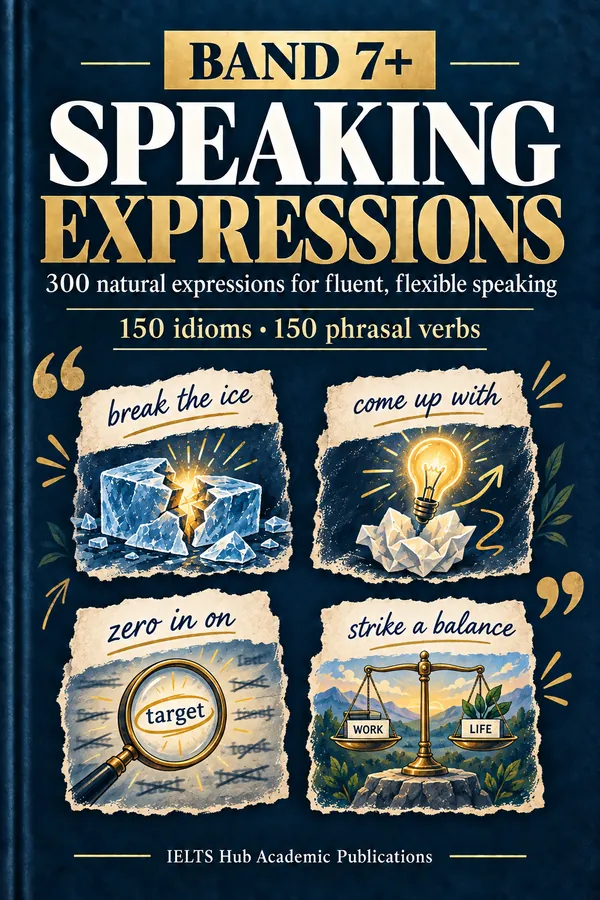
Band 7+ Speaking Expressions
300 natural expressions for fluent, flexible speaking
₹199$6.99CAD 8.99AUD 9.99£4.99NZD 10.99€5.99AED 24SGD 8.99