Speaking test #250
Part 1 · Interview
4 to 5 minutes. The examiner asks about you and familiar topics.
Can you tell me your full name?
Where are you from?
Do you work or are you a student?
Do you prefer studying/working in the morning or in the afternoon? [Why/ Why not?
?] I prefer studying in the morning because my brain is fresher and more alert at that time of day. I find that I am able to focus better and get more work done before lunchtime.
Do you prefer taking a longer or a short break? [Why/ Why not?
?] It really depends on what I am doing and how much energy I have. If I have been working on a particularly challenging task, I may prefer to take a longer break to give my brain a rest and come back to it with renewed energy. On the other hand, if I am in the flow and making good progress, I may prefer to take a short break to keep the momentum going.
What do you usually do during break? [Why/ Why not?
?] During my breaks, I usually like to do something active to help me recharge. This could be going for a walk, hitting the gym, or even just stretching and doing some light yoga. I find that moving my body helps me clear my mind and refocus on my work when I return.
Why is it important for people to take some time off? [Why/ Why not?
?] Taking time off is important for a number of reasons. First and foremost, it allows us to rest and recharge, which is essential for maintaining our physical and mental health. It also allows us to pursue our passions and interests, which can be incredibly fulfilling and help us feel more balanced and fulfilled in our lives. Additionally, taking time off can give us the opportunity to spend time with loved ones and build stronger relationships with those around us. Overall, taking time off is an important aspect of self-care and can have numerous benefits for our well-being.
Do you walk a lot?
Yes, I consider myself to be quite an avid walker. I find that it's a great way to clear my head and get some fresh air, especially when I've been sitting in front of a computer all day.
Do you walk more often now than in the past?
Yes, I do tend to walk more frequently now than I did in the past. I've become more conscious of the benefits of regular physical activity, and walking is such an easy and accessible way to stay active.
Do you think people will walk more in the future?
I certainly hope so. With the ongoing emphasis on the importance of maintaining a healthy lifestyle, I think more and more people will begin to recognize the value of regular walking as a form of exercise. Additionally, with the ongoing concerns about climate change and air pollution, I think people will also begin to appreciate the benefits of walking as a form of sustainable transportation.
Where do you usually take a walk?
I tend to take walks in a variety of different places. Sometimes I'll go for a walk in a nearby park or nature reserve, other times I'll take a walk around my neighborhood. I also like to take walks along the beach or a river if I'm near one. I find that changing up my walking routes keeps things interesting and helps to prevent boredom.
You will have to talk about the topic for one to two minutes. You have one minute to think about what you are going to say. You can make some notes to help you if you wish.
Describe a book you have recently read
You should say:
- What is the title and author of the book
- What is the genre of the book
- What is the main storyline or theme of the book
- Why did you choose to read this book and what are your thoughts on it
What is the title and author of the book
I recently had the pleasure of reading the book "The God of Small Things" by Arundhati Roy, an acclaimed Indian author. This novel falls under the genre of literary fiction and is widely praised for its intricate storytelling and lyrical prose. The book revolves around the lives of two twins, Rahel and Estha, and explores themes of love, loss, societal norms, and the complexities of family relationships.
What is the genre of the book
I was drawn to this book due to its reputation as a modern classic in Indian literature, and I was intrigued by the premise of the story. As I delved into the pages, I was captivated by Roy's vivid descriptions and her ability to portray the intricacies of human emotions. The way she weaves together past and present narratives kept me engaged throughout, as I uncovered the dark secrets and tragedies that shaped the characters' lives.
What is the main storyline or theme of the book
One aspect of the book that resonated with me was its exploration of the caste system and societal expectations in India, shedding light on issues that are often swept under the rug. Roy's powerful storytelling not only entertained me but also made me reflect on larger societal issues. Overall, "The God of Small Things" left a profound impact on me, prompting me to contemplate the complexities of human relationships and the consequences of societal norms.
Why did you choose to read this book and what are your thoughts on it
In conclusion, reading "The God of Small Things" was a transformative experience for me, and I highly recommend it to anyone seeking a thought-provoking and beautifully written novel that delves deep into the human psyche. This book has solidified my admiration for Arundhati Roy's writing and has inspired me to explore more works of literature that offer profound insights into the human condition.
- Words
- 281
- Sentences
- 11
- Words per sentence
- 25.5
- Speaking time
- about 2.2 min
Counted at 130 words a minute. The exam gives you one to two minutes.
Part 3 · Discussion
4 to 5 minutes. The examiner asks broader questions linked to the cue card topic.
How could the themes of a new book be different from those in classic literature?
That's a fascinating question! Recent books often explore contemporary issues that resonate with today's society, such as technology, mental health, and social justice, while classic literature tends to delve into timeless themes like love, honor, and the human condition. For instance, a modern novel might tackle the complexities of digital relationships or environmental concerns, reflecting current societal anxieties. In contrast, classics like "Pride and Prejudice" or "Moby Dick" engage with universal themes that continue to be relevant, but they do so through historical contexts. This difference in focus not only showcases the evolution of societal values but also provides readers with a broader perspective on how human experiences can change over time. Ultimately, both types of literature enrich our understanding of the world, albeit through different lenses.
Why do people have different opinions about how valuable a certain book is?
People can have widely differing views on the value of a particular book for several reasons. Firstly, personal experiences play a significant role; a book that resonates with one reader due to their life circumstances might not have the same impact on another. Additionally, cultural background can influence how individuals interpret themes and characters, leading to varied opinions. Furthermore, the context in which a book is read—like age or current events—can dramatically shape one's perception, making it feel more or less relevant. Lastly, readers often have different literary preferences, which can affect their appreciation of a book's style or genre. All these factors contribute to the rich tapestry of opinions surrounding literature, making discussions about books all the more fascinating!
How important is storytelling for sharing complicated ideas in literature?
Storytelling plays a profoundly significant role in conveying complex ideas within literature. It serves as a powerful vehicle for authors to explore intricate themes and emotions, allowing readers to engage with concepts that might otherwise be overwhelming. Through compelling narratives, writers can weave together various elements—such as character development, plot twists, and rich imagery—to create a tapestry that not only captivates the audience but also facilitates deeper understanding. Moreover, storytelling often taps into universal experiences, making it easier for readers to relate to and internalize these complex ideas. Ultimately, it transforms abstract concepts into relatable experiences, enriching both the literary work and the reader's journey.
Why do you think some people prefer certain types of books more than others?
People are often drawn to certain genres of books due to a combination of personal taste, life experiences, and even cultural influences. For instance, someone who has a deep passion for adventure might find themselves captivated by thrilling narratives and fast-paced plots, while others might prefer the introspection found in literary fiction. Additionally, readers often seek out genres that resonate with their current emotions or circumstances; during tough times, many gravitate towards uplifting stories or comfort reads that offer solace. Ultimately, these choices reflect our individual identities and aspirations, making the reading experience feel deeply personal and fulfilling.
How could a book's popularity change in the future as society's values shift?
That's a fascinating question! As societal values shift over time, the popularity of a book can definitely change dramatically. For instance, themes that were once celebrated might become outdated or even controversial, causing readers to lose interest. Conversely, books that tackle issues like social justice or diversity might gain traction as people become more aware and supportive of these ideas. Additionally, the rise of digital platforms and social media has made it easier for voices advocating for different values to be heard, potentially catapulting lesser-known works into the spotlight. Ultimately, the evolution of societal values not only influences what we read but also how we interpret and engage with literature.
What methods can writers use to reach more readers with their work?
Authors have a myriad of approaches at their disposal to engage a wider audience with their writings. For starters, they can leverage the power of social media platforms to connect with readers directly, sharing snippets of their work or behind-the-scenes insights that pique interest. Additionally, incorporating relatable themes and universal experiences into their narratives can make their stories resonate with a broader demographic. Collaborations with other creators, such as illustrators or even influencers, can also enhance the visual appeal of their work and draw in different audience segments. Ultimately, it’s about blending creativity with an understanding of what contemporary readers are looking for, making literature feel more accessible and engaging.
Go further with the books

Speaking
Speaking Tips for IELTS
Proven Strategies for Band 8.0+
₹299$9.99CAD 13.99AUD 14.99£7.99NZD 16.99€8.99AED 39SGD 12.99

Speaking
Speak Like a Band 9
Real Test Questions & High-Scoring Answers
₹299$9.99CAD 13.99AUD 14.99£7.99NZD 16.99€8.99AED 39SGD 12.99
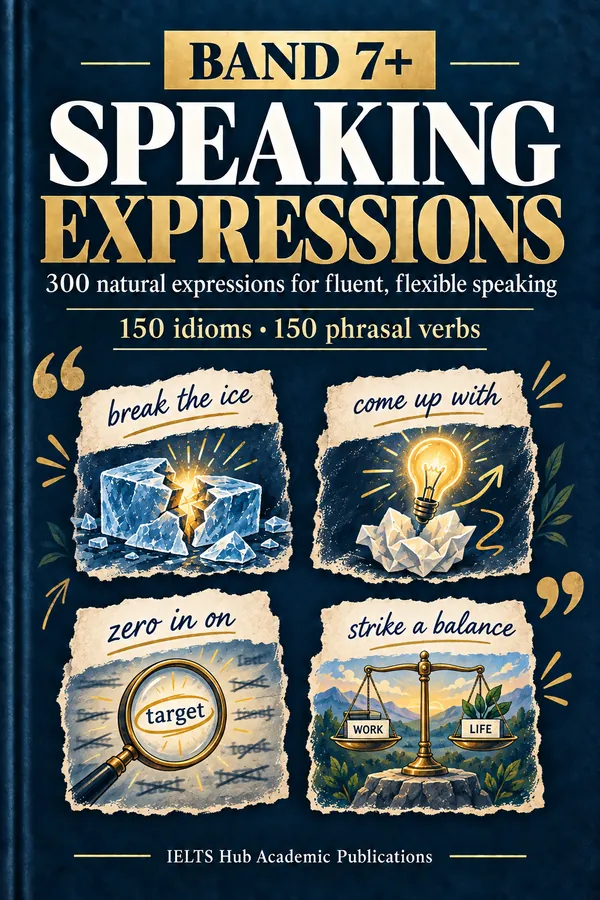
Speaking
Band 7+ Speaking Expressions
300 natural expressions for fluent, flexible speaking
₹199$6.99CAD 8.99AUD 9.99£4.99NZD 10.99€5.99AED 24SGD 8.99