Speaking test #259
Part 1 · Interview
4 to 5 minutes. The examiner asks about you and familiar topics.
Can you tell me your full name?
Where are you from?
Do you work or are you a student?
What is your most vivid childhood memory?
My most vivid childhood memory is definitely the time my family took a trip to Disney World. I remember feeling so excited and overwhelmed by all the sights and sounds. It was such a magical experience that has stayed with me to this day.
Are you still in touch with your childhood friends?
Yes, I am still in touch with a few of my childhood friends. We've managed to stay connected despite the distance and time that has passed. It's always great to catch up with them and reminisce about old times.
What was your favourite toy when you were a child?
Oh man, that's a tough one. I had so many favourite toys when I was a child. But if I had to choose just one, I would say my favourite toy was my stuffed animal collection. I had so many different ones and I loved cuddling up with them at night.
Is it important for children to have fun? Why?
Absolutely. I think it's extremely important for children to have fun and enjoy their childhood. Play and laughter are crucial for their physical, mental, and emotional development. It helps to build their self-esteem, creativity, and social skills, and provides a much-needed break from the stresses of daily life. Plus, it's just plain good for the soul!
Do you like chocolate? [Why / why not?
?] Oh absolutely, I'm a total chocoholic. There's just something about the rich, creamy taste that I can't resist. Plus, it's a great way to satisfy my sweet tooth.
What type of chocolate do you prefer? [Why?
?] I have a bit of a sweet tooth, so I tend to go for the really dark, rich chocolate. I find that it has a more intense flavor and it's less sweet, which I really enjoy. Plus, it's supposed to be healthier for you, so that's always a bonus.
When do you usually eat chocolate?
I don't really have a specific time when I eat chocolate. I pretty much enjoy it anytime, anywhere. Sometimes I'll have a little piece as a pick-me-up in the afternoon, or I'll have a little square as a dessert after dinner. It's just one of those things that's always good to have on hand.
Do people give chocolate as a present in your country? [When?
?] Yes, chocolate is definitely a popular gift in my country. It's a classic present for Valentine's Day, birthdays, and Christmas, and it's also a common gift for saying thank you or congratulating someone. Chocolate is just one of those things that always seems to put a smile on people's faces.
You will have to talk about the topic for one to two minutes. You have one minute to think about what you are going to say. You can make some notes to help you if you wish.
A food menu/dish you know how to cook
You should say:
- What dish/menu it is
- Ingredients required
- Cooking process
- Special tips or variations
What dish/menu it is
I would like to talk about a popular Indian dish called "Palak Paneer," which is a nutritious and flavorful spinach and cottage cheese curry.
Ingredients required
To prepare Palak Paneer, the key ingredients needed are fresh spinach leaves, paneer (cottage cheese), onions, tomatoes, garlic, ginger, green chilies, and a blend of aromatic spices such as cumin, coriander, garam masala, and turmeric.
Cooking process
The cooking process starts by blanching the spinach leaves and then blending them into a smooth puree. In a separate pan, the onions, garlic, ginger, and green chilies are sautéed until golden brown. Next, the tomato puree is added along with the powdered spices to create a fragrant base. The spinach puree is then poured into the pan and simmered until the flavors meld together. Finally, the cubed paneer is gently folded into the creamy spinach mixture and cooked until heated through.
Special tips or variations
For a unique twist, some variations of Palak Paneer include adding cream for a richer texture or garnishing with a dollop of butter before serving. Additionally, to make it healthier, one can substitute paneer with tofu or add a handful of cashew nuts for extra creaminess. These small adjustments can enhance the taste and presentation of this classic Indian dish.
- Words
- 202
- Sentences
- 10
- Words per sentence
- 20.2
- Speaking time
- about 1.6 min
Counted at 130 words a minute. The exam gives you one to two minutes.
Part 3 · Discussion
4 to 5 minutes. The examiner asks broader questions linked to the cue card topic.
What are the differences between traditional foods and modern cooking styles in your country?
In my country, traditional dishes are often rich in history and cultural significance, reflecting the ingredients and cooking methods passed down through generations. For instance, many of our traditional meals are made from locally sourced ingredients and emphasize seasonal flavors, which is something modern culinary trends tend to overlook in favor of convenience and global accessibility. Nowadays, there’s a noticeable shift towards fusion cuisine, where chefs creatively blend elements from different culinary traditions, which can sometimes dilute the authenticity of our traditional foods. However, I believe that while modern trends are exciting, they can coexist with traditional dishes, allowing us to appreciate our roots while also embracing innovation. Ultimately, this culinary evolution enriches our food culture, making it more diverse and vibrant.
Some folks think that making meals at home is better than eating at restaurants. What do you think about this?
I absolutely believe that cooking at home is more beneficial than dining out, and there are several reasons for this. First and foremost, home-cooked meals are often healthier because you have complete control over the ingredients and portion sizes. You can easily incorporate fresh vegetables, lean proteins, and whole grains, which can be quite challenging when eating out. Additionally, cooking at home can be a wonderful way to bond with family or friends, as it often turns into a shared experience where everyone pitches in. Not to mention, preparing meals at home can be significantly more cost-effective, allowing you to save money for other activities. Overall, while dining out can be a delightful treat, the benefits of home cooking are truly hard to beat!
How important do you think food is to cultural identity?
Food plays a profoundly significant role in shaping cultural identity. It's fascinating how traditional dishes can evoke a sense of nostalgia and belonging, connecting individuals to their heritage. For many, meals are not just about sustenance; they are a celebration of traditions and a way to pass down stories from one generation to the next. Moreover, the ingredients and cooking methods often reflect the history and geography of a region, making food an essential component of cultural expression. In a world that’s becoming increasingly globalized, food can also serve as a bridge between cultures, allowing people to experience and appreciate diversity through the lens of cuisine.
Why do you think a lot of people struggle to learn cooking?
I believe there are several reasons why many people struggle with learning to cook. First and foremost, cooking can seem quite daunting for beginners, especially when faced with complex recipes or unfamiliar ingredients. Additionally, in our fast-paced world, many individuals prioritize convenience over culinary skills, often resorting to takeout or pre-packaged meals. There’s also the fear of making mistakes—nobody wants to serve a burnt dish to their friends or family! Lastly, without proper guidance or encouragement, people may lack the confidence to experiment in the kitchen, which is such a vital part of becoming a proficient cook.
How could people's cooking habits change in the next few decades?
I believe the way people approach cooking will undergo significant transformations in the coming decades, largely due to advancements in technology and shifting lifestyle habits. For instance, we may see an increase in smart kitchen appliances that not only assist in cooking but also provide personalized meal plans based on dietary preferences and health goals. Additionally, as people become more health-conscious, there will likely be a greater emphasis on sustainable cooking practices, focusing on locally sourced ingredients and minimizing food waste. Social media will continue to play a pivotal role, inspiring home chefs to share their culinary creations and experiment with diverse cuisines from around the globe. Overall, I think cooking will evolve from a chore into a more enjoyable and creative endeavor, making it a cherished part of daily life.
What steps can be taken to help more people learn to cook?
To encourage more people to develop cooking skills, I believe a multifaceted approach would be most effective. First, community cooking classes could be organized, making it accessible for individuals of all ages to participate and learn in a fun, social environment. Additionally, incorporating cooking into school curricula could instill these essential skills from an early age, fostering a sense of culinary appreciation among children. Another idea is to promote online platforms where people can share their cooking experiences and tips, creating a supportive cooking community that inspires others to try their hand at it. Lastly, we could see more public campaigns highlighting the health benefits and cost savings of cooking at home, which might motivate people to pick up the spatula and start experimenting in the kitchen!
Go further with the books
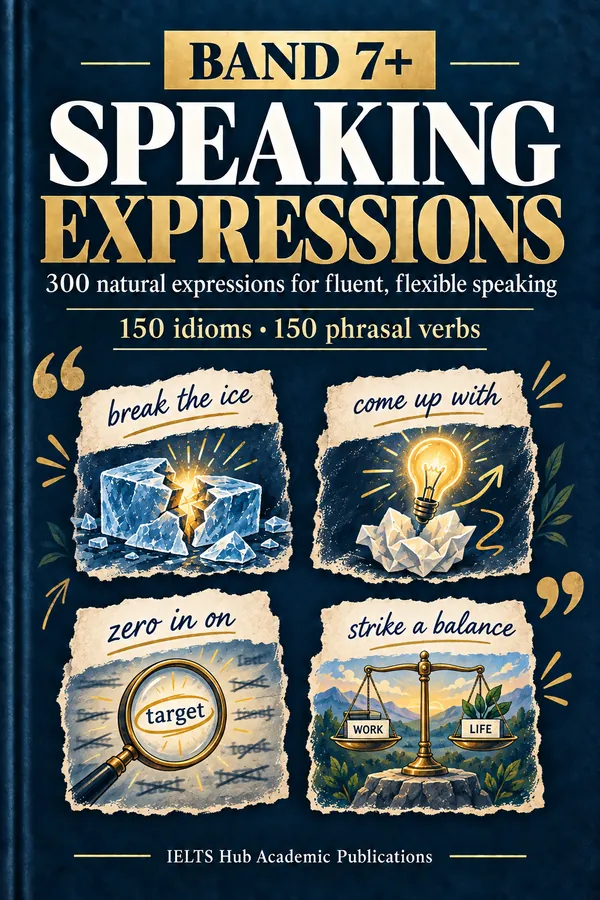
Speaking
Band 7+ Speaking Expressions
300 natural expressions for fluent, flexible speaking
₹199$6.99CAD 8.99AUD 9.99£4.99NZD 10.99€5.99AED 24SGD 8.99

Speaking
Speaking Tips for IELTS
Proven Strategies for Band 8.0+
₹299$9.99CAD 13.99AUD 14.99£7.99NZD 16.99€8.99AED 39SGD 12.99
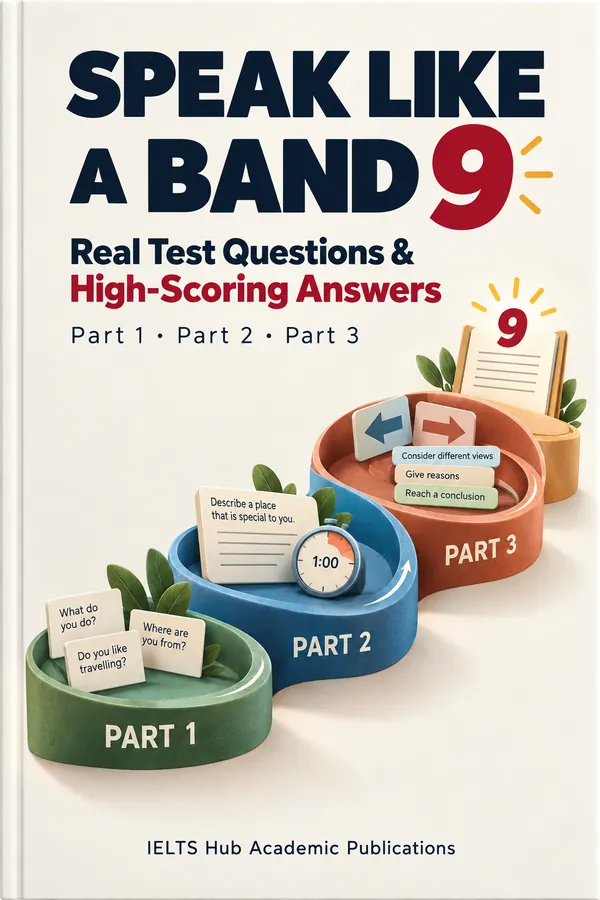
Speaking
Speak Like a Band 9
Real Test Questions & High-Scoring Answers
₹299$9.99CAD 13.99AUD 14.99£7.99NZD 16.99€8.99AED 39SGD 12.99