Speaking test #287
Part 1 · Interview
4 to 5 minutes. The examiner asks about you and familiar topics.
Can you tell me your full name?
Where are you from?
Do you work or are you a student?
Do you enjoy reading about history? [Why?
?] I absolutely love reading about history. I find it fascinating to learn about past events and how they have shaped the world we live in today. The stories and personalities from different eras always capture my attention and I find myself getting lost in the details and the context of the events.
When was the last time you read a book or watched a film about history? [Why?
?] The last time I read a book about history was about a month ago. I read "The Rise and Fall of the Third Reich" by William L. Shirer. It was a gripping account of the rise of Nazi Germany and the events leading up to the Second World War. I was particularly interested in learning more about the political and social climate of the time and how it led to such a catastrophic event in history.
What historical event do you find most interesting? [Why/ Why not?
?] One of the historical events that I find most interesting is the American Revolution. I find it fascinating to learn about the events leading up to the war, the political and social climate of the time, and how it led to the formation of the United States of America. I also find the personalities of the key players in the war, such as George Washington and Thomas Jefferson, to be incredibly intriguing.
Do you think studying history is important? [Why/ Why not?
?] I believe that studying history is incredibly important. It provides us with a better understanding of the world we live in today and how it came to be. It helps us to understand the causes and consequences of past events, as well as the motivations and actions of the people who lived through them. It also helps us to learn from the mistakes of the past and to make better decisions in the present and future. Without an understanding of history, it would be difficult to fully understand the world we live in today.
Do you have any hobbies?
Yes, I have a few hobbies. I love to read, write, and play sports. I also enjoy traveling and trying new foods.
Is it important to have a hobby?
Yes, I believe it is important to have a hobby. Hobbies allow us to relax, escape from our daily routines, and pursue something that we are passionate about. They can also be a source of inspiration and creativity.
Is it harmful to spend too much time on a hobby?
I don't think it is harmful to spend a lot of time on a hobby as long as it is not negatively impacting other areas of our lives. However, it is important to maintain a balance and not neglect our responsibilities or relationships.
What free-time activities would you like to try in the future?
In the future, I would like to try learning a new language, playing a musical instrument, and volunteering in my community. I also have a dream of one day traveling to Japan to experience their culture and try sushi-making classes.
You will have to talk about the topic for one to two minutes. You have one minute to think about what you are going to say. You can make some notes to help you if you wish.
Describe a song or a piece of music you like
You should say:
- What is the song or piece of music
- How you discovered it
- Why you like it
- How it makes you feel
What is the song or piece of music
I'd like to talk about a song that holds a special place in my heart, which is "Tum Hi Ho" by Arijit Singh. I first came across this song during a road trip with friends a few years ago. One of my friends played it on the car stereo, and from the moment I heard the soulful melody and heartfelt lyrics, I was captivated.
How you discovered it
What I love most about "Tum Hi Ho" is its emotional depth and the way it beautifully conveys the feelings of love and longing. The lyrics are poignant and evoke a sense of nostalgia, and Arijit Singh's mesmerizing voice adds an extra layer of intensity to the song. The music itself is simple yet powerful, with a haunting melody that stays with you long after the song ends.
Why you like it
Whenever I listen to "Tum Hi Ho," it elicits a range of emotions within me. Sometimes it brings tears to my eyes, while other times it fills me with a sense of warmth and comfort. The song has a way of touching my soul and resonating with my own experiences of love and heartbreak. It's like a musical journey that takes me through a rollercoaster of emotions every time I listen to it.
How it makes you feel
In conclusion, "Tum Hi Ho" is more than just a song to me; it's a piece of art that speaks to my heart in a way that few songs can. Its beauty lies in its simplicity and raw emotion, and it continues to hold a special place in my music collection. Listening to this song is not just a mere auditory experience but a profound emotional journey that never fails to move me.
- Words
- 278
- Sentences
- 13
- Words per sentence
- 21.4
- Speaking time
- about 2.1 min
Counted at 130 words a minute. The exam gives you one to two minutes.
Part 3 · Discussion
4 to 5 minutes. The examiner asks broader questions linked to the cue card topic.
How can different types of music affect how people feel and act?
Different genres of music can have a profound impact on people's emotions and behaviors, often acting as a catalyst for various feelings. For instance, upbeat genres like pop or dance music often evoke feelings of happiness and can even encourage people to engage in social activities or exercise. On the other hand, more melancholic genres such as blues or classical music can facilitate introspection and help individuals process their emotions. It's fascinating how music can transport us to different emotional states, often reflecting our moods or even influencing them. Additionally, certain music genres can foster a sense of community, as people often come together to enjoy live performances or share their love for a particular style, creating lasting social bonds.
How much do you believe music can connect people from different cultures?
I genuinely believe that music acts as a remarkable universal language that transcends cultural boundaries. It's fascinating how a simple melody or a powerful rhythm can evoke emotions and memories that resonate with people from diverse backgrounds. For instance, genres like jazz or reggae have roots in specific cultures but have found audiences worldwide, highlighting their ability to connect people regardless of their origins. Furthermore, music often addresses universal themes such as love, struggle, and joy, which makes it relatable to everyone. So, in a world that can sometimes feel divided, music serves as a beautiful reminder of our shared humanity.
How important do you think music is in forming personal identities and social relationships?
I believe the role of music in shaping individual identities and social connections is immensely significant. Music acts as a universal language, transcending cultural boundaries and allowing people to express their emotions and experiences in a way that words often cannot. For many, certain genres or songs can become a part of their personal narrative, reflecting their values, struggles, and aspirations. Moreover, music fosters social connections, bringing together diverse groups of people at concerts or festivals, where shared experiences create lasting bonds. In essence, music not only shapes who we are but also helps us find our place within a community, making it a vital aspect of human experience.
Why do you think some songs or music connect with people more than others?
I believe certain songs resonate more deeply with people due to a combination of emotional connection and personal experiences. When a piece of music captures a specific feeling or moment in time, it can evoke strong memories, creating a sense of nostalgia. For instance, a song that played during a significant life event, like a wedding or graduation, often holds a special place in someone’s heart. Additionally, the lyrical depth and musical composition can also play a pivotal role; songs that are relatable or express universal themes tend to strike a chord with a wider audience. Ultimately, it’s this unique blend of personal relevance and artistic expression that makes some music profoundly impactful.
How could changes in technology affect how music is made and listened to in the future?
The evolution of technology is bound to revolutionize both the creation and consumption of music in ways we can only begin to imagine. For instance, advancements in artificial intelligence could lead to unprecedented collaborations between humans and machines, allowing artists to experiment with complex compositions that were previously unachievable. Additionally, the rise of virtual reality and augmented reality could transform live performances into immersive experiences, where audiences feel more connected to the music and the artist. On the consumption side, streaming services may become even more personalized, offering tailored playlists based on our individual tastes, which could deepen our engagement with different genres. Overall, it’s exciting to think about how these innovations will shape our musical landscape, making it more diverse and accessible than ever before!
What steps can be taken to support music education in schools to help students enjoy different music styles more?
To enhance students' appreciation for various music genres, schools could implement a more diverse curriculum that includes not only classical music but also contemporary styles like jazz, hip-hop, and world music. This could involve hosting workshops with local musicians who can share their expertise and passion for their craft, which would make the learning experience more interactive and engaging. Additionally, creating extracurricular programs like music clubs or choirs can foster a sense of community and allow students to explore their musical interests outside the classroom. Using technology, such as music production software, could also attract students who might not initially see themselves as musicians, thereby broadening their musical horizons. Overall, a multifaceted approach that combines traditional teaching with modern methods can significantly enhance students' appreciation for music.
Go further with the books
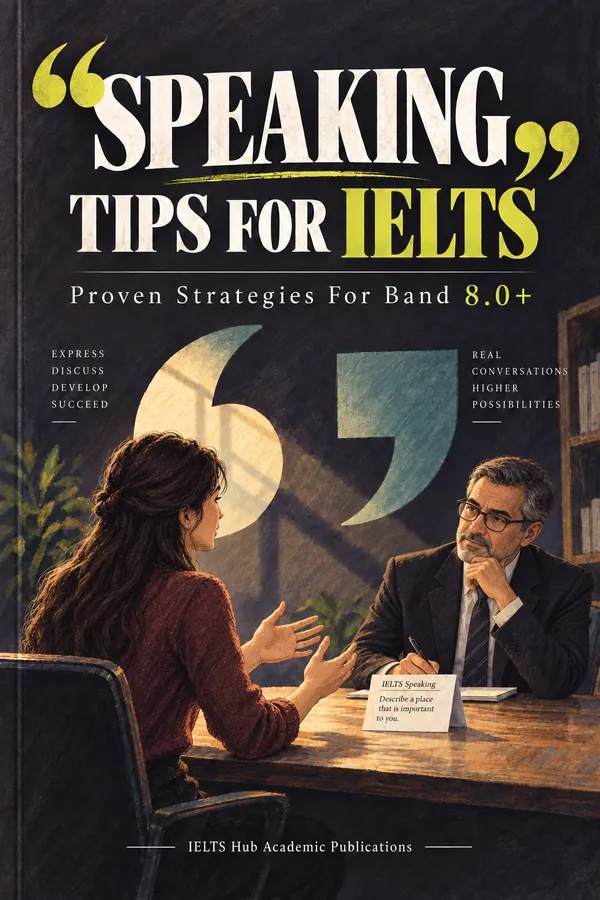
Speaking
Speaking Tips for IELTS
Proven Strategies for Band 8.0+
₹299$9.99CAD 13.99AUD 14.99£7.99NZD 16.99€8.99AED 39SGD 12.99
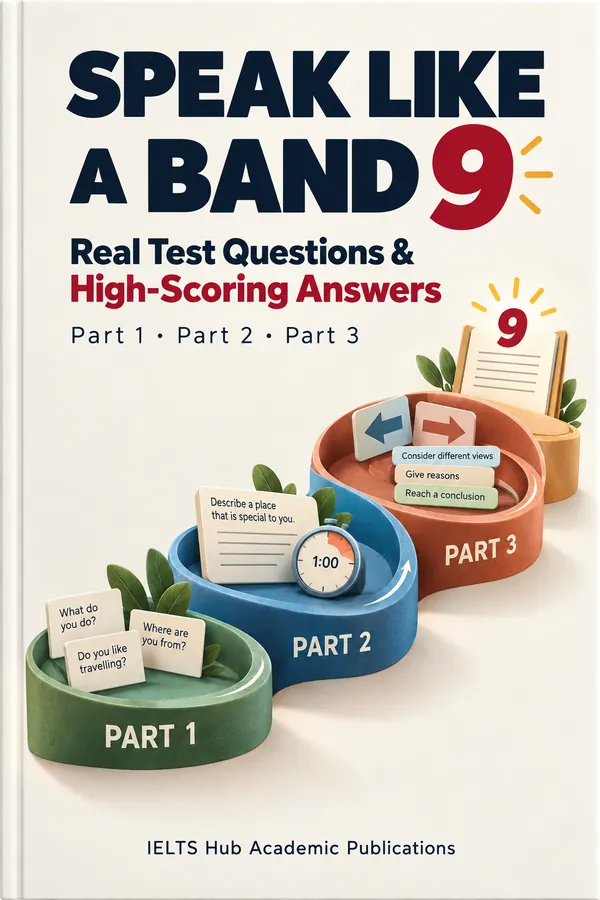
Speaking
Speak Like a Band 9
Real Test Questions & High-Scoring Answers
₹299$9.99CAD 13.99AUD 14.99£7.99NZD 16.99€8.99AED 39SGD 12.99
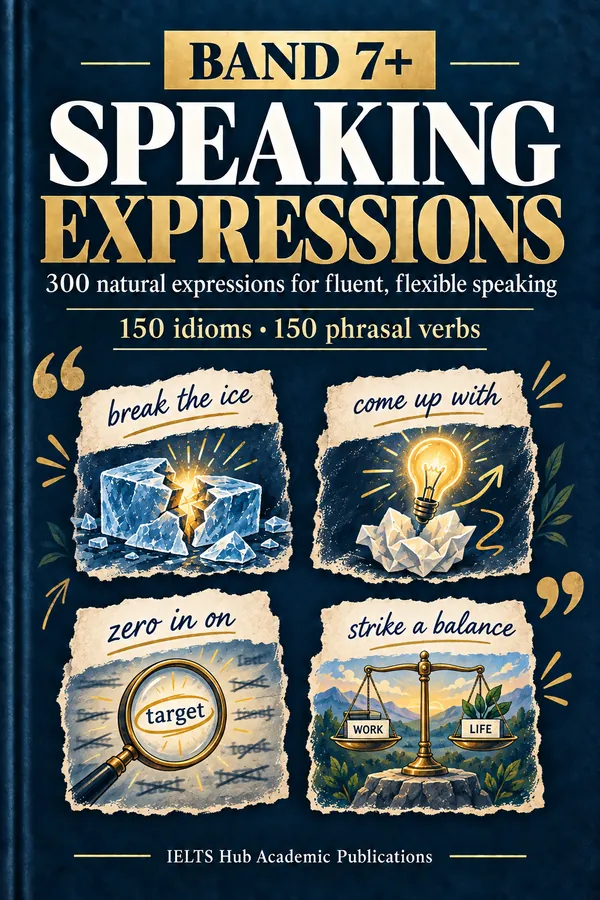
Speaking
Band 7+ Speaking Expressions
300 natural expressions for fluent, flexible speaking
₹199$6.99CAD 8.99AUD 9.99£4.99NZD 10.99€5.99AED 24SGD 8.99