Speaking test #322
Part 1 · Interview
4 to 5 minutes. The examiner asks about you and familiar topics.
Can you tell me your full name?
Where are you from?
Do you work or are you a student?
How do you feel about birds? [Why?
?] I absolutely adore birds! Their vibrant colors and unique songs always bring a smile to my face. Plus, it's amazing to see the different adaptations and behaviors they exhibit in their natural habitats.
Have you seen many kinds of birds?
Yes, I've been fortunate enough to observe a wide variety of birds in my travels. From the majestic bald eagle in the United States to the colorful parrots of South America, it's always a treat to spot a new species.
How do people in your country feel about birds?
In India, birds hold a special place in our culture and traditions. Many people keep bird feeders in their gardens to attract a variety of species, and it's not uncommon to see people taking early morning walks to watch and photograph the birds.
Do any birds have any particular significance in your country?
Absolutely! The peacock is the national bird of India and is revered for its beauty and grace. In Hindu mythology, the god Krishna is often depicted with a peacock feather in his headband, symbolizing his vanity and pride.
Did you save money when you were young?
Yes, I did save money when I was young. I have always had a strong sense of financial responsibility and understood the importance of saving money for the future. I remember putting away a portion of my allowance every week into a piggy bank, and as I got older, I opened a savings account at the bank.
Do parents give children pocket money in your culture (India)?
Yes, parents in India do give children pocket money. It is common for parents to give their children a small allowance to manage their expenses, such as buying snacks or going to the movies with friends. It is also a way for parents to teach their children about budgeting and managing money.
What kinds of things do people save money for?
People save money for a variety of things, such as buying a new car or house, paying for education, going on vacation, or saving for retirement. Some people also save money for emergencies or unexpected expenses. Ultimately, it depends on each person's financial goals and priorities.
Why do you think some people cannot save money?
I believe that some people cannot save money due to a lack of financial literacy or discipline. They may struggle with budgeting and managing their expenses, or they may have a tendency to overspend or live beyond their means. Additionally, some people may have financial constraints such as low income or high debt, which can make it difficult to save money. However, with the right mindset and tools, anyone can learn to save money and achieve their financial goals.
You will have to talk about the topic for one to two minutes. You have one minute to think about what you are going to say. You can make some notes to help you if you wish.
A project you worked on in school/college or office
You should say:
- What was the project
- How did you contribute to the project
- Challenges faced during the project
- What were the outcomes or results of the project
What was the project
During my final year of college, I had the opportunity to work on a project titled "Sustainable Campus Initiative" aimed at promoting eco-friendly practices within our college premises. As a team member, my role was to conduct research on sustainable solutions that could be implemented on campus and to create awareness among students and staff regarding the importance of environmental conservation.
How did you contribute to the project
One of the main challenges we faced during the project was resistance from some individuals who were reluctant to change their habits and adopt sustainable practices. Convincing them about the benefits of our initiative required patience and effective communication skills. Additionally, coordinating with various departments and ensuring everyone was on the same page posed a logistical challenge.
Challenges faced during the project
Despite the challenges, our efforts yielded positive results. We successfully implemented waste segregation practices, set up recycling bins across the campus, and organized awareness campaigns such as tree-planting drives and workshops on sustainable living. As a result, we witnessed a significant reduction in waste generation and an increase in the adoption of eco-friendly habits among the college community.
What were the outcomes or results of the project
Overall, the Sustainable Campus Initiative project was a rewarding experience that not only enhanced my teamwork and leadership skills but also instilled in me a deeper sense of responsibility towards the environment. It was fulfilling to see the positive impact of our project reflected in a greener and more sustainable campus environment.
- Words
- 228
- Sentences
- 10
- Words per sentence
- 22.8
- Speaking time
- about 1.8 min
Counted at 130 words a minute. The exam gives you one to two minutes.
Part 3 · Discussion
4 to 5 minutes. The examiner asks broader questions linked to the cue card topic.
What are the differences between teamwork projects in schools and those at work?
Collaborative projects in educational settings tend to focus more on skill development and teamwork, often allowing students to explore their creativity and express their ideas without the pressure of immediate results. In contrast, professional environments usually emphasize efficiency and goal-oriented outcomes, where the stakes are higher, and the focus is on delivering tangible results. Additionally, educational projects often encourage a more relaxed atmosphere where mistakes are viewed as valuable learning opportunities, while in the workplace, there can be a greater emphasis on meeting deadlines and maintaining productivity. Ultimately, both settings foster collaboration, yet the underlying motivations and pressures can differ significantly, shaping the overall experience for the participants.
How might some people find group work harder than working by themselves?
Group projects can indeed pose a unique set of challenges compared to working alone. For one, individuals may struggle with differing opinions and conflicting ideas, which can lead to tension and hinder progress. Moreover, coordinating schedules and ensuring everyone is on the same page can be quite demanding, often resulting in miscommunication. Additionally, some people may feel overwhelmed by the responsibility of ensuring that all group members contribute equally, which can add extra pressure. Ultimately, while collaboration can foster creativity, it also requires a level of compromise and patience that not everyone finds easy to navigate.
How important do you think teamwork is for the success of a project?
Teamwork is absolutely paramount when it comes to the success of any project. When individuals collaborate, they bring together a diverse range of skills and perspectives, which can spark innovation and lead to more robust solutions. Moreover, effective teamwork fosters a sense of accountability; team members are more likely to stay committed to their tasks when they know others are relying on them. Ultimately, the ability to communicate openly and support one another can make the difference between a project that merely meets expectations and one that truly excels. So, in my opinion, investing time in building a cohesive team is vital for achieving outstanding results.
Why do you think a lot of people like to work in groups instead of alone on projects?
I believe the preference for teamwork over independent work stems from a few key factors. Firstly, working in teams often leads to a synergy that can amplify creativity and problem-solving. When diverse minds come together, they can generate a wider range of ideas and perspectives, which is invaluable in tackling complex projects. Additionally, teamwork fosters a sense of collaboration and camaraderie; individuals feel supported and motivated by their peers, which can enhance overall productivity. Lastly, sharing responsibilities can alleviate the pressure on individuals, making the work experience more enjoyable and less daunting.
What changes could we expect in how group projects are done in the future?
In the future, I believe we'll see a significant shift towards more collaborative and interdisciplinary approaches in group projects. With advancements in technology, tools that facilitate real-time communication and project management will become even more sophisticated, allowing team members from various locations to work seamlessly together. Additionally, I think there's going to be a greater emphasis on diversity of thought, where teams will be encouraged to include individuals from different backgrounds and skill sets to foster innovation. This could lead to more dynamic problem-solving and creative outcomes. Overall, the evolution of group projects will likely reflect our increasingly global and interconnected world.
What steps can be taken to make communication better among team members during a project?
Improving communication among team members during a project is crucial for its success. One effective measure is to implement regular check-in meetings, where everyone can share updates and address any challenges they’re facing. This not only fosters a sense of team cohesion but also ensures that everyone is on the same page. Additionally, utilizing collaborative tools, like project management software, can streamline communication and keep all relevant information easily accessible. Lastly, encouraging an open-door policy where team members feel comfortable voicing their thoughts can significantly enhance interpersonal relationships and lead to a more productive working environment.
Go further with the books

Speaking
Band 7+ Speaking Expressions
300 natural expressions for fluent, flexible speaking
₹199$6.99CAD 8.99AUD 9.99£4.99NZD 10.99€5.99AED 24SGD 8.99

Speaking
Speaking Tips for IELTS
Proven Strategies for Band 8.0+
₹299$9.99CAD 13.99AUD 14.99£7.99NZD 16.99€8.99AED 39SGD 12.99
Speaking
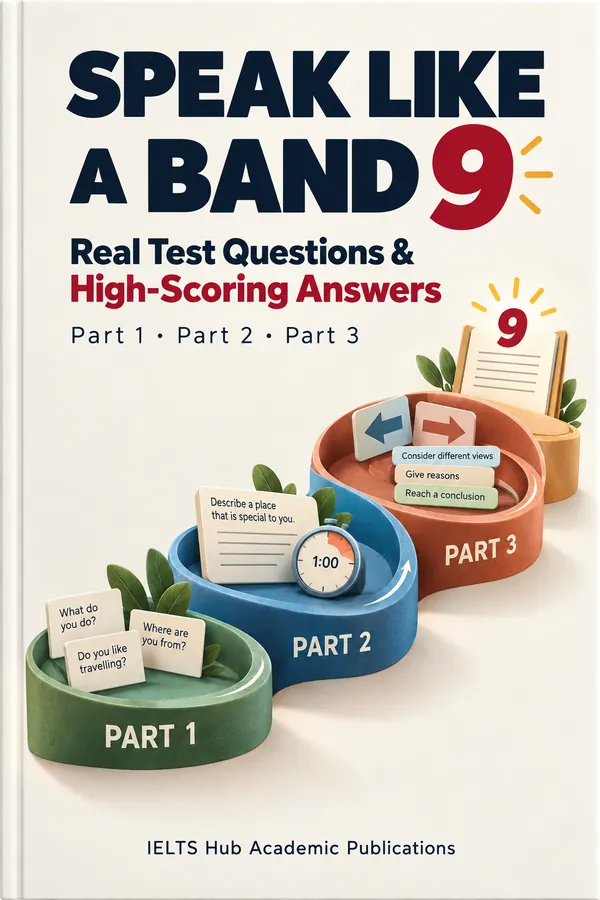
Speak Like a Band 9
Real Test Questions & High-Scoring Answers
₹299$9.99CAD 13.99AUD 14.99£7.99NZD 16.99€8.99AED 39SGD 12.99