Speaking test #343
Part 1 · Interview
4 to 5 minutes. The examiner asks about you and familiar topics.
Can you tell me your full name?
Where are you from?
Do you work or are you a student?
Do you like texting?
I am quite fond of texting as it allows me to communicate with people in a quick and convenient manner. I find it particularly useful for short and informal conversations, as well as for arranging plans and appointments.
Have you ever received a confusing text message?
Yes, I have received a few confusing text messages in the past. Sometimes, I find that the message is not clear or that the context is missing, which can make it difficult to understand the intended meaning.
In what circumstances are making a phone call better than sending a text message?
I believe that making a phone call is better than sending a text message in certain situations, such as when discussing important or sensitive matters, when there is a need for immediate clarification, or when the conversation requires a more personal touch. Additionally, phone calls can be more effective in situations where tone and emphasis are important, such as when expressing emotions or giving instructions.
Have you ever had difficulty replying to a message?
Yes, I have had difficulty replying to a message in the past, particularly when the message is vague or unclear. In such cases, I often find myself rereading the message multiple times and trying to interpret the meaning. However, I try to clarify any confusion by asking follow-up questions or requesting more information.
Are you a tidy person?
I would consider myself to be quite tidy, yes. I place a high value on organization and cleanliness, and find that maintaining a tidy environment helps me to feel more focused and productive.
How do you keep things tidy?
I try to adopt a few key strategies to keep things tidy. One of the most important is to have a designated place for everything, so that I know where things belong and can quickly put them away when I'm finished using them. I also try to make a habit of doing a quick tidy-up at the end of each day, so that I start the next day with a clean slate. Additionally, I try to be mindful of creating clutter in the first place, by being selective about what I bring into my home or workspace, and being conscious of the amount of stuff I accumulate.
Do you think people should be tidy all the time?
I think that it's important for people to strive to maintain a certain level of tidiness, as it can have a positive impact on one's mental and physical well-being. However, I don't believe that anyone should feel pressured to be perfectly tidy all the time. Life can be messy and chaotic at times, and it's important to be able to let go and be okay with a little messiness from time to time.
Are you tidier at work or at home?
I would say that I am equally tidy at both work and home. I try to maintain a similar level of organization and cleanliness in both environments, as I find that it helps me to feel more productive and focused regardless of where I am.
You will have to talk about the topic for one to two minutes. You have one minute to think about what you are going to say. You can make some notes to help you if you wish.
Describe your favourite subject in your academic life
You should say:
- What is the subject
- How you became interested in it
- What you like about it
- How it has influenced your life or future goals
What is the subject
My favorite subject in my academic life is Mathematics. Ever since I was a child, numbers and patterns have intrigued me, sparking a curiosity that eventually blossomed into a deep passion for the subject. Mathematics has a unique way of blending logic and creativity, which initially drew me in and continues to captivate me to this day.
How you became interested in it
What I particularly like about Mathematics is its universal language and applicability in various aspects of life. The beauty of solving complex equations or unraveling intricate theorems is immensely satisfying to me. The subject challenges me to think critically, analyze problems from different angles, and develop logical reasoning skills that are beneficial not only in academics but also in real-world scenarios.
What you like about it
Studying Mathematics has significantly influenced my life by sharpening my problem-solving abilities and enhancing my analytical thinking. It has taught me the importance of precision, accuracy, and perseverance in overcoming challenges. Moreover, my interest in Mathematics has shaped my future goals, as I aspire to pursue a career in a field that involves applying mathematical principles to solve practical problems and contribute to innovative solutions.
How it has influenced your life or future goals
In conclusion, Mathematics is not just a subject to me, but a fascinating realm of knowledge that continues to inspire and motivate me. Its impact on my academic journey and future endeavors is profound, and I am grateful for the opportunities it has provided me to grow intellectually and personally.
- Words
- 233
- Sentences
- 11
- Words per sentence
- 21.2
- Speaking time
- about 1.8 min
Counted at 130 words a minute. The exam gives you one to two minutes.
Part 3 · Discussion
4 to 5 minutes. The examiner asks broader questions linked to the cue card topic.
How can the value of a favorite subject change for people with different job goals?
The significance of a favorite subject can vary dramatically based on an individual's career aspirations, and this divergence is quite fascinating. For instance, someone aiming to become a doctor might find subjects like biology or chemistry to be crucial, as they lay the groundwork for understanding complex medical concepts. In contrast, a budding artist might gravitate towards subjects like art history or design, which fuel their creativity and help them develop their unique style. Moreover, even within the same field, people can have different favorite subjects that resonate with their personal interests and strengths, illustrating how diverse our educational journeys can be. Ultimately, the relevance of a favorite subject is deeply intertwined with one’s future ambitions, shaping the way we approach learning and professional development.
Why do people have strong feelings about their school choices?
People often feel strongly about their academic preferences for a variety of reasons. Firstly, personal interest plays a huge role; when someone is genuinely passionate about a subject, it can ignite a sense of purpose and motivation, making the learning experience much more enjoyable. Additionally, cultural and familial influences can shape these preferences. For instance, if a family values certain fields, like medicine or engineering, individuals may feel compelled to pursue those paths to meet expectations. Lastly, the potential for career advancement and job security in specific fields can also drive strong feelings, as people want to ensure they’re making sound choices for their future. Overall, these emotional and practical factors intertwine to create a deep connection to one's academic choices.
How can picking a favorite subject affect a person's future chances?
Choosing a favorite subject can significantly shape a person's future opportunities in various ways. For starters, it often aligns with their passions and strengths, which can lead to greater academic success. When someone excels in a subject they love, it can open doors to prestigious universities and specialized programs that further hone their skills. Moreover, this choice can influence their career path; for example, a strong interest in science might lead someone to pursue a career in healthcare or engineering. Ultimately, a favorite subject not only defines one’s educational trajectory but also lays the groundwork for a fulfilling and successful career.
Why do you think some subjects connect better with students than others?
Certain subjects resonate more with students because they often align with their personal interests and career aspirations. For instance, subjects like art or music may capture the imagination of those who are creatively inclined, while STEM subjects might attract those who enjoy problem-solving and analytical thinking. Additionally, the way a subject is taught can significantly influence students' engagement; an enthusiastic teacher can make even the most challenging topics come alive! Furthermore, when students can see the real-world applications of what they are learning, it tends to spark their curiosity and motivation to delve deeper into the subject. Ultimately, it’s the combination of passion, teaching style, and relevance that makes certain subjects stand out for students.
How do you see favorite subjects changing in schools in the future?
I believe the role of favorite subjects will evolve significantly in the future educational landscape. As technology continues to advance, subjects might become more interdisciplinary, blending areas like science and art or mathematics and music. This integration could help students develop a more holistic understanding of knowledge and its applications in real life. Additionally, with the rise of personalized learning, students may have more autonomy to explore their interests deeply, leading to greater engagement and motivation. Ultimately, I think this shift will foster a generation of learners who are not only knowledgeable but also creatively adept and ready to tackle complex challenges.
How can schools help students find the subjects they like best?
Educational institutions can adopt a variety of approaches to help students identify their preferred subjects. For instance, offering diverse curricula that include a wide range of subjects can spark interest and allow students to explore different fields. Additionally, implementing personalized guidance programs where students receive tailored advice from educators can significantly enhance their understanding of their strengths and passions. Workshops and extracurricular activities that focus on hands-on experiences can also be invaluable, as they allow students to engage with subjects in a practical context. Ultimately, creating an environment that encourages exploration and experimentation is key to helping students uncover their true interests.
Go further with the books
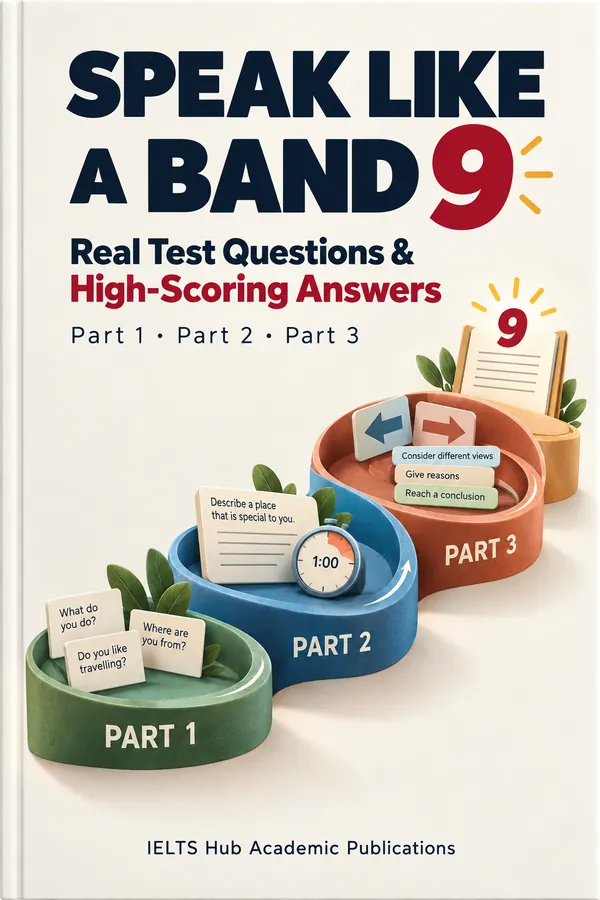
Speaking
Speak Like a Band 9
Real Test Questions & High-Scoring Answers
₹299$9.99CAD 13.99AUD 14.99£7.99NZD 16.99€8.99AED 39SGD 12.99

Speaking
Band 7+ Speaking Expressions
300 natural expressions for fluent, flexible speaking
₹199$6.99CAD 8.99AUD 9.99£4.99NZD 10.99€5.99AED 24SGD 8.99

Speaking
Speaking Tips for IELTS
Proven Strategies for Band 8.0+
₹299$9.99CAD 13.99AUD 14.99£7.99NZD 16.99€8.99AED 39SGD 12.99