Speaking test #351
Part 1 · Interview
4 to 5 minutes. The examiner asks about you and familiar topics.
Can you tell me your full name?
Where are you from?
Do you work or are you a student?
Do you wear a watch?
Yes, I do wear a watch. I find it to be a practical and stylish accessory that allows me to keep track of time throughout the day. Q
Have you ever gotten a watch as a gift?
Yes, I have. I remember receiving a beautiful watch as a gift from my parents on my graduation day. It was a precious and meaningful present that I still wear to this day. Q
Why do some people wear expensive watches?
Some people wear expensive watches as a symbol of status or wealth. It could also be a sign of luxury and exclusivity, as well as a form of personal expression. Additionally, expensive watches often possess intricate craftsmanship and superior quality that sets them apart from more affordable watches. Q
Do you think it is important to wear a watch?
Personally, I do think it is important to wear a watch. It serves as a useful tool for keeping track of time, which is essential in our daily lives. Additionally, a watch can also be a fashion statement, and can reflect one's personal style and preferences. However, it is ultimately a matter of personal preference and might not be as important for others.
Have you done water sports?
Yes, I have had the opportunity to participate in a variety of water sports in the past. I have dabbled in activities such as surfing, kayaking, and stand-up paddleboarding. Each of these experiences has been incredibly exhilarating and challenging in their own unique ways.
What other water sports would you like to try?
I am particularly interested in trying out water sports such as kiteboarding and windsurfing. I find the idea of harnessing the power of the wind to propel oneself across the water to be a fascinating concept. Additionally, I would also like to try my hand at scuba diving. I have always been fascinated by the underwater world and would love to explore it more intimately.
Do you think water sports are dangerous?
Water sports can certainly be dangerous if proper precautions are not taken. However, I believe that with the right training, equipment, and mindset, most water sports can be enjoyed safely. It is important to always be aware of one's surroundings and to have a healthy respect for the power of the water.
What kind of water sports do people in your (this) country like?
In my country, people tend to enjoy a wide variety of water sports. Popular activities include swimming, boating, jet skiing, and water skiing. Additionally, many people also enjoy more extreme sports such as wakeboarding and kitesurfing. The country's coastlines and rivers provide ample opportunities for people to engage in these activities.
You will have to talk about the topic for one to two minutes. You have one minute to think about what you are going to say. You can make some notes to help you if you wish.
Describe the traffic jam in your city
You should say:
- When and where the traffic jam occurred
- Reasons for the traffic congestion
- How it affected you or others
- Possible solutions to alleviate traffic congestion
When and where the traffic jam occurred
In my bustling city of Mumbai, known for its vibrant culture and fast-paced lifestyle, I recently encountered a severe traffic jam during rush hour on a Monday morning. The incident took place at a major intersection near the central business district, where multiple roads converge, creating a bottleneck situation that brought the entire area to a standstill. The cacophony of honking vehicles and frustrated commuters painted a chaotic picture of urban congestion that is all too common in metropolitan cities like Mumbai.
Reasons for the traffic congestion
The primary reasons behind this traffic snarl were a combination of factors such as poor urban planning, inadequate infrastructure, and a high volume of vehicles on the roads. The lack of efficient public transportation systems and the ongoing construction activities further exacerbated the situation, leading to gridlock on the roads. Additionally, reckless driving behaviors, such as lane-cutting and disobeying traffic rules, contributed to the chaos and added to the delays faced by commuters trying to navigate through the traffic maze.
How it affected you or others
The impact of this traffic jam was felt not only by individuals trying to reach their destinations on time but also by businesses and services that rely on seamless transportation networks for their operations. Productivity took a hit as employees arrived late for work, deliveries were delayed, and emergency services struggled to maneuver through the congested streets. The stress and frustration experienced by commuters in such situations can have a ripple effect on the overall well-being of the city's residents and economy.
Possible solutions to alleviate traffic congestion
To alleviate the persistent issue of traffic congestion in our city, it is imperative to implement a multi-faceted approach that includes investing in public transportation, promoting carpooling and cycling, improving traffic management systems, and creating pedestrian-friendly infrastructure. Encouraging telecommuting options for employees, restricting vehicle usage in certain areas, and imposing stricter penalties for traffic violations can also play a significant role in reducing traffic congestion and creating a more sustainable urban environment for all residents.
- Words
- 319
- Sentences
- 11
- Words per sentence
- 29.0
- Speaking time
- about 2.5 min
Counted at 130 words a minute. The exam gives you one to two minutes.
Part 3 · Discussion
4 to 5 minutes. The examiner asks broader questions linked to the cue card topic.
How are traffic jams in cities different from those in the countryside?
Traffic jams in urban areas and rural locations are often starkly different in nature and impact. In bustling cities, traffic congestion is typically characterized by a high volume of vehicles, which leads to gridlock on major roads, especially during peak hours. This situation is exacerbated by the presence of public transport systems, which can either alleviate or contribute to the chaos, depending on their efficiency. On the other hand, traffic jams in rural areas are usually less frequent and often caused by roadworks or the occasional agricultural vehicle. These situations tend to be more temporary and less intense, allowing for quicker resolutions. Ultimately, while both settings experience traffic issues, the scale and frequency in urban environments are far more pronounced.
Some people believe that traffic jams are just a normal part of living in a city. What do you think about this idea?
I can certainly understand why many people view traffic congestion as an inevitable aspect of urban living. Cities are typically bustling hubs of activity, which naturally leads to increased vehicle use. However, I believe that while congestion is common, it doesn't have to be an unchangeable reality. With the right infrastructure improvements and a push towards public transportation, we can alleviate some of these issues. For instance, cities that invest in cycling lanes and pedestrian-friendly spaces often see a significant decrease in vehicular traffic. So, while congestion might seem inevitable, it’s certainly manageable with innovative solutions!
How important do you think traffic jams are for everyday life and the economy of a city?
Traffic jams have a profound impact on both daily life and the economy of a city. Firstly, they can lead to significant time wastage, as commuters spend hours stuck in congestion instead of engaging in more productive activities. This not only affects individuals' mental well-being but also leads to increased stress levels, which can ripple through families and communities. Economically, the losses are staggering; businesses suffer from delayed deliveries and employees arriving late. Moreover, the environmental toll is considerable, contributing to heightened pollution levels that can have lasting effects on public health. Overall, the ramifications of traffic jams extend far beyond just inconvenience—they can truly hinder a city’s growth and quality of life.
Why do you think traffic jams happen more often in today's cities than they did before?
Traffic jams have become increasingly prevalent in modern cities due to a combination of factors. First and foremost, the rapid growth of urban populations has led to a significant increase in the number of vehicles on the roads. As cities attract more people seeking better job opportunities and lifestyles, the demand for transportation skyrockets, resulting in congested streets. Furthermore, the reliance on personal vehicles has exacerbated the situation, as many individuals prefer driving over utilizing public transport, which can be less convenient. Additionally, urban planning often fails to keep pace with this growth, leading to inadequate road infrastructure that simply can't accommodate the volume of traffic. All these elements combined create a perfect storm for traffic jams in today's bustling metropolises.
How might traffic patterns change if cities keep growing and developing?
If cities continue to expand and develop, we could witness some significant shifts in traffic patterns. For instance, as more people move to urban areas, the demand for public transportation may increase dramatically, prompting cities to invest in robust public transit systems. This could lead to a reduction in the number of cars on the road, ultimately easing congestion. Additionally, with the rise of remote work and flexible hours, we might see a shift in peak traffic times, making the roads less crowded throughout the day. Overall, these changes could foster a more sustainable urban environment, encouraging greener commuting options like cycling and walking.
What steps can be taken to reduce the problems caused by traffic jams in cities?
To tackle the pressing issue of traffic congestion in urban areas, a multifaceted approach is essential. Firstly, investing in public transportation can encourage more people to leave their cars at home, reducing the number of vehicles on the road. Additionally, implementing carpooling initiatives and incentivizing shared rides can significantly cut down on traffic volume. It would also be beneficial to promote the use of non-motorized transport options like cycling and walking by creating safer and more accessible infrastructure. Lastly, employing smart traffic management systems can optimize traffic flow and minimize bottlenecks, making commuting a much smoother experience for everyone.
Go further with the books

Speaking
Speaking Tips for IELTS
Proven Strategies for Band 8.0+
₹299$9.99CAD 13.99AUD 14.99£7.99NZD 16.99€8.99AED 39SGD 12.99
Speaking
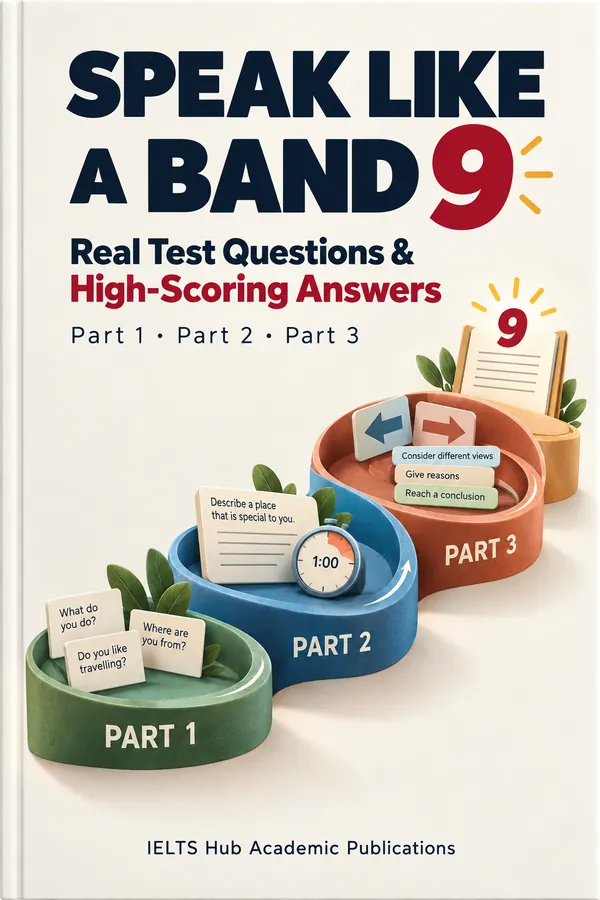
Speak Like a Band 9
Real Test Questions & High-Scoring Answers
₹299$9.99CAD 13.99AUD 14.99£7.99NZD 16.99€8.99AED 39SGD 12.99

Speaking
Band 7+ Speaking Expressions
300 natural expressions for fluent, flexible speaking
₹199$6.99CAD 8.99AUD 9.99£4.99NZD 10.99€5.99AED 24SGD 8.99