Speaking test #366
Part 1 · Interview
4 to 5 minutes. The examiner asks about you and familiar topics.
Can you tell me your full name?
Where are you from?
Do you work or are you a student?
Do you like going to amusement parks?
? Oh yeah, I absolutely love going to amusement parks. **There's just something so thrilling about all the rides and games, you know**?
How often do you go to amusement parks?
? I don't go as often as I'd like, but probably a few times a year. It's always a special treat to go, so I try to make the most of it when I do.
What do you usually do at amusement parks?
? Well, I usually start off by trying out all the big thrill rides, and then I like to check out some of the games and maybe grab a bite to eat. And of course, I always try to take a spin on the carousel at least once.
Would you like to take you children to amusement parks in the future?
? Absolutely! I can't wait to take my kids to an amusement park and share that excitement with them. It's just such a fun and memorable experience, and I'm sure they'll love it as much as I do.
Do you enjoy dancing? [Why/Why not?
?] Oh absolutely, I love dancing! It's such a fun and expressive way to move your body and let loose. Plus, it's a great way to get some exercise and stay active.
Has anyone ever taught you to dance? [Why/Why not?
?] Yes, I've actually taken some formal dance lessons before. I wanted to learn how to do some specific styles of dance and figured it would be best to have a professional teach me. Plus, it's always helpful to have someone critique and give guidance as you're learning. 3. Tell me about any traditional dancing in your country. In my country, we have a lot of different types of traditional dancing. One of the most popular is called the "Folk Dance," which is a group dance that is often accompanied by live music and traditional costumes. It's a really fun and energetic dance that is often performed at cultural festivals and celebrations.
Do you think that traditional dancing will be popular in the future? [Why/Why not?
?] I definitely think that traditional dancing will always have a place in our culture and will continue to be popular in the future. It's such a rich and important part of many cultures and helps to preserve traditions and heritage. Plus, it's just so enjoyable to watch and participate in!
You will have to talk about the topic for one to two minutes. You have one minute to think about what you are going to say. You can make some notes to help you if you wish.
Describe a difficult thing you did well
You should say:
- What the difficult thing was
- Why it was challenging
- How you managed to do it well
- The outcome of your efforts
What the difficult thing was
I once tackled the challenge of organizing a charity event for underprivileged children in my community. The task was difficult because it required meticulous planning, coordination with various stakeholders, and the need to fundraise a significant amount of money in a short period of time. Additionally, as a full-time student with limited experience in event management, the responsibility seemed overwhelming at first.
Why it was challenging
To manage this challenge effectively, I created a detailed project plan outlining tasks, timelines, and responsibilities for each team member involved. I also reached out to local businesses and community members for donations and sponsorships, leveraging my communication skills to articulate the importance of the cause. Despite facing initial setbacks and rejections, I remained persistent and focused on the end goal of making a difference in the lives of the children.
How you managed to do it well
As a result of our efforts, the charity event was a resounding success, surpassing our fundraising target and attracting a large turnout from the community. The children were thrilled to participate in various activities and receive essential supplies and gifts. Seeing the smiles on their faces and knowing that we had made a positive impact on their lives was incredibly rewarding and reinforced my belief in the power of collective action to bring about meaningful change.
The outcome of your efforts
In conclusion, organizing the charity event for underprivileged children was a challenging yet fulfilling experience that taught me valuable lessons in teamwork, resilience, and empathy. It demonstrated that with dedication, strategic planning, and a strong sense of purpose, even the most difficult tasks can be accomplished successfully. I am grateful for the opportunity to have contributed to a cause greater than myself and inspired to continue making a difference in my community.
- Words
- 281
- Sentences
- 12
- Words per sentence
- 23.4
- Speaking time
- about 2.2 min
Counted at 130 words a minute. The exam gives you one to two minutes.
Part 3 · Discussion
4 to 5 minutes. The examiner asks broader questions linked to the cue card topic.
How do the problems faced in tough tasks vary between people and groups?
That's a fantastic question! The challenges faced in difficult tasks can vary significantly between individuals and teams, largely due to the dynamics of collaboration and personal responsibility. For instance, when an individual tackles a challenging task, they often rely on their own skills and decision-making abilities, which can lead to intense pressure and potential burnout if things don't go well. On the other hand, teams can share the burden, but they might encounter issues like communication breakdowns or conflicting opinions, which can complicate the process. Moreover, the diversity of perspectives in a team can be both a blessing and a curse; while it can lead to innovative solutions, it can also result in groupthink if not managed properly. Ultimately, both approaches have their unique sets of challenges, and understanding these differences can really help in choosing the right strategy for any given task.
How much easier might some people find it to deal with tough tasks compared to others?
It's fascinating how individual differences can significantly affect our ability to tackle difficult tasks. Some people might have a natural aptitude for managing challenges due to their personality traits, such as resilience or optimism. For instance, individuals who possess a strong sense of self-efficacy often approach daunting tasks with a more positive mindset, which can lead to better outcomes. Additionally, prior experiences and the support network one has can play a crucial role; those with a background of overcoming obstacles may have developed effective coping strategies. Ultimately, it's a blend of personal attributes and external influences that dictates how easily someone navigates challenges.
How can facing tough challenges affect a person's self-esteem and confidence?
Overcoming difficult challenges can have a profound impact on a person's self-esteem and confidence. When individuals face and conquer obstacles, they often experience a boost in self-worth, realizing that they possess the resilience and capability to handle tough situations. This newfound strength can propel them to take on even greater challenges, creating a positive feedback loop that enhances their overall sense of achievement. Moreover, it fosters a sense of independence and autonomy, as they learn to trust their judgment and abilities. Ultimately, these experiences not only enhance their confidence in specific areas but also contribute to a more robust belief in themselves across various aspects of life.
Why do you think people often decide to face tough challenges even with the risks?
I believe people are inherently drawn to difficult challenges because they offer an opportunity for personal growth and self-discovery. Facing obstacles can be incredibly rewarding; it allows individuals to step out of their comfort zones and test their limits. Additionally, the sense of accomplishment that comes from overcoming a significant challenge can be tremendously fulfilling. Many also seek to push their boundaries to gain new experiences, which often leads to a greater sense of fulfillment in life. Ultimately, the desire to achieve something meaningful often outweighs the perceived risks, driving people to embrace these challenges with enthusiasm.
How could tough tasks change in the future as technology improves?
As technology continues to advance at an unprecedented pace, the nature of difficult tasks is likely to shift significantly. For instance, tasks that once required substantial human effort, such as data analysis or even complex calculations, may be increasingly automated through sophisticated algorithms and artificial intelligence. This evolution could free up human resources to focus on more creative problem-solving and strategic thinking, areas where we can add unique value. Additionally, as we develop more intuitive interfaces and tools, even the most daunting tasks could become more manageable, allowing a broader range of people to engage with them. Overall, I believe these technological advancements will not only make difficult tasks easier but also redefine what we consider to be challenging in the first place.
What methods can people use to get ready for difficult tasks?
To effectively prepare for challenging tasks, individuals can adopt a variety of strategies that enhance their readiness and resilience. First and foremost, setting clear goals is crucial; having a well-defined target helps in maintaining focus and motivation. Additionally, breaking down the task into smaller, more manageable steps can make the process less overwhelming and allows for incremental progress. Another effective strategy is to cultivate a positive mindset by practicing visualization techniques or affirmations, which can boost confidence and reduce anxiety. Engaging in regular self-reflection can also be beneficial, as it encourages individuals to learn from past experiences and adjust their approach accordingly. Overall, a combination of these methods can significantly enhance one's ability to tackle challenges with greater ease and confidence.
Go further with the books
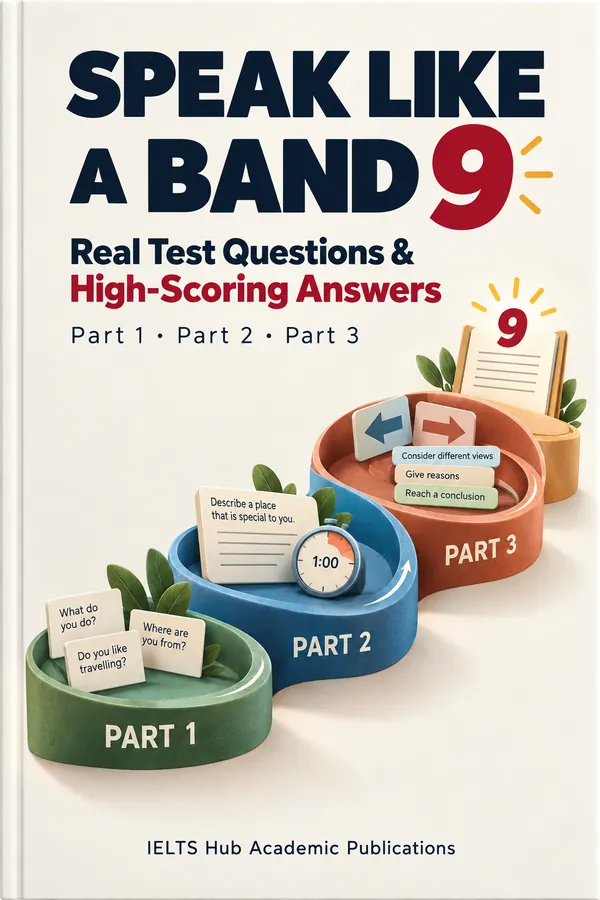
Speaking
Speak Like a Band 9
Real Test Questions & High-Scoring Answers
₹299$9.99CAD 13.99AUD 14.99£7.99NZD 16.99€8.99AED 39SGD 12.99
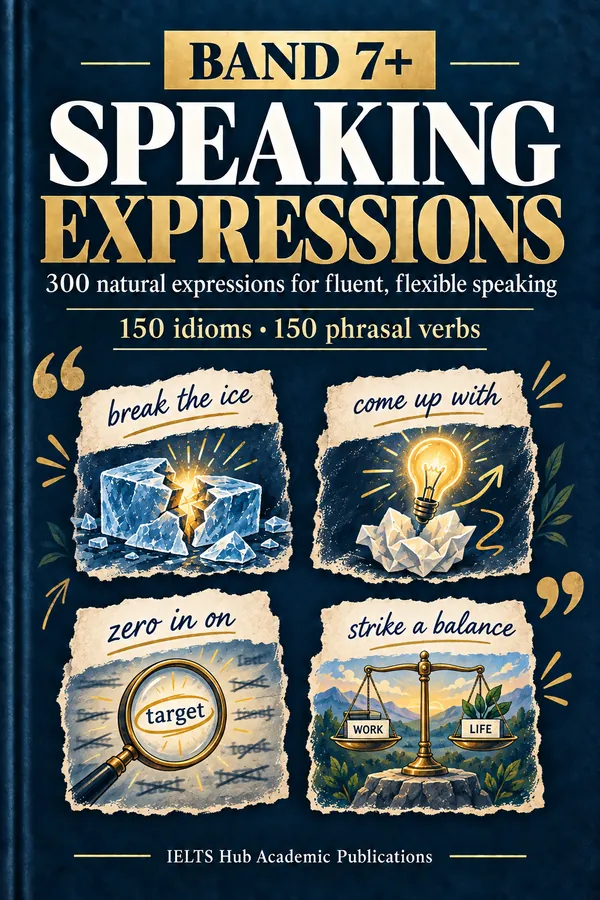
Speaking
Band 7+ Speaking Expressions
300 natural expressions for fluent, flexible speaking
₹199$6.99CAD 8.99AUD 9.99£4.99NZD 10.99€5.99AED 24SGD 8.99
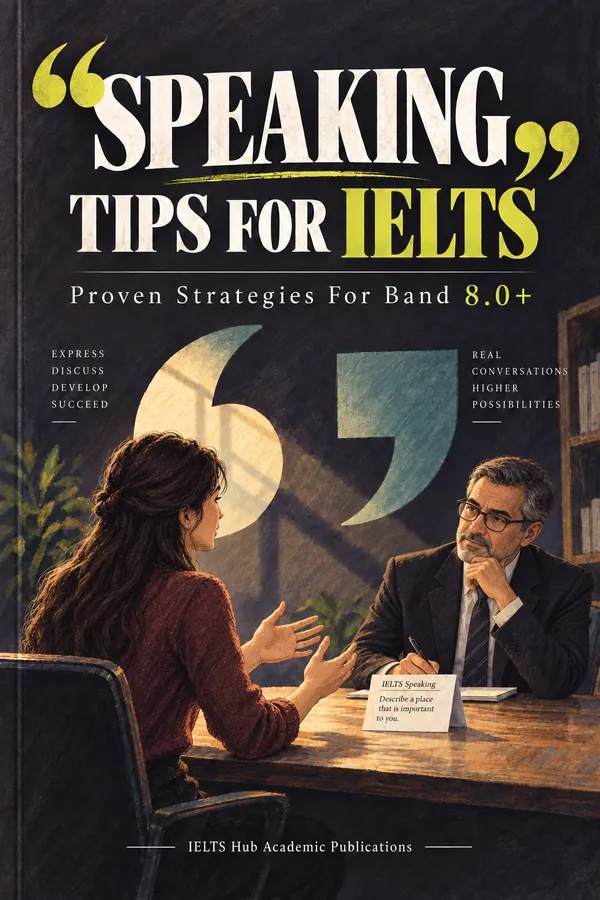
Speaking
Speaking Tips for IELTS
Proven Strategies for Band 8.0+
₹299$9.99CAD 13.99AUD 14.99£7.99NZD 16.99€8.99AED 39SGD 12.99