Speaking test #381
Part 1 · Interview
4 to 5 minutes. The examiner asks about you and familiar topics.
Can you tell me your full name?
Where are you from?
Do you work or are you a student?
Do you like geography?
I absolutely adore geography. I find it fascinating to study the Earth's physical features, climate, and human interactions with the environment. Understanding how our planet functions as a whole is crucial for us as a society, and I find it endlessly intriguing.
Have you ever studied geography at school?
Yes, I have studied geography at school. I found it to be a very engaging and informative subject. My teachers taught us about various topics such as plate tectonics, the water cycle, and landforms, which I found very interesting. It helped me understand the world around me better.
Are you good at reading maps?
I would say I am quite skilled at reading maps. I have always had an interest in cartography and have spent a lot of time studying maps in my spare time. I am quite familiar with using different types of maps such as topographic, road, and satellite maps. I find it easy to orient myself and navigate using maps.
Would you visit a country because of its geographical location?
Yes, I would definitely consider visiting a country because of its geographical location. I think that the location of a country can play a big role in its culture, climate, and overall atmosphere. For example, if I were to find a country that is located in a tropical area and surrounded by mountains, I would be very intrigued to visit. The unique combination of a tropical climate and mountainous terrain would make for an exciting and unique trip.
Have you ever got lost when you visited a new place? [Why/Why not?
?] Yes, I have definitely gotten lost when I visited a new place before. I think it's easy to get turned around and disoriented in unfamiliar surroundings, especially if you're not familiar with the layout or the language.
Do you find it difficult to get to new places without using a map? [Why/Why not?
?] I would say that I find it somewhat difficult to get to new places without using a map, as it can be hard to orient oneself and figure out which direction to go in. However, if I have a sense of the general area and some basic landmarks, I can usually figure it out.
How do you feel when you get lost somewhere? [Why/Why not?
?] When I get lost somewhere, I usually feel a bit anxious and stressed. Being lost can be disorienting and it can be hard to figure out where to go or what to do next. However, I also try to keep a sense of perspective and remind myself that it's all part of the adventure of exploring new places.
Would you stop to help somebody who was lost? [Why/Why not?
?] Of course I would stop to help somebody who was lost. I believe that helping others is a fundamental part of being a good person, and I would want someone to do the same for me if I were lost. Furthermore, I am confident that I can help someone to get back on track, by providing them with clear direction and guidance.
You will have to talk about the topic for one to two minutes. You have one minute to think about what you are going to say. You can make some notes to help you if you wish.
Describe a teacher from the past whom you remember
You should say:
- How you knew this teacher
- What subject they taught
- What was special about this teacher
- How this teacher influenced you
How you knew this teacher
I'd like to talk about my high school English teacher, Mrs. Sharma, who left a lasting impact on me. Mrs. Sharma was my English teacher during my final year of high school. She was a petite lady with a warm smile and a passion for literature that was infectious. I got to know her when I was placed in her class for the academic year, and from the very first lesson, I knew she was going to be a special teacher.
What subject they taught
Mrs. Sharma taught English literature, focusing on classic works by renowned authors such as Shakespeare, Dickens, and Austen. What set her apart was her ability to bring these texts to life in a way that made them relevant and engaging to us as teenagers. She had a unique talent for connecting the themes and characters from the past to our modern lives, making the lessons not just educational but also thought-provoking.
What was special about this teacher
What made Mrs. Sharma truly special was her dedication to her students' success and well-being. She went above and beyond to ensure that each of us understood the material and felt supported in our learning journey. She encouraged us to think critically, express our ideas confidently, and never settle for mediocrity. Her unwavering belief in our potential inspired me to strive for excellence in all areas of my life.
How this teacher influenced you
Mrs. Sharma's influence on me extended far beyond the classroom. Her emphasis on the power of words and the beauty of literature sparked a love for reading and writing in me that has stayed with me to this day. She instilled in me a sense of curiosity and a thirst for knowledge that continues to drive me in my academic and personal pursuits. Mrs. Sharma will always hold a special place in my heart as a teacher who not only taught me English but also imparted valuable life lessons that have shaped the person I am today.
- Words
- 318
- Sentences
- 21
- Words per sentence
- 15.1
- Speaking time
- about 2.4 min
Counted at 130 words a minute. The exam gives you one to two minutes.
Part 3 · Discussion
4 to 5 minutes. The examiner asks broader questions linked to the cue card topic.
How do you think a teacher from the past affects students differently than a teacher today?
That's a fascinating question! The influence of a teacher from the past often revolved around a more traditional approach, where authority figures were primarily seen as dispensers of knowledge. Students would usually absorb information through lectures and rote learning, with limited interaction. In contrast, contemporary teachers tend to adopt a more interactive methodology, encouraging critical thinking and creativity. They often act as facilitators, guiding students through discussions and collaborative projects, which fosters a much more engaging learning environment. Additionally, the integration of technology in education today allows teachers to reach students in innovative ways, making learning more accessible and enjoyable.
Some people think that a great teacher can influence you for life. What do you think about this idea?
Absolutely, I wholeheartedly agree that the influence of a memorable teacher can indeed last a lifetime. A great teacher doesn’t just impart knowledge; they inspire and ignite a passion for learning that can shape a student's future. The lasting impression they leave can motivate individuals to pursue their dreams and overcome challenges, often long after they've left the classroom. Moreover, the values and skills instilled by such educators can be pivotal in personal development, helping students navigate various aspects of life. In essence, a memorable teacher can be a transformative figure, shaping not only academic success but also character and resilience.
How important do you think a teacher is in shaping a student's future?
The role of a teacher in shaping a student's future is absolutely paramount. Teachers not only impart knowledge but also serve as mentors and role models, influencing a student’s personal development and character formation. A great teacher can ignite a passion for learning, encouraging students to explore their interests and pursue their dreams. Moreover, they help cultivate essential skills such as critical thinking and problem-solving, which are vital in today’s rapidly changing world. Ultimately, the impact of a teacher can resonate throughout a student's life, steering them toward a successful and fulfilling future.
Why do you think some teachers stick in their students' minds?
Certain teachers leave a lasting impression on their students for a variety of compelling reasons. Firstly, they often possess a genuine passion for their subject, which ignites curiosity and inspires students to engage deeply with the material. Additionally, these teachers tend to build strong relationships with their students, fostering a sense of trust and respect that allows for open communication. When students feel valued and understood, they are more likely to remember the lessons taught and the values imparted. Lastly, teachers who use innovative and interactive teaching methods can make learning not just informative but also enjoyable and memorable, ensuring that their influence lasts long after the classroom experience is over.
What changes do you expect in teaching over the next ten years?
I believe the teaching profession is on the brink of some exciting transformations in the next decade. Firstly, the integration of technology will likely become even more pronounced, with online learning platforms and virtual classrooms revolutionizing how knowledge is imparted. This shift will not only enhance accessibility for students worldwide but also allow educators to employ a range of innovative teaching methods tailored to diverse learning styles. Moreover, I foresee a growing emphasis on social-emotional learning as educators recognize the importance of nurturing students' mental health alongside academic achievement. This holistic approach will help foster a more supportive learning environment. Lastly, as the world evolves, teachers will need to focus on equipping students with 21st-century skills—like critical thinking, collaboration, and digital literacy—so they can thrive in an ever-changing job market. Overall, it’s an exhilarating time to be in education, with endless possibilities on the horizon!
What steps can be taken to help teachers make a bigger difference in their students' lives?
To ensure that teachers are more impactful in their students' lives, one of the most effective measures would be to provide ongoing professional development. This could include workshops and training sessions that focus on innovative teaching methods and classroom management strategies. Additionally, fostering a strong mentor-mentee relationship between educators and students can create an environment where students feel more supported and understood. Furthermore, involving teachers in curriculum development allows them to tailor lessons to meet their students' specific needs, making learning more relevant and engaging. Finally, encouraging teachers to collaborate and share their experiences can lead to a more cohesive teaching approach, ultimately benefiting the students. By implementing these measures, we can create a more enriching educational experience that truly resonates with young learners.
Go further with the books
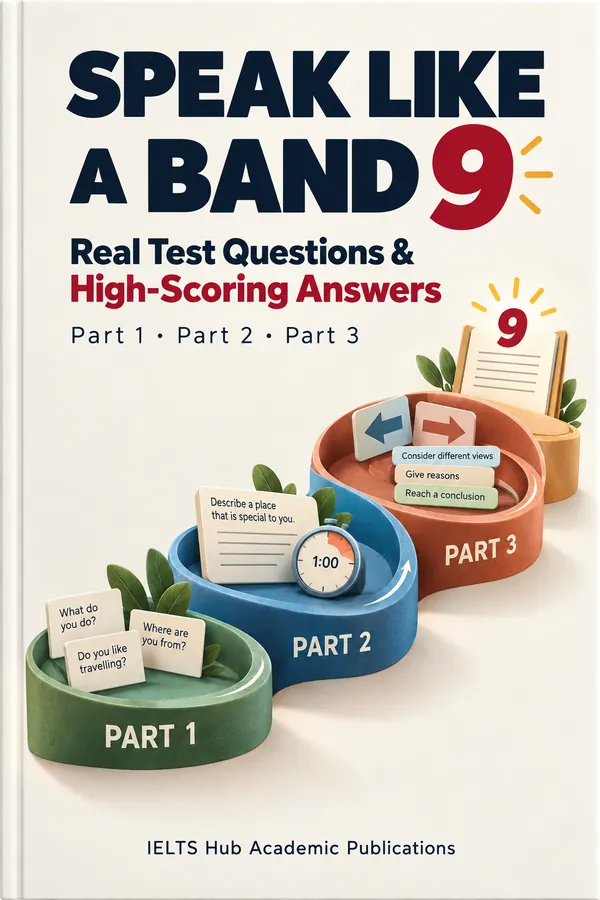
Speaking
Speak Like a Band 9
Real Test Questions & High-Scoring Answers
₹299$9.99CAD 13.99AUD 14.99£7.99NZD 16.99€8.99AED 39SGD 12.99
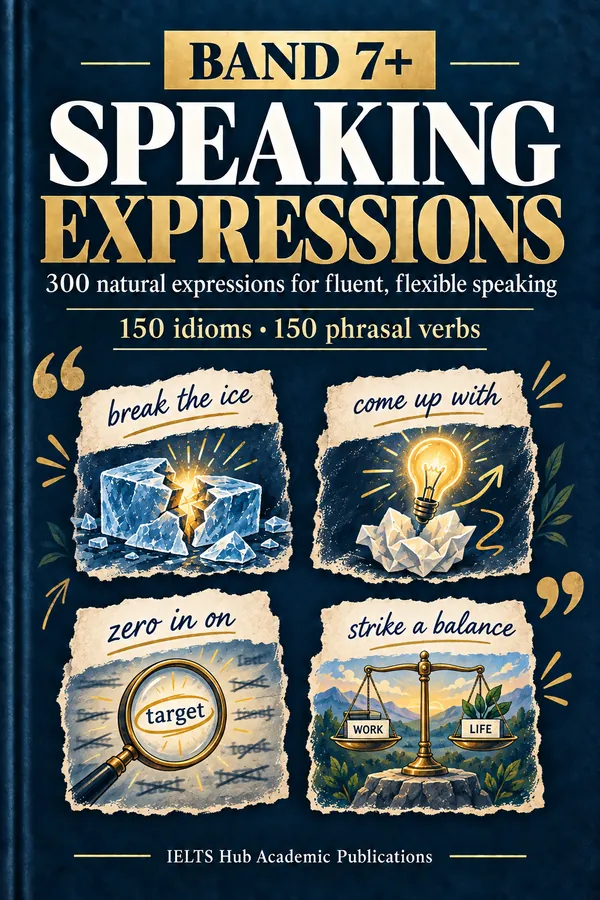
Speaking
Band 7+ Speaking Expressions
300 natural expressions for fluent, flexible speaking
₹199$6.99CAD 8.99AUD 9.99£4.99NZD 10.99€5.99AED 24SGD 8.99
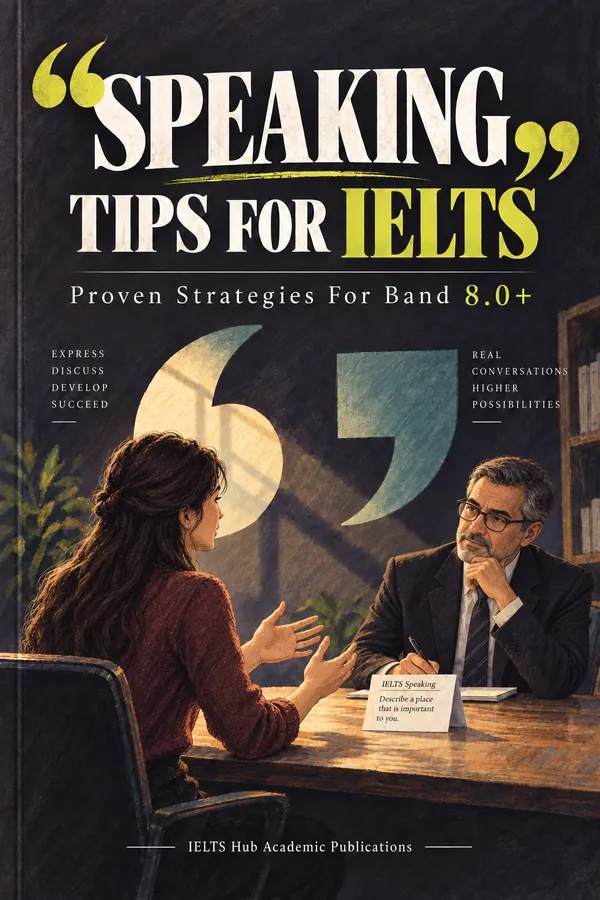
Speaking
Speaking Tips for IELTS
Proven Strategies for Band 8.0+
₹299$9.99CAD 13.99AUD 14.99£7.99NZD 16.99€8.99AED 39SGD 12.99