Speaking test #390
Part 1 · Interview
4 to 5 minutes. The examiner asks about you and familiar topics.
Can you tell me your full name?
Where are you from?
Do you work or are you a student?
What's your favorite indoor activity?
My favorite indoor activity is definitely reading. I love getting lost in a good book and immersing myself in different worlds and characters. It's a great way to relax and unwind after a long day.
Do you prefer to play indoor games or outdoor games?
I really enjoy both indoor and outdoor games. Outdoor games are great for getting some fresh air and exercise, but indoor games can be just as fun and engaging. It really depends on my mood and the weather.
What indoor games did you play when you were a child?
When I was a child, I loved playing board games and card games with my family. We would often spend hours playing Monopoly, Scrabble, and Rummy. It was a great way to bond and spend time together.
What sorts of indoor games do children in your country play now?
Nowadays, children in my country seem to be more interested in playing video games and computer games. They also enjoy playing sports games and puzzle games. However, traditional indoor games like board games and card games are still popular among families and friends.
Do you like insects?
Personally, I have a bit of a mixed opinion when it comes to insects. Some of them, like butterflies and ladybugs, are quite beautiful and fascinating to observe, but others, like cockroaches and mosquitoes, can be quite unpleasant and even dangerous. So, I suppose you could say that it depends on the specific type of insect in question.
Do you think insects are useful?
Definitely! Insects play an incredibly important role in many ecosystems and are vital for pollination, pest control, and even as a food source for other animals. For example, bees are responsible for pollinating a large percentage of the fruits, vegetables, and nuts that we eat. Without insects, our world would be a very different and less diverse place.
What kinds of insects make some people scared?
I think it's safe to say that most people have a bit of a phobia when it comes to certain types of insects, like spiders, for example. Other insects that can make people feel uneasy include cockroaches, beetles, and even some species of ants. These insects are often seen as dirty or creepy and can evoke feelings of disgust or fear in some people.
Are there many different insects in the place where you live?
Yes, there are quite a few different types of insects where I live. We have everything from the common house fly to various types of butterflies and moths. There are also quite a few types of beetles and ants, as well as some interesting types of praying mantises and other types of bugs. It's quite fascinating to see the diversity of insects that can be found in even just one small area.
You will have to talk about the topic for one to two minutes. You have one minute to think about what you are going to say. You can make some notes to help you if you wish.
Describe a national festival in your country
You should say:
- What is the festival?
- How is it celebrated?
- What is the significance of the festival?
- Your personal experience or feelings about the festival
What is the festival?
In India, one of the most prominent national festivals celebrated with great fervor is Diwali, also known as the Festival of Lights. This festival symbolizes the victory of light over darkness and good over evil. Diwali typically falls in the autumn season and is marked by lighting up homes with diyas (oil lamps), colorful decorations, bursting of firecrackers, exchanging sweets, and offering prayers to goddess Lakshmi, the deity of wealth and prosperity.
How is it celebrated?
The celebration of Diwali begins with cleaning and decorating homes to welcome the goddess Lakshmi. Families come together to perform puja (prayers) and light up their houses with diyas and colorful lights. The night sky is illuminated with breathtaking firework displays, creating a festive atmosphere filled with joy and excitement. People also exchange gifts and sweets with their loved ones and neighbors, spreading happiness and strengthening social bonds.
What is the significance of the festival?
The significance of Diwali lies in its cultural and spiritual importance. It is a time for renewal, reflection, and the start of a new year in some parts of India. The festival signifies the triumph of light over darkness, knowledge over ignorance, and hope over despair. It is believed that the lights and prayers during Diwali dispel negativity and bring prosperity and good fortune into people's lives.
Your personal experience or feelings about the festival
Personally, Diwali holds a special place in my heart as it brings back cherished memories of celebrating with my family and friends. The joy of dressing up in new clothes, indulging in delicious sweets, and witnessing the dazzling fireworks always fills me with happiness and nostalgia. Diwali is not just a festival but a time of togetherness and gratitude, reminding us of the importance of spreading love and positivity in our lives and communities.
- Words
- 281
- Sentences
- 14
- Words per sentence
- 20.1
- Speaking time
- about 2.2 min
Counted at 130 words a minute. The exam gives you one to two minutes.
Part 3 · Discussion
4 to 5 minutes. The examiner asks broader questions linked to the cue card topic.
How can the importance of national festivals be different in various countries?
The significance of national festivals can vary widely between countries, reflecting their unique cultural heritage and historical context. For instance, in India, festivals like Diwali and Holi are not just celebrations; they embody deep-rooted spiritual beliefs and community bonds, showcasing the country's rich tapestry of traditions. Conversely, in places like the United States, national holidays such as Independence Day are more about celebrating freedom and national pride, often marked by fireworks and barbecues, rather than deep cultural rituals. Additionally, some countries might emphasize religious aspects in their festivities, while others focus on secular celebrations, highlighting how diverse cultural values shape these occasions. Ultimately, these variations illustrate how festivals serve as a mirror to a nation's identity and values.
How much do you think people care about national festivals in today’s society?
I believe that national festivals hold significant value in today’s society, albeit in varying degrees across different cultures. These celebrations often serve as a cultural touchstone, allowing people to connect with their heritage and traditions. Moreover, they foster a sense of community spirit, bringing together individuals from diverse backgrounds to share in the festivities. However, it's also true that in our fast-paced world, some people may view these occasions as mere holidays rather than meaningful events. Overall, I think the appreciation for national festivals is still quite robust, especially among those who recognize their role in strengthening social bonds and preserving cultural identity.
How do national festivals help build a sense of community and national identity?
National festivals play a pivotal role in fostering a sense of community and national identity by bringing people together to celebrate shared traditions and values. These events often serve as a reminder of a country’s rich history and cultural heritage, which can strengthen the bonds among citizens. When individuals participate in festivities, they engage in communal activities that promote a feeling of belonging and unity. Furthermore, national festivals often showcase local customs and practices, allowing people to appreciate the diversity within their nation. Ultimately, these celebrations not only enhance social cohesion but also instill a sense of pride in one’s national identity.
Why do you think national festivals are usually linked to cultural traditions and practices?
National festivals are deeply intertwined with cultural traditions and customs because they serve as a celebration of a country's heritage and identity. These events often reflect the rich tapestry of a nation's history, showcasing unique practices, traditional attire, and local cuisines that have been passed down through generations. Moreover, they provide a platform for communities to come together, fostering a sense of unity and belonging. Festivals also play a crucial role in educating younger generations about their roots, ensuring that these cherished customs are preserved. Overall, they are not just events; they are living expressions of a nation's culture and values.
How could the celebration of national festivals be different in the next few decades?
It's fascinating to think about how the celebration of national festivals might evolve over the next few decades. With the rise of technology and social media, we could see a shift towards more virtual celebrations, where people participate from all around the world, breaking geographical barriers. Additionally, as societies become more multicultural, we might witness a blending of traditions, leading to innovative ways of celebrating that reflect a more inclusive outlook. Moreover, sustainability will likely play a significant role; festivals may incorporate eco-friendly practices, reducing waste and promoting awareness of environmental issues. Overall, while the essence of these festivals will remain, their form and engagement methods could transform dramatically, reflecting the changing values and lifestyles of future generations.
What steps can be taken to keep national festivals interesting and meaningful for young people?
To ensure that national festivals remain relevant and engaging for younger generations, it's vital to incorporate modern technology and social media. For instance, live streaming events or creating interactive apps can greatly enhance participation, making the experience more immersive and appealing. Additionally, involving young people in the planning process can foster a sense of ownership and enthusiasm; their ideas can bring fresh perspectives that resonate with their peers. Furthermore, integrating contemporary themes, such as sustainability or cultural diversity, can make these festivals more relatable and meaningful. Ultimately, the key is to strike a balance between tradition and innovation, keeping the essence of the festival alive while making it exciting for the youth.
Go further with the books

Speaking
Speaking Tips for IELTS
Proven Strategies for Band 8.0+
₹299$9.99CAD 13.99AUD 14.99£7.99NZD 16.99€8.99AED 39SGD 12.99

Speaking
Speak Like a Band 9
Real Test Questions & High-Scoring Answers
₹299$9.99CAD 13.99AUD 14.99£7.99NZD 16.99€8.99AED 39SGD 12.99
Speaking
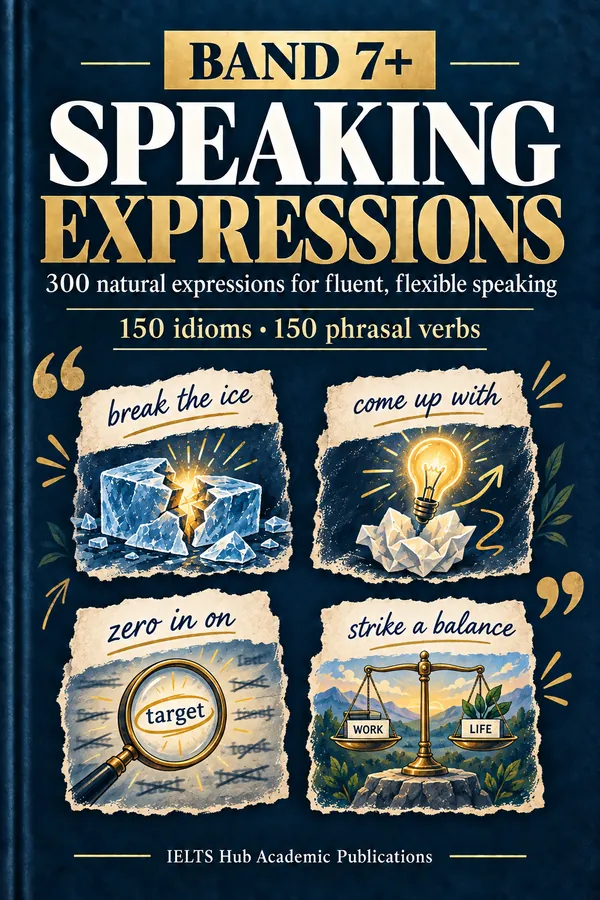
Band 7+ Speaking Expressions
300 natural expressions for fluent, flexible speaking
₹199$6.99CAD 8.99AUD 9.99£4.99NZD 10.99€5.99AED 24SGD 8.99