Speaking test #401
Part 1 · Interview
4 to 5 minutes. The examiner asks about you and familiar topics.
Can you tell me your full name?
Where are you from?
Do you work or are you a student?
Do you like looking at yourself in the mirror? How often?
I absolutely love looking at myself in the mirror. I find it to be a great way to check my appearance and make sure I am looking my best before leaving the house. I typically look in the mirror a few times a day, such as when I wake up in the morning, before I go to bed at night, and occasionally throughout the day when I am getting ready for different events or activities.
Have you ever bought mirrors?
Yes, I have bought mirrors before. I have purchased several mirrors for different rooms in my home, including a large floor mirror for my bedroom and a few smaller mirrors for my bathroom. I also recently purchased a full-length mirror for my entryway, which is great for checking my outfit before heading out the door.
Do you usually take a mirror with you?
No, I do not usually take a mirror with me when I am on the go. I find that most public restrooms and other facilities have mirrors available for use, so I don't typically feel the need to carry one with me. However, if I am going on a trip or will be away from home for an extended period of time, I may bring a small compact mirror with me.
Would you use mirrors to decorate your room?
Yes, I definitely would use mirrors to decorate my room. I think mirrors are a great way to add some visual interest and can also make a room feel larger and more open. I have used mirrors in the past to decorate different rooms in my home, such as hanging a group of small mirrors in my dining room to create a unique wall display. I also love the idea of incorporating a large floor mirror into a room design, as it can make a big impact and can also be functional for getting ready in the morning.
What was your first mobile phone?
My first mobile phone was a Nokia 3310. I remember it being a very basic model with no internet or camera, but it was still a game-changer for me at the time. It was a gift from my parents when I was in high school, and I felt so grown up having my own phone.
Do you often use your mobile phone for texting or calls?
Yes, I use my mobile phone for both texting and calls quite frequently. I find it to be a convenient way to communicate with friends and family, and I also use it for work-related communication. I also use my phone to send and receive emails, which is very helpful.
Will you buy a new one in the future?
Yes, I plan to buy a new phone in the near future. I like to stay up to date with the latest technology and features, so I like to upgrade my phone every couple of years.
How has your mobile phone changed your life?
My mobile phone has changed my life in many ways. It has made communication so much more convenient and easy. I can stay connected with friends and family no matter where I am in the world. It also allows me to access information and stay connected with work and the news. Additionally, it has also made my life easier by having all my contacts, appointments, and notes in one place. Overall, my mobile phone has made my life more productive, organized and efficient.
You will have to talk about the topic for one to two minutes. You have one minute to think about what you are going to say. You can make some notes to help you if you wish.
An occasion when you had to do something in a hurry
You should say:
- What the situation was
- Why you had to act quickly
- How you managed to do it in a hurry
- What the outcome was
What the situation was
I vividly remember a time when I had to rush to the airport to catch a flight to attend my cousin's wedding in another city. It was a Sunday morning, and I overslept, waking up just an hour before my flight was scheduled to depart.
Why you had to act quickly
The reason I had to act quickly was that missing the flight would have not only caused me to miss my cousin's special day but also incurred additional costs for rescheduling the flight. Moreover, I had promised my cousin that I would be there to witness her wedding ceremony.
How you managed to do it in a hurry
In order to manage the situation in a hurry, I quickly packed my essentials, called a cab, and rushed to the airport. Upon reaching the airport, I explained my situation to the airline staff, who were understanding and helped expedite the check-in process for me.
What the outcome was
Fortunately, I made it to the boarding gate just in time before the doors closed. I felt a sense of relief and accomplishment as I settled into my seat onboard. The outcome was that I reached the wedding venue on time, much to the delight of my cousin and other family members. This experience taught me the importance of time management and being prepared for unforeseen circumstances.
- Words
- 206
- Sentences
- 10
- Words per sentence
- 20.6
- Speaking time
- about 1.6 min
Counted at 130 words a minute. The exam gives you one to two minutes.
Part 3 · Discussion
4 to 5 minutes. The examiner asks broader questions linked to the cue card topic.
How might rushing to do something feel different at work compared to in personal life?
That's a fascinating question! When we're pressed for time in a work setting, the pressure can really ramp up. For instance, deadlines often lead to a sense of urgency that can result in a more frantic pace and sometimes even a bit of stress. In contrast, when we're in our personal lives, the experience of hurrying might not feel as daunting – it could be more about squeezing in a last-minute errand or getting ready for a night out. Additionally, the consequences of rushing can differ significantly. In a professional context, hurrying might lead to mistakes or missed opportunities, while in personal situations, it might just result in minor inconveniences, like forgetting your wallet or being late to a dinner. Overall, the emotional weight and impact of rushing can vary greatly between these two spheres of life.
How often do you think people end up in situations where they need to act fast?
I believe that people frequently find themselves in situations that demand quick decision-making, and this can happen in various aspects of life. For instance, in the workplace, unexpected challenges often arise, such as urgent deadlines or sudden changes in project requirements, which necessitate immediate responses. Additionally, in our personal lives, situations like emergencies or unexpected visitors can catch us off guard, compelling us to think on our feet. Moreover, with the fast-paced nature of modern life, the ability to act swiftly has become increasingly important. Whether it’s navigating through traffic, managing finances, or even making last-minute travel plans, we often have to rely on our instincts to make split-second decisions. Overall, while some individuals may thrive in these high-pressure scenarios, others might struggle, highlighting the diverse ways people cope with the need for rapid action.
How important is it for people to make fast choices in their everyday lives?
The ability to make quick decisions is incredibly significant in our fast-paced world. In many situations, being decisive can lead to immediate benefits and, conversely, hesitation can result in missed opportunities. For instance, think about everyday moments like choosing what to eat or deciding whether to take a new job offer; these choices, albeit small, can shape our routines or even our futures. Moreover, quick decision-making fosters a sense of confidence and self-reliance, which are essential traits in both personal and professional settings. Ultimately, while it's important to think things through, the ability to act swiftly often leads to a more dynamic and fulfilling life.
Why do some people do well under pressure while others find it hard to act quickly?
That's a fascinating question! I believe the ability to thrive under pressure often boils down to individual temperament and past experiences. Some people possess a natural inclination towards resilience, allowing them to remain level-headed in challenging situations. Additionally, those who have faced high-pressure scenarios before may develop effective coping strategies, which can enhance their performance when stakes are high. On the other hand, individuals who struggle might grapple with overwhelming anxiety or a lack of confidence, which can cloud their judgment and hinder decisive action. Ultimately, it’s a complex interplay of personality traits and life experiences that shapes how we respond to pressure.
How could technology affect how fast people have to complete tasks in the future?
The future implications of technology on our response times could be quite profound. As advancements in artificial intelligence and automation continue to evolve, the expectation for immediate responses is likely to increase significantly. For instance, with the rise of real-time communication tools, we may find ourselves under pressure to reply almost instantaneously, which can lead to a culture of immediacy. This shift could affect our work-life balance, as the lines between personal and professional time become increasingly blurred. However, it also opens up opportunities for greater efficiency and productivity, provided we manage our time wisely and set appropriate boundaries.
What methods can people use to improve their time management and avoid rushing into things?
To manage time more effectively and minimize the urge for hasty actions, individuals can adopt several strategies. Firstly, setting clear goals is crucial; when people know exactly what they want to achieve, it becomes easier to prioritize tasks and allocate their time accordingly. Additionally, using tools like calendars or to-do lists can help keep track of deadlines and commitments, ensuring that nothing falls through the cracks. Another effective approach is the practice of time blocking, where specific chunks of time are dedicated to particular tasks, allowing for focused work without distractions. Finally, it's essential to regularly review one’s progress and make adjustments as necessary; this reflection can help identify areas where time is being wasted and where improvements can be made. By implementing these strategies, individuals can cultivate a more organized and productive lifestyle, ultimately reducing the need for those last-minute rushes!
Go further with the books
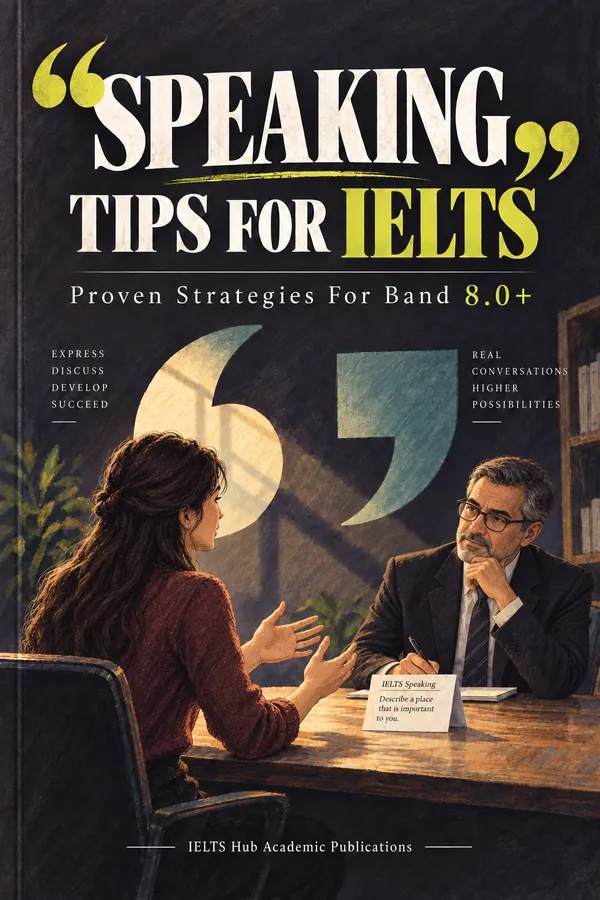
Speaking
Speaking Tips for IELTS
Proven Strategies for Band 8.0+
₹299$9.99CAD 13.99AUD 14.99£7.99NZD 16.99€8.99AED 39SGD 12.99
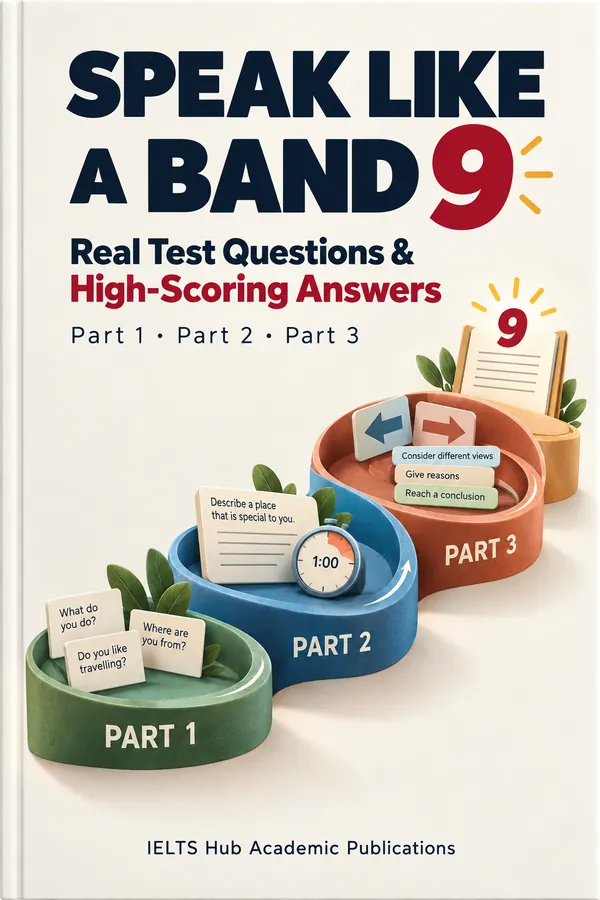
Speaking
Speak Like a Band 9
Real Test Questions & High-Scoring Answers
₹299$9.99CAD 13.99AUD 14.99£7.99NZD 16.99€8.99AED 39SGD 12.99
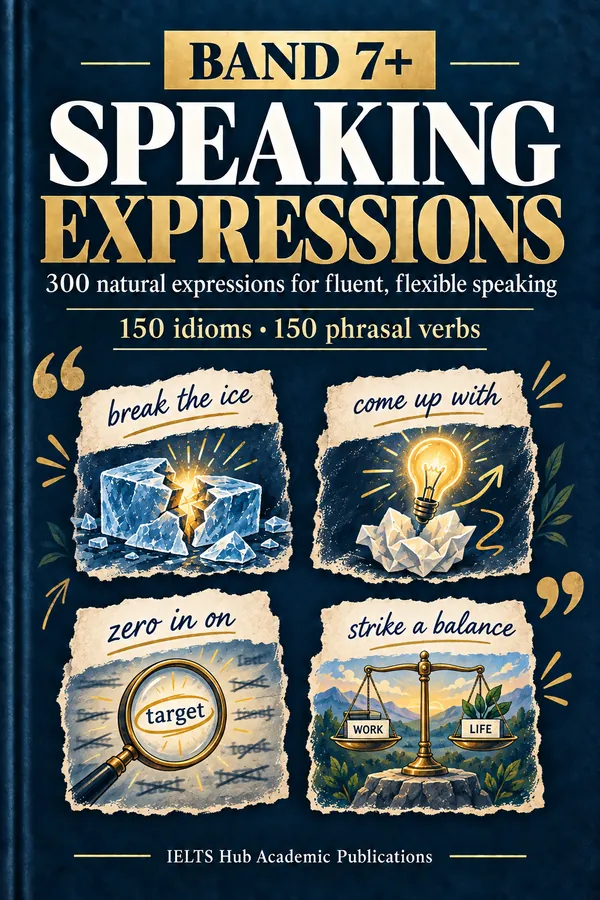
Speaking
Band 7+ Speaking Expressions
300 natural expressions for fluent, flexible speaking
₹199$6.99CAD 8.99AUD 9.99£4.99NZD 10.99€5.99AED 24SGD 8.99