Speaking test #404
Part 1 · Interview
4 to 5 minutes. The examiner asks about you and familiar topics.
Can you tell me your full name?
Where are you from?
Do you work or are you a student?
Which instrument do you like listening to most? [Why?
?] I absolutely adore listening to the piano. The soft melodies and intricate harmonies that can be produced from a piano are truly mesmerizing to me. The piano is a versatile instrument that can be used to play a wide range of genres and styles, from classical to pop. It's also a beautiful instrument to look at and the sound it produces is simply breathtaking.
Have you ever learned to play a musical instrument? [Which one?
?] Yes, I have had the pleasure of learning how to play the guitar. It's a wonderful instrument that I've grown to love over the years. I find that playing the guitar is a great way to relax and unwind after a long day, and it's also a great way to express myself creatively.
Do you think children should learn to play a musical instrument at school? [Why/Why not?
?] I definitely think that children should learn to play a musical instrument at school. Not only does learning to play an instrument help with the development of fine motor skills and hand-eye coordination, but it also helps with creativity and self-expression. Additionally, playing an instrument can also have a positive impact on children's cognitive development and can even improve their academic performance. Overall, I think that learning to play a musical instrument is an incredibly valuable skill that should be taught to children at school.
How easy would it be to learn to play an instrument without a teacher? [Why?
?] Learning to play an instrument without a teacher would be quite difficult, in my opinion. While there are certainly resources available, such as online tutorials and instructional videos, nothing can replace the guidance and feedback that a teacher can provide. A teacher can provide personalized instruction and can help identify and correct any mistakes that a student may be making. Additionally, a teacher can provide encouragement and motivation, which is essential for any student trying to learn an instrument. Without a teacher, it would be much more difficult to progress and improve one's playing skills.
Does your name have any special meaning?
My name, Nguyen, is a very common surname in Vietnam and it means "the one who goes first." I feel proud to have this name as it symbolizes leadership and being a pioneer in my culture.
How would you choose names for your next generation?
I would choose names that have special meanings and are meaningful to our family. For example, I would consider names that have been passed down from previous generations or names that have a significant meaning in our culture. I would also consider names that have a positive connotation and are easy to pronounce.
Are there any differences between how Vietnamese people name their children now and in the past?
Yes, there are definitely differences between how Vietnamese people name their children now and in the past. In the past, names were often chosen based on traditional customs and beliefs, such as choosing a name that had a good meaning or was associated with a specific deity. Nowadays, parents are more likely to choose names that are more modern and fashionable, and may not have as much significance as traditional names.
Does anyone in your family have the same name as you?
Yes, actually many of my family members have the same name as me. My father, grandfather, and uncles all have the same surname, Nguyen. However, my given name is unique to me and my immediate family. It is a tradition in Vietnamese culture to have the same surname within the family.
You will have to talk about the topic for one to two minutes. You have one minute to think about what you are going to say. You can make some notes to help you if you wish.
Describe a big city you would like to visit
You should say:
- What city it is and where it is located
- What attracts you to visit this city
- What you plan to do and see in this city
- How you think this visit would impact you
What city it is and where it is located
I would love to visit Mumbai, often referred to as the 'City of Dreams', located on the west coast of India. The vibrant metropolis of Mumbai is not only the financial capital of India but also a melting pot of diverse cultures, making it a fascinating destination to explore.
What attracts you to visit this city
What attracts me most to Mumbai is its rich cultural heritage and the bustling city life. From iconic landmarks like the Gateway of India and Marine Drive to the vibrant street markets and Bollywood studios, there is so much to see and experience in this city. The energy and spirit of Mumbai are truly infectious, and I am drawn to immerse myself in its dynamic atmosphere.
What you plan to do and see in this city
During my visit to Mumbai, I plan to indulge in the local cuisine, explore the historical sites, and soak in the Bollywood charm by visiting film studios and maybe even catching a live shooting. I also look forward to experiencing the city's famous nightlife and interacting with the friendly locals to get a deeper insight into their way of life.
How you think this visit would impact you
I believe that a visit to Mumbai would have a profound impact on me, broadening my perspectives and enriching my cultural knowledge. It would be an opportunity to step out of my comfort zone, embrace new experiences, and create lasting memories. I am sure that this visit would not only be a memorable adventure but also a transformative journey of personal growth.
- Words
- 237
- Sentences
- 10
- Words per sentence
- 23.7
- Speaking time
- about 1.8 min
Counted at 130 words a minute. The exam gives you one to two minutes.
Part 3 · Discussion
4 to 5 minutes. The examiner asks broader questions linked to the cue card topic.
How do big cities and small towns differ in lifestyle and chances for people?
Larger cities and smaller towns offer remarkably different lifestyles and opportunities, which can be quite fascinating to explore. In big cities, the pace of life is often much quicker; people are usually caught up in a whirlwind of activities, from bustling workplaces to vibrant social scenes. This dynamic atmosphere can lead to a plethora of career opportunities, as urban areas tend to attract a diverse range of industries and talents, providing residents with more options for professional growth. Conversely, smaller towns often have a more laid-back lifestyle, allowing for a stronger sense of community and connection among residents. While the job market may be more limited, these towns typically offer a unique charm, where people can enjoy a slower pace and a closer-knit community. Ultimately, the choice between city life and town living often boils down to personal preferences—whether one prioritizes the excitement and opportunities of urban life or the tranquility and familiarity of smaller communities.
Some people think that being in a big city can be too much. What do you think about this idea?
I absolutely understand why some people might feel that living in a big city can be overwhelming. The sheer magnitude of the hustle and bustle, combined with the constant influx of people and noise, can certainly create a sense of chaos. However, I believe that this vibrant atmosphere also offers a plethora of opportunities and experiences that smaller towns often lack. For instance, the diversity of cultures, cuisines, and entertainment options can be incredibly enriching. So while it can be intense at times, I think that for many, the excitement and possibilities far outweigh the challenges.
How do big cities help a country's culture and economy grow?
Big cities are often the epicenter of cultural and economic development in a country. They attract a diverse population, which fosters a rich tapestry of cultural exchange and innovation. This melting pot of ideas not only enhances the local arts scene but also contributes significantly to the economy through tourism and creative industries. Economically, cities serve as hubs for businesses and industries, providing job opportunities and driving investment. Essentially, the vibrancy and dynamism of big cities can catalyze national growth, making them indispensable to a country's overall progress.
Why do you think so many people want to go to big cities even though they have difficulties?
I believe many individuals are irresistibly attracted to large urban areas due to the myriad of opportunities they offer. Cities are often seen as hubs of innovation, where creativity and entrepreneurship thrive, which can be incredibly appealing to those looking to advance their careers. Moreover, the cultural diversity in these urban environments provides a vibrant tapestry of experiences—whether through food, music, or art—that simply isn't found in smaller towns. While challenges like high living costs and congestion exist, the allure of dynamic lifestyles and the chance to connect with a wide array of people often outweighs these difficulties. Ultimately, the excitement and potential for personal growth in a city can be a powerful magnet for many.
How could big cities change in the future because of new technology and environmental issues?
The future of big cities is likely to undergo a profound transformation due to technological advancements and growing environmental concerns. As we witness the rise of smart city technologies, urban areas may become more efficient and sustainable, with integrated systems for energy management and transportation. For instance, the widespread adoption of electric vehicles and renewable energy sources can drastically reduce carbon footprints, making cities cleaner and healthier places to live. Additionally, innovations like vertical gardens and green roofs can enhance urban biodiversity, contributing to a more vibrant ecosystem. Overall, I believe that with the right focus on technology and sustainability, cities could evolve into dynamic hubs that prioritize both human well-being and environmental integrity.
"What steps can city planners take to improve life for people living in big cities?"?
Urban planners play a crucial role in shaping the urban landscape, and there are several measures they can take to enhance residents' quality of life. Firstly, they could prioritize the development of green spaces, such as parks and community gardens, which not only provide a recreational area but also promote mental well-being. Additionally, improving public transportation systems can significantly reduce congestion, making it easier for people to commute and access essential services. Moreover, incorporating mixed-use developments can encourage a vibrant community atmosphere by allowing residents to live, work, and play in close proximity. Lastly, engaging residents in the planning process through community consultations can ensure that the developments truly reflect the needs and desires of the community, fostering a sense of ownership and belonging. All these measures combined can create a more harmonious and fulfilling urban environment.
Go further with the books

Speaking
Speaking Tips for IELTS
Proven Strategies for Band 8.0+
₹299$9.99CAD 13.99AUD 14.99£7.99NZD 16.99€8.99AED 39SGD 12.99
Speaking
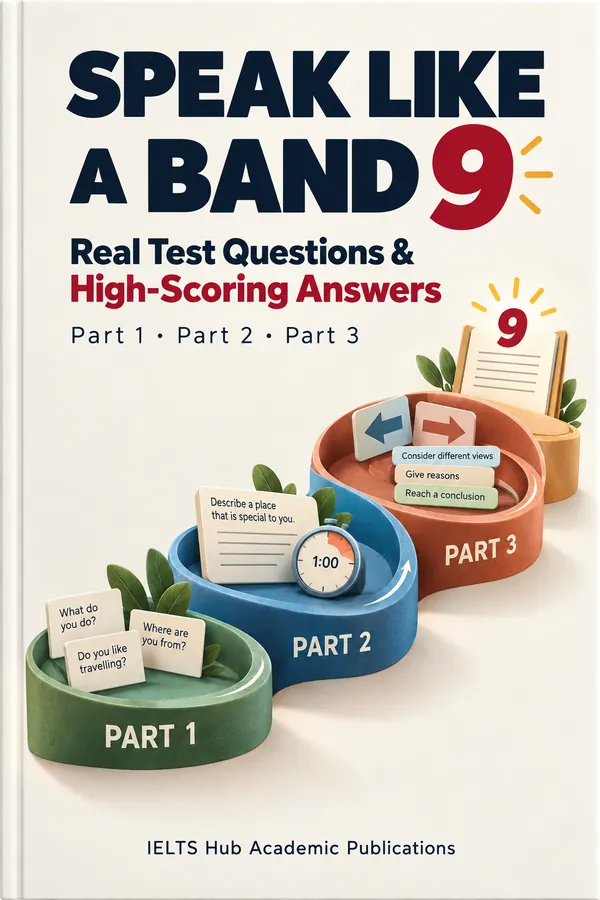
Speak Like a Band 9
Real Test Questions & High-Scoring Answers
₹299$9.99CAD 13.99AUD 14.99£7.99NZD 16.99€8.99AED 39SGD 12.99

Speaking
Band 7+ Speaking Expressions
300 natural expressions for fluent, flexible speaking
₹199$6.99CAD 8.99AUD 9.99£4.99NZD 10.99€5.99AED 24SGD 8.99