Speaking test #410
Part 1 · Interview
4 to 5 minutes. The examiner asks about you and familiar topics.
Can you tell me your full name?
Where are you from?
Do you work or are you a student?
Are there any parks or gardens near where you live?
Yes, there are several parks and gardens located near my residence. One of the most popular ones is the local botanical garden which boasts a wide variety of flora and fauna and is a great place for nature lovers to explore.
How often do you go to a park or garden?
I try to visit a park or garden at least once a week, as it allows me to unwind and connect with nature. I find it to be a great way to escape the hustle and bustle of daily life and take a break from my routine.
What do you do when you are at a park or garden?
When I am at a park or garden, I like to take a leisurely stroll and explore the different paths and trails. I also enjoy observing the different types of birds and wildlife that can be found there. Sometimes, I also bring a book or magazine to read while enjoying the fresh air and greenery.
Do people of your country (India) enjoy going to that park/garden?
Yes, people in India generally enjoy going to parks and gardens. It is a popular leisure activity for both families and individuals, as it provides a space to relax, exercise, and connect with nature. Many people also enjoy going to parks and gardens to spend time with friends and family or to have picnics.
You will have to talk about the topic for one to two minutes. You have one minute to think about what you are going to say. You can make some notes to help you if you wish.
Describe your favourite toy in your childhood
You should say:
- What was the toy
- How did you get the toy
- How did you play with the toy
- Why was it your favourite
What was the toy
During my childhood in India, my favorite toy was a plush teddy bear named Brownie. Brownie was a gift from my grandparents on my fifth birthday. It was love at first sight with Brownie, as its soft fur and kind eyes instantly captured my heart.
How did you get the toy
I spent countless hours playing with Brownie in imaginative scenarios I created. From tea parties to adventures in the backyard, Brownie was always by my side. I even shared my secrets and fears with Brownie, treating it like a trusted friend who listened without judgment.
How did you play with the toy
What made Brownie my favorite toy was the comfort and companionship it provided during both playtime and moments of solitude. Its presence made me feel secure and less lonely, especially during times when my parents were busy with work. Brownie became more than just a toy; it became a source of solace and joy in my childhood.
Why was it your favourite
In conclusion, Brownie holds a special place in my heart as my favorite childhood toy due to the love and companionship it offered. Its role went beyond being a mere plaything, serving as a constant source of comfort and happiness during my formative years. I will always cherish the memories of playing with Brownie and the bond we shared.
- Words
- 206
- Sentences
- 12
- Words per sentence
- 17.2
- Speaking time
- about 1.6 min
Counted at 130 words a minute. The exam gives you one to two minutes.
Part 3 · Discussion
4 to 5 minutes. The examiner asks broader questions linked to the cue card topic.
How are toys from the past for kids different from the ones we have now?
Childhood toys from the past often had a much simpler design and were typically made from natural materials like wood or fabric. In contrast, today's toys are often packed with technology, featuring interactive elements and digital interfaces that can captivate a child's attention in a matter of seconds. This shift reflects not only advancements in manufacturing techniques but also a change in children's play habits—many now prefer toys that offer instant gratification. Moreover, past toys encouraged imaginative play, such as dolls and building blocks, which fostered creativity, while modern toys sometimes limit this by providing too much structure. It's fascinating to see how toys have evolved, yet I believe there's still a place for those classic designs that encourage open-ended play and social interaction.
How much do you think people exaggerate the importance of toys during childhood?
I believe the importance of toys in childhood is often understated rather than overstated. Toys play a crucial role in a child's development, fostering both cognitive skills and social interactions. They provide a medium for children to explore their creativity and imagination, which is essential in their formative years. While some may argue that toys are merely sources of entertainment, I see them as tools that can help children learn important life skills, such as problem-solving and cooperation. Ultimately, the right toys can significantly enrich a child's experience and contribute to their overall growth.
How do toys help children develop their social skills?
Toys play a pivotal role in the development of children’s social skills, acting as both tools for learning and mediums for interaction. Through play, children engage in cooperative activities, which are essential for fostering teamwork and communication skills. For instance, when kids play with building blocks together, they not only learn to share and negotiate but also develop empathy as they understand each other’s perspectives. Moreover, imaginative play with dolls or action figures allows children to explore different roles and scenarios, which is crucial for their emotional intelligence. Ultimately, toys serve as a foundation for essential social interactions, helping children navigate the complexities of relationships as they grow.
Why do you think some toys are loved by kids?
Certain toys become favorites for children due to a combination of factors that resonate with their interests and developmental needs. For one, toys that spark imagination and creativity often capture a child's attention and encourage them to engage in play for hours on end. Additionally, toys that offer a sense of achievement, like puzzles or building blocks, can provide that satisfying feeling of accomplishment, which kids find incredibly rewarding. Social interaction also plays a key role; toys that can be enjoyed with friends or family tend to be more popular, as they create opportunities for shared experiences. Ultimately, the blend of fun, challenge, and social engagement is what makes certain toys stand out as favorites among children.
How could the kinds of toys kids like change in the future?
The types of toys children prefer are likely to evolve significantly in the future, largely due to rapid advancements in technology and changing societal values. For instance, we might see a surge in interactive toys that incorporate augmented reality or artificial intelligence, allowing for a more immersive play experience. Additionally, as environmental concerns become increasingly pressing, there could be a shift towards more sustainable options, with toys made from eco-friendly materials gaining popularity. Furthermore, the emphasis on educational value might lead to a rise in toys that promote STEM learning, blending fun with skill development. Overall, I think the future of children's toys will be a fascinating mix of innovation, sustainability, and education!
What steps can parents take to make sure kids have fun while learning during playtime?
Parents can take several measures to ensure that children's playtime is both enjoyable and educational. One effective approach is to provide a variety of age-appropriate toys that stimulate creativity and problem-solving skills, such as building blocks or puzzles. Additionally, incorporating interactive games that foster teamwork and communication can make playtime not only fun but also a valuable learning experience. Furthermore, parents might consider setting aside specific times for outdoor activities, where children can explore nature and learn about the environment firsthand. This kind of hands-on experience can greatly enhance their understanding of the world. Ultimately, by striking a balance between structured learning and free play, parents can create an atmosphere where children thrive both academically and socially.
Go further with the books
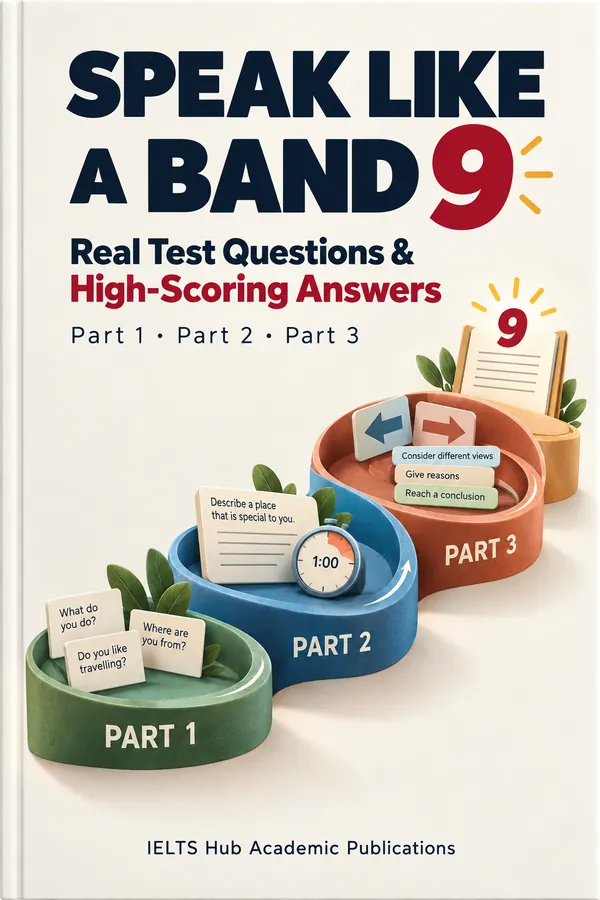
Speaking
Speak Like a Band 9
Real Test Questions & High-Scoring Answers
₹299$9.99CAD 13.99AUD 14.99£7.99NZD 16.99€8.99AED 39SGD 12.99
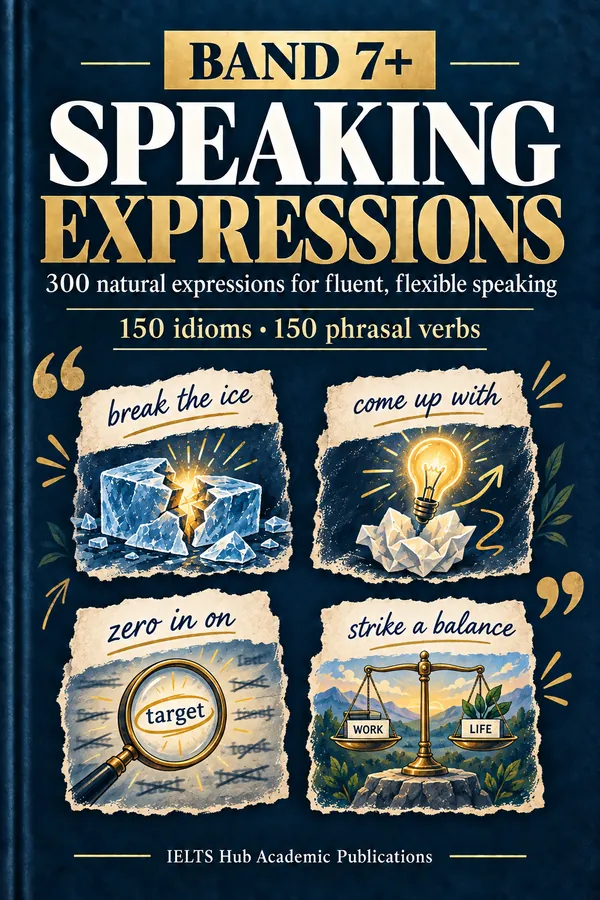
Speaking
Band 7+ Speaking Expressions
300 natural expressions for fluent, flexible speaking
₹199$6.99CAD 8.99AUD 9.99£4.99NZD 10.99€5.99AED 24SGD 8.99
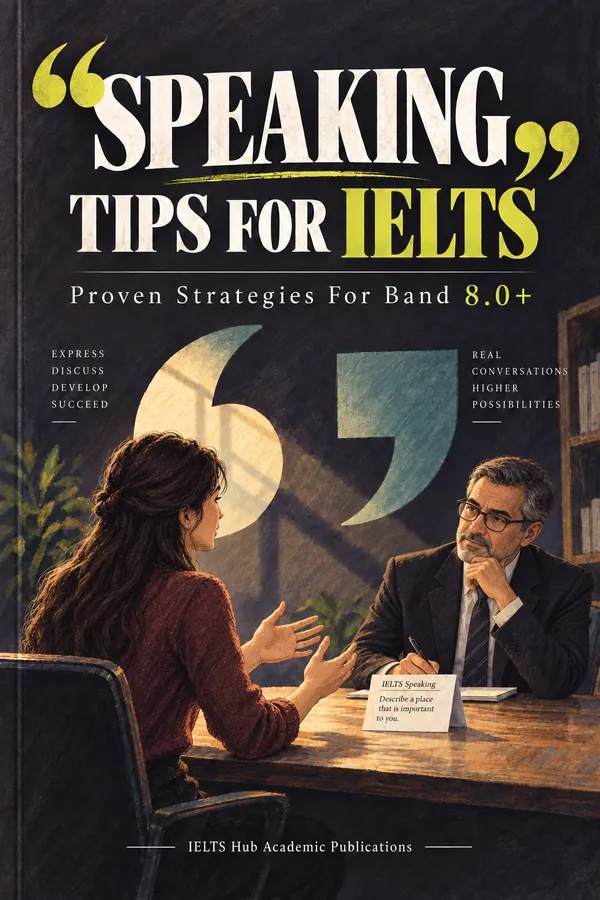
Speaking
Speaking Tips for IELTS
Proven Strategies for Band 8.0+
₹299$9.99CAD 13.99AUD 14.99£7.99NZD 16.99€8.99AED 39SGD 12.99