Speaking test #413
Part 1 · Interview
4 to 5 minutes. The examiner asks about you and familiar topics.
Can you tell me your full name?
Where are you from?
Do you work or are you a student?
You will have to talk about the topic for one to two minutes. You have one minute to think about what you are going to say. You can make some notes to help you if you wish.
An accident you saw
You should say:
- Where and when did you see it?
- What happened?
- How did it affect the people involved?
- What did you do after witnessing the accident?
Where and when did you see it?
In my home country of India, I witnessed a distressing accident while traveling to work last year. It was a sunny morning in the bustling city of Mumbai, and I was on my usual route when I saw a collision between a car and a motorbike near a busy intersection. The accident occurred right in front of me, causing a moment of shock and panic among onlookers.
What happened?
The impact was severe, with the motorbike rider being thrown onto the road while the car sustained significant damage to its front end. Passersby immediately rushed to the scene to help the injured individual, while others dialed emergency services for assistance. The motorcyclist seemed to be in immense pain, and the driver of the car appeared shaken and distressed by the unfolding events. It was a stark reminder of the fragility of life and the unpredictable nature of accidents.
How did it affect the people involved?
The accident had a profound effect on the people involved as well as those who witnessed it. The injured motorcyclist was eventually taken to the hospital for treatment, while the driver was questioned by the authorities. The incident left a somber atmosphere in the air, with bystanders reflecting on the importance of road safety and being more cautious while driving or riding on the streets. It served as a wake-up call for many to prioritize safety over speed in their daily commutes.
What did you do after witnessing the accident?
After witnessing the accident, I stayed at the scene to offer any assistance I could provide. I helped direct traffic away from the area to prevent further accidents and offered support to those involved in any way possible. Additionally, I spoke to the authorities to recount what I had witnessed, hoping to assist in their investigation of the incident. The experience stayed with me for a long time, prompting me to become more vigilant on the roads and advocate for safer driving practices in my community.
- Words
- 314
- Sentences
- 15
- Words per sentence
- 20.9
- Speaking time
- about 2.4 min
Counted at 130 words a minute. The exam gives you one to two minutes.
Part 3 · Discussion
4 to 5 minutes. The examiner asks broader questions linked to the cue card topic.
How are road incidents different from those that happen at home or at work?
Incidents on the road tend to have a unique set of dynamics compared to those that happen in more controlled environments like homes or workplaces. For one, road incidents often involve a higher degree of unpredictability due to the presence of various factors such as weather conditions, the behavior of different drivers, and the speed at which vehicles travel. This can lead to serious consequences, including severe injuries or fatalities, which is far less common in domestic or office settings where risks can often be managed more effectively. Moreover, road incidents frequently require immediate responses from emergency services, highlighting the need for quick decision-making and swift action. In contrast, incidents at home or work might allow for more time to assess the situation and take measured steps. Additionally, the emotional impact of a road incident can be quite profound, often involving traumatic experiences not just for those directly involved but also for witnesses. Overall, the nature of road incidents demands a different kind of awareness and preparedness that isn’t as prevalent in other environments.
Some people think that accidents usually happen because of carelessness. What do you think about this idea?
I absolutely agree with that perspective! While accidents can happen due to unforeseen circumstances, a significant number of them stem from human error and negligence. For instance, when people don't adhere to safety regulations or take shortcuts, they increase the likelihood of incidents occurring. It's quite alarming to consider how a momentary lapse in attention can lead to severe consequences, not just for the individual but for others as well. Ultimately, fostering a culture of responsibility and awareness could greatly reduce the number of accidents we see today.
How important do you think it is for communities to have good safety measures to avoid accidents?
I believe it’s absolutely crucial for communities to implement proper safety measures to prevent accidents. Not only do these measures help to protect individuals, but they also foster a sense of collective responsibility within the community. When people feel safe in their environment, it leads to a more vibrant and thriving community, where residents are more likely to engage in social activities and support one another. Moreover, investing in safety infrastructure, like pedestrian crossings and well-lit areas, can significantly reduce the likelihood of accidents, ultimately saving lives and reducing healthcare costs. In essence, the presence of robust safety measures is a cornerstone of a healthy, resilient community.
Why do you think people often want to see accidents, even if it might not be safe?
That's such an intriguing question! I think people are often fascinated by the unexpected and accidents provide a glimpse into that chaotic moment. There’s a certain element of curiosity that drives individuals to witness these events, almost like a natural instinct to understand what’s happening around them. Additionally, some might feel a sense of adrenaline rush or excitement in witnessing something that disrupts the mundane flow of everyday life. Unfortunately, this desire can sometimes override their sense of self-preservation, leading them to put themselves in potentially dangerous situations.
How could new technology change what accidents are like in the future?
Advancements in technology are poised to significantly alter the landscape of accidents in the future. With the rise of autonomous vehicles, for instance, we could see a dramatic reduction in road accidents caused by human error. These vehicles are equipped with sophisticated sensors and algorithms, which can anticipate and respond to potential hazards far more quickly than a human driver. Moreover, the integration of smart city infrastructure could enhance traffic management systems, minimizing congestion and improving safety. While it's unlikely that accidents will be completely eradicated, technology will certainly play a pivotal role in making our environments safer and more efficient.
What measures could be taken to raise awareness about road safety among drivers and pedestrians?
Raising awareness about road safety is crucial, and there are several effective measures that can be implemented. Firstly, public awareness campaigns using social media and traditional media can significantly impact people's perceptions and behaviors regarding road safety. These campaigns could include eye-catching advertisements that highlight the consequences of reckless driving or the importance of pedestrian safety. Additionally, community workshops and school programs can engage individuals at a grassroots level, educating them about safe practices on the road. Finally, involving local governments in organizing events, like road safety fairs, can create a sense of community responsibility and encourage everyone to take road safety seriously. It’s about fostering a culture where safety is prioritized by all road users!
Go further with the books
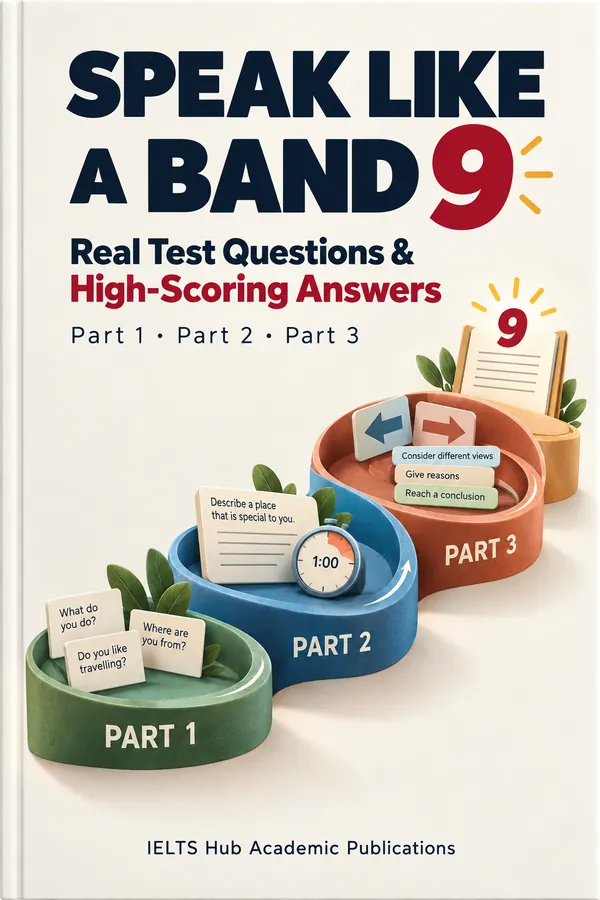
Speaking
Speak Like a Band 9
Real Test Questions & High-Scoring Answers
₹299$9.99CAD 13.99AUD 14.99£7.99NZD 16.99€8.99AED 39SGD 12.99

Speaking
Band 7+ Speaking Expressions
300 natural expressions for fluent, flexible speaking
₹199$6.99CAD 8.99AUD 9.99£4.99NZD 10.99€5.99AED 24SGD 8.99
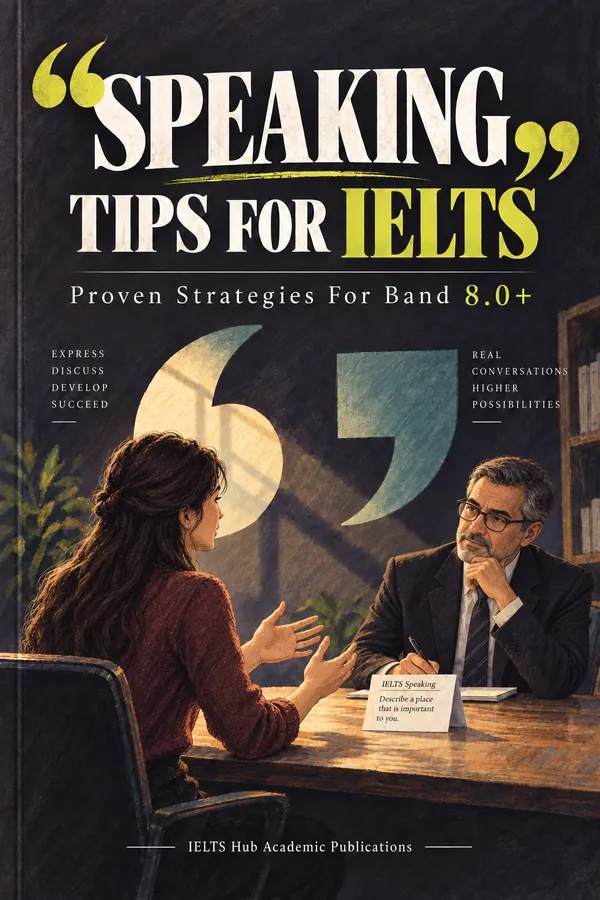
Speaking
Speaking Tips for IELTS
Proven Strategies for Band 8.0+
₹299$9.99CAD 13.99AUD 14.99£7.99NZD 16.99€8.99AED 39SGD 12.99