Speaking test #427
Part 1 · Interview
4 to 5 minutes. The examiner asks about you and familiar topics.
Can you tell me your full name?
Where are you from?
Do you work or are you a student?
What do you usually do on your birthday?
On my birthday, I usually spend time with my friends and family. We usually have a nice dinner or go out to a fun activity. I also like to treat myself to something special, like a massage or a new piece of clothing.
What did you do on your birthday when you were young?
When I was young, I used to have big birthday parties with all of my friends. We would play games and have lots of snacks. My parents would always try to make it a really special day for me.
Is it important for you to celebrate your birthday?
Yes, celebrating my birthday is definitely important to me. It's a chance for me to reflect on the past year and think about all of the things I've accomplished. It's also a great excuse to spend time with my loved ones and have some fun.
Which birthdays are considered important in your country?
In my country, all birthdays are considered important, but certain milestone birthdays are often given extra attention. For example, turning 16 or 18 is often seen as a rite of passage and is celebrated with special parties or ceremonies. Turning 30 or 40 is also often seen as a significant milestone, and people often throw big parties or go on special trips to mark the occasion.
Do you like to see the sky?
Oh absolutely, I find the sky to be one of the most mesmerizing and awe-inspiring sights in nature. The vast expanse of blue, the different hues and shades it can take on, and the ever-changing clouds all make for a truly captivating view.
Which is the best place in your hometown (Bathind) to see the stars?
In my hometown of Bathind, I would have to say that the best place to see the stars is at the top of the local hill. The air is clear and the view is unobstructed, making for a perfect spot to stargaze on a clear night.
Do you prefer the sky in the morning or the sky at night?
That's a tough question, as both have their own unique beauty. The sky in the morning is often painted with vibrant hues of orange, pink, and purple as the sun rises, creating a truly breathtaking sight. On the other hand, the sky at night is a canvas of twinkling stars, constellations, and the moon, which is equally mesmerizing.
Can you see the moon and stars at night where you live?
Yes, I am fortunate enough to live in an area where light pollution is minimal, so I am able to see the moon and stars quite clearly at night. It's always a magical experience to look up at the night sky and see the glittering stars and the glowing moon.
You will have to talk about the topic for one to two minutes. You have one minute to think about what you are going to say. You can make some notes to help you if you wish.
When you got stuck in a traffic jam
You should say:
- Where were you going
- How long were you stuck in traffic
- What did you do while waiting
- How did you feel about the situation
Where were you going
I vividly remember a time when I got stuck in a massive traffic jam while heading to a family wedding in Mumbai, India. I was on my way to the airport to catch a flight to attend the wedding in another city. However, the unexpected traffic congestion turned my smooth journey into a frustrating experience.
How long were you stuck in traffic
I ended up being stuck in traffic for over two hours, which made me anxious about missing my flight. During the long wait, I tried to stay calm and composed by listening to music on my phone and observing the hustle and bustle outside. I also took the opportunity to catch up on some pending work emails, turning the idle time into a somewhat productive moment.
What did you do while waiting
As the minutes ticked by, I couldn't help but feel increasingly frustrated and helpless about the situation. The honking of horns, the stifling heat inside the car, and the uncertainty of reaching my destination on time all added to my growing sense of unease. I found myself constantly checking the time, hoping for the traffic to clear up miraculously.
How did you feel about the situation
Despite the stressful situation, I tried to maintain a positive outlook and reminded myself that getting worked up wouldn't change the circumstances. Eventually, the traffic started moving slowly, and I reached the airport just in time to catch my flight. Looking back, the experience taught me the importance of patience and adaptability in dealing with unexpected challenges like getting stuck in a traffic jam.
- Words
- 244
- Sentences
- 12
- Words per sentence
- 20.3
- Speaking time
- about 1.9 min
Counted at 130 words a minute. The exam gives you one to two minutes.
Part 3 · Discussion
4 to 5 minutes. The examiner asks broader questions linked to the cue card topic.
How are traffic jams in cities different from those in the countryside?
Traffic jams in urban areas and rural locations differ significantly in several ways. In cities, traffic congestion is often a result of increased population density and a high volume of vehicles, which can lead to bottlenecks at key intersections. Moreover, urban traffic jams tend to be more persistent, occurring during peak hours and often caused by a combination of commuters, public transport, and delivery vehicles. In contrast, rural traffic jams are more sporadic and usually arise from fewer but larger vehicles, such as agricultural machinery or occasional roadworks, which can create temporary traffic disruptions. Overall, while both settings face challenges, the nature and frequency of traffic congestion vary greatly, reflecting the unique dynamics of urban versus rural life.
How much can we say that traffic jams are a big problem in today's cities?
Traffic congestion is undoubtedly a pressing issue in modern cities, and its impact is felt on multiple levels. Firstly, it contributes to increased air pollution, which poses serious health risks to the population. Moreover, the time wasted in traffic can lead to reduced productivity, affecting both individuals and businesses. Additionally, the frustration of being stuck in traffic can result in heightened stress levels, which is something many city dwellers grapple with daily. Overall, it’s clear that addressing traffic congestion is essential for improving the quality of life in urban environments.
How important is it for governments to deal with traffic jams to keep city life running smoothly?
Addressing traffic congestion is absolutely paramount for governments aiming to ensure the smooth functioning of urban life. When cities become gridlocked, it not only hampers the daily commute of residents but also has a ripple effect on local economies and public services. If people are stuck in traffic for extended periods, it can lead to increased levels of frustration and consequently, a decline in overall quality of life. Moreover, addressing this issue can significantly contribute to reducing pollution and enhancing public health, making cities more livable. Ultimately, effective traffic management is crucial not just for efficiency but also for fostering a sense of community and well-being among urban dwellers.
Why do you think people usually get upset when they are stuck in traffic?
Traffic jams can be incredibly frustrating for a number of reasons. Firstly, they often disrupt our daily routines, making us late for work or appointments, which can throw off our entire day. Additionally, there's a sense of helplessness that comes with sitting in a car, unable to control the situation, which can lead to feelings of stress and irritation. Moreover, traffic jams can also be a significant waste of time, and people generally dislike feeling like they're not being productive. In today’s fast-paced world, where everyone is constantly rushing to meet deadlines, being stuck in traffic feels like an unwelcome interruption to our busy lives.
How could traffic situations change in the future as technology improves?
As technology continues to advance at an astonishing pace, I believe we will witness a significant transformation in traffic conditions. For starters, the rise of smart traffic management systems could lead to a more streamlined flow of vehicles, reducing congestion and minimizing delays. Additionally, the integration of autonomous vehicles into our transportation networks may drastically change how we navigate our roads, potentially leading to safer and more efficient travel. We might also see the emergence of eco-friendly transportation options, such as electric and hydrogen-powered vehicles, which could help combat air pollution and contribute to a greener environment. Overall, the future of traffic looks promising, with technology poised to enhance our commuting experience in ways we can only imagine today.
What steps can be taken to reduce traffic jams during busy times?
To tackle the issue of traffic jams during peak hours, several effective measures could be implemented. First and foremost, enhancing public transportation systems would encourage more people to opt for buses or trains instead of driving. This could be achieved by increasing the frequency of services and ensuring that they are both reliable and affordable. Additionally, cities could consider implementing carpooling initiatives or even congestion pricing, which discourages unnecessary car usage during the busiest times. Lastly, promoting flexible working hours could significantly reduce the number of vehicles on the road during traditional rush hours, leading to a more efficient flow of traffic. Overall, a combination of these strategies could effectively alleviate the frustrating problem of traffic congestion.
Go further with the books
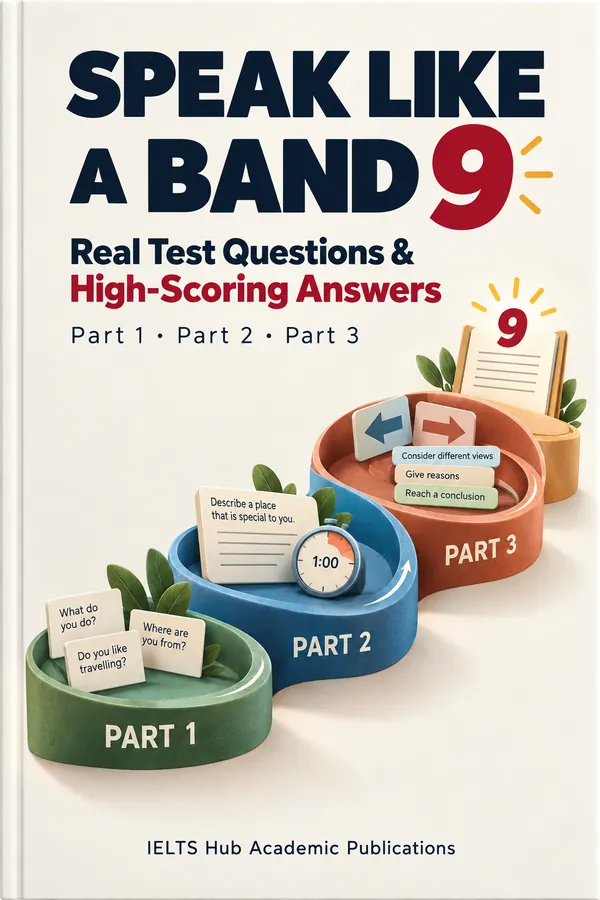
Speaking
Speak Like a Band 9
Real Test Questions & High-Scoring Answers
₹299$9.99CAD 13.99AUD 14.99£7.99NZD 16.99€8.99AED 39SGD 12.99
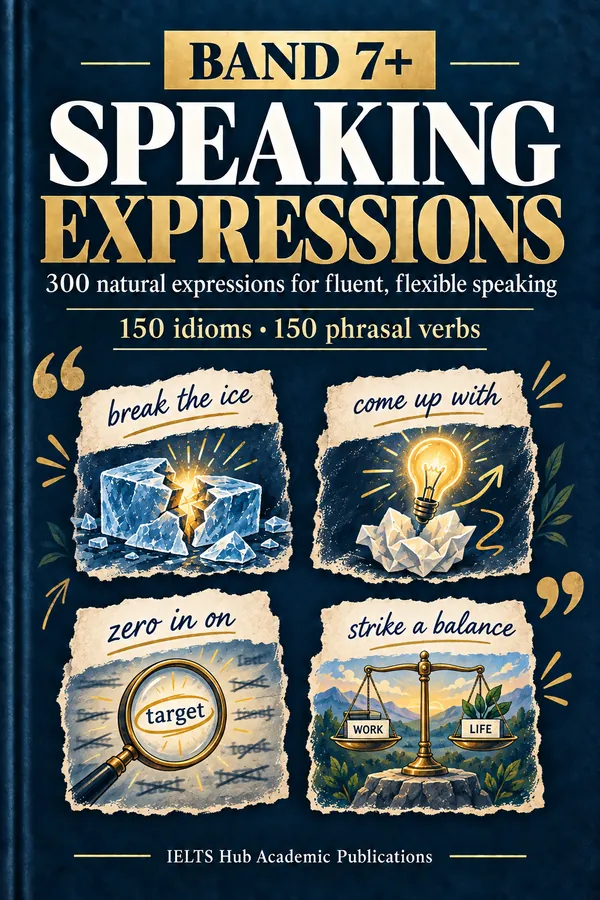
Speaking
Band 7+ Speaking Expressions
300 natural expressions for fluent, flexible speaking
₹199$6.99CAD 8.99AUD 9.99£4.99NZD 10.99€5.99AED 24SGD 8.99
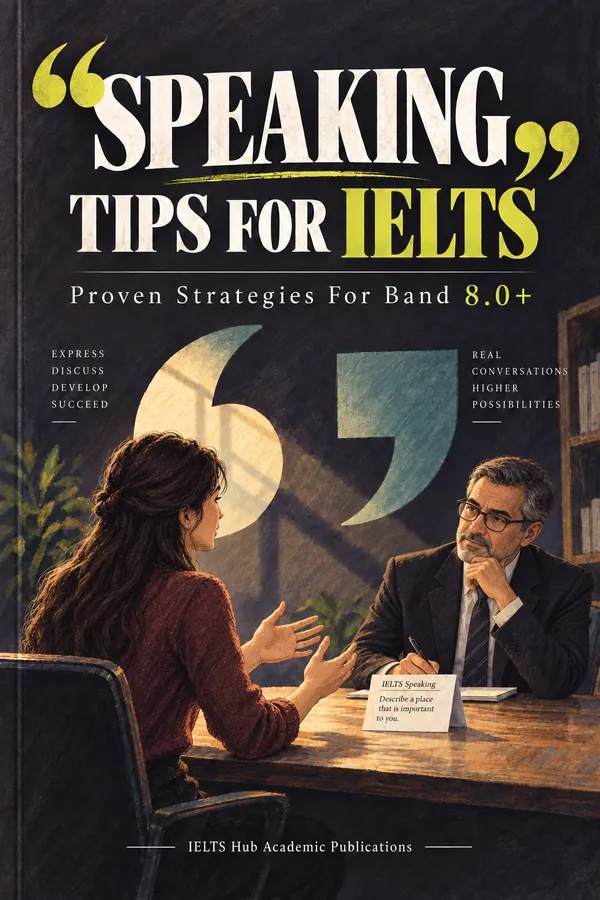
Speaking
Speaking Tips for IELTS
Proven Strategies for Band 8.0+
₹299$9.99CAD 13.99AUD 14.99£7.99NZD 16.99€8.99AED 39SGD 12.99