Speaking test #438
Part 1 · Interview
4 to 5 minutes. The examiner asks about you and familiar topics.
Can you tell me your full name?
Where are you from?
Do you work or are you a student?
Do you often read books? When?
Yes, I'm an avid reader and I try to make time for reading every day, whether it's before bed or during my lunch break at work.
Are your reading habits now different than before?
Yes, they definitely have changed over the years. When I was younger, I used to only read fiction, but now I enjoy a wider range of genres, including non-fiction, biographies, and even self-help books.
Have you ever read a novel that has been adapted into a film?
Yes, many times actually. One of my favorite examples is the Harry Potter series - I read all of the books before seeing any of the movies, and it was such a different experience watching the films knowing the plot and characters so well.
Which do you prefer, reading books or watching movies?
It's tough to choose just one, because I really enjoy both activities for different reasons. Reading allows me to escape into different worlds and really immerse myself in the story, whereas watching movies is a great way to relax and unwind after a long day. Ultimately, I think it just depends on my mood and how much time I have available.
Do you have any special talent?
Yes, I do have a special talent. I am a proficient pianist and have been playing the piano for over a decade. I have a passion for classical music and enjoy playing pieces by composers such as Beethoven and Chopin.
Did you learn it when you were young or recently?
I started learning the piano when I was quite young, around the age of six. I have been taking lessons consistently ever since and have continued to improve my skills and technique over the years.
Do you think your talent can be useful for your future work?
I believe that my talent for playing the piano can be useful for my future work in several ways. For example, it could be beneficial in the field of music education, as I could use my skills to teach others. Additionally, my ability to play the piano could be an asset in the entertainment industry, as I could perform in concerts or events.
Do you think anyone in your family has the same talent?
Yes, actually, my older sister is also a pianist and has been playing for even longer than I have. We often play together and it's always a joy to perform with her. Additionally, my cousin is a professional musician and plays several instruments, including the piano. So, it seems that the talent for music runs in the family.
You will have to talk about the topic for one to two minutes. You have one minute to think about what you are going to say. You can make some notes to help you if you wish.
A book you enjoyed reading because you had to think a lot
You should say:
- What was the book
- Why did you choose to read it
- What made you think a lot while reading
- How did the book impact your thinking
What was the book
I would like to talk about the book "The God of Small Things" by Arundhati Roy, which deeply resonated with me and prompted a lot of introspection. I chose to read this book based on the numerous recommendations I received about its captivating storyline and powerful themes. As I delved into the intricate narrative woven by Roy, I found myself constantly reflecting on the complex characters and the underlying social issues depicted in the book.
Why did you choose to read it
"The God of Small Things" made me think a lot due to its multi-layered narrative that skillfully interweaves themes of love, loss, societal norms, and the impact of historical events on individuals. The non-linear storytelling technique employed by the author required me to pay close attention to details and connections between past and present events. This constant engagement with the text forced me to analyze the characters' motivations and the consequences of their actions, leading to a deeper understanding of the human experience.
What made you think a lot while reading
Reading this book had a profound impact on my thinking as it challenged my preconceived notions about societal hierarchies, cultural norms, and the complexities of human relationships. It made me realize the importance of looking beyond surface appearances and delving into the nuances of human emotions and experiences. "The God of Small Things" not only broadened my perspective but also encouraged me to question societal injustices and strive for a more compassionate and empathetic worldview.
How did the book impact your thinking
In conclusion, "The God of Small Things" stands out as a thought-provoking literary masterpiece that left a lasting impression on me. Through its thoughtfully crafted narrative and compelling characters, the book sparked a journey of self-reflection and critical thinking that continues to influence my views on society and human nature. I highly recommend this book to anyone seeking a profound reading experience that challenges conventional thinking and inspires introspection.
- Words
- 302
- Sentences
- 12
- Words per sentence
- 25.2
- Speaking time
- about 2.3 min
Counted at 130 words a minute. The exam gives you one to two minutes.
Part 3 · Discussion
4 to 5 minutes. The examiner asks broader questions linked to the cue card topic.
How do books that need a lot of thought differ from those that are easier to understand?
Books that require deep thinking often challenge readers to engage with complex themes and ideas, demanding a level of critical analysis that straightforward books typically do not. For instance, a philosophical text may explore intricate concepts about existence or morality, encouraging readers to ponder and reflect deeply, whereas a light novel might simply entertain with a clear plot and relatable characters. These thought-provoking texts often utilize nuanced language and layered narratives, allowing for multiple interpretations, which can be incredibly rewarding for those willing to invest the time and effort. In contrast, straightforward books generally offer a more immediate gratification, making them accessible to a broader audience without the need for extensive contemplation. Ultimately, the engagement with challenging literature can foster a broader perspective and a deeper understanding of the world, enriching our cognitive and emotional experiences.
Some people think that difficult books are more satisfying than easy ones. What do you think about this?
I absolutely see where those people are coming from! Challenging books often push us to think critically and engage with complex themes, which can make for a deeply enriching experience. They tend to open our minds and encourage us to reflect on different perspectives, which is incredibly valuable in today’s diverse world. That said, I believe there's also a place for light reads—they can be a wonderful escape and provide a sense of relaxation that we all need from time to time. Ultimately, it’s about finding a balance; both types of literature have their unique rewards and can enrich our lives in different ways.
How important do you think it is for readers to connect with complicated ideas in books?
Engaging with complex themes in literature is incredibly significant for readers. It not only broadens their understanding of the world but also fosters a sense of empathy towards diverse perspectives. When readers delve into intricate narratives, they often find themselves grappling with profound questions about human nature, morality, and society. This intellectual engagement can spark critical thinking and encourage individuals to reflect on their own beliefs and values. Moreover, literature serves as a mirror, reflecting the complexities of life, which can be both enlightening and transformative. Ultimately, tackling these themes makes reading a much more rewarding experience!
Why do you think some readers choose books that make them think instead of ones that are just fun?
I believe many readers gravitate towards books that challenge their thinking because they are in search of personal growth and intellectual stimulation. Engaging with complex themes and ideas often provides a sense of intellectual enrichment, allowing readers to expand their horizons and question their own beliefs. Additionally, such books often provoke profound discussions and can even lead to a shift in perspective, which is incredibly rewarding. On the flip side, while entertaining books offer escapism, some readers find that the thrill of a good challenge can be much more fulfilling in the long run. Ultimately, it’s about the desire to delve deeper into the human experience and understand the world better.
What differences could we notice in books if more writers aimed to create deep and meaningful content?
If more authors shifted their focus towards creating thought-provoking content, we could witness a significant transformation in the literary landscape. Literature might become a more powerful tool for social change, as readers are encouraged to engage with complex themes and question their own perspectives. This could lead to a surge in introspective writing, prompting audiences to explore deeper emotional and intellectual connections with the material. Additionally, we might see a rise in diverse narratives that challenge conventional norms, ultimately enriching the reading experience. In essence, literature could evolve into a more dynamic space for discussion and reflection, fostering a culture that values critical thinking and empathy.
How can schools help students find books that make them think critically?
Educational institutions can play a pivotal role in fostering a love for reading that promotes critical thinking by curating a diverse selection of books tailored to different interests and age groups. For instance, they could establish reading clubs where students can engage in lively discussions about thought-provoking literature. Additionally, incorporating interactive workshops that emphasize analytical skills would help students delve deeper into the material. Schools might also invite authors or experts to give talks, igniting students' passion for exploring complex themes. Ultimately, creating a vibrant reading culture will not only stimulate students’ minds but also equip them with essential skills for their future.
Go further with the books
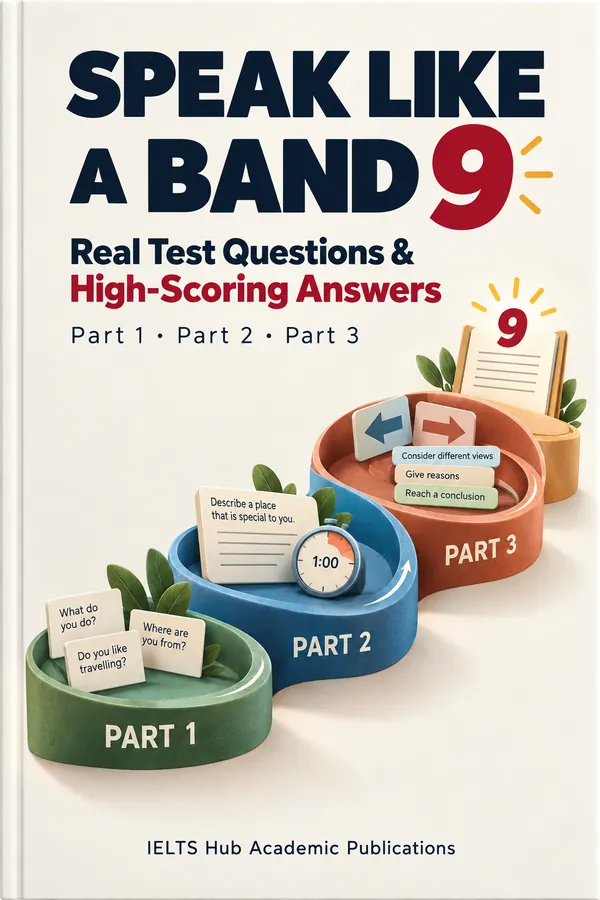
Speaking
Speak Like a Band 9
Real Test Questions & High-Scoring Answers
₹299$9.99CAD 13.99AUD 14.99£7.99NZD 16.99€8.99AED 39SGD 12.99
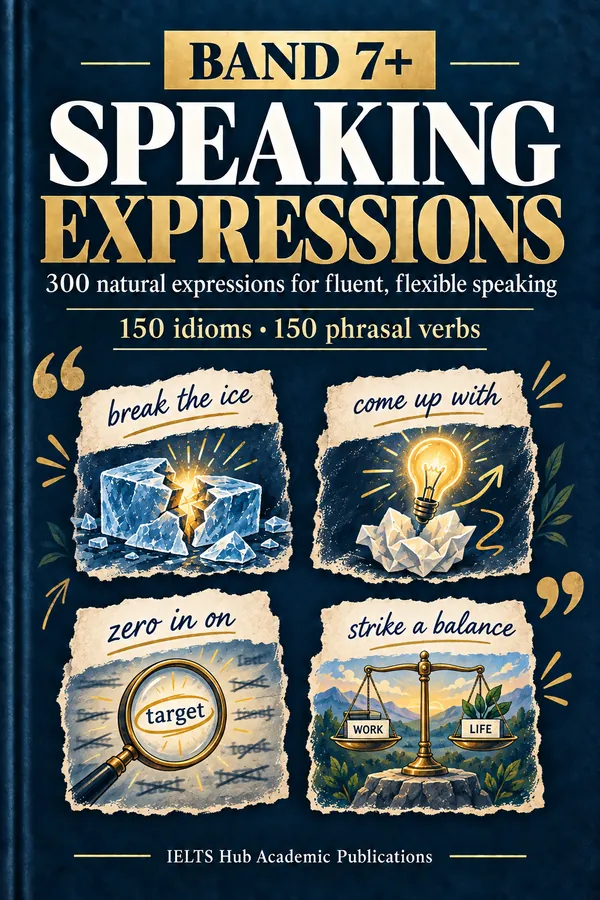
Speaking
Band 7+ Speaking Expressions
300 natural expressions for fluent, flexible speaking
₹199$6.99CAD 8.99AUD 9.99£4.99NZD 10.99€5.99AED 24SGD 8.99
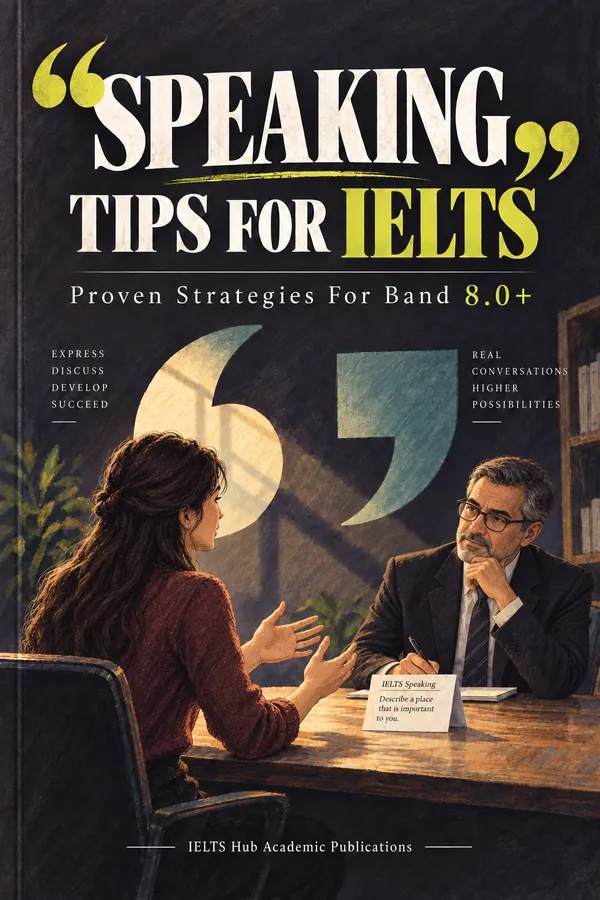
Speaking
Speaking Tips for IELTS
Proven Strategies for Band 8.0+
₹299$9.99CAD 13.99AUD 14.99£7.99NZD 16.99€8.99AED 39SGD 12.99