Speaking test #441
Part 1 · Interview
4 to 5 minutes. The examiner asks about you and familiar topics.
Can you tell me your full name?
Where are you from?
Do you work or are you a student?
How often do you make telephone calls?
I make telephone calls quite frequently, probably on a daily basis. I would say that I make around 3-4 calls a day on average.
Who do you spend the most time talking to on the telephone?
I spend the most time talking to my family and close friends on the telephone. I try to stay in touch with them as much as possible and make sure to catch up with them regularly.
When do you think you’ll next make a telephone call?
I think I'll next make a telephone call later today, as I usually call my parents in the evening to check in with them and see how their day went.
Do you sometimes prefer to send a text message instead of telephoning?
Yes, I do prefer to send text messages instead of telephoning in certain situations. For example, if I need to quickly convey a short message or if I'm in a noisy or crowded place, I find that sending a text message is more convenient and efficient. Additionally, it allows me to communicate with people in different time zones, as they can respond to the message at their convenience.
What kind of entertainment do you prefer, TV or radio?
I would have to say that I prefer TV over radio. I find that the visual aspect of television adds an extra layer of engagement and immersion to the content that I am watching. However, I do appreciate the convenience and simplicity of listening to the radio, especially when I am on the go or doing other tasks.
How are radio programs and television programs different?
Well, one of the most obvious differences between radio programs and television programs is the presence of visual elements on television. Television programs also tend to be more elaborate in terms of production value and special effects, whereas radio programs rely solely on audio to convey their message. Additionally, television programs often have a wider range of genres and formats, such as dramas, comedies, and reality shows, whereas radio programs tend to be more limited in this regard.
What programs do you like to listen/watch?
I enjoy watching a variety of programs, but some of my favorites include crime dramas, comedies, and reality shows. I also enjoy watching documentaries and current affairs programs to stay informed about what is happening in the world. In terms of radio programs, I enjoy listening to music and talk shows, as well as news and weather updates.
Do you prefer TV news or news on the radio?
I would have to say that I prefer TV news over news on the radio. I find that the visuals and graphics used in TV news broadcasts help to better convey the information and give me a better understanding of the events that are being reported. Additionally, I find that TV news programs often provide more in-depth coverage and analysis of the stories they are reporting on. However, I do appreciate the convenience and immediacy of listening to news updates on the radio when I am on the go or away from a TV.
You will have to talk about the topic for one to two minutes. You have one minute to think about what you are going to say. You can make some notes to help you if you wish.
Someone you know who has started a business
You should say:
- Who the person is
- What type of business they started
- How they started the business
- Challenges they faced and how they overcame them
Who the person is
I would like to talk about my friend Ravi, who embarked on the entrepreneurial journey by starting his own digital marketing agency. Ravi has always been passionate about digital technologies and marketing strategies, which led him to establish his business in this field.
What type of business they started
Initially, Ravi began his business by working as a freelance digital marketer, taking on small projects for local businesses. Through his dedication and expertise, he gradually built a strong portfolio and reputation in the industry. This laid the foundation for him to transition into a full-fledged digital marketing agency.
How they started the business
Like any other entrepreneur, Ravi faced numerous challenges along the way. One of the biggest hurdles he encountered was securing clients and competing with well-established agencies in the market. However, he overcame this obstacle by offering innovative solutions, personalized services, and building strong relationships with his clients. This approach not only helped him attract new clients but also retain them for the long term.
Challenges they faced and how they overcame them
Moreover, Ravi also had to deal with financial constraints and the pressure of meeting deadlines. To address this, he focused on optimizing his business operations, expanding his team strategically, and investing in continuous learning to stay ahead of the curve. Through his persistence, resilience, and strategic decision-making, Ravi successfully navigated through the challenges and steered his business towards growth and success.
- Words
- 217
- Sentences
- 12
- Words per sentence
- 18.1
- Speaking time
- about 1.7 min
Counted at 130 words a minute. The exam gives you one to two minutes.
Part 3 · Discussion
4 to 5 minutes. The examiner asks broader questions linked to the cue card topic.
What challenges do new business owners face that are different from those of established companies?
The challenges faced by new business owners are often quite different from those experienced by established companies. New entrepreneurs typically grapple with issues like securing initial funding and establishing a brand presence, which can be daunting without a proven track record. In contrast, established companies may face challenges related to market saturation or adapting to changing consumer preferences, as they often have to innovate to maintain their foothold. Additionally, new businesses might struggle with building a customer base from scratch, while established firms need to focus on retaining customer loyalty in a competitive landscape. Ultimately, both have their hurdles, but the nature of these challenges varies significantly based on their different stages of development.
How can someone see starting a business as a good opportunity or a risky choice?
Entrepreneurship can be viewed as a worthwhile endeavor for several reasons. Firstly, it offers individuals the chance to pursue their passions and turn their ideas into reality, which can be incredibly fulfilling. Additionally, successful entrepreneurs often create jobs and contribute to economic growth, making a positive impact on society as a whole. However, it's also important to acknowledge that entrepreneurship carries inherent risks. Many start-ups face challenges like financial instability and market competition, which can lead to failure. This duality makes entrepreneurship a fascinating journey—it's both exhilarating and daunting at the same time!
How important is innovation for a new business to succeed?
Innovation plays a pivotal role in the success of a new business, acting as the driving force that sets it apart from competitors. In today’s fast-paced market, companies that embrace cutting-edge technology and creative solutions can quickly gain a competitive edge, attracting customers who are eager for something fresh and exciting. Moreover, innovation fosters a culture of continuous improvement, encouraging businesses to adapt and respond to changing consumer needs. Ultimately, without a commitment to innovation, a new business may struggle to establish itself or could even become obsolete in the face of more agile competitors. It's fascinating how a single innovative idea can transform not just a company, but an entire industry!
Why do you think some people are more likely to start their own business than others?
I believe the inclination to start a business often stems from a combination of personality traits, life experiences, and environmental factors. For instance, individuals who possess a strong sense of entrepreneurial spirit tend to be more willing to take risks and embrace uncertainty, which is essential in the competitive world of business. Additionally, those who have been exposed to entrepreneurial role models, whether through family or community, are more likely to develop a desire to forge their own path. Furthermore, access to resources, such as funding and mentorship, can significantly influence one's decision to become an entrepreneur. In contrast, individuals who are more risk-averse or who have a preference for stability may find the idea of starting a business daunting. Ultimately, I think it’s a fascinating interplay of personal ambition, skills, and the surrounding environment that drives some people to pursue entrepreneurship while others prefer more conventional career paths.
What changes could happen to small businesses in the next ten years?
The landscape of small businesses is likely to undergo significant transformations in the next decade, primarily driven by advancements in technology and changing consumer preferences. For starters, the rise of e-commerce will continue to empower small businesses, allowing them to reach a global audience without the hefty overheads of a traditional storefront. Additionally, as sustainability becomes a crucial concern, we may see a surge in eco-friendly small businesses that prioritize ethical practices and green products. Moreover, the increasing use of social media as a marketing tool means that small businesses will have to adapt to new trends and engage with their audience in more innovative ways. This dynamic environment could also foster greater collaboration among small businesses, leading to unique partnerships that can enhance their offerings. Overall, the next decade promises to be an exciting time for small businesses as they navigate these changes and capitalize on new opportunities.
What steps can be taken to help new entrepreneurs on their journey?
Supporting aspiring entrepreneurs is crucial for fostering innovation and economic growth. One effective measure is to provide financial assistance through grants or low-interest loans, which can alleviate the initial burden of starting a business. Additionally, establishing mentorship programs that connect new entrepreneurs with experienced business leaders can offer invaluable guidance and insights. Furthermore, creating networking opportunities through workshops and seminars helps them build vital connections within their industry. Lastly, offering access to educational resources and training programs can equip them with the necessary skills to navigate the complexities of running a business.
Go further with the books
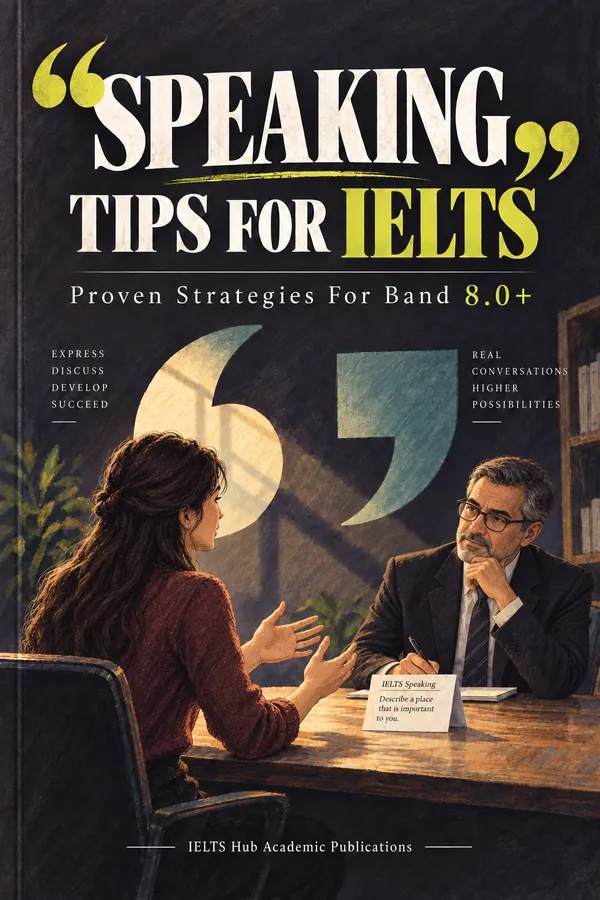
Speaking
Speaking Tips for IELTS
Proven Strategies for Band 8.0+
₹299$9.99CAD 13.99AUD 14.99£7.99NZD 16.99€8.99AED 39SGD 12.99

Speaking
Speak Like a Band 9
Real Test Questions & High-Scoring Answers
₹299$9.99CAD 13.99AUD 14.99£7.99NZD 16.99€8.99AED 39SGD 12.99

Speaking
Band 7+ Speaking Expressions
300 natural expressions for fluent, flexible speaking
₹199$6.99CAD 8.99AUD 9.99£4.99NZD 10.99€5.99AED 24SGD 8.99