Speaking test #442
Part 1 · Interview
4 to 5 minutes. The examiner asks about you and familiar topics.
Can you tell me your full name?
Where are you from?
Do you work or are you a student?
What kind of TV programs do you like?
I am quite the eclectic viewer when it comes to TV programs. I enjoy a wide range of genres, from crime dramas and action-packed thrillers to comedic sitcoms and thought-provoking documentaries. I also have a fondness for historical dramas and foreign productions, as they often offer a unique perspective and cultural insight.
Do you often watch programs on TV or on your smartphone?
I tend to watch TV programs on both my TV and smartphone, depending on the situation. If I'm at home and have some free time, I'll usually watch on my TV, as the larger screen and surround sound enhance the viewing experience. However, if I'm on the go or have a shorter amount of time, I'll watch on my smartphone. It's a convenient way to catch up on my favorite shows while I'm commuting or waiting for an appointment.
Do you like watching the same kind of TV programs all the time?
Not at all. I thrive on variety, so I like to watch different types of programs and explore new genres. I find that constantly switching things up keeps my interest piqued and prevents me from getting bored. I also enjoy the surprise and excitement of discovering new programs that I might not have otherwise considered.
Do you talk with your friends about the TV programs that you watch?
Absolutely. I find that discussing TV programs with my friends is a great way to bond and share my interests. It's also a great way to discover new programs, as my friends often recommend shows that they think I'll enjoy. Additionally, discussing the themes, characters, and plotlines of a show can lead to some interesting and thought-provoking conversations.
Do you like texting?
I am quite fond of texting as it allows me to communicate with people in a quick and convenient manner. I find it particularly useful for short and informal conversations, as well as for arranging plans and appointments.
Have you ever received a confusing text message?
Yes, I have received a few confusing text messages in the past. Sometimes, I find that the message is not clear or that the context is missing, which can make it difficult to understand the intended meaning.
In what circumstances are making a phone call better than sending a text message?
I believe that making a phone call is better than sending a text message in certain situations, such as when discussing important or sensitive matters, when there is a need for immediate clarification, or when the conversation requires a more personal touch. Additionally, phone calls can be more effective in situations where tone and emphasis are important, such as when expressing emotions or giving instructions.
Have you ever had difficulty replying to a message?
Yes, I have had difficulty replying to a message in the past, particularly when the message is vague or unclear. In such cases, I often find myself rereading the message multiple times and trying to interpret the meaning. However, I try to clarify any confusion by asking follow-up questions or requesting more information.
You will have to talk about the topic for one to two minutes. You have one minute to think about what you are going to say. You can make some notes to help you if you wish.
When you had to wait for someone or something to arrive
You should say:
- Who or what you were waiting for
- Where you were waiting
- How long you had to wait
- How you passed the time while waiting
Who or what you were waiting for
Waiting is an inevitable part of life, and one memorable instance when I had to wait for something was when I was eagerly anticipating the arrival of my childhood friend after several years. My friend, whom I hadn't seen since we graduated from high school, had informed me about his visit to my city, and I was thrilled to catch up with him.
Where you were waiting
I decided to wait for him at the airport, a place that holds a special significance for rekindling memories. As I stood near the arrival gate, the excitement and anticipation grew with each passing minute. The familiarity of the airport surroundings added to my nostalgic feelings, making the wait more bearable.
How long you had to wait
The wait turned out to be longer than expected as my friend's flight was delayed due to unforeseen circumstances. Despite the delay, I remained patient and used the time to reflect on our shared memories and plan the activities we could do together during his stay. I also kept myself occupied by reading a book, sipping on a cup of coffee, and observing the hustle and bustle of the airport.
How you passed the time while waiting
Finally, after a wait of almost two hours, my friend's arrival was announced, and the moment we reunited was filled with joy and excitement. The long wait only made the reunion more special, and we spent the day reminiscing about our school days and catching up on each other's lives. Overall, the experience of waiting for my friend's arrival taught me the value of patience and the joy of rekindling old friendships.
- Words
- 256
- Sentences
- 11
- Words per sentence
- 23.3
- Speaking time
- about 2.0 min
Counted at 130 words a minute. The exam gives you one to two minutes.
Part 3 · Discussion
4 to 5 minutes. The examiner asks broader questions linked to the cue card topic.
What are the different feelings you have when waiting for a person compared to waiting for something, like a package or an event?
That's a fascinating question! When we're waiting for someone, the feelings often revolve around anticipation and excitement, especially if it’s someone we cherish, like a friend or a loved one. There’s a certain tinge of nervousness that can accompany that wait, as we wonder how they will react when they arrive. On the other hand, waiting for something like a delivery or an event tends to provoke a different emotional response—often a mix of impatience and curiosity. While we might feel a sense of eagerness for the delivery, there’s also that underlying anxiety about whether it will actually arrive on time. So, in essence, waiting for people often invokes more personal emotions, whereas waiting for objects or events can feel more transactional and less emotionally charged.
Some people think waiting is annoying, while others see it as a chance to think. What do you think about this idea?
I absolutely see both sides of this argument! On one hand, waiting can indeed feel like a waste of time, especially in our fast-paced world where everyone is constantly rushing. However, I believe that waiting can also serve as a unique chance for self-reflection and contemplation. When we're forced to pause, it gives us the opportunity to process our thoughts, plan for the future, or simply enjoy the moment. I often find that some of my best ideas come to me during those quiet moments of waiting, making it a surprisingly valuable experience! So, in my view, it really depends on how one chooses to approach the situation.
How can waiting be important in our everyday lives?
Waiting can be incredibly significant in our daily lives for several reasons. Firstly, it often provides us with a moment to reflect, helping us to clarify our thoughts and prioritize what truly matters. For instance, when we wait in line or at an appointment, it can serve as a brief pause in our hectic schedules, allowing us to unwind and recharge. Furthermore, waiting can build anticipation, which can enhance our appreciation for what we’re waiting for—think about the excitement of awaiting a friend’s arrival or the release of a much-anticipated movie. Lastly, learning to wait gracefully can cultivate patience, a valuable trait that helps us navigate the ups and downs of life more effectively.
Why do you think people have different amounts of patience when waiting for different things?
That's a fascinating question! I believe the varying levels of patience people exhibit often stem from their personal experiences and expectations. For instance, someone waiting for a job interview may feel a heightened sense of anxiety, making them less patient compared to someone waiting for a bus. Additionally, cultural factors play a significant role; in some cultures, there’s a strong emphasis on immediacy and efficiency, which can lead to a lower tolerance for waiting. Ultimately, it all boils down to the perceived value of what’s at stake—if the outcome is deemed worthwhile, people are more likely to exhibit remarkable patience.
How could waiting feel different in the future because of new technology and communication?
That's a fascinating question! As technology continues to evolve at a rapid pace, I can envision that the experience of waiting will transform significantly. For instance, with the proliferation of real-time communication tools and apps, waiting times might feel less burdensome because we can stay connected and engaged with others while we wait. Imagine being in a queue, and instead of just standing there, you could easily catch up with friends or even attend virtual meetings right from your phone. Moreover, advancements in automation and AI could streamline processes that typically involve waiting, like in banks or restaurants, where we’d likely see more self-service options. This would not only reduce wait times but also enhance convenience, allowing us to make the most of our time. Overall, I believe that the future of waiting will be characterized by increased efficiency and a greater sense of connection, making the experience much more pleasant!
What ways can we improve the waiting experience for people?
To make the waiting experience more bearable, various strategies can be implemented that cater to different preferences. For starters, providing comfortable seating and a pleasant ambiance can significantly enhance the mood of those waiting. Additionally, incorporating elements like free Wi-Fi or charging stations allows people to engage in their favorite activities, such as browsing the internet or catching up on work. Another great approach is to offer entertaining distractions, like magazines, videos, or even live performances, which can make the time seem to fly by. Lastly, ensuring that the staff is friendly and engaging can create a more positive atmosphere, as a simple chat can help alleviate the frustration of waiting. By focusing on these aspects, organizations can transform a potentially tedious experience into a more enjoyable one!
Go further with the books
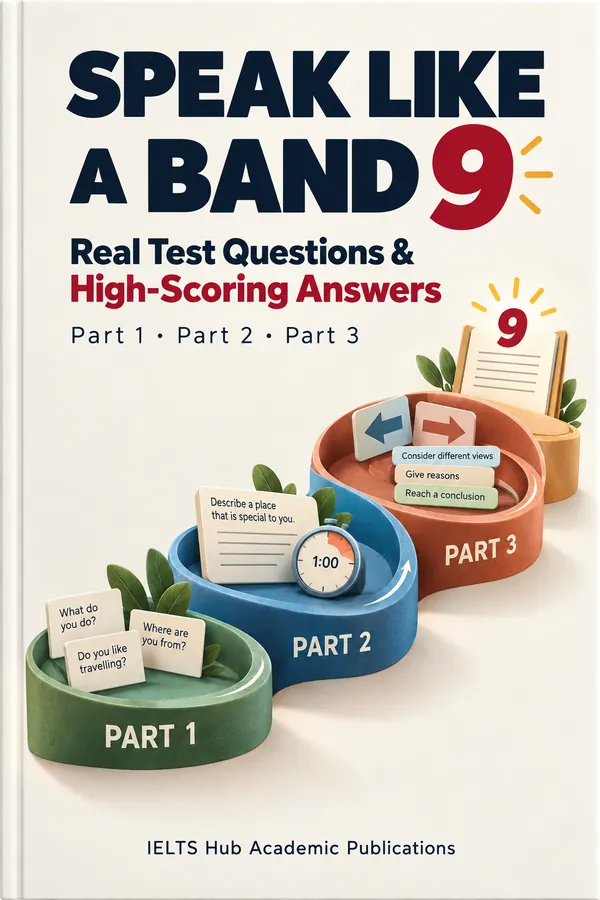
Speaking
Speak Like a Band 9
Real Test Questions & High-Scoring Answers
₹299$9.99CAD 13.99AUD 14.99£7.99NZD 16.99€8.99AED 39SGD 12.99

Speaking
Band 7+ Speaking Expressions
300 natural expressions for fluent, flexible speaking
₹199$6.99CAD 8.99AUD 9.99£4.99NZD 10.99€5.99AED 24SGD 8.99
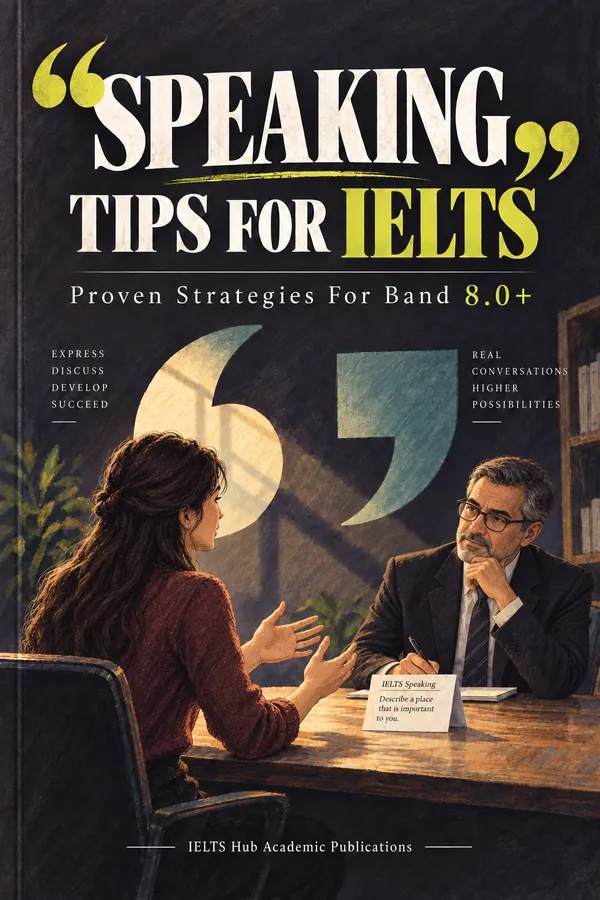
Speaking
Speaking Tips for IELTS
Proven Strategies for Band 8.0+
₹299$9.99CAD 13.99AUD 14.99£7.99NZD 16.99€8.99AED 39SGD 12.99