Speaking test #446
Part 1 · Interview
4 to 5 minutes. The examiner asks about you and familiar topics.
Can you tell me your full name?
Where are you from?
Do you work or are you a student?
How bad is the traffic in your country (India)?
The traffic in my country, India, can be quite challenging at times. With a rapidly growing population and a vast network of roads and highways, traffic congestion is a common issue in many cities. The problem is particularly severe during peak hours, when the roads become clogged with vehicles, leading to long delays and increased pollution levels.
Do traffic problems affect you?
Yes, traffic problems do affect me on a daily basis. As someone who commutes to work, I often find myself stuck in gridlock, which can be quite frustrating and time-consuming. Additionally, the noise and pollution caused by the heavy traffic can be quite detrimental to my overall well-being.
What do you do to deal with the traffic problems?
To deal with traffic problems, I try to plan my trips and errands during off-peak hours, when the roads are less congested. I also try to carpool or take public transportation whenever possible, as this helps to reduce the number of vehicles on the road. Additionally, I try to stay informed about any road closures or construction projects that may be causing delays, so that I can plan my routes accordingly.
Would you like to move to a place without traffic problems in the future?
While I am quite fond of my current city and the people I have grown to know and love, I would definitely be open to the idea of moving to a place without traffic problems in the future. A place where getting around is easy and efficient would be a dream come true for me, as it would allow me to spend more time doing the things I enjoy, rather than sitting in traffic. However, I would also consider other factors such as job opportunities, safety and cost of living before making a final decision.
Do you like to travel?
Oh, absolutely! I am a huge fan of traveling and experiencing new cultures, cuisines, and landscapes. There is nothing quite like immersing oneself in a new environment and gaining a fresh perspective on the world.
How did you get here today?
I opted to utilize public transportation today, as it is a convenient and eco-friendly mode of transportation. I took the bus from my residence to the nearest train station and then boarded a train to reach here.
Do you often use public transport?
Yes, I do. I try to use public transportation as much as possible, as it is not only cost-effective but also beneficial for the environment. It also allows me to avoid traffic congestion and parking difficulties, which can be quite a hassle.
What are the benefits of travelling by foot?
Travelling by foot has several benefits, the most obvious one being the ability to explore a place in a more leisurely and intimate manner. Walking also allows you to discover hidden gems and lesser-known places that you might miss while using other forms of transportation. Additionally, walking is a great way to stay active and healthy, and it is also an environmentally friendly mode of transportation. Overall, I believe that travelling by foot is a great way to immerse oneself in a new place and gain a deeper understanding of it.
You will have to talk about the topic for one to two minutes. You have one minute to think about what you are going to say. You can make some notes to help you if you wish.
Describe a time when you were asked to give your opinion
You should say:
- Who asked for your opinion
- What the topic of discussion was
- How you expressed your opinion
- The outcome of sharing your opinion
Who asked for your opinion
I vividly recall a time when my college professor asked for my opinion during a class debate on gender equality. The topic of discussion revolved around the challenges faced by women in the workplace. I felt a surge of responsibility to express my thoughts on the matter considering its relevance in today's society.
What the topic of discussion was
During the debate, I expressed my opinion by highlighting the systemic barriers that hinder women's progress in the corporate world. I emphasized the importance of creating a more inclusive work environment and providing equal opportunities for both genders. I backed my arguments with relevant statistics and real-life examples to support my stance.
How you expressed your opinion
The outcome of sharing my opinion was overwhelmingly positive. Not only did it spark a meaningful discussion among my peers, but it also encouraged others to voice their perspectives. My professor commended me for my well-reasoned arguments and thoughtful insights, which boosted my confidence in articulating my opinions in public forums.
The outcome of sharing your opinion
Overall, this experience taught me the significance of voicing my opinions on important societal issues. It reinforced my belief in the power of constructive dialogue and critical thinking in fostering positive change. I realized that by speaking up and sharing my perspective, I can contribute to creating a more inclusive and progressive society.
- Words
- 209
- Sentences
- 12
- Words per sentence
- 17.4
- Speaking time
- about 1.6 min
Counted at 130 words a minute. The exam gives you one to two minutes.
Part 3 · Discussion
4 to 5 minutes. The examiner asks broader questions linked to the cue card topic.
How can people have different views when talking about a controversial issue?
People's opinions can diverge significantly when discussing a controversial topic due to a variety of factors. Firstly, personal experiences play a crucial role; what one person has lived through can shape their perspective in a way that others might find difficult to understand. Additionally, cultural backgrounds can lead to strongly held beliefs that differ vastly from one group to another. For instance, societal norms and values often influence how individuals interpret the same information, leading to diverse viewpoints. Moreover, the impact of media cannot be understated; the way an issue is presented can sway public opinion, resulting in polarized views. Ultimately, these elements contribute to a rich tapestry of opinions that can make discussions both challenging and enlightening!
How much do you think personal experiences shape a person's opinions on different issues?
Absolutely, personal experiences play a significant role in shaping our viewpoints on a wide range of issues. Our individual journeys, whether they involve challenges, triumphs, or even mundane moments, often provide us with unique insights that can greatly influence our beliefs and attitudes. For instance, someone who has faced adversity may develop a more empathetic perspective towards social issues, while those who have enjoyed certain privileges might see the world through a different lens. This nuanced understanding is what makes our perspectives so diverse and fascinating. In essence, the tapestry of our experiences weaves together to form a rich backdrop against which we interpret the world around us.
How important is it for people to share their views in a democratic society?
Expressing opinions in a democratic society is absolutely crucial. It not only empowers individuals to voice their thoughts and beliefs but also fosters a culture of open dialogue and mutual respect. When people share their perspectives, it contributes to a more informed electorate, which is essential for making sound decisions that affect the community. Moreover, the act of expressing one’s opinion can lead to social change, as it encourages others to rethink their own views and can even influence policy-making. Ultimately, a vibrant democracy thrives on the diverse voices of its citizens, making their expression indispensable.
Why do you think some people have a hard time sharing their thoughts in groups?
I think there are a few reasons why some individuals struggle to share their opinions in group settings. For one, the fear of being judged can be quite daunting; people often worry about how their ideas will be perceived by others. Additionally, some may lack self-confidence, especially if they feel outnumbered or believe they don’t have enough expertise on a subject. Lastly, group dynamics can play a significant role; if the atmosphere feels overly competitive or hostile, it can stifle open communication. In contrast, when groups foster a culture of mutual respect and active listening, individuals are much more likely to contribute their thoughts freely.
How would society change if more people felt confident to share their thoughts?
If more people felt empowered to voice their opinions, I believe we would witness a remarkable shift in societal dynamics. Firstly, this could lead to a greater sense of community engagement, as individuals would be more inclined to participate in discussions about issues that matter to them. This increased participation could foster a culture of open dialogue, enabling diverse perspectives to come to the fore and enriching decision-making processes. Moreover, it might also encourage leaders to be more responsive and accountable, knowing that their constituents are actively expressing their views. Overall, such a change could cultivate a society that values inclusivity and collective responsibility, ultimately paving the way for more innovative solutions to pressing challenges.
What ways can we promote more open talks about different opinions in communities?
To foster more open discussions about differing opinions in communities, one effective approach could be to create safe spaces for dialogue. This means organizing community forums or workshops where individuals feel comfortable expressing their thoughts without fear of judgment. Additionally, encouraging active listening through trained facilitators can help participants understand diverse perspectives more deeply. Schools and local organizations might also implement programs that teach critical thinking and respectful debate, enabling people to engage with opposing views constructively. Ultimately, by promoting a culture of respect and open-mindedness, we can significantly enhance the quality of discourse in our communities.
Go further with the books
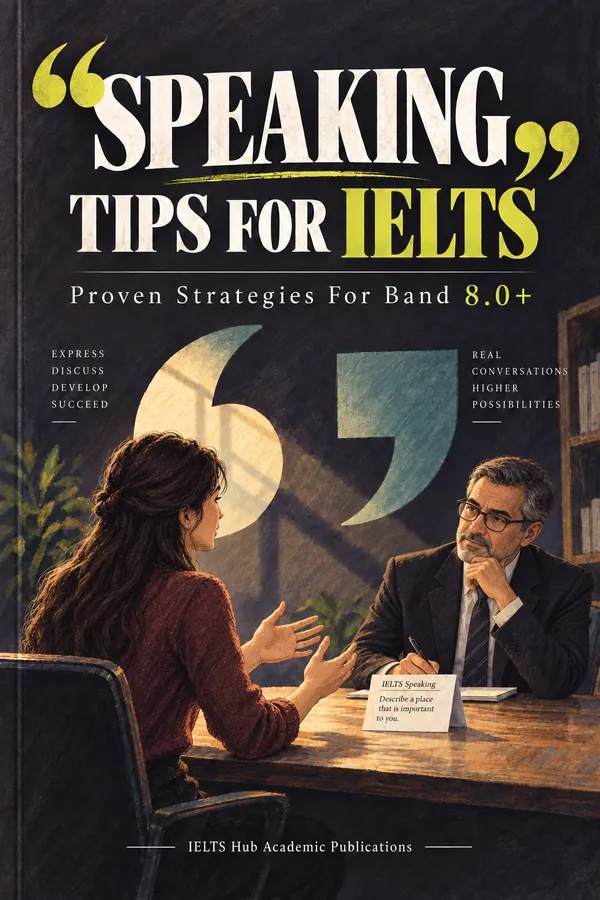
Speaking
Speaking Tips for IELTS
Proven Strategies for Band 8.0+
₹299$9.99CAD 13.99AUD 14.99£7.99NZD 16.99€8.99AED 39SGD 12.99
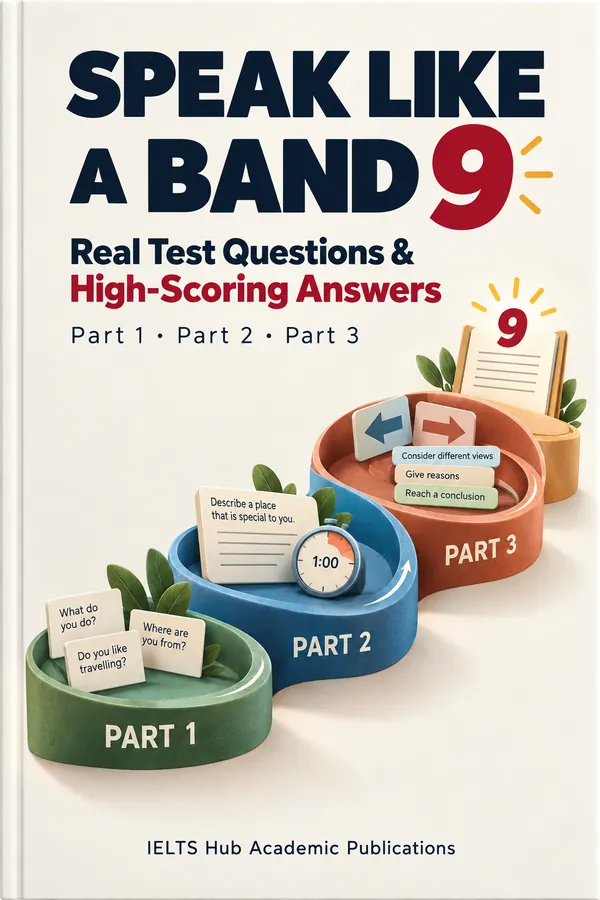
Speaking
Speak Like a Band 9
Real Test Questions & High-Scoring Answers
₹299$9.99CAD 13.99AUD 14.99£7.99NZD 16.99€8.99AED 39SGD 12.99

Speaking
Band 7+ Speaking Expressions
300 natural expressions for fluent, flexible speaking
₹199$6.99CAD 8.99AUD 9.99£4.99NZD 10.99€5.99AED 24SGD 8.99