Speaking test #454
Part 1 · Interview
4 to 5 minutes. The examiner asks about you and familiar topics.
Can you tell me your full name?
Where are you from?
Do you work or are you a student?
Do you write a lot?
Yes, I do write a lot. I find it to be a great way to express myself and to explore my thoughts and ideas. Whether it's through journaling, blogging, or writing fiction, I always make sure to set aside some time each day to write.
What do you like to write about?
I like to write about a variety of different subjects and themes. I find that my writing is often influenced by my personal experiences, so I like to write about things that I have lived through or that have affected me in some way. I also enjoy writing about social issues and current events, as I feel that it gives me a chance to engage with the world around me in a meaningful way.
Should children be taught creative writing from an early age?
I believe that children should definitely be taught creative writing from an early age. Not only is it an important way to develop their language skills and imagination, but it can also be a great way to help them process their emotions and understand the world around them. By encouraging children to express themselves through writing, we can help them develop important skills that will serve them well throughout their lives.
Would you like to become a famous author?
I would love to become a famous author. I think it would be an amazing feeling to know that my words have touched the hearts of people all over the world. However, I also realize that fame and success are not the only things that matter. I am content with creating something that resonates with people and that they can relate to. So, while I would be thrilled to become a famous author, I am also content with the idea of writing simply for the love of it. Overall, I would be happy with whatever outcome my writing brings me.
What kinds of advertisements do you watch?
I tend to watch advertisements that are relevant to my interests or needs. For example, if I'm in the market for a new car, I'll pay extra attention to car advertisements. I also appreciate advertisements that are well-made and creatively produced, regardless of the product being advertised.
Where can you see advertisements?
Advertisements can be seen in a variety of places, including on television, online, on billboards and posters, in newspapers and magazines, and even on the sides of buses or on the backs of receipts.
Have you ever bought something because of its advertisement?
Yes, I have definitely made purchases because of an advertisement before. Whether it's a product or a service, an effective advertisement can definitely influence my decision to make a purchase.
Do you watch advertisements from the beginning to the end?
It really depends on the advertisement. If I'm interested in the product or service being advertised, then I'll likely watch the whole thing. On the other hand, if the advertisement is not relevant to me or is poorly made, I'll probably tune it out before it's over.
You will have to talk about the topic for one to two minutes. You have one minute to think about what you are going to say. You can make some notes to help you if you wish.
Interesting TV programme about a science topic
You should say:
- What was the TV programme about
- Why did you find it interesting
- What did you learn from the programme
- Would you recommend it to others
What was the TV programme about
I recently watched a fascinating TV programme that delved into the mysteries of the universe and the concept of black holes. The programme provided a comprehensive explanation of the science behind black holes, their formation, and their impact on the space-time continuum. It also explored the latest research and discoveries in the field of astrophysics, making it an intriguing watch for science enthusiasts like me.
Why did you find it interesting
What captivated me the most about this TV programme was the way it simplified complex scientific concepts, making them accessible to a wider audience. The use of visual aids, animations, and real-life examples helped me grasp the intricate details of black holes and their significance in the universe. The programme managed to strike a perfect balance between entertainment and education, keeping me engaged throughout.
What did you learn from the programme
From the programme, I gained a deeper understanding of the fundamental principles of astrophysics and the groundbreaking work being done in the field. I was particularly fascinated by the theoretical implications of black holes and their role in shaping our understanding of the cosmos. The programme inspired me to further explore the wonders of space and encouraged me to delve into more scientific documentaries and literature.
Would you recommend it to others
Without a doubt, I would highly recommend this TV programme to others, especially to those with an interest in science and astronomy. Its thought-provoking content, engaging presentation, and informative nature make it a must-watch for anyone seeking to expand their knowledge of the universe. I believe that this programme has the potential to inspire a new generation of budding scientists and ignite a passion for discovery and exploration.
- Words
- 263
- Sentences
- 12
- Words per sentence
- 21.9
- Speaking time
- about 2.0 min
Counted at 130 words a minute. The exam gives you one to two minutes.
Part 3 · Discussion
4 to 5 minutes. The examiner asks broader questions linked to the cue card topic.
What are the differences between the themes in science TV shows and those in entertainment shows?
That's a fascinating question! Science-related TV programs often delve into complex themes such as innovation, exploration, and the implications of technological advancements, which can really stimulate critical thinking. They tend to focus on presenting factual information and encouraging viewers to engage with the world around them, often highlighting the importance of scientific literacy. On the other hand, entertainment-focused shows prioritize light-hearted themes and emotional engagement, aiming to evoke laughter or drama rather than provoke deep thought. They often explore everyday life, relationships, and human emotions, which can provide a much-needed escape from reality. Ultimately, both genres have their own unique appeal, but they cater to different interests and needs of the audience.
What are the possible downsides of putting too much emphasis on science programs in the media?
Focusing heavily on science programs in the media certainly has its benefits, but there are some notable drawbacks that we shouldn't overlook. For one, an overemphasis on science can lead to the overshadowing of other equally important subjects, such as the arts and humanities. These areas foster creativity and critical thinking, which are essential for a well-rounded society. Moreover, if audiences become too fixated on scientific advancements, they might develop a skewed perception of reality, believing that science holds all the answers, while ignoring the humanistic aspects of life. Lastly, this could potentially lead to a narrowing of public discourse, where topics outside of science receive less attention and, ultimately, less funding and support.
How do education programs in science help the public understand complicated topics?
Educational science programs play a pivotal role in demystifying complex topics for the general public. By breaking down intricate concepts into more digestible formats, these programs make science accessible and engaging. For instance, when science is presented through interactive experiments or relatable analogies, it fosters a deeper understanding and piques curiosity among viewers. Furthermore, these programs often highlight real-world applications of scientific principles, which can inspire individuals to appreciate the relevance of science in their daily lives. Ultimately, by promoting critical thinking and encouraging inquiry, educational science programs not only inform but also empower audiences to engage with the world around them.
Why do you believe it's important for people to watch science programs on TV?
Engaging with scientific content on television is absolutely essential for several reasons. Firstly, it helps to demystify complex topics, making them more accessible to the general public. When people watch programs that break down scientific principles, they can grasp concepts that might otherwise seem intimidating. Additionally, in an age where misinformation is rampant, being informed about scientific advancements helps us make well-informed decisions regarding health, technology, and the environment. Lastly, these programs can spark curiosity and interest in science, potentially inspiring the next generation of innovators and researchers. Overall, this engagement fosters a more informed society that values evidence-based knowledge.
How could science programming change in the next ten years?
The landscape of science programming is poised for some remarkable changes in the next decade, driven by rapid advancements in technology and an increasing emphasis on interdisciplinary collaboration. For starters, we can expect to see a surge in cutting-edge technologies like artificial intelligence and machine learning becoming integral to scientific research and programming. This will not only streamline processes but also enhance our ability to analyze vast amounts of data more efficiently. Furthermore, the rise of open-source platforms will likely foster a more inclusive scientific community, allowing researchers from diverse backgrounds to share their findings and tools. This collaboration could lead to breakthroughs that we can’t even imagine yet. Overall, as science programming becomes more accessible and collaborative, I believe it will play an even more crucial role in addressing some of the world’s most pressing challenges.
What steps can be taken to make scientific information easier to access in popular media?
To enhance the accessibility of scientific information in popular media, a multifaceted approach is essential. First and foremost, media outlets could collaborate with scientists to ensure that complex concepts are distilled into digestible snippets that resonate with the general public. Additionally, leveraging multimedia platforms like podcasts and social media can significantly broaden the audience reach, making science engaging and relatable. Furthermore, educational initiatives in schools could emphasize critical thinking and media literacy, equipping students with the skills to navigate scientific content effectively. Lastly, involving community leaders in disseminating scientific knowledge can create a ripple effect, encouraging a culture of curiosity and informed discussion. Ultimately, these measures could foster a deeper public understanding and appreciation of science.
Go further with the books

Speaking
Speaking Tips for IELTS
Proven Strategies for Band 8.0+
₹299$9.99CAD 13.99AUD 14.99£7.99NZD 16.99€8.99AED 39SGD 12.99

Speaking
Speak Like a Band 9
Real Test Questions & High-Scoring Answers
₹299$9.99CAD 13.99AUD 14.99£7.99NZD 16.99€8.99AED 39SGD 12.99
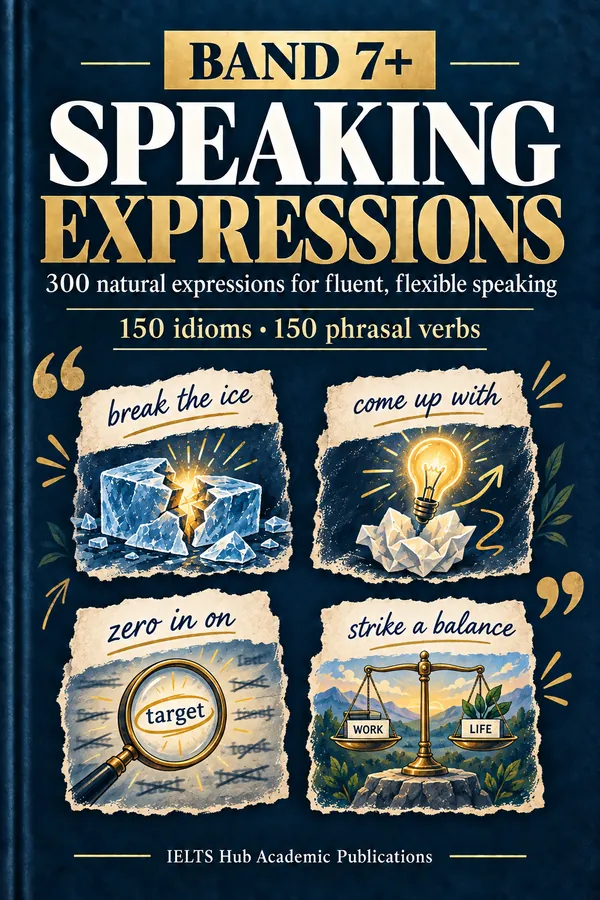
Speaking
Band 7+ Speaking Expressions
300 natural expressions for fluent, flexible speaking
₹199$6.99CAD 8.99AUD 9.99£4.99NZD 10.99€5.99AED 24SGD 8.99