Speaking test #468
Part 1 · Interview
4 to 5 minutes. The examiner asks about you and familiar topics.
Can you tell me your full name?
Where are you from?
Do you work or are you a student?
What was the dream job for you when you were young?
When I was younger, I always dreamed of becoming a doctor. I loved the idea of being able to help people and make a difference in their lives. However, as I got older and learned more about the field, I realized that it wasn't the right fit for me.
Have you changed your mind about your dream job?
Yes, I have. I used to think that becoming a doctor was my ultimate career goal, but as I explored other options and learned more about myself, I realized that there were other paths that were a better fit for my interests and skills.
What do you plan to do in the future?
In the future, I hope to work in a career that allows me to use my creativity and problem-solving skills. I'm still exploring different options, but I'm considering careers in design or marketing.
What kind of jobs are popular in India?
In India, there are a wide range of popular careers. Some of the most in-demand jobs include engineering, IT, and finance. However, there are also many opportunities in fields such as healthcare, education, and government.
Can you remember the dreams you had?
Oh, definitely. I tend to have quite vivid and memorable dreams, so I can usually recall them pretty easily. Sometimes they're just random and nonsensical, but other times they feel really meaningful and significant.
Do you share your dreams with others? (or are you interested in others' dreams?
?) I'll definitely share some of my more interesting or notable dreams with friends and family, but I don't go around telling everyone about every little dream I have. As for other people's dreams, I'm definitely intrigued by them and love hearing about people's subconscious thoughts and experiences. It's always fascinating to me how different and unique everyone's dreams can be.
Do you think dreams have special meanings?
I definitely think that dreams can be a way for our minds to process and work through things that are going on in our lives. Sometimes I'll have a dream that feels really symbolic or tied to something I'm struggling with, and it can be really helpful in helping me understand my own thoughts and feelings. That being said, I don't think that every single dream needs to be analyzed and dissected. Sometimes they're just dreams and nothing more.
Do you want to make your dreams come true?
Absolutely. I think everyone has dreams and goals that they want to accomplish, and I'm no different. I have a lot of things that I want to do and experience in my life, and I'm always working towards making those dreams a reality. It takes hard work and dedication, but it's definitely worth it in the end.
You will have to talk about the topic for one to two minutes. You have one minute to think about what you are going to say. You can make some notes to help you if you wish.
Describe a war or conflict you know about
You should say:
- What war or conflict it was
- When and where it took place
- The main parties involved
- The outcome or impact of the war or conflict
What war or conflict it was
The war I would like to talk about is the India-Pakistan war of 1971, which took place in the Indian subcontinent. This conflict occurred from December 3rd to December 16th, 1971, primarily in the eastern part of the region, present-day Bangladesh. The main parties involved were India and Pakistan, with the latter also facing resistance from the local Mukti Bahini freedom fighters in East Pakistan.
When and where it took place
The outcome of this war was a significant victory for India, leading to the creation of an independent Bangladesh. The conflict resulted in the surrender of over 90,000 Pakistani soldiers to the Indian Army, marking one of the largest surrenders since World War II. The war had a profound impact on the region, not only in terms of territorial changes but also in shaping the geopolitics of South Asia.
The main parties involved
The India-Pakistan war of 1971 also had lasting repercussions on the diplomatic relations between the two countries, further exacerbating the existing tensions. The conflict highlighted the deep-rooted historical and political issues between India and Pakistan, which continue to influence their interactions to this day. Additionally, the war underscored the importance of self-determination and the consequences of suppression of regional identities.
The outcome or impact of the war or conflict
In conclusion, the India-Pakistan war of 1971 stands as a significant event in the history of the Indian subcontinent, with far-reaching implications for the nations involved and the region as a whole. The conflict not only led to the creation of a new nation but also underscored the complexities of regional politics and the lasting effects of war on societies and relationships.
- Words
- 257
- Sentences
- 11
- Words per sentence
- 23.4
- Speaking time
- about 2.0 min
Counted at 130 words a minute. The exam gives you one to two minutes.
Part 3 · Discussion
4 to 5 minutes. The examiner asks broader questions linked to the cue card topic.
How do the effects of past wars compare to those of today's conflicts?
That’s a really thought-provoking question! The impacts of historical conflicts often manifest in long-lasting societal changes and cultural shifts, as they tend to shape national identities and borders for generations to come. For instance, the aftermath of World Wars I and II fundamentally altered the political landscape of Europe and even resulted in the formation of the European Union as a means of fostering peace. In contrast, modern-day wars, such as those in the Middle East, tend to have more immediate humanitarian consequences, like mass displacement of people and ongoing instability in the region. Additionally, the way we perceive and process these conflicts has evolved. With the advent of social media and instantaneous news coverage, modern wars are often viewed in real-time, which can lead to a heightened sense of urgency and global awareness. Historical conflicts, on the other hand, are often analyzed through the lens of history, allowing for a more detached perspective. Thus, while both types of conflicts leave profound marks on societies, the nature and immediacy of their impacts can be quite different.
How much do you think the way wars are shown in the media affects how people view those conflicts?
The portrayal of wars in media has a profound impact on public perception, often shaping how people understand and relate to these conflicts. When media outlets present wars through a particular lens—be it heroic narratives, humanitarian crises, or political agendas—it can significantly skew the public's understanding. For instance, sensationalized coverage might evoke strong emotions and lead to polarized opinions, while more nuanced reporting can foster a deeper awareness of the complexities involved. Additionally, the rise of social media has allowed for a more diverse range of voices to emerge, which can either challenge or reinforce mainstream narratives. Ultimately, the way wars are depicted can create a powerful narrative that influences everything from public opinion to government policy, highlighting the crucial role media plays in shaping our perceptions of conflict.
How important is it to learn about past wars to understand today's global problems?
Studying past wars is incredibly crucial for understanding current geopolitical issues. History often repeats itself, and many of the conflicts we see today are rooted in historical grievances, territorial disputes, or ideological battles that have been simmering for decades, if not centuries. By analyzing previous wars, we can gain valuable insights into the motivations and behaviors of nations, which in turn helps us to decipher contemporary political dynamics. Additionally, understanding the outcomes of past conflicts can inform current strategies for diplomacy and conflict resolution, ultimately fostering more peaceful international relations. So, in a nutshell, diving into history equips us with a deeper perspective that is essential for navigating today’s complicated global landscape.
Why do you think some conflicts get more news coverage than others?
That's a fascinating question! I believe the level of media attention a conflict receives often depends on several factors, such as the geopolitical significance of the region, the involvement of major world powers, or even the human interest angle. For example, conflicts in countries that are strategically important—like those with vast natural resources or significant political alliances—tend to dominate headlines. Additionally, conflicts that result in dramatic visuals or compelling stories often capture the public's imagination more effectively, leading to heightened coverage. Ultimately, media outlets also have to consider what their audiences find engaging, which can sometimes skew attention away from equally important but less sensationalized conflicts.
How could current global trends like technology and climate change influence future conflicts?
Future conflicts are likely to be heavily influenced by current global trends like technological advancements and climate change. For instance, as technology evolves, we may witness an increase in cyber warfare, where nations engage in battles over information and data integrity rather than traditional military confrontations. Additionally, with climate change leading to resource scarcity, particularly in water and arable land, we might see tensions rise between countries or regions competing for these vital resources. It’s fascinating yet alarming to think that the very innovations meant to connect us could also become tools for escalating conflicts. Overall, if we don’t address these issues collaboratively, the future could be marked by a stark increase in geopolitical tensions and conflicts.
What steps can be taken to stop conflicts from turning into wars?
Preventing conflicts from escalating into wars is a multifaceted challenge, but there are several effective measures that can be implemented. Firstly, diplomatic dialogue is crucial; fostering open communication between conflicting parties can help address grievances before they spiral out of control. Additionally, involving international organizations like the United Nations can provide a neutral platform for mediation, which often leads to peaceful resolutions. Furthermore, promoting cultural understanding and education about different societies can reduce prejudices and foster mutual respect, which is vital in avoiding misunderstandings that could lead to conflict. Lastly, implementing economic incentives for peace, such as trade agreements or development aid, can encourage cooperation rather than confrontation. By focusing on these strategies, we can create a more harmonious global environment and mitigate the risk of war.
Go further with the books
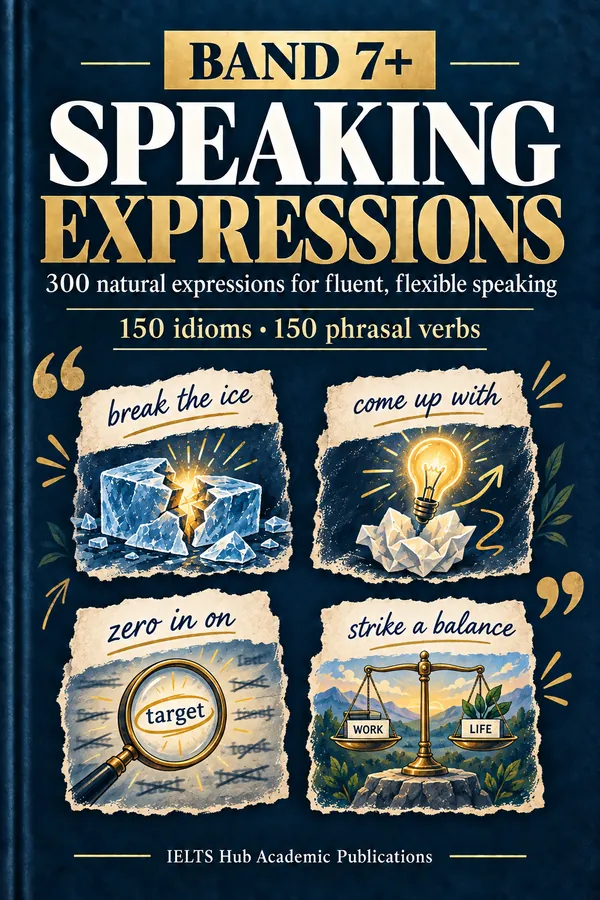
Speaking
Band 7+ Speaking Expressions
300 natural expressions for fluent, flexible speaking
₹199$6.99CAD 8.99AUD 9.99£4.99NZD 10.99€5.99AED 24SGD 8.99
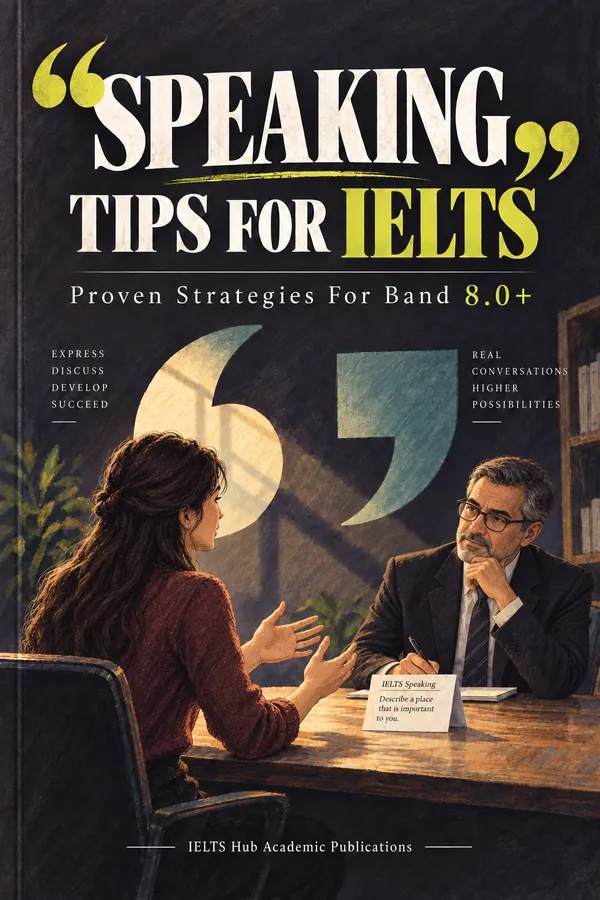
Speaking
Speaking Tips for IELTS
Proven Strategies for Band 8.0+
₹299$9.99CAD 13.99AUD 14.99£7.99NZD 16.99€8.99AED 39SGD 12.99

Speaking
Speak Like a Band 9
Real Test Questions & High-Scoring Answers
₹299$9.99CAD 13.99AUD 14.99£7.99NZD 16.99€8.99AED 39SGD 12.99