Speaking test #480
Part 1 · Interview
4 to 5 minutes. The examiner asks about you and familiar topics.
Can you tell me your full name?
Where are you from?
Do you work or are you a student?
Why do some people throw litter/garbage on the street?
I believe that some people may throw litter or garbage on the street because they have a lack of understanding or concern for the impact it has on the environment and their community. They may also have a lack of education or resources for proper disposal, or simply a lack of personal responsibility for their actions.
How do you feel when you see people throw litter/garbage?
Seeing people throw litter or garbage on the street makes me feel frustrated and disheartened. It shows a lack of respect for the community and the environment, and also contributes to a negative image of the city.
Do you think your city is clean or not?
I think that my city has its moments of cleanliness and moments of litter, but it could definitely use improvement. There are certain areas that are always well-maintained, but there are also areas where litter and garbage can be found often.
What do you do if you see garbage on the street?
If I see garbage on the street, I would do my best to dispose of it properly by either throwing it in a trash can or bringing it home to dispose of it there. I also believe in leading by example and encouraging others to do the same, instead of simply ignoring the problem. Additionally, I would consider supporting community clean-up initiatives or contacting my local government to address the issue.
Do you like geography?
I absolutely adore geography. I find it fascinating to study the Earth's physical features, climate, and human interactions with the environment. Understanding how our planet functions as a whole is crucial for us as a society, and I find it endlessly intriguing.
Have you ever studied geography at school?
Yes, I have studied geography at school. I found it to be a very engaging and informative subject. My teachers taught us about various topics such as plate tectonics, the water cycle, and landforms, which I found very interesting. It helped me understand the world around me better.
Are you good at reading maps?
I would say I am quite skilled at reading maps. I have always had an interest in cartography and have spent a lot of time studying maps in my spare time. I am quite familiar with using different types of maps such as topographic, road, and satellite maps. I find it easy to orient myself and navigate using maps.
Would you visit a country because of its geographical location?
Yes, I would definitely consider visiting a country because of its geographical location. I think that the location of a country can play a big role in its culture, climate, and overall atmosphere. For example, if I were to find a country that is located in a tropical area and surrounded by mountains, I would be very intrigued to visit. The unique combination of a tropical climate and mountainous terrain would make for an exciting and unique trip.
You will have to talk about the topic for one to two minutes. You have one minute to think about what you are going to say. You can make some notes to help you if you wish.
Describe a situation when you received some useful advice
You should say:
- Who gave you the advice
- What the advice was about
- How the advice helped you
- Why you found the advice useful
Who gave you the advice
Receiving valuable advice can have a profound impact on one's life, and I vividly recall a situation when I received some invaluable guidance from my grandfather that significantly influenced my perspective. My grandfather, a wise and experienced individual, shared with me his insights on the importance of perseverance and resilience in the face of challenges. His advice was about staying determined and focused on my goals, regardless of the obstacles that may come my way.
What the advice was about
This advice proved to be immensely beneficial to me during a particularly challenging academic period. I encountered several setbacks and moments of self-doubt, but I remembered my grandfather's words and remained steadfast in my efforts. His guidance motivated me to push through the difficulties with a positive attitude and unwavering determination. As a result, I was able to overcome the obstacles and achieve success in my endeavors.
How the advice helped you
I found my grandfather's advice to be incredibly useful because it not only helped me navigate a difficult situation but also instilled in me a valuable life lesson. The experience taught me the importance of resilience, perseverance, and maintaining a positive mindset in the face of adversity. I realized that setbacks are a natural part of life's journey, and it is our response to them that ultimately determines our growth and success.
Why you found the advice useful
In conclusion, the advice I received from my grandfather has had a lasting impact on me, shaping my approach to challenges and setbacks. His wise words served as a guiding light during a tough period and have since become a source of inspiration for me in various aspects of my life. I will always be grateful for his valuable advice and the profound influence it has had on my personal growth and development.
- Words
- 287
- Sentences
- 13
- Words per sentence
- 22.1
- Speaking time
- about 2.2 min
Counted at 130 words a minute. The exam gives you one to two minutes.
Part 3 · Discussion
4 to 5 minutes. The examiner asks broader questions linked to the cue card topic.
How can the advice from friends be different from the advice from professionals?
That's a great question! The advice from friends often comes from a place of empathy and personal experience. They might share their own stories, which can make the advice feel more relatable and less intimidating. However, it's important to note that friends may not always have the expertise needed to address certain issues. On the other hand, professionals, like therapists or counselors, offer well-informed guidance based on training and research. Their advice is usually more structured and tailored to individual needs, providing a more comprehensive approach to solving a problem. Ultimately, both types of advice can be valuable, but they serve different purposes in our lives.
How helpful is it to get advice from different places before deciding?
Seeking advice from multiple sources can be incredibly beneficial when making decisions, particularly for significant life choices. By gathering diverse perspectives, one can broaden their understanding of the situation and uncover insights that might not be evident from a single viewpoint. Moreover, this approach allows individuals to weigh the pros and cons more effectively, ultimately leading to a more informed choice. However, it’s essential to ensure that the sources are credible and relevant; otherwise, it can lead to confusion or information overload. In a world filled with opinions, striking a balance between multiple inputs and one's own intuition is key to making sound decisions.
How important is it for people to get help during tough times in their lives?
Receiving guidance during challenging times is incredibly significant for individuals. When faced with adversity, having someone to provide support and perspective can make a world of difference. It not only helps in navigating tough situations but also fosters resilience and emotional well-being. Guidance can come from various sources, whether it’s friends, family, or professionals, and it often encourages individuals to see their challenges as opportunities for growth. Ultimately, the support we receive can empower us to make better decisions and emerge stronger from our difficulties.
Why do you think some people listen to advice better than others?
I believe the receptiveness to advice often boils down to personality traits and life experiences. Some individuals are naturally more open-minded, which allows them to consider different perspectives without feeling defensive. Others may have faced challenges that have made them more resilient, fostering a willingness to learn from others. Additionally, cultural factors can play a significant role; in some cultures, seeking guidance is seen as a strength rather than a weakness. Ultimately, those who approach life with a growth mindset tend to embrace advice more readily, viewing it as an opportunity for improvement rather than criticism.
How could giving advice change in the future because of technology and social media?
The role of advice-giving is likely to undergo a significant transformation in the coming years, largely driven by advancements in technology and the pervasive influence of social media. With the rise of digital platforms, people are more inclined to seek advice from a broader range of sources, often turning to online communities or influencers rather than traditional experts. This shift could democratize access to information, allowing individuals to share their experiences and insights in a more personalized manner. However, it also raises concerns about the quality of advice available, as not all sources are credible. As algorithms evolve, we might see a more tailored approach to advice-giving, where AI tools analyze user preferences and provide targeted recommendations. Ultimately, while technology may enhance the accessibility of advice, the need for discernment and critical thinking will be more crucial than ever.
What steps can be taken to make sure the advice given is useful and fits the needs of the person getting it?
To ensure that advice is relevant and applicable, it's crucial to start with a thorough understanding of the individual's unique circumstances. This means really listening to their concerns and asking probing questions to get to the heart of the matter. Additionally, tailoring the advice to fit their specific needs and context can significantly enhance its effectiveness. It might also be beneficial to provide examples or case studies that resonate with their situation, making the advice feel more relatable and practical. Ultimately, fostering an open dialogue allows for adjustments to be made, ensuring that the advice remains contextually appropriate and actionable.
Go further with the books
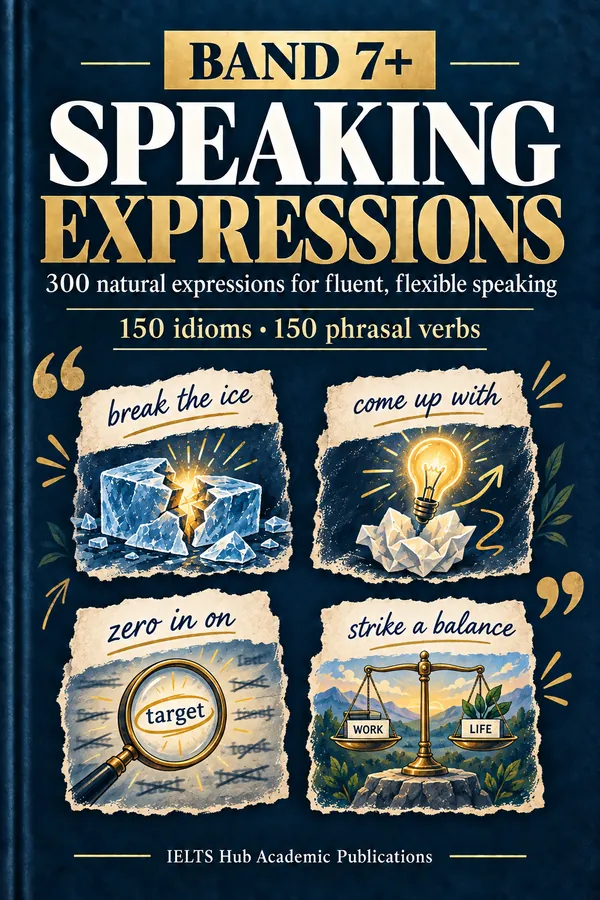
Speaking
Band 7+ Speaking Expressions
300 natural expressions for fluent, flexible speaking
₹199$6.99CAD 8.99AUD 9.99£4.99NZD 10.99€5.99AED 24SGD 8.99
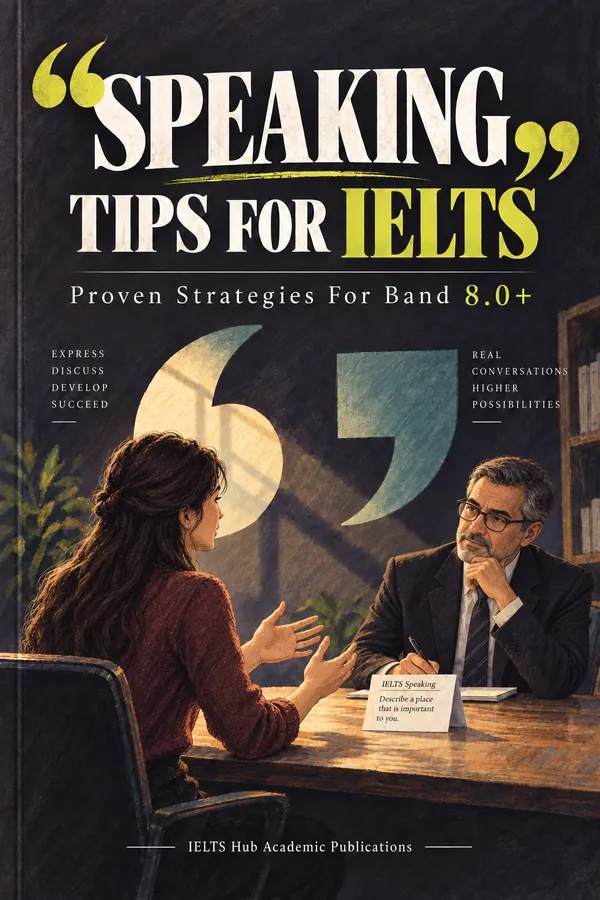
Speaking
Speaking Tips for IELTS
Proven Strategies for Band 8.0+
₹299$9.99CAD 13.99AUD 14.99£7.99NZD 16.99€8.99AED 39SGD 12.99
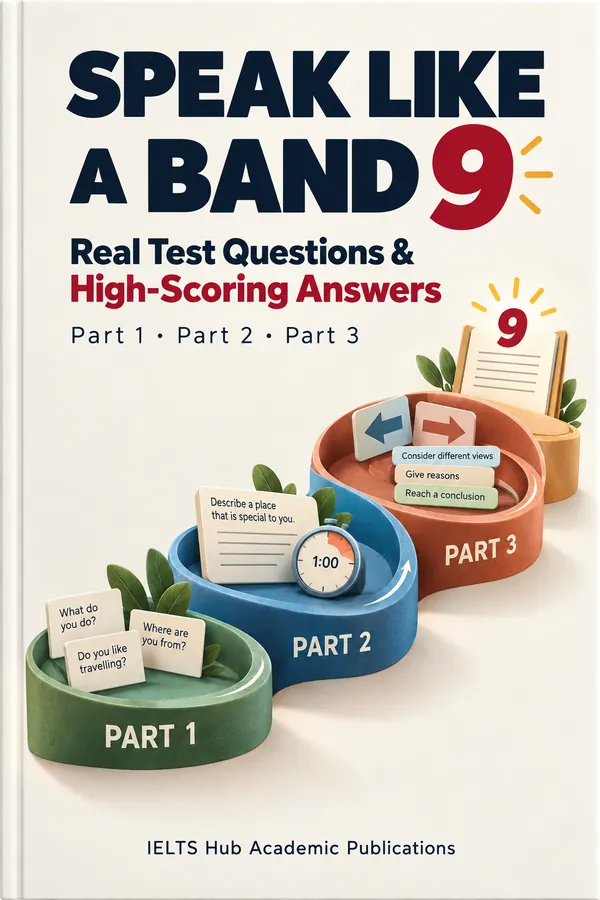
Speaking
Speak Like a Band 9
Real Test Questions & High-Scoring Answers
₹299$9.99CAD 13.99AUD 14.99£7.99NZD 16.99€8.99AED 39SGD 12.99