Speaking test #486
Part 1 · Interview
4 to 5 minutes. The examiner asks about you and familiar topics.
Can you tell me your full name?
Where are you from?
Do you work or are you a student?
Do you enjoy reading about history? [Why?
?] I absolutely love reading about history. I find it fascinating to learn about past events and how they have shaped the world we live in today. The stories and personalities from different eras always capture my attention and I find myself getting lost in the details and the context of the events.
When was the last time you read a book or watched a film about history? [Why?
?] The last time I read a book about history was about a month ago. I read "The Rise and Fall of the Third Reich" by William L. Shirer. It was a gripping account of the rise of Nazi Germany and the events leading up to the Second World War. I was particularly interested in learning more about the political and social climate of the time and how it led to such a catastrophic event in history.
What historical event do you find most interesting? [Why/ Why not?
?] One of the historical events that I find most interesting is the American Revolution. I find it fascinating to learn about the events leading up to the war, the political and social climate of the time, and how it led to the formation of the United States of America. I also find the personalities of the key players in the war, such as George Washington and Thomas Jefferson, to be incredibly intriguing.
Do you think studying history is important? [Why/ Why not?
?] I believe that studying history is incredibly important. It provides us with a better understanding of the world we live in today and how it came to be. It helps us to understand the causes and consequences of past events, as well as the motivations and actions of the people who lived through them. It also helps us to learn from the mistakes of the past and to make better decisions in the present and future. Without an understanding of history, it would be difficult to fully understand the world we live in today.
Do you have any hobbies?
Yes, I have a few hobbies. I love to read, write, and play sports. I also enjoy traveling and trying new foods.
Is it important to have a hobby?
Yes, I believe it is important to have a hobby. Hobbies allow us to relax, escape from our daily routines, and pursue something that we are passionate about. They can also be a source of inspiration and creativity.
Is it harmful to spend too much time on a hobby?
I don't think it is harmful to spend a lot of time on a hobby as long as it is not negatively impacting other areas of our lives. However, it is important to maintain a balance and not neglect our responsibilities or relationships.
What free-time activities would you like to try in the future?
In the future, I would like to try learning a new language, playing a musical instrument, and volunteering in my community. I also have a dream of one day traveling to Japan to experience their culture and try sushi-making classes.
You will have to talk about the topic for one to two minutes. You have one minute to think about what you are going to say. You can make some notes to help you if you wish.
Describe a city that you think is very interesting
You should say:
- What city it is and where it is located
- What makes this city interesting to you
- What are some unique features or attractions of this city
- Would you like to visit this city in the future? Why or why not
What city it is and where it is located
I would like to talk about Mumbai, a vibrant city located on the west coast of India. Mumbai, formerly known as Bombay, is the capital city of the state of Maharashtra and is the financial and entertainment capital of India. Its unique blend of culture, history, and modernity makes it a fascinating city to explore.
What makes this city interesting to you
What makes Mumbai interesting to me is its incredible diversity. It is a melting pot of different cultures, languages, and cuisines, where traditional values coexist with a fast-paced modern lifestyle. The city's bustling streets, iconic landmarks like the Gateway of India, and the vibrant Bollywood film industry all contribute to its charm.
What are some unique features or attractions of this city
One of the most unique features of Mumbai is its local train network, known as the lifeline of the city. The dabbawalas, who deliver home-cooked meals to office workers with precision and efficiency, are another interesting aspect of Mumbai's culture. Additionally, the city's street food scene offers a tantalizing array of flavors that reflect its rich culinary heritage.
Would you like to visit this city in the future? Why or why not
I would definitely love to visit Mumbai in the future. As a city with a rich history, diverse culture, and dynamic energy, Mumbai offers a plethora of experiences waiting to be explored. From strolling along the Marine Drive to sampling local street food delicacies, Mumbai promises a memorable and enriching travel experience that I would not want to miss.
- Words
- 224
- Sentences
- 12
- Words per sentence
- 18.7
- Speaking time
- about 1.7 min
Counted at 130 words a minute. The exam gives you one to two minutes.
Part 3 · Discussion
4 to 5 minutes. The examiner asks broader questions linked to the cue card topic.
How can cities vary when it comes to cultural sites and fun things to do?
Urban areas can vary significantly when it comes to their cultural attractions and leisure activities, often shaped by factors like history, demographics, and economic resources. For instance, a city with a rich historical background, like Rome or Kyoto, might boast an abundance of world-renowned museums and historic landmarks, drawing tourists and locals alike. In contrast, a modern metropolis like New York or Shanghai may offer a more dynamic array of contemporary art galleries and vibrant nightlife, catering to a younger, more diverse population. Additionally, the availability of leisure activities can differ greatly; for example, coastal cities often provide outdoor recreational options such as beaches and water sports, while mountainous regions might focus on hiking and skiing. This diversity in cultural offerings not only reflects the city's identity but also influences the lifestyle of its residents, making urban living a unique experience depending on where you are. Ultimately, the blend of cultural attractions and leisure pursuits is what makes each urban area distinctly appealing!
What features of a city might make some people like it more than others?
There are several aspects of a city that can significantly enhance its appeal. For instance, cultural diversity often attracts individuals who enjoy experiencing different traditions and lifestyles. A vibrant arts scene, complete with galleries and theaters, can also make a city more enticing for those who appreciate creativity and intellectual stimulation. Additionally, access to green spaces and recreational areas plays a crucial role in providing a sense of well-being and relaxation amidst the hustle and bustle of urban life. Lastly, the presence of good public transport and affordable housing can make a city more accessible, drawing in people from various backgrounds and walks of life.
How important do you believe public transport is in making a city more attractive?
Public transport plays a crucial role in enhancing a city's appeal for several reasons. Firstly, it provides accessibility, allowing both residents and tourists to easily navigate the urban landscape without the hassle of traffic or parking issues. This convenience can significantly influence a visitor's overall experience. Additionally, an efficient public transport system can promote a sense of community by connecting various neighborhoods and fostering social interactions among diverse groups of people. Lastly, cities that invest in sustainable transport options often find themselves more attractive to environmentally conscious individuals, which can boost tourism and local economies. Overall, a well-developed public transport network is not just about getting from point A to B; it’s about creating a vibrant, interconnected urban environment.
Why are some cities seen as more fun for tourists than for people who live there?
That's a fascinating question! Some cities often have a plethora of attractions that are tailored to tourists, such as iconic landmarks, museums, and vibrant cultural events, which might not resonate as much with locals who experience these places on a daily basis. For instance, a city like Paris, with its breathtaking architecture and rich history, might be seen as world-renowned for its tourist appeal, while locals may grow accustomed to these sights and take them for granted. Additionally, tourists might seek out unique experiences or local cuisine that locals might overlook because they are more focused on day-to-day life. This juxtaposition often creates a scenario where the tourist experience feels more exotic and invigorating compared to the local perspective, making those cities more enticing for visitors.
How could a city's features change in the coming decades?
I believe the characteristics of a city will undergo significant transformation in the coming decades, primarily driven by advancements in technology and shifts in societal values. For instance, we might see cities becoming more sustainable and eco-friendly, with a focus on green spaces and renewable energy sources. Urban planning is likely to prioritize smart infrastructure, integrating technology to enhance public services and improve the quality of life for residents. Additionally, as remote work becomes more prevalent, we might witness a shift in population density, with people opting to live in less congested areas while still having access to urban amenities. Overall, the future city will probably be a dynamic blend of innovation and community, reflecting the changing needs and aspirations of its inhabitants.
What steps can be taken to make less popular cities more appealing?
To enhance the attractiveness of less popular cities, a multifaceted approach is essential. Firstly, investing in infrastructure development can significantly improve connectivity and accessibility, making these cities more appealing to both tourists and residents. Additionally, promoting local culture through festivals and events can create a vibrant atmosphere that draws people in. Marketing campaigns highlighting unique attractions, like historical landmarks or natural beauty, can also spark interest. Furthermore, offering incentives for businesses to set up shop can lead to a thriving local economy, which in turn attracts visitors eager to experience the local lifestyle. Overall, a combination of these strategies can transform lesser-known cities into hidden gems worth exploring.
Go further with the books

Speaking
Speaking Tips for IELTS
Proven Strategies for Band 8.0+
₹299$9.99CAD 13.99AUD 14.99£7.99NZD 16.99€8.99AED 39SGD 12.99
Speaking
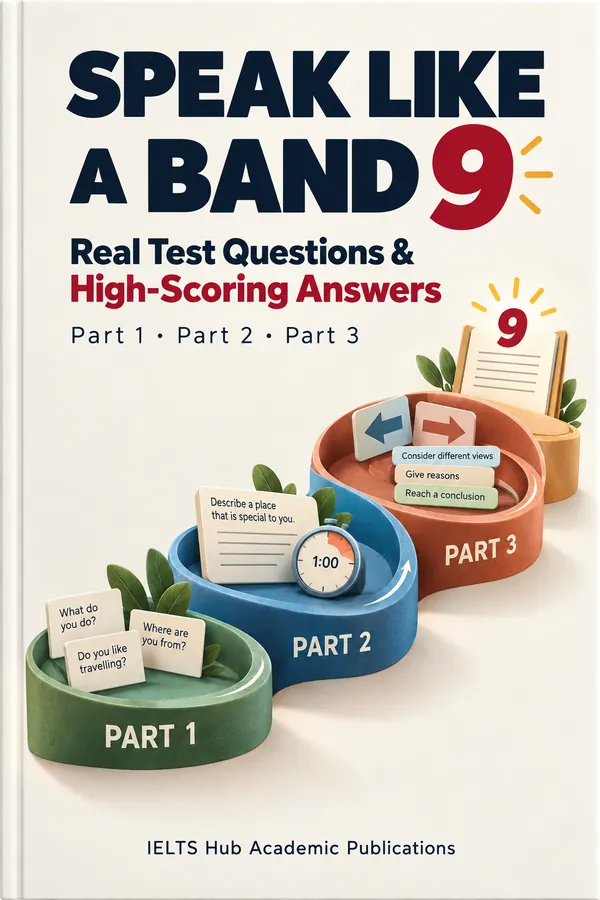
Speak Like a Band 9
Real Test Questions & High-Scoring Answers
₹299$9.99CAD 13.99AUD 14.99£7.99NZD 16.99€8.99AED 39SGD 12.99

Speaking
Band 7+ Speaking Expressions
300 natural expressions for fluent, flexible speaking
₹199$6.99CAD 8.99AUD 9.99£4.99NZD 10.99€5.99AED 24SGD 8.99