Speaking test #493
Part 1 · Interview
4 to 5 minutes. The examiner asks about you and familiar topics.
Can you tell me your full name?
Where are you from?
Do you work or are you a student?
Do people of your country like barbecue?
Yes, people in my country love barbecue. It's a popular way to spend time with friends and family, especially during the summer months.
What kind of food do you like to eat for barbecue?
As a vegetarian, I usually enjoy grilled vegetables like bell peppers, zucchini, and eggplant. I also love skewering tofu and marinating it in a spicy sauce before grilling.
Would you like to have barbecue with your family or your friends?
I would love to have a barbecue with both my family and friends. There's something about the combination of good food and good company that just makes for a perfect day.
Did you have barbecue when you were a child?
Yes, I have fond memories of having barbecue with my family when I was a child. We would often have barbecue parties in our backyard and invite friends and neighbors to join us. It was always such a fun and social way to spend a summer evening.
How many languages can you speak? [Why/Why not?
?] I can speak three languages fluently - English, Spanish, and French. I have always been fascinated with different cultures and languages, so I made it a point to learn as many as possible. I believe that being multilingual can open up many opportunities, both personally and professionally.
How useful will English be to you in your future? [Why/Why not?
?] English is incredibly useful to me in my future as it is widely spoken and understood in many countries around the world. It is considered a global language and is used in many fields such as business, education, and technology. Being proficient in English will greatly benefit me in my career and personal growth.
What do you remember about learning languages at school? [Why/Why not?
?] I remember that learning languages at school was a fun and challenging experience for me. I enjoyed learning about different cultures and grammar rules, but I also found it difficult to retain new vocabulary and grammar structures. However, I believe that the effort I put into learning languages at school has greatly helped me in my ability to speak multiple languages fluently.
What do you think would be the hardest language for you to learn? [Why?
?] I think the hardest language for me to learn would be Chinese. The structure and grammar of the language is vastly different from the languages I am familiar with, and the characters used in Chinese are also quite challenging. Additionally, the tones and pronunciation are also very difficult, which makes it a language that would take a lot of time and effort to master.
You will have to talk about the topic for one to two minutes. You have one minute to think about what you are going to say. You can make some notes to help you if you wish.
Describe a review you read about a product or service
You should say:
- What product or service was reviewed
- Where did you read the review
- What were the positive aspects highlighted in the review
- Did the review influence your decision to try the product or service
What product or service was reviewed
I recently came across a compelling review of the OnePlus Nord smartphone, a popular device known for its affordability and impressive features. This review was featured on a renowned tech website that I frequently visit to stay updated on the latest gadgets and technology trends. The article highlighted various positive aspects of the OnePlus Nord, such as its sleek design, high-quality camera performance, and smooth user experience. The reviewer also praised the phone's long-lasting battery life and its value for money proposition, making it an attractive option for budget-conscious consumers.
Where did you read the review
After reading the review, I was genuinely impressed by the positive feedback on the OnePlus Nord. The detailed descriptions of its features and the reviewer's personal experience using the phone painted a vivid picture of its capabilities. The review effectively showcased the strengths of the device and highlighted how it could meet the diverse needs of different users. As someone in need of a new smartphone, the positive aspects highlighted in the review definitely caught my attention and sparked my interest in trying out the OnePlus Nord for myself.
What were the positive aspects highlighted in the review
While the review alone did not solely influence my decision to purchase the OnePlus Nord, it played a significant role in shaping my perception of the product. The positive aspects highlighted in the review aligned with my preferences in a smartphone, which further motivated me to consider the OnePlus Nord as a potential option. Ultimately, after conducting additional research and comparing it with other models, I decided to give the OnePlus Nord a try based on the compelling review I had read and the reputation of the brand in the market.
Did the review influence your decision to try the product or service
In conclusion, the review of the OnePlus Nord that I read provided valuable insights into the product's features and performance, ultimately influencing my decision-making process. The positive aspects highlighted in the review, combined with my own research and preferences, led me to choose the OnePlus Nord as my new smartphone. This experience highlighted the power of reviews in shaping consumer perceptions and influencing purchasing decisions, underscoring the importance of credible and detailed evaluations in today's competitive market.
- Words
- 347
- Sentences
- 14
- Words per sentence
- 24.8
- Speaking time
- about 2.7 min
Counted at 130 words a minute. The exam gives you one to two minutes.
Part 3 · Discussion
4 to 5 minutes. The examiner asks broader questions linked to the cue card topic.
How are reviews of products or services in regular media different from those online?
That's a fascinating question! Reviews in traditional media, like newspapers or magazines, often come from seasoned critics who have a wealth of experience and expertise in their field. These reviews typically offer a more polished and in-depth analysis, as they are usually longer and more detailed, exploring various aspects of the product or service. In contrast, online reviews are often user-generated, which means they can be quite diverse and reflect a broader range of opinions. They tend to be more spontaneous and can provide a real-time snapshot of consumer sentiment, but they may lack the rigor and credibility that formal reviews possess. Overall, while traditional media reviews might offer a more authoritative perspective, online reviews can be incredibly valuable for their immediacy and relatability.
How can one person see a product review differently from another person?
People can definitely have varying perspectives on a product review due to several factors. First and foremost, personal experiences play a crucial role; what works wonders for one person might be a complete disaster for another, depending on their specific needs and expectations. Additionally, individual preferences and lifestyle choices can significantly influence how someone perceives a product. For example, a tech enthusiast might focus on the technical specifications, while a casual user might prioritize ease of use and practicality. Lastly, social influences, like recommendations from friends or trending opinions on social media, can also shape someone’s viewpoint, leading to diverse interpretations of the same product review. It's fascinating how such a seemingly straightforward topic can spark so much debate!
How do customer reviews affect what people buy?
Customer reviews play a pivotal role in shaping consumer behavior, especially in today’s digital age. Many shoppers rely heavily on these reviews to make informed decisions, as they often provide real-life experiences from other buyers. It's fascinating how a single glowing review can sway someone to try a product, while a few negative comments might deter even the most curious of consumers. Moreover, reviews can foster a sense of trust and credibility, which is crucial in building a brand’s reputation. Ultimately, they serve as a form of social proof, indicating that a product is worth purchasing based on the experiences of others.
Why do you think people feel the need to write reviews after trying a product or service?
People often feel compelled to write reviews after using a product or service for several reasons. Firstly, sharing their experiences can be a way to give back to the community, helping others make informed decisions. They might feel a sense of responsibility, especially if they had an extraordinary experience—good or bad—and want to shed light on it. Additionally, in today's digital age, people are increasingly aware of the influence of their opinions, so they may feel empowered to voice their thoughts and contribute to a larger conversation. Lastly, writing reviews can also serve as a form of personal expression, allowing individuals to articulate their feelings and reflect on their experiences in a meaningful way.
How might consumers change how they look at product reviews in the future?
In the future, I believe we might see a significant shift in how consumers approach product reviews, largely driven by technological advancements. With the rise of artificial intelligence, we could have more personalized review systems that analyze individual preferences and provide tailored recommendations. This could lead to a more nuanced understanding of products, as reviews would not just be based on general feedback but would also reflect a consumer's specific needs. Additionally, I foresee a growing reliance on video reviews and interactive content, making it easier for consumers to engage with the information before making a purchase. As transparency becomes increasingly important, platforms may also introduce more comprehensive verification processes, ensuring that reviews are genuine and trustworthy. Overall, the future of product reviews is likely to be more engaging and reliable, enhancing the overall shopping experience for consumers.
How can companies make the reviews for their products or services better and more genuine?
Businesses can significantly enhance the quality and authenticity of reviews by implementing a few strategic measures. First and foremost, they could encourage genuine feedback by reaching out to customers post-purchase, perhaps through personalized emails that invite them to share their experiences. Additionally, companies can invest in robust verification systems that ensure reviews come from actual purchasers, which would help to eliminate fake reviews that often mislead consumers. Moreover, providing incentives for customers to leave honest feedback—like discounts on future purchases—can motivate more people to share their thoughts, leading to a richer pool of insights. Ultimately, fostering a culture of transparency and open communication not only boosts credibility but also builds long-lasting relationships with customers.
Go further with the books

Speaking
Speaking Tips for IELTS
Proven Strategies for Band 8.0+
₹299$9.99CAD 13.99AUD 14.99£7.99NZD 16.99€8.99AED 39SGD 12.99
Speaking
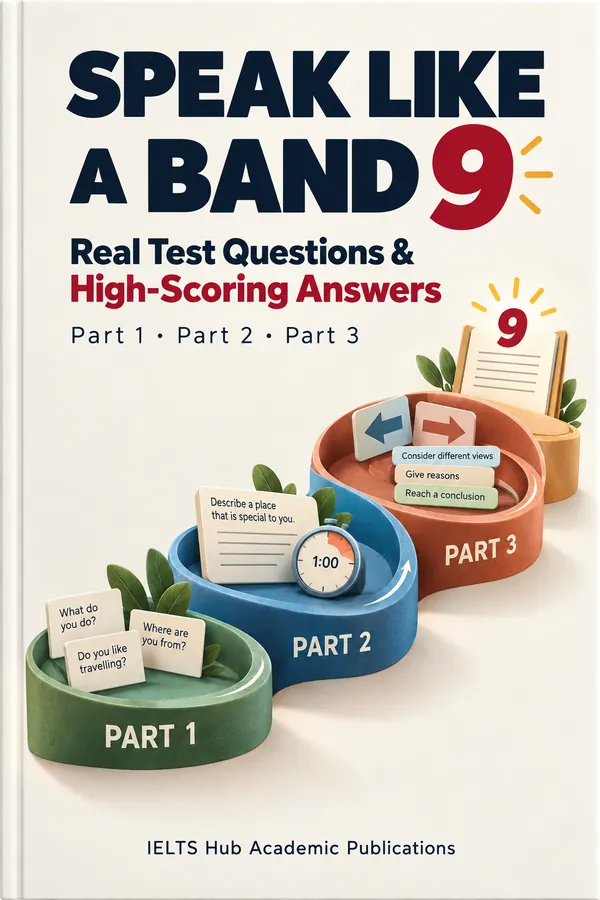
Speak Like a Band 9
Real Test Questions & High-Scoring Answers
₹299$9.99CAD 13.99AUD 14.99£7.99NZD 16.99€8.99AED 39SGD 12.99

Speaking
Band 7+ Speaking Expressions
300 natural expressions for fluent, flexible speaking
₹199$6.99CAD 8.99AUD 9.99£4.99NZD 10.99€5.99AED 24SGD 8.99